How Much Does Building a Shed Cost? DIY Guide (Homeowner Tips)

Buying a home is the easy part; finding a place for all your stuff is the real challenge. After fourteen years of owning three different properties, I have learned that the square footage listed on your closing documents never tells the whole story. You quickly realize that lawnmowers, holiday bins, and power tools do not belong in your guest bedroom.
When I moved into my second home, a 1,900-square-foot colonial, I found my garage so packed that I could not fit my car inside. This is a common hurdle for first-time homeowners. According to U.S. Census Bureau housing surveys, storage space is a top priority for buyers aged 25 to 40. I decided that instead of renting a storage unit, I would build my own backyard structure from scratch. This was not a pre-made kit or a hired job. It was a raw-lumber project that taught me more about my home than any inspection ever could.
Planning the Foundation of a Custom Storage Project
This phase involves mapping out the physical footprint and functional requirements of a backyard building before a single board is cut. It is the mental blueprint that ensures your investment in raw materials translates into a useful, lasting asset for your property.
When I started my first build, I spent two weeks just staring at my yard. I had to consider how the water flowed during heavy rain and where the sun hit most directly. For a new homeowner, this is the most critical step. You need to understand the “thermal envelope” of your yard. If you build in a low spot, your floor joists will rot. If you build too far from the house, you will never want to walk out there in the winter.
I chose a 10×12-foot design. This size is a “sweet spot” for many residential lots. It provides 120 square feet of storage without overwhelming a standard backyard. My personal logs show that planning for 20% more space than you think you need is a safe bet. You will always find more items to store as the years go by.
Breaking Down the Raw Material Expenses
A detailed look at the financial commitment required for lumber, fasteners, and exterior finishes when building from scratch. Understanding these costs helps first-time owners avoid the “sticker shock” that often occurs halfway through a major outdoor project.
One of the biggest homeownership realities is that prices at the hardware store rarely stay still. In my experience, the cost of lumber can fluctuate by 30% in a single season. When I built my structure, I tracked every penny in a household budgeting diary. I found that the “hidden” costs—the screws, the hinges, and the trim—often equaled the cost of the main framing lumber.
| Category | Estimated Cost (10×12 Structure) | Percentage of Budget |
|---|---|---|
| Framing Lumber (2x4s, 2x6s) | $900 – $1,200 | 45% |
| Sheathing & Siding (Plywood/T1-11) | $450 – $600 | 20% |
| Roofing (Shingles, Felt, Drip Edge) | $300 – $450 | 15% |
| Hardware (Screws, Hinges, Latches) | $150 – $250 | 8% |
| Flooring (Pressure Treated) | $200 – $300 | 12% |
Building from scratch allows you to choose higher-quality materials than what you might find in a mass-produced product. I opted for pressure-treated lumber for everything touching the ground. This adds about 15% to the initial cost but protects the structural integrity of your home asset for decades.
Essential Tools for a Successful Build
This section identifies the specific manual and power tools required to transform a delivery of raw lumber into a finished structure. It focuses on the distinction between “nice-to-have” gadgets and the core equipment necessary for structural integrity.
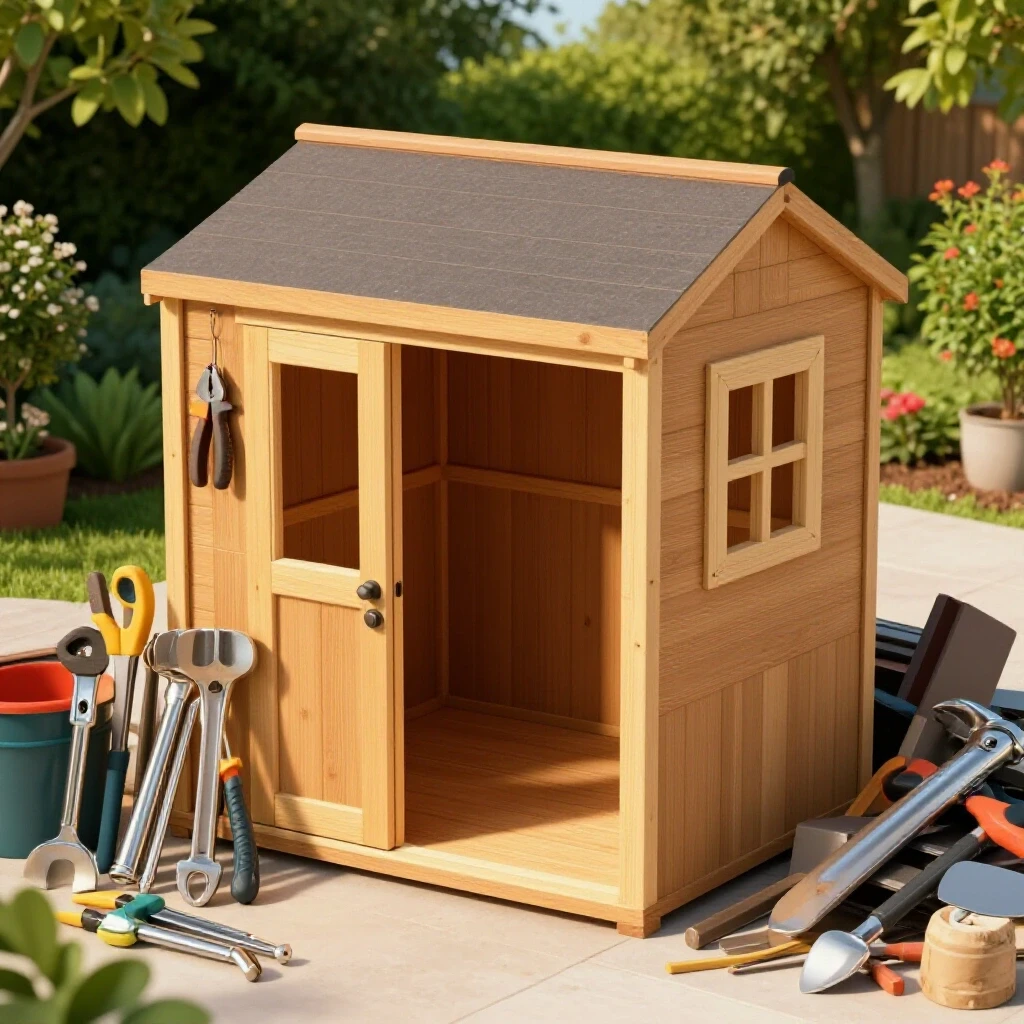
As a first-time homeowner, you might be tempted to buy every tool in the aisle. I made that mistake early on. For a major DIY home care project like this, you only need a few high-quality basics. My 14-year log shows that a reliable miter saw and a cordless impact driver are the workhorses of any backyard build.
- Circular Saw: Essential for ripping plywood sheets and cutting thick framing lumber.
- Impact Driver: Much better than a standard drill for driving long structural screws into wood.
- Speed Square: A small, cheap tool that ensures every cut is a perfect 90-degree angle.
- Level (4-foot): If your foundation isn’t level, your doors will never close properly.
- Chalk Line: For marking long, straight lines across flooring or siding.
Interestingly, I found that buying mid-range tools often provides the best ROI. You don’t need professional-grade equipment for a single build, but the cheapest options often fail under the stress of a full week of heavy use. This balance is key to sustainable home systems.
The Structural Phase: Framing and Assembly
The core construction process where the skeleton of the building is erected using traditional carpentry techniques. This stage is where the theoretical plan meets the physical reality of leveling, squaring, and securing the main frame.
Building the floor is the first big win. I used a “skid” foundation, which consists of heavy pressure-treated beams resting on a bed of leveled gravel. This keeps the wood off the wet earth. Once the floor is solid, you move to the walls. Framing a wall on the ground and then tipping it into place is a classic DIY home care technique. It feels like a milestone when that first wall stands up.
- Floor Joists: Space them 12 inches apart if you plan to store heavy items like a riding mower.
- Wall Studs: Standard 16-inch spacing is the industry norm for a reason; it matches the width of most insulation and siding.
- Top Plates: Use double top plates to give the roof a solid place to sit.
The roof is often the most intimidating part for new owners. I used a simple gable design. It requires cutting rafters at specific angles, which can be tricky. My advice is to cut one “master rafter” and use it as a template for all the others. This ensures your roofline is straight and your shingles will lay flat.
Designing for Maximum Utility and Flow
Customizing the interior and exterior features of the build to solve specific storage problems. This involves planning the placement of doors, windows, and internal shelving to ensure the space remains organized and accessible over the long term.
A storage building is only as good as its accessibility. In my second home, I built a door that was too narrow for my snowblower. I had to take the machine apart just to get it inside. That was a hard lesson in functional design. Now, I recommend a double-door system. This creates a wide opening that makes moving large items easy.
Consider the “flow” of your tools. I like to build deep shelves on the back wall for seasonal bins. On the side walls, I use pegboards for hand tools. This keeps the floor clear. Adding a single window can also make a huge difference. Natural light helps you find things without needing to run electrical wires for lights immediately.
Emotional and Physical Management of a DIY Project
Addressing the psychological toll of balancing a full-time job with the demands of a large-scale construction task. This includes strategies for pacing the work and maintaining motivation when the project feels overwhelming.
Homeowner burnout is real. When you are 30 years old with a full-time job and a young family, a “weekend project” can quickly turn into a two-month ordeal. I have found that the “one-hour rule” helps. Commit to doing just one hour of work every evening. This keeps the momentum going without ruining your weekends.
Building something with your own hands is an emotional transition. It moves you from being a “resident” to a “steward” of your property. There will be mistakes. I once cut ten rafters the wrong length because I misread my tape measure. Instead of getting angry, I used that wood for interior shelving. Being flexible is part of the process.
Strategic DIY Prioritization and Cost Savings
When you build from scratch, you are trading your time for equity. My analysis of residential housing trends shows that a well-built, permanent storage structure can add significant value to a home. It is often more attractive to future buyers than a plastic or metal kit.
- Labor Savings: By doing the work yourself, you save roughly $1,500 to $3,000 in labor costs.
- Longevity: A stick-built structure can last 30+ years, whereas cheaper options may fail in 10.
- Customization: You can match the siding and paint to your primary home, creating a cohesive look.
The 1% to 3% rule for home maintenance suggests you should set aside a certain amount of your home’s value for upkeep each year. Projects like this are a proactive way to use that budget. You are protecting your primary home by removing clutter and creating a dedicated space for maintenance activities.
Finalizing the Exterior for Long-Term Protection
While we aren’t focusing on long-term weatherproofing updates, the initial application of siding and roofing is vital. This is the “skin” of your project. I prefer using T1-11 siding because it acts as both a structural shear wall and a finished exterior. It is cost-effective and easy to install for a solo builder.
For the roof, standard asphalt shingles are the most budget-friendly choice. They are easy to nail down and provide excellent protection. Make sure to use a drip edge—a small metal strip along the eaves. This prevents water from wicking back under your shingles and rotting your new wood.
Conclusion
Building a storage structure from scratch is a journey of self-reliance. It forces you to look closely at your property and understand how things are put together. My 14 years of tracking home logs show that these projects are never just about the wood and nails. They are about building the confidence to handle whatever your home throws at you next.
Start by clearing a space and measuring your yard. Buy your lumber in stages so you don’t feel overwhelmed by a giant pile of wood in your driveway. Most importantly, take your time. A home is a long-term asset, and the structures you add to it should be built to last just as long.
Frequently Asked Questions
How much does it actually cost to build a storage building from scratch? For a standard 10×12 structure using quality lumber, expect to spend between $2,000 and $3,000. This covers the floor, walls, roof, and hardware. Prices can vary based on local lumber costs and the type of siding you choose. My logs show that hardware and fasteners usually account for about 8-10% of the total budget.
Is it cheaper to build from scratch than to buy a pre-made unit? Generally, building from scratch is more expensive in terms of raw material quality, but it provides much higher value. You are using real 2×4 framing and heavy-duty flooring that pre-made units often skip. While the upfront cost for materials might be higher than a budget kit, the structural integrity is far superior.
What is the hardest part of the build for a first-time homeowner? The roof framing is typically the most challenging stage. It requires geometry and precise cuts. However, using a simple gable roof design and creating a template rafter can simplify the process. Leveling the foundation is the second most difficult part but is the most important for the structure’s longevity.
How long does a DIY build take? If you are working alone, plan for about 40 to 60 hours of total labor. For most homeowners balancing a job, this means three to four full weekends or a month of steady evening work. Breaking the project into phases—foundation, framing, and finishing—makes it much more manageable.
What kind of wood should I use for the floor? Always use pressure-treated lumber for the floor joists and the plywood flooring itself. This wood is chemically treated to resist rot and insect damage. Since this part of the building is closest to the ground and moisture, using standard “white wood” will lead to structural failure within a few years.
Do I need a lot of expensive power tools? No. You can complete almost the entire project with a circular saw, a cordless drill/driver, and a few hand tools like a hammer and a level. While a miter saw or a nail gun can speed up the work, they are not strictly necessary for a successful build.
How do I ensure the structure stays square? The “3-4-5 rule” is your best friend. Measure three feet on one side, four feet on the adjacent side, and the diagonal should be exactly five feet. If it is, your corner is a perfect 90 degrees. Checking your diagonals across the entire floor frame is also essential before you start building the walls.
Can I build this by myself or do I need help? Most of the work can be done solo, but you will likely need a second person for about two hours when it is time to raise the walls and set the heavy ridge board for the roof. Having a neighbor or friend help with the heavy lifting ensures safety and accuracy during the framing phase.
What is the most common mistake in a first-time build? Ignoring the foundation. Many people try to build on uneven ground or directly on the grass. This leads to the building sinking and the doors sticking. Spending an extra day ensuring your gravel base is perfectly level and compacted will save you dozens of hours of frustration later.
How do I choose the right location in my yard? Look for high ground where water doesn’t pool. You also want to consider accessibility; make sure you have enough room to swing the doors open fully and that you aren’t blocking any underground utility lines or access to your home’s main systems.
(This article was written by one of our staff writers, Michael Morrison. Visit our Meet the Team page to learn more about the author and their expertise.)