Couch Cleaning Cost Breakdown: Real Expenses & DIY Savings (Guide)

Few things impact the visual harmony of a living room more than the state of the main sofa. As a financial planner, I look at furniture not just as a place to sit, but as a depreciating asset that requires a maintenance strategy. When the fabric begins to look dull or loses its original vibrancy, many homeowners immediately think about replacement. However, from a strict budgetary perspective, refreshing the existing piece is often the more prudent path. The challenge lies in accurately forecasting the expenses involved so you don’t end up with a bill that rivals the cost of a new piece.
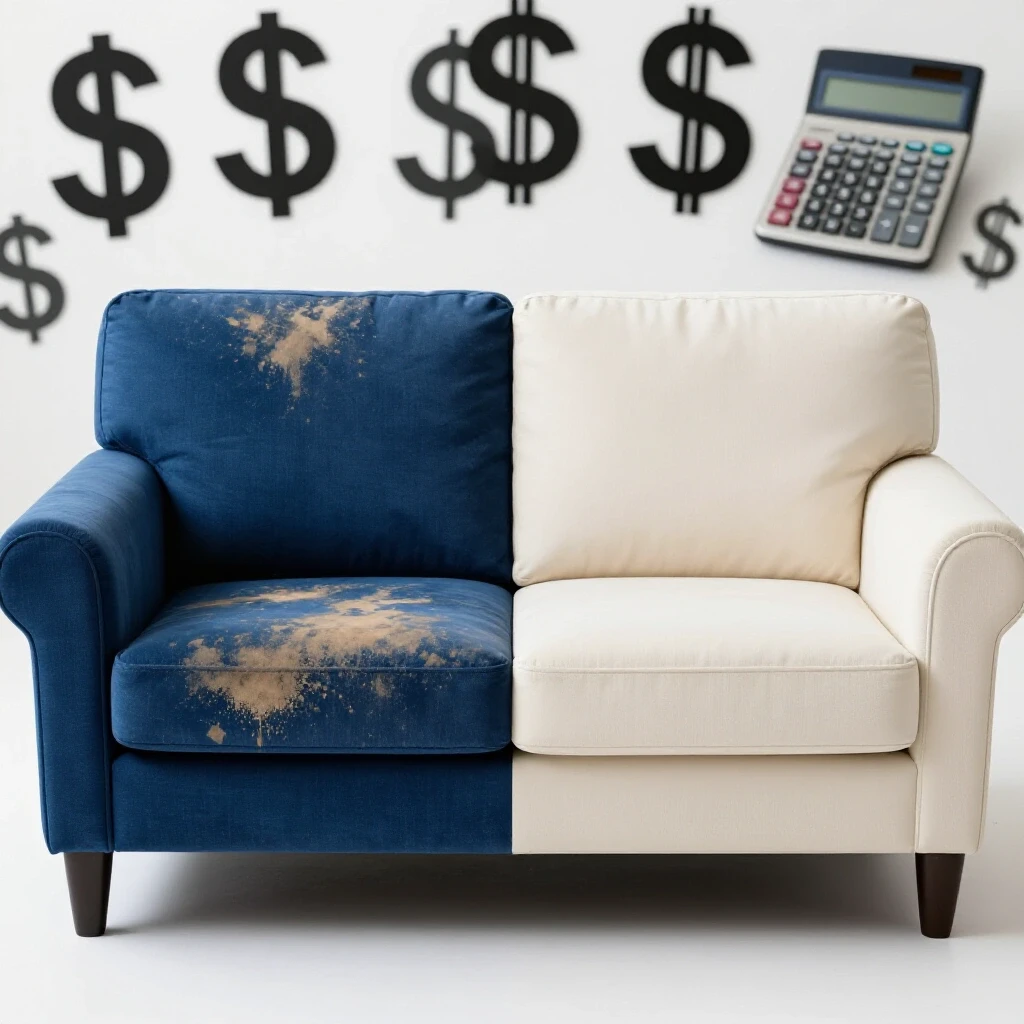
In my decade of tracking home expenses, I have found that most people underestimate the cost of professional upholstery services by at least 20%. They focus on the base quote and forget about the ancillary fees that creep in once the technician is in the home. By using a data-driven approach, we can strip away the guesswork and build a framework that protects your savings while restoring your home’s aesthetic.
Evaluating the Economic Value of Seating Refreshment
This process involves calculating the remaining useful life of your furniture and comparing it against the cost of restoration. It is a fundamental step in construction accounting applied to the home. By understanding the “cost-per-year” of your furniture, you can decide if spending money on a deep clean is a sound investment or a case of throwing good money after bad.
When I look at my own home renovation budget, I treat furniture maintenance as a line item similar to HVAC servicing. If I bought a high-quality sectional for $4,000 and expect it to last 15 years, its annual capital cost is roughly $266. If a professional refresh costs $300 and extends the “like-new” appearance for another three years, the math clearly supports the maintenance.
However, if the piece is a lower-end model nearing the end of its structural life, spending 50% of its original value on a cleaning is a poor allocation of funds. I always suggest a “replacement threshold” of 25%. If the restoration costs more than a quarter of a comparable new piece, it is time to reconsider the project.
Professional Service Rates vs. DIY Equipment Expenses
This section compares the total cost of hiring a specialist against the price of renting or buying your own machinery. It breaks down the labor-to-material ratio, which is the percentage of your budget going toward someone’s time versus the physical supplies used. Understanding this helps you decide if your “sweat equity” is worth the time investment.
In my experience, professional rates vary wildly based on your zip code and the size of the furniture. Based on my tracked spreadsheets, a standard three-seat sofa typically ranges from $120 to $350 for professional work. If you choose the DIY route, a machine rental usually costs between $35 and $55 for 24 hours, plus another $20 to $30 for the necessary solutions.
- Professional Labor-to-Material Ratio: 80% Labor / 20% Materials.
- DIY Labor-to-Material Ratio: 10% Labor (your time value) / 90% Materials.
Interestingly, the “before and after” visual difference is often tied to the heat and suction power of the equipment. While a rental might save you $200, it may only achieve 70% of the vibrancy a professional grade machine offers. I usually recommend the professional route for high-value fabrics where the risk of a DIY mistake could lead to a permanent loss of the asset’s value.
Line-Item Breakdown of Fabric Restoration Materials
A line-item breakdown is an itemized list of every single expense expected in a project. In financial planning, this prevents “budget creep,” where small, forgotten costs add up to a significant overage. By identifying every component—from the base service to the specific spot treatments—you create a ceiling for your spending.
When I managed a recent living room refresh, I insisted on a detailed quote before any work began. Many companies offer a “starting at” price that only covers a basic steam pass. To get a true “after” result that looks like a showroom, you often need to add specific services.
| Item Description | Estimated Cost (Low) | Estimated Cost (High) |
|---|---|---|
| Base Service (Standard Sofa) | $120.00 | $200.00 |
| Specialized Spot Treatment | $30.00 | $70.00 |
| Fabric Protector Application | $40.00 | $90.00 |
| Travel/Service Fee | $0.00 | $50.00 |
| Total Projected Budget | $190.00 | $410.00 |
Building this into your remodeling expense tracker ensures you aren’t surprised when the final invoice arrives. I recommend a 10% contingency buffer for these projects, specifically to cover extra time needed for heavily used areas like armrests or headrests.
Hidden Ancillary Costs in Upholstery Maintenance
Hidden costs are expenses that are not immediately obvious but are necessary for the project’s completion. In home improvement, these often include things like “minimum call-out fees” or “oversized furniture surcharges.” Identifying these early prevents you from running out of money mid-project or dipping into your emergency fund.
One of the most common traps I see is the “minimum service fee.” Many top-tier professionals won’t come to a home for less than $150 or $200. If your single sofa quote is $120, they might tack on a $30 “small job fee.” Another factor is the complexity of the fabric. Natural fibers like wool or linen often require dry-extraction methods, which can cost 30% to 50% more than standard steam methods used on synthetic polyesters.
- Access Fees: Some buildings charge for service vehicle parking or elevator usage.
- Fabric Type Surcharges: Delicate or vintage fabrics require specialized care.
- Deep-Set Stain Surcharges: Areas requiring multiple passes may trigger extra labor costs.
By asking about these fees during the bidding phase, you maintain control over the financial framework. I always advise my clients to get at least three quotes and compare the “all-in” price rather than the base rate.
A Data-Driven Case Study: My Personal Sofa Ledger
This case study looks at a real-world example of a furniture refresh project, comparing the initial budget to the actual final spend. It highlights where the variances occurred and provides a realistic look at the financial outcome. Using a ledger format allows us to see the “before and after” of the bank account alongside the visual transformation of the furniture.
Two years ago, I decided to refresh a grey sectional that had seen five years of heavy use. My goal was to restore the fabric’s nap and remove the dullness that had accumulated. I set a budget of $250 based on local online averages.
Actual Project Ledger: 1. Initial Quote: $175 (Covered basic steam only). 2. On-site Adjustment: +$45 (The technician identified the fabric as a high-density weave requiring more passes). 3. Protective Coating: +$60 (Added to preserve the “after” look for longer). 4. Taxes and Gratuity: +$40. 5. Final Total: $320.
My budget variance was 28% over the initial estimate. This happened because I didn’t account for the specific fabric density in my initial spreadsheet. The visual outcome was excellent—the “after” state looked nearly identical to the day we bought it—but the financial lesson was clear: always verify your fabric type before setting your budget.
Spreadsheet Templates for Maintenance Tracking
A maintenance tracker is a digital tool used to record the timing, cost, and results of home upkeep tasks. For a cost-conscious homeowner, this is the primary defense against over-improving a home. It helps you see the cumulative cost of a piece of furniture over its entire lifespan, which informs future purchasing decisions.
To keep your project on track, I recommend a simple four-column spreadsheet. This allows you to monitor the cost vs. value of your home improvement efforts in real-time.
- Date and Service Provider: Tracks who did the work for future reference or warranty-like follow-ups.
- Projected vs. Actual Cost: Highlights where your estimation skills need work.
- Condition Rating (1-10): A subjective “before and after” score to measure the aesthetic ROI.
- Next Service Date: Based on a 12-to-24-month cycle to prevent the fabric from reaching a “point of no return.”
Using these metrics, you can see if a specific pro is providing a better value or if a DIY attempt actually saved you money in the long run. If your “after” rating is only a 5 but you spent $300, your cost-benefit amortization is poor.
Long-Term ROI and Market Value Considerations
Return on Investment (ROI) in this context refers to the value added to your lifestyle and the potential preservation of the home’s resale appeal. While a clean sofa doesn’t technically increase your home’s appraised value, it significantly impacts the “perceived value” during a sale. A well-maintained interior suggests a well-maintained home, which can lead to faster offers and higher prices.
From a personal finance perspective, the ROI here is “deferred replacement.” If a $300 refresh allows you to keep a $3,000 sofa for two more years, you are essentially saving $1,500 in capital outlays for those years. That money can stay in your high-yield savings account or be diverted to high-ROI renovations like kitchen hardware updates or minor bathroom refreshes.
- Lifestyle Value: The daily satisfaction of a clean environment.
- Financial Value: Avoiding the high interest of furniture financing or the depletion of cash reserves.
- Market Value: Ensuring the home looks “staged” and ready for guests or buyers at any time.
I always tell my clients to look at the “opportunity cost.” If you spend $4,000 on a new sofa because you didn’t spend $300 on maintenance, what else could that $3,700 have done for your home’s equity?
Actionable Steps for Your Next Refresh
To ensure your next project stays within its financial boundaries, follow this strict framework. These steps are designed to minimize risk and maximize the visual impact of your expenditure.
- Identify Fabric Content: Check the tag under the cushions. Knowing if it’s “S” (Solvent), “W” (Water), or “WS” (Both) will dictate the cost.
- Measure Square Footage: Professionals often charge by the linear foot. Measure your sofa before calling for quotes so you can provide accurate data.
- Set a Hard Ceiling: Decide the maximum you are willing to pay before the “replacement rule” kicks in.
- Request an “All-In” Quote: Ask the provider to include travel, specialized treatments, and taxes in their written estimate.
- Document the Outcome: Take photos and record the final cost in your remodeling expense tracker.
By following these steps, you transition from a reactive homeowner to a proactive asset manager. You aren’t just cleaning a couch; you are executing a calculated financial move that preserves your home’s value and your family’s budget.
FAQ
How much does it usually cost to have a standard sofa professionally refreshed? For a standard three-seat sofa, expect to pay between $150 and $300. This range covers the basic labor and equipment usage. Prices fluctuate based on your geographic location and the specific fabric type, with natural fibers often sitting at the higher end of the scale.
Is it actually cheaper to rent a machine and do it myself? In the short term, yes. A rental and supplies will cost roughly $75, saving you about $100 to $200. However, you must factor in 3 to 5 hours of your own labor. If your time is worth $50 an hour, the “true cost” of DIY might actually be higher than hiring a professional.
How often should I budget for this type of upholstery maintenance? For a household with average use, a 12-to-24-month cycle is standard. I recommend tracking the appearance in your spreadsheet. If the “before and after” difference is massive, you may have waited too long, which can lead to permanent fabric wear.
Will a professional refresh remove all visible wear and tear? It will remove most surface accumulation and restore color vibrancy. However, it cannot fix physical fabric thinning or “pilling.” Think of it as a deep restorative treatment rather than a structural repair.
Do companies charge extra for “deep cleaning” versus a regular refresh? Most reputable companies have a standard rate for a “deep clean.” Be wary of very low quotes ($50-$75), as these often only cover a light surface misting and will require expensive “add-ons” to get a true restorative result.
What is the “replacement rule” for furniture maintenance? I suggest the 25% rule. If the cost to refresh the piece exceeds 25% of the cost of a brand-new, comparable replacement, the financial ROI is usually too low to justify the expense.
Can I get a discount for doing multiple pieces at once? Yes, this is a great way to optimize your home renovation budget. Since the “travel fee” and “setup time” are fixed costs for the pro, adding a second piece often reduces the per-item cost by 15% to 20%.
Does the color of the fabric affect the cost? Generally, no. However, very light colors (whites, creams) may require more labor time to achieve a uniform “after” look, which could lead to a higher labor charge if the company bills by the hour rather than the piece.
How long does the furniture need to dry before I can use it? Typically, 6 to 12 hours. From a financial perspective, plan this for a day when you won’t be tempted to order takeout or go to a movie because you can’t sit in your living room, as those “hidden costs” can blow your daily budget.
What should I look for in a professional quote to avoid hidden fees? Look for “flat-rate” pricing. Ensure the quote explicitly mentions things like “spot treatment,” “heavy traffic areas,” and “fuel surcharges.” If the quote is vague, the final invoice is much more likely to exceed your spreadsheet’s projections.
(This article was written by one of our staff writers, Steven Fletcher. Visit our Meet the Team page to learn more about the author and their expertise.)