How to Make a DIY Kitchen Drawer Organizer (Step-by-Step Guide)

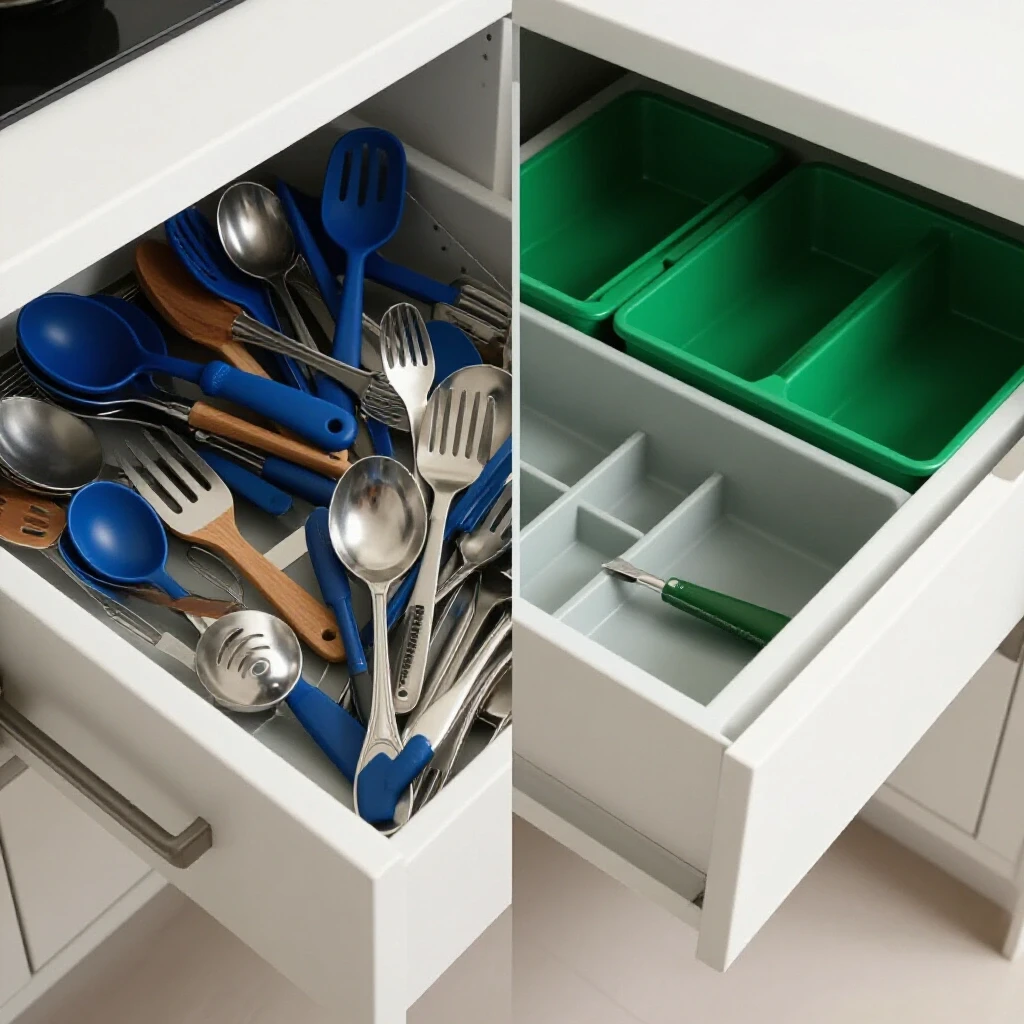
There is a specific kind of frustration that builds when you are in the middle of preparing a meal and cannot find the one tool you need. You open a drawer, and instead of a neat arrangement, you are met with a chaotic pile of spatulas, whisks, and measuring spoons. I have spent a decade managing large-scale facilities where efficiency is a requirement, not a luxury. Bringing that same logic into my own kitchen through custom-built internal dividers changed how I work in my home.
In my early DIY years, I often rushed through projects without a clear plan. I once spent an entire Saturday morning cutting wood for a set of dividers, only to realize I had measured the drawer width but forgotten to account for the thickness of the drawer slides. The resulting inserts were an eighth of an inch too wide and completely useless. This taught me that even small-scale upgrades require the same precision I apply to commercial building maintenance.
Establishing the Project Scope and Feasibility
A custom internal storage project involves creating tailored compartments within existing cabinetry to maximize space and accessibility. This project is ideal for those who want a high-end, integrated look without the expense of specialized carpentry.
| Metric | DIY Estimation | Professional Comparison |
|---|---|---|
| Active Labor Time | 4 – 6 Hours | 2 – 3 Hours |
| Total Weekend Blocks | 1 Weekend | N/A (Scheduled Appointment) |
| Material Cost | $30 – $60 | $150 – $300 (Custom Order) |
| Difficulty Rating | 4/10 (Moderate) | Professional Grade |
| Tool Investment | Low to Moderate | High (Industrial Shop) |
When you build your own inserts, you control the exact dimensions of every slot. This is particularly useful for non-standard items like long offset spatulas or bulky meat mallets that never seem to fit in store-bought trays. By using thin sheet materials, you preserve the maximum amount of usable volume inside the drawer box.
Selecting the Right Sheet Materials for Utility
Choosing the correct material for your internal partitions ensures the structure remains rigid under the weight of heavy metal utensils and resists the humidity of a kitchen environment. Your choice impacts both the longevity of the project and the ease of the build.
- 1/4-inch Poplar or Birch Plywood: This is my preferred choice for its strength-to-weight ratio. It takes finish well and is less likely to warp than cheaper alternatives.
- 1/8-inch Hardboard (Masonite): This is very thin and saves space, but it can be brittle. It is best for smaller drawers holding lighter items like measuring spoons.
- Solid Wood Lattice: These are pre-planed thin strips of wood. They are more expensive but require less cutting and sanding than large sheets.
In my experience, 1/4-inch birch plywood offers the best balance. It is thick enough to be glued and pinned but thin enough that it doesn’t eat up your storage space. If you are working with a tight budget, hardboard is functional, though it lacks the premium feel of real wood grain.
Essential Tool Inventory for Precision Cutting
Success in this project depends on your ability to make square, repeatable cuts. While you do not need a full woodshop, a few specific hand tools will make the process much smoother and safer.
- Stainless Steel Measuring Tape: Use a tape with clear markings down to 1/16 of an inch.
- Japanese Pull Saw or Fine-Tooth Backsaw: These saws create a very thin kerf (the width of the cut), which is vital for precise fits.
- Miter Box: This helps you guide your saw to ensure every cut is exactly 90 degrees.
- Combination Square: This tool is essential for marking cut lines and checking that your corners are square.
- Wood Glue (PVA): Look for a brand that is water-resistant, as kitchen environments can be humid.
- 220-Grit Sandpaper: This is used to smooth the edges so you don’t get splinters when reaching for a fork.
- Spring Clamps: These hold the dividers in place while the glue sets.
I always recommend a Japanese pull saw for beginners. Unlike standard Western saws that cut on the push stroke, these cut on the pull, which gives you much more control and requires less physical effort. This reduces the chance of the saw jumping and marring your material.
Measuring and Mapping the Internal Layout
The planning phase is where most mistakes happen. You must measure the interior of the drawer at the front, back, and middle because many cabinets are not perfectly square.
- Measure the interior depth (front to back).
- Measure the interior width (side to side).
- Measure the interior height, then subtract 1/2 inch to ensure the dividers do not scrape the cabinet frame when the drawer closes.
Once you have these numbers, I suggest using a piece of cardboard cut to the exact size of your drawer bottom. Place your actual kitchen tools on the cardboard and move them around until you find the most efficient layout. This “analog” planning method is much more effective than drawing it on paper because it accounts for the actual physical footprint of your items.
Why Dry-Fitting Prevents Project Failure
Dry-fitting is the process of assembling all your pieces without glue to verify the fit. This is a critical step that I never skip, regardless of how many times I have measured.
In the world of facility management, we call this a “mock-up.” It allows you to see how the pieces interact. Wood can expand or contract based on the temperature in your home, and a piece that fits perfectly on your workbench might be too tight inside the drawer. If a piece is too long, you can easily sand it down. If you have already applied glue, you are stuck with a messy correction.
During the dry-fit, pay close attention to the intersections of the wood. If you are using a simple butt joint—where the end of one board meets the face of another—ensure there are no gaps. Gaps weaken the structure and collect crumbs and dust over time.
Step-by-Step Execution of the Divider System
Once your plan is set and your pieces are cut, the assembly process begins. Follow these steps to ensure a clean and durable result.
- Sand all pieces before assembly. It is much harder to sand inside a small compartment than it is to sand an individual strip of wood.
- Apply a very thin bead of wood glue to the ends of your cross-members. Using too much glue results in “squeeze-out,” which can interfere with the finish.
- Position the perimeter pieces first. These should fit snugly against the drawer walls.
- Insert the internal dividers according to your cardboard layout.
- Use spring clamps to hold the joints tight. If you don’t have clamps, you can use blue painter’s tape to provide temporary tension.
- Wipe away any excess glue immediately with a damp cloth.
Building on this, if you want a more professional look, you can use a “half-lap” joint. This involves cutting a notch halfway through two intersecting boards so they slot into each other. While this takes more time and a steady hand with a saw, it creates a very rigid grid that doesn’t rely solely on glue for strength.
Applying a Food-Safe Finish for Longevity
Kitchen drawers are high-traffic areas. They are exposed to crumbs, occasional moisture from damp hands, and the constant friction of metal tools. Leaving the wood raw will lead to staining and potential mold growth.
| Finish Type | Cure Time | Pros | Cons |
|---|---|---|---|
| Mineral Oil | Immediate | 100% Food Safe | Requires re-application |
| Shellac | 1-2 Hours | Fast drying, non-toxic | Not heat resistant |
| Water-Based Poly | 24 Hours | Very durable | Longer wait time |
| Beeswax Polish | 30 Minutes | Natural look | Can be sticky if over-applied |
I generally recommend a water-based polyurethane or a simple shellac. Shellac is a natural resin that has been used for centuries. It dries incredibly fast, which is great for a weekend project. More importantly, it is non-toxic once cured. Always check the manufacturer’s technical guide to ensure the finish is rated for indirect food contact.
Troubleshooting Common Assembly Issues
Even with careful planning, you might encounter issues during the final installation. One common problem is the “rattle.” If your insert is slightly too small, it will slide around every time you open the drawer.
To fix a loose fit, I use small adhesive-backed felt pads or silicone bumpers on the outside corners of the insert. This creates a friction fit that keeps the unit stable without needing to nail it into your expensive cabinetry. If you find that a divider has warped, you can often straighten it by dampening the concave side and clamping it flat overnight, though it is usually better to simply cut a new piece.
Another issue is “racking,” where the insert becomes a trapezoid shape instead of a rectangle. You can prevent this by ensuring your long perimeter pieces are exactly the same length and using a square during the gluing process. If the unit isn’t square, it will bind against the drawer sides.
Maintaining Your Custom Storage System
Once your project is installed, it requires minimal maintenance. However, since kitchens are prone to spills, you should perform a quick inspection every few months.
- Vacuum out crumbs using a crevice tool.
- Wipe the wood with a slightly damp cloth; never soak the dividers in water.
- If you used an oil finish, re-apply a thin layer once a year to keep the wood from drying out.
- Check the glue joints for any signs of separation caused by the weight of the utensils.
In my home, I have found that these custom inserts actually encourage the family to stay organized. When there is a specific slot for the pizza cutter, it rarely ends up in the wrong place. This reduces the time spent searching and keeps the kitchen functional during busy weeknights.
Final Quality Control Checklist
Before you consider the project finished, go through this checklist to ensure everything meets safety and functional standards.
- Are all edges smooth to the touch?
- Does the drawer open and close without the dividers hitting the cabinet frame?
- Is the finish completely dry and free of odors?
- Do the heaviest tools fit comfortably without bowing the wood?
- Is the insert stable and not sliding during drawer movement?
If you can check off all these items, you have successfully upgraded your kitchen’s utility. You have saved the cost of professional labor and created a solution that is perfectly tailored to your specific needs.
Knowing When to Call a Professional
While building internal dividers is a manageable weekend task, there are times when you might need expert help. If your drawer slides are broken or the drawer box itself is falling apart, simply adding dividers won’t solve the underlying problem.
If you discover structural damage to the cabinetry or if the drawers are made of a material that is difficult to work with, such as thin metal or glass, consult a cabinet maker. For most standard wood or MDF drawers, however, this project is well within the reach of a determined DIYer. The satisfaction of opening a perfectly organized drawer is worth the few hours of focused effort.
Frequently Asked Questions
How do I handle drawers with curved or slanted sides? Most modern drawers have straight sides, but older furniture may have a slight taper. In these cases, it is best to build the insert slightly smaller than the narrowest point and use the felt pad trick mentioned earlier to fill the gaps. Alternatively, you can use a bevel gauge to measure the angle and cut your ends to match, though this significantly increases the difficulty.
What is the best way to clean wood dividers without damaging them? Avoid harsh chemicals. A mixture of mild dish soap and warm water on a well-wrung cloth is sufficient. Immediately dry the wood with a clean towel. Because these are inside a drawer, they don’t get the same grease buildup as external surfaces, so heavy scrubbing is rarely necessary.
Can I use hot glue for the assembly to save time? I strongly advise against hot glue. Kitchens can get warm, and hot glue can soften and fail over time. It also creates a thick bond line that prevents the pieces from sitting flush. Stick with a high-quality wood glue for a permanent, professional bond.
What if I change my kitchen tools later? This is the benefit of a custom build. If you get a new set of knives that don’t fit, you can carefully pry out a single divider, sand the area, and glue in a new one. If you used a “friction fit” rather than nailing the insert into the drawer, you can even remove the entire unit and modify it on your workbench.
Is it necessary to use a bottom piece for the insert? Not necessarily. If your drawer bottom is in good condition, you can build a “bottomless” grid that simply sits on the existing surface. This saves material and keeps the insert lightweight. However, adding a 1/8-inch plywood bottom makes the entire unit more rigid and easier to remove for cleaning.
How do I prevent the wood from splitting when using thin materials? If you choose to use small finish nails (brads) in addition to glue, always drill a pilot hole first. Thin wood like 1/4-inch plywood will almost certainly split if you drive a nail directly into the end grain. A drill bit slightly smaller than the nail diameter will prevent this.
What is the best way to cut multiple pieces to the exact same length? Use a “stop block.” Clamp a scrap piece of wood to your miter box or workbench at the desired distance from the saw blade. Butt your material against this block for every cut. This ensures that every divider is identical, which is the key to a square and professional-looking result.
How high should the dividers be? A good rule of thumb is to make the dividers about 1/2 inch to 1 inch shorter than the interior height of the drawer side. This provides enough height to keep tools separated but leaves enough clearance so that nothing gets jammed against the top of the cabinet opening.
Can I use cardboard instead of wood for a temporary solution? Yes, heavy-duty corrugated cardboard or foam core can be used to test a layout for a few weeks before committing to wood. This is a great way to “live with” a design to see if the compartment sizes are actually practical for your daily cooking habits.
Does this project require any building code considerations? No, internal cabinetry modifications do not fall under standard residential building codes like electrical or plumbing work. However, you should ensure that any finishes used are non-toxic and that the dividers do not interfere with the mechanical operation of the drawer slides, which could lead to a safety hazard if a drawer were to fall out.
(This article was written by one of our staff writers, Robert Callahan. Visit our Meet the Team page to learn more about the author and their expertise.)