DIY Kitchen Upgrade Ideas for Maximum ROI (Step-by-Step Guide)

Have you ever wondered why some kitchens feel energized and modern while yours feels like a relic of the past, despite having the same basic footprint? It is rarely the layout that makes a kitchen feel dated; usually, it is the worn surfaces and lackluster lighting that drain the room of its potential.
In my twelve years as a facilities manager, I have overseen millions of dollars in commercial upgrades. However, the most rewarding projects have always been the ones I tackled in my own home on a Saturday morning. I remember my first major attempt at refreshing my kitchen. I thought I could prep, prime, and paint twenty cabinet doors in a single weekend. By Sunday night, I was surrounded by sticky, half-painted doors and felt completely defeated. I had ignored the manufacturer’s technical data on humidity and dry times. That mistake taught me that a successful home upgrade is not about speed; it is about respecting the process, the materials, and the building codes that keep us safe.
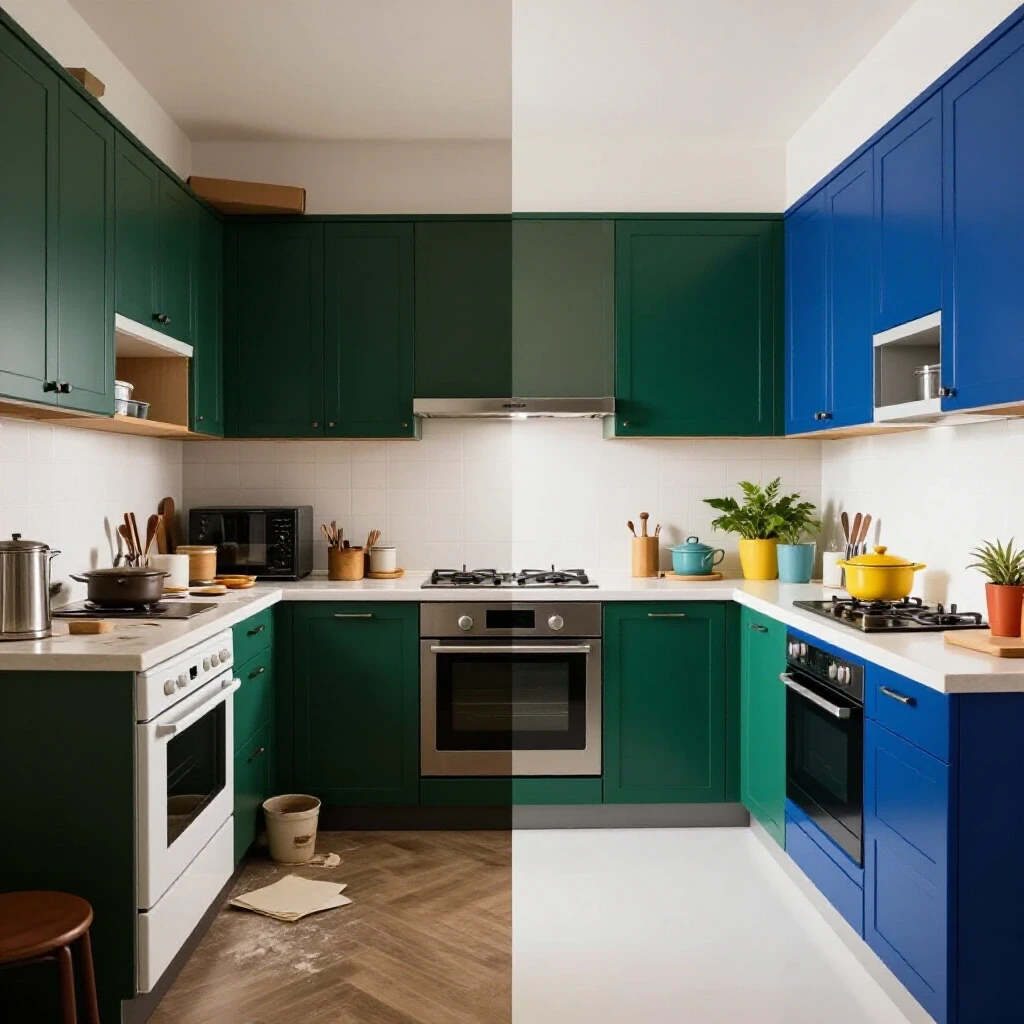
When you approach a kitchen refresh, you are balancing aesthetics with high-traffic durability. This guide focuses on functional improvements that you can realistically complete without calling in a professional crew. We will cover refinishing surfaces, updating hardware, and installing modern lighting while adhering to the safety standards that prevent costly errors.
Strategic Planning for Kitchen Surface Refreshes
Planning involves assessing the current state of your kitchen components and determining which upgrades provide the most visual and functional impact. This phase requires a realistic look at your schedule, as most high-quality finishes require significant curing time that cannot be rushed without risking failure.
Before you pick up a screwdriver, you must evaluate the structural integrity of your cabinets and walls. If the cabinet boxes are soft, water-damaged, or pulling away from the wall, a simple paint job will not save them. In my experience, the most successful weekend projects are those where the “bones” of the kitchen are solid, but the “skin” is tired.
I use a simple “Condition Audit” before starting any work. I check every hinge for sagging and every drawer slide for smooth operation. If a drawer sticks, I factor in the time to clean or replace the glides. This prevents the frustration of having a beautiful new finish on a drawer that still does not open correctly.
| Project Phase | Active Labor Hours | Total Elapsed Time (Inc. Drying) | Difficulty (1-10) |
|---|---|---|---|
| Cabinet Refinishing | 12–16 Hours | 4–5 Days | 7 |
| Backsplash Installation | 8–10 Hours | 3 Days | 6 |
| Under-Cabinet Lighting | 3–4 Hours | 4 Hours | 4 |
| Hardware Replacement | 2–3 Hours | 3 Hours | 2 |
Essential Tool Kit for Kitchen Improvements
Having the right tools prevents mid-project hardware store runs and ensures results that look professional rather than amateur. This section outlines the specialized equipment needed for surface preparation, electrical testing, and precision installation to keep your project on track and safe.
You do not need a warehouse full of tools, but you do need specific ones. For example, a standard screwdriver is fine for a few screws, but an impact driver with a clutch setting is better for cabinet hinges to avoid stripping the wood. I always keep a digital multimeter in my kit. Even if I am just swapping a light fixture, I never trust a flipped breaker alone; I verify that the wires are dead before touching them.
- Digital Multimeter: Used to verify that electrical circuits are de-energized.
- Cordless Drill/Driver: With a variety of bits and a torque clutch to prevent over-tightening.
- Random Orbit Sander: Essential for smoothing cabinet surfaces without leaving swirl marks.
- Laser Level: Projects a perfectly straight line across walls for backsplash and hardware alignment.
- Notched Trowel (1/4″ x 1/4″): The standard size for most subway tile backsplash applications.
- HVLP Sprayer or High-Quality Brushes: For applying a smooth finish to cabinetry.
- TSP (Trisodium Phosphate): A heavy-duty cleaner used to remove grease from surfaces before painting.
Navigating Building Codes and Safety Protocols
Understanding the National Electrical Code (NEC) and basic plumbing standards ensures that your modifications meet residential safety requirements. This knowledge protects your home from fire hazards and ensures that your work will pass an inspection if you ever decide to sell your property.
Safety in the kitchen is largely about water and electricity. According to NEC 210.8, all receptacles serving kitchen countertop surfaces must have Ground Fault Circuit Interrupter (GFCI) protection. If you are replacing outlets to match your new decor, you must ensure they are GFCI-protected. If the existing outlet is not GFCI, you should install a GFCI receptacle at the start of the circuit or use a GFCI breaker in your panel.
Air quality is another major concern. When sanding old cabinets, you may encounter lead-based paint if your home was built before 1978. I always wear an N95 or P100 respirator and use a vacuum attachment on my sander. This keeps dust out of my lungs and out of the rest of the house, which is a major pain point for anyone living through a renovation.
Refinishing Cabinets for a Durable Finish
The process of cleaning, sanding, priming, and painting existing cabinetry can achieve a factory-like finish without the cost of replacement. This is the most labor-intensive part of a kitchen refresh, requiring strict adherence to material cure times and environmental conditions.
The biggest mistake DIYers make is skipping the cleaning step. Kitchen cabinets are coated in a fine layer of aerosolized cooking grease. If you paint over that grease, the paint will peel off in sheets within six months. I use a TSP solution and a scrub sponge to strip every inch of the frames and doors.
After cleaning, you must “scuff sand” the surface. You aren’t trying to remove all the old finish; you just want to create “tooth” for the new primer to grab onto. I find that 220-grit sandpaper is the sweet spot. It roughens the surface enough for adhesion without leaving deep scratches that show through the final coat of paint.
- Step 1: Labeling. Use painter’s tape to number every door and its corresponding cabinet opening.
- Step 2: Degreasing. Scrub with TSP and let dry completely for at least two hours.
- Step 3: Sanding. Lightly sand all surfaces and vacuum away dust with a brush attachment.
- Step 4: Priming. Use a high-quality bonding primer like Zinsser B-I-N or KILZ Restoration.
- Step 5: Painting. Apply two thin coats of urethane alkyd enamel. This paint flows out like oil paint but cleans up with water.
Why Dry-Fitting Hardware Prevents Permanent Damage
Dry-fitting is the process of testing the placement and fit of components before applying adhesives or drilling final holes. This step is critical for cabinet hardware and tile, as it allows you to visualize the end result and make adjustments while they are still easy to fix.
I once drilled holes for new “modern” handles on ten doors before realizing the handles were slightly crooked. I had to fill the holes with wood putty, sand, and repaint. Now, I always use a plastic drilling jig. These inexpensive guides clamp onto the corner of the door and ensure every hole is in the exact same spot.
For tile backsplashes, dry-fitting means laying out a row of tiles on the countertop against the wall. This helps you identify where you will have “slivers” or tiny pieces of tile at the corners. By shifting your starting point by just half an inch, you can often avoid difficult cuts and create a much cleaner, more balanced look.
Installing a Tile Backsplash for Function and Style
Adding a protective layer to walls using ceramic or glass tiles involves substrate preparation, adhesive application, and grouting. A well-installed backsplash protects your walls from moisture and heat while serving as a focal point for the room’s design.
The secret to a backsplash that doesn’t crack is the substrate. If you are tiling over drywall, ensure the wall is flat and free of loose paper. I prefer using a modified thin-set mortar rather than “mastic” adhesive. Mastic is easier to use but can fail in wet areas or near high-heat zones like the back of a stove.
When applying the mortar, hold your notched trowel at a 45-degree angle. This creates consistent ridges that allow the tile to “bed” properly. If you press a tile in and pull it back, the back of the tile should be at least 80% covered in mortar. This is a technical standard from the Tile Council of North America (TCNA) that ensures your backsplash stays on the wall for decades.
| Material | Application | Typical Cure Time | Recommended Tool |
|---|---|---|---|
| Bonding Primer | Cabinet Prep | 1–2 Hours | High-density foam roller |
| Urethane Paint | Cabinet Finish | 16–24 Hours | HVLP or Synthetic brush |
| Modified Thin-set | Tile Adhesive | 24 Hours | 1/4″ Square notch trowel |
| Pre-mixed Grout | Tile Joints | 24–48 Hours | Rubber grout float |
Enhancing Ambiance with Under-Cabinet Lighting
Integrating LED systems improves task lighting and provides a high-end feel to any kitchen. This project involves selecting the right color temperature and ensuring all wiring is hidden and meets local electrical safety codes for low-voltage installations.
Task lighting is often overlooked, but it is the most functional upgrade you can make. I recommend 12V or 24V LED tape light systems. They are thin enough to be hidden behind the front lip of the cabinet. When choosing LEDs, look for a Color Rendering Index (CRI) of 90 or higher. This ensures that the food you are preparing looks natural and appetizing under the lights.
For a clean look, I drill small holes through the bottom of the cabinet boxes to run the wires up to the top, where the driver (transformer) can be hidden. Ensure the driver is accessible and not sealed behind a wall; drivers can fail over time and need to be replaceable. This follows the general rule that any electrical connection or component must remain accessible for maintenance.
Troubleshooting Common DIY Execution Errors
Identifying and fixing issues like uneven tile gaps, paint runs, or loose hardware during the process prevents them from becoming permanent flaws. Most DIY failures happen when a person tries to “power through” a mistake rather than stopping to correct it.
If you notice a “run” or a “drip” in your cabinet paint, do not try to brush it out while it is tacky. You will only make it worse. Instead, let it dry completely, sand it flat with 320-grit paper, and then re-coat that section. Patience is your best tool here.
If your tile starts to sag while the mortar is wet, your mix was likely too thin. You can use “T-spacers” or even small wedges to hold the tile in place until the mortar sets. If you find a tile is crooked after the mortar has dried but before grouting, you can carefully pop it off with a putty knife, scrape the wall clean, and re-set it. It is a twenty-minute fix that saves you years of looking at a crooked tile.
Maintaining Your Upgraded Kitchen Surfaces
Once the work is done, protecting your investment requires proper cleaning and occasional maintenance. Using the wrong chemicals on new paint or grout can strip the finish and lead to premature wear.
For painted cabinets, avoid abrasive cleaners or those containing ammonia. A simple mixture of mild dish soap and warm water is all you need. I also recommend keeping a small “touch-up” kit. Take a small glass jar, fill it with your cabinet paint, and label it. If you ever ding a door with a heavy pan, you can fix it in seconds.
Grout should be sealed roughly 72 hours after installation, provided it has fully cured. Sealing prevents oils and spaghetti sauce from staining the porous cement. I set a recurring reminder on my phone to re-seal my grout every two years. It takes ten minutes and keeps the kitchen looking brand new.
Knowing When to Step Back
A successful DIYer knows their limits. If you open a wall and find charred wires, or if you realize your subfloor is rotting under the dishwasher, it is time to pause. My rule of thumb is: if the fix requires a permit that I am not licensed to pull, or if it involves the main gas line, I stop and consult a professional. There is no shame in ensuring your home remains safe and code-compliant.
By following these steps, you can transform your kitchen into a space that reflects your hard work and attention to detail. You don’t need a massive budget; you just need a solid plan, the right tools, and the patience to do the job correctly.
Frequently Asked Questions
What is the best paint for kitchen cabinets? I recommend a water-borne urethane alkyd enamel. This type of paint offers the durability and leveling properties of traditional oil-based paint but dries faster and cleans up with water. It resists the oils from your hands and the frequent cleaning that kitchen surfaces endure.
How long should I wait before using my kitchen after painting cabinets? While the paint may feel dry to the touch in 2 to 4 hours, it remains “soft” for several days. I suggest waiting at least 24 hours before reattaching doors and 7 to 10 days before heavy use. If you lean a heavy pot against “dry” paint that hasn’t cured, it may leave a permanent mark.
Do I really need to sand my cabinets if I use a “no-sand” primer? In my professional opinion, yes. “No-sand” primers are great, but a light scuff-sanding with 220-grit paper creates a mechanical bond that primer alone cannot match. It takes an extra hour but can prevent the paint from peeling in high-use areas like the trash pull-out.
Can I install a backsplash over existing tile? Technically, yes, if the original tile is perfectly flat and well-adhered. However, it adds thickness to the wall, which can make your outlets look recessed and create issues where the tile meets the cabinets. I always recommend removing the old tile and starting with a fresh, flat surface for the best results.
How do I know if my kitchen outlets are safe for a refresh? Look for the “Test” and “Reset” buttons on the outlet. If they are missing, the outlet is likely not a GFCI. You can use a plug-in circuit tester (available for under $10) to see if the outlet is grounded and if it is protected by a GFCI device elsewhere on the circuit.
What is the most common mistake when installing under-cabinet lights? Choosing the wrong color temperature is the most frequent error. If your kitchen has “warm” wood tones, look for 2700K or 3000K lights. If you have a modern, white, or gray kitchen, 4000K may look better. Mixing color temperatures (e.g., cool white under cabinets and warm white on the ceiling) often looks disjointed.
Is it necessary to remove cabinet doors to paint them? Yes, absolutely. Painting doors while they are hanging leads to drips, missed spots behind hinges, and uneven coverage. Laying them flat allows the paint to level out naturally, resulting in a much smoother, professional-looking finish.
What should I do if my grout color looks uneven after it dries? This usually happens if too much water was used during the cleanup process, which washes out the pigment. You can use a grout “refresh” or “stain” product to even out the color. To avoid this, use a damp—not dripping—sponge and change your rinse water frequently.
How do I handle outlets that are now “sunken” after adding a backsplash? You should use “box extenders” or “caterpillar” spacers. These allow you to pull the outlet forward so it sits flush against the new tile. This is a code requirement to ensure that any sparks are contained within the electrical box and not exposed to the wall cavity.
Do I need a special saw to cut backsplash tile? For ceramic or glass tile, a manual “score and snap” cutter often works well for straight cuts. For L-shaped cuts around outlets, you will need a diamond blade on a wet saw or a handheld angle grinder with a tile blade. Most hardware stores offer wet saw rentals for a few hours.
How do I prevent my new cabinet hardware from coming loose? Use a tiny drop of blue thread-locking compound on the screw threads before tightening. This prevents the screws from vibrating loose over time due to the constant opening and closing of the doors. Do not use the red compound, as that is permanent and will make future changes impossible.
(This article was written by one of our staff writers, Robert Callahan. Visit our Meet the Team page to learn more about the author and their expertise.)