DIY Home Entryway Makeover Guide: Step-by-Step Results (How-To)

As the seasons shift, many of us look at the entrance of our homes and realize it no longer reflects the pride we take in our property. Taping into seasonal trends often provides the necessary spark to begin a functional upgrade, especially when the weather allows for doors to remain open during the work. For a busy professional, the entryway is the first and last thing seen every day, making it a high-impact zone for a weekend project.
In my twelve years as a facilities manager, I have overseen large-scale building maintenance, but my true passion lies in the granular details of my own home. I have spent countless weekends navigating the transition from a high-stress office environment to the tactile reality of a screwdriver and a level. My first attempt at refreshing an entry zone taught me that success is not about speed; it is about respecting the mechanics of the door and the safety of the electrical components.
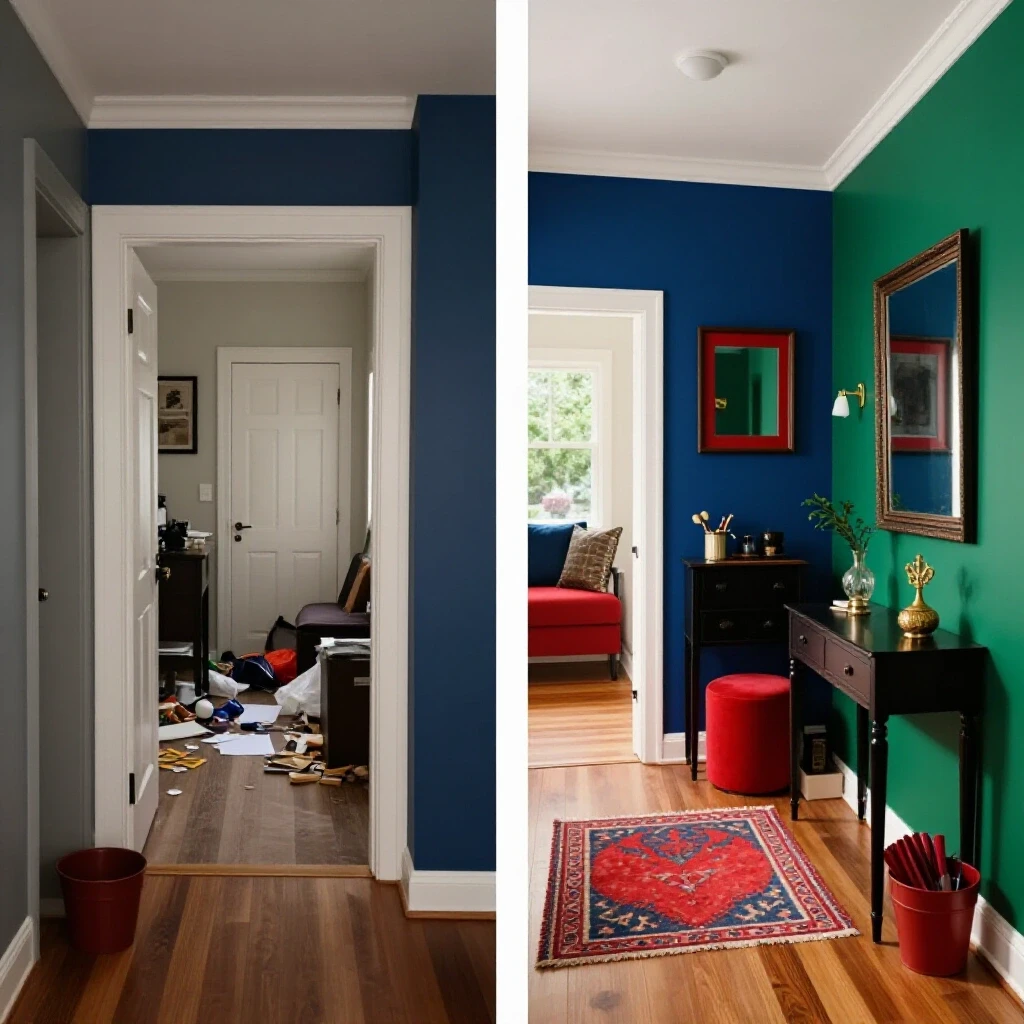
This guide focuses on the immediate results of a focused entryway refresh. We will look at how to update hardware, improve lighting, and refine surfaces using methods that prioritize code compliance and physical safety. By the end of this process, you will have a functional, updated space that meets residential standards without the need for external intervention.
Establishing a Safe Project Foundation
Setting up a secure workspace is the first step in ensuring a project does not result in a call to an emergency repair service. This phase involves identifying potential hazards such as lead paint in older homes or unstable flooring surfaces that could lead to trips.
Safety is the primary metric of a successful DIY home improvement. Before I ever pick up a drill, I verify the environment. If your home was built before 1978, you must test for lead paint before sanding any trim or door surfaces. I use a simple EPA-recognized swab test kit to confirm the area is safe. Furthermore, because the entry is a high-traffic zone, you must communicate with everyone in the household to ensure no one attempts to walk through the workspace while tools are active or adhesives are curing.
My own journey included a significant learning curve regarding workspace management. During one of my early weekend DIY projects, I neglected to secure a heavy door while changing the hinges. The door shifted, nearly pinning my hand against the frame. From that day forward, I have used door jacks or simple wooden shims to stabilize any vertical surface I am working on. It is a small step that prevents a major injury.
- PPE Requirements: Always wear impact-resistant safety glasses when using power tools or hammers.
- Respiratory Protection: Use an N95 mask when sanding old finishes or applying high-VOC (Volatile Organic Compound) paints.
- Work Zone Lighting: If the natural light is poor, set up a portable LED work light to ensure you can see small screw heads and wiring colors clearly.
Essential Tool Inventory for Entryway Upgrades
Having the correct tools on hand prevents the frustration of mid-project hardware store runs that eat into your limited weekend time. A well-stocked kit allows you to maintain momentum and ensures that fasteners are driven correctly without stripping.
A DIY tool list for an entrance refresh is relatively modest but requires specific items for precision. You will need a combination of manual hand tools for delicate adjustments and power tools for efficiency. I recommend a 12V or 18V cordless drill-driver system. These tools offer enough torque for driving long screws into door frames without being so heavy that they cause hand fatigue during a long afternoon of work.
Interestingly, the most overlooked tool in a beginner’s kit is the non-contact voltage tester. This device allows you to check for live wires without touching them. In my facility management role, I have seen many “simple” light fixture swaps go wrong because a DIYer assumed the wall switch was the only source of power. Always verify that the circuit is dead at the breaker box before touching any wiring.
- Non-Contact Voltage Tester: A handheld sensor that glows or beeps near live electrical current.
- Multi-bit Screwdriver: Essential for the variety of Phillips, flathead, and Torx screws found in modern locksets.
- Cordless Drill and Impact Driver: Used for pre-drilling holes and driving structural screws into the studs.
- Digital Multimeter: A tool used to measure voltage, current, and resistance; vital for troubleshooting faulty doorbells or light sockets.
- Level (2-foot and Torpedo): Used to ensure that new hardware and shelving are perfectly horizontal or vertical.
- Utility Knife with Fresh Blades: For scoring old paint lines so that trim does not tear when hardware is removed.
- Wood Chisel Set: Necessary for deepening hinges or strike plate mortises (the recessed areas where hardware sits).
Understanding Building Codes for Residential Entrances
Building codes exist to ensure that every part of your home is safe for occupants and emergency responders. When modifying an entrance, you must adhere to specific standards regarding egress (the ability to exit) and electrical safety.
The National Electrical Code (NEC) and the International Residential Code (IRC) are the two primary documents that govern these upgrades. For example, the IRC requires that at least one primary exit door in a home must be a side-hinged door with a minimum clear width of 32 inches. While you are likely not resizing your door frame, you must ensure that any new hardware or interior organizers do not obstruct this minimum clearance.
In my experience, the most common code violation in DIY entrance work involves the use of double-cylinder deadbolts. These are locks that require a key to open from both the inside and the outside. Many local jurisdictions prohibit these on primary exit doors because they can trap occupants inside during a fire. Always check your local municipal code before installing a lock that requires a key to exit.
- Egress Clearance: Ensure the door can swing at least 90 degrees without hitting furniture or new fixtures.
- Lighting Requirements: The NEC requires a wall-switch-controlled lighting outlet at every outdoor entrance that provides grade-level access.
- Fastener Depth: For security and code compliance, the strike plate screws should be at least 3 inches long to reach the structural wall stud behind the door frame.
Step-by-Step Execution: Hardware and Lighting
Updating the hardware and lighting is the core of a functional entrance refresh. This phase provides the most immediate visual and mechanical improvement, but it requires careful attention to alignment and electrical connections.
Phase 1: Electrical Safety and Light Fixture Swap
Before touching the light fixture, turn off the power at the main breaker panel. Do not rely on the wall switch. Once the power is off, use your non-contact voltage tester to verify the wires are cold. Remove the old fixture and inspect the junction box. If the box is loose, tighten the internal screws to ensure it can support the weight of the new fixture.
Building on this, you must understand the “why” behind wire coloring. In standard North American residential wiring, the black wire is “hot” (carries the current), the white wire is “neutral” (completes the circuit), and the green or bare copper wire is “ground” (provides a safe path for electricity in a fault). Connect the wires using plastic wire nuts, ensuring no bare copper is visible outside the nut except for the ground wire.
Phase 2: Lockset and Deadbolt Installation
Removing an old lockset often reveals years of paint buildup. Use your utility knife to score the edge of the hardware before unscrewing it. This prevents the paint from peeling off the door face. Once the old hardware is out, “dry-fit” the new lock. Dry-fitting is the process of assembling the parts without fully tightening the screws to ensure everything aligns.
If the new latch does not line up with the old hole in the frame, you may need to adjust the strike plate. I often find that a small adjustment with a wood chisel is better than trying to force the door shut. A properly installed lock should click into place with minimal effort. If you have to pull or push the door to get the deadbolt to turn, the alignment is off, which puts unnecessary stress on the locking mechanism.
Surface Preparation and Refinancy Techniques
The visual impact of an entrance refresh depends heavily on the quality of the surface preparation. Skipping the cleaning and sanding stages will result in a finish that peels or shows every imperfection from the previous layer.
Substrate preparation is the technical term for getting a surface ready for a new coating. For a door or trim, this means removing oils, dirt, and loose paint. I use a solution of TSP (Trisodium Phosphate) or a modern substitute to degloss the old paint. This chemical cleaner breaks down the slick surface, allowing the new primer to “bite” into the material.
As a result of my years in facilities management, I have learned that the “sand-prime-sand” method is the only way to achieve a professional-looking result. After the initial cleaning, lightly sand the surface with 120-grit sandpaper. Apply a high-quality primer, let it dry according to the manufacturer’s specs, and then sand again with 220-grit paper. This removes any “nibs” or dust particles that got caught in the wet primer.
- Drying Times: Most water-based primers are dry to the touch in 30 minutes but require 2 to 4 hours before a topcoat can be applied.
- Temperature Variables: Do not paint if the temperature is below 50°F or above 90°F, as this interferes with the chemical curing process of the paint.
- Masking: Use high-quality painter’s tape to protect the floor and the edges of the door frame. Remove the tape while the paint is still slightly tacky to prevent the dried film from tearing.
Troubleshooting Common Entryway Installation Obstacles
Even with careful planning, you will likely encounter challenges. The key is to remain calm and use diagnostic tools to identify the root cause of the problem rather than forcing a solution.
One common issue is a “binding” door, where the door rubs against the frame after you have reinstalled the hinges. This often happens because the weight of the door has pulled the top hinge slightly loose. My favorite fix is the “long screw trick.” Replace one of the short screws in the top hinge with a 3-inch wood screw. This pulls the hinge and the door frame closer to the wall stud, lifting the door and clearing the rub point.
Another frequent failure is a light fixture that won’t turn on after installation. Use your multimeter to check for continuity in the bulb and to ensure that 120 volts are reaching the socket. If the multimeter shows power at the wires but the light is dead, the issue is likely a loose neutral connection or a faulty tab at the bottom of the light socket.
Troubleshooting Flowchart: Door Won’t Lock
- Check Alignment: Does the deadbolt hit the strike plate? If yes, move the plate.
- Check Depth: Is the hole in the frame deep enough for the bolt? If no, use a drill or chisel to deepen it.
- Check Obstructions: Is there debris in the latch hole? Clean it out with a vacuum.
- Check Door Sag: Is the door hanging straight? If no, tighten the top hinge screws.
Realistic Time Estimates and First-Use Benchmarks
One of the biggest pain points for DIYers is underestimating the time required. A project that looks like it takes an hour in a video often takes a full afternoon when you account for setup, troubleshooting, and cleanup.
In my project logs, I track “active hours” versus “total duration.” Active hours are the time spent with a tool in hand. Total duration includes drying times and the inevitable trips to find a dropped screw. For a standard entrance zone refresh, I have found the following benchmarks to be accurate for a single person working at a safe, deliberate pace.
| Task | Active Hours | Total Duration (inc. drying) | Difficulty (1-5) |
|---|---|---|---|
| Hardware Swap (Lock & Deadbolt) | 1.5 Hours | 1.5 Hours | 2 |
| Light Fixture Replacement | 1 Hour | 1 Hour | 3 |
| Door Surface Prep & Priming | 2 Hours | 6 Hours | 2 |
| Final Topcoat Painting | 1 Hour | 4 Hours | 2 |
| Weatherstripping Installation | 0.5 Hours | 0.5 Hours | 1 |
These estimates assume you have your tools ready and the workspace cleared. If you are learning how to use a multimeter or a chisel for the first time, add an extra 30 minutes to those specific tasks for the learning curve.
Safe Home Upgrades: Final Quality Control Checklist
Before you declare the project finished, you must perform a quality control check. This ensures that the entrance is not only beautiful but also safe and code-compliant. I follow a strict checklist derived from facility maintenance standards to ensure nothing was missed during the excitement of the upgrade.
- Deadbolt Function: Does the key turn smoothly from the outside? Does the thumb-turn work without resistance from the inside?
- Electrical Grounding: Is the light fixture properly grounded to the junction box?
- Fastener Security: Are all screws tight? Check the hinges, strike plates, and light mounting brackets.
- Clearance Check: Does the door open fully without hitting any new rugs or organizers?
- Clean-up: Have all metal shavings from drilling and sanding dust been vacuumed? These can be hazardous to pets and children.
Maintaining a clean site is part of the job. I always keep a shop vacuum nearby to suck up wood chips as they fall. This prevents the debris from being tracked into the rest of the house and keeps the workspace professional.
Conclusion
Completing a refresh of your home’s entrance is a rewarding way to apply your DIY skills toward a functional, daily-use area. By focusing on the initial results of safe tool usage, code compliance, and proper surface preparation, you can avoid the common pitfalls that lead to expensive professional repairs.
The satisfaction of a door that clicks shut perfectly and a light that illuminates the path home is worth the weekend effort. Your next steps should be to inventory your tools, check your local codes regarding deadbolts, and select a weekend with moderate temperatures to begin your project.
FAQ: DIY Entrance Refresh
Can I replace my front door lock without any prior experience?
Yes, replacing a standard residential lockset is a common entry-level project. Most modern kits are designed to fit standard pre-drilled holes. The key is to ensure your door thickness matches the lock’s specifications (usually 1-3/8″ or 1-3/4″) and that you do not force the screws, which can strip the internal threads.
What should I do if the new light fixture has different colored wires than my house?
In older homes, you might find cloth-wrapped wires or colors that don’t match modern black and white. In these cases, use a multimeter to identify the hot wire. If you are ever unsure which wire is which, stop immediately. While this guide promotes DIY, identifying mystery wiring in an old house is a safety-critical task that requires verified electrical knowledge.
Why is my new deadbolt hard to turn even though it’s brand new?
This is almost always an alignment issue. If the deadbolt isn’t perfectly centered with the hole in the strike plate, it will rub against the metal, creating friction. You can test this by trying to turn the lock while the door is open. If it turns easily when open but is hard to turn when closed, you need to adjust the position of the strike plate on the door frame.
Is it necessary to remove the door from its hinges to paint it?
While you can paint a door while it is hanging, you will get a much better result if you remove it and lay it flat on sawhorses. This prevents “runs” and “sags” in the paint. However, for a quick weekend refresh, many people choose to leave it hanging. If you do, use a high-quality brush and work in small sections, following the wood grain.
How long do I need to wait before I can close the door after painting?
This is a critical step. If you close the door too soon, the paint will “block,” meaning it will stick to the weatherstripping and peel off when you next open the door. Most latex paints require at least 2 to 4 hours of dry time before they are tack-free, but you should wait at least 24 hours before closing the door firmly against weatherstripping if possible.
Do I need a permit for these types of upgrades?
In most jurisdictions, simple “like-for-like” replacements—such as swapping a light fixture or a door lock—do not require a building permit. However, if you are running new electrical lines or structurally changing the size of the door opening, a permit and inspection are usually mandatory.
What is the best way to clean old hardware before replacing it?
If you decide to keep your old hinges but want them to look new, you can boil them in water with a bit of baking soda to remove layers of old paint. This is a classic facility management trick for restoring historical hardware without using harsh chemical strippers.
My door frame is made of metal. Can I still use these methods?
Metal frames require different fasteners, such as self-tapping screws, and you cannot easily use a wood chisel to adjust the strike plate. If you have a metal frame, ensure your new hardware is specifically rated for use with steel or aluminum components.
How can I tell if my entryway light is “code compliant”?
Check that the fixture is rated for “Wet Locations” if it is exposed to rain, or “Damp Locations” if it is under a deep porch. Additionally, ensure the light is controlled by a switch located inside the door for safety and ease of use.
What if my door is sagging and won’t close right?
Before replacing hardware, check the hinge screws. Over time, the top hinge screws often pull out of the wood. Replacing the standard 1-inch screws with 3-inch screws that reach the wall stud will often pull the door back into alignment and solve the sagging issue immediately.
(This article was written by one of our staff writers, Robert Callahan. Visit our Meet the Team page to learn more about the author and their expertise.)