How to Replace a Kitchen Sink Faucet Hose (Step-by-Step Guide)

Focusing on affordability is often the primary driver for many of my home repairs. Over my 12 years as a facilities manager and active DIYer, I have learned that a small drip under the kitchen cabinet can quickly turn into a costly headache if ignored. While I manage large-scale systems at work, the cramped space beneath a residential sink offers its own unique set of challenges that require patience and the right technical approach.
One evening, after a long shift, I noticed a small pool of water near the base of my kitchen cabinet. I initially thought it was a simple spill, but a quick inspection revealed a steady weep from the braided line connected to the pull-out sprayer. It reminded me of a similar failure I tracked in a commercial breakroom; the constant friction of the hose rubbing against the cabinet floor eventually compromised the outer casing. Recovering from that discovery required a methodical plan to swap the line without causing further damage to the shutoff valves or the faucet body itself.
Understanding the Scope and Difficulty of Line Replacement
This project involves identifying a failure in the flexible water delivery system of a kitchen faucet and installing a compatible replacement part. It requires basic mechanical aptitude and the ability to work in confined spaces.
| Project Metric | Estimated Value |
|---|---|
| Active Working Time | 1 to 2 Hours |
| Total Weekend Block | 3 Hours (includes parts run) |
| DIY Material Cost | $15 – $45 |
| Professional Labor Savings | $150 – $300 |
| Difficulty Rating | 4/10 (Moderate physical effort) |
Identifying the Source of an Under-Sink Drip
Before purchasing parts, you must verify exactly where the water is escaping from the system. This stage ensures you are not replacing a functional hose when the issue is actually a loose nut or a failing cartridge.
In my experience, leaks in the flexible sprayer line usually occur at the “crimp” point—where the hose meets the metal fitting—or along the length of the hose due to abrasion. I recommend drying the entire area with a microfiber cloth and then wrapping a dry paper towel around different sections of the line. Turn on the faucet and watch for the towel to darken. This simple diagnostic step prevents the frustration of installing a new part only to find the leak was coming from a different connection.
Common Failure Points in Flexible Faucet Lines
- O-ring failure: The small rubber ring at the connection point can perish or flatten over time.
- Braided sheath abrasion: The outer layer wears down from rubbing against the sink’s underside or heavy items stored in the cabinet.
- Quick-connect fatigue: Plastic clips used by many modern manufacturers can crack or lose their tension.
- Mineral buildup: Hard water deposits can cause the hose to become brittle, leading to cracks when the hose is extended.
Necessary Tools for Flexible Line Maintenance
Having the correct tools on hand is the difference between a one-hour fix and a frustrated trip to the hardware store mid-project. For most modern fixtures, you will not need heavy pipe wrenches, but rather precise hand tools.
- Adjustable Wrench (Crescent Wrench): A 6-inch or 8-inch wrench is used to loosen the hex nuts on the water supply lines.
- Basin Wrench: This specialized tool features a long handle and a pivoting head, allowing you to reach the mounting nut located high up behind the sink bowl.
- Slip-Joint Pliers (Channel Locks): These provide extra grip for stubborn plastic nuts or for holding a valve steady while you turn a wrench.
- Flashlight or Headlamp: Working in a dark cabinet requires hands-free lighting to see the small clips and threads clearly.
- Small Bucket and Rags: Even with the water off, the hose will contain residual water that must be caught to protect the cabinet floor.
- Thread Seal Tape (PTFE): Used on threaded metal-to-metal connections to ensure a watertight seal, though not used on “quick-connect” or compression fittings.
Essential vs. Optional Tool Matrix
| Tool | Necessity | Purpose |
|---|---|---|
| Adjustable Wrench | Essential | Loosening supply nuts |
| Headlamp | Essential | Visibility in dark cabinets |
| Basin Wrench | Optional | Reaching deep mounting nuts |
| Silicone Grease | Optional | Lubricating O-rings for better seal |
Navigating Common Connection Types and Materials
Modern faucets use several different methods to attach the sprayer hose to the water outlet. Understanding these before you start will help you avoid breaking a proprietary clip that cannot be easily replaced.
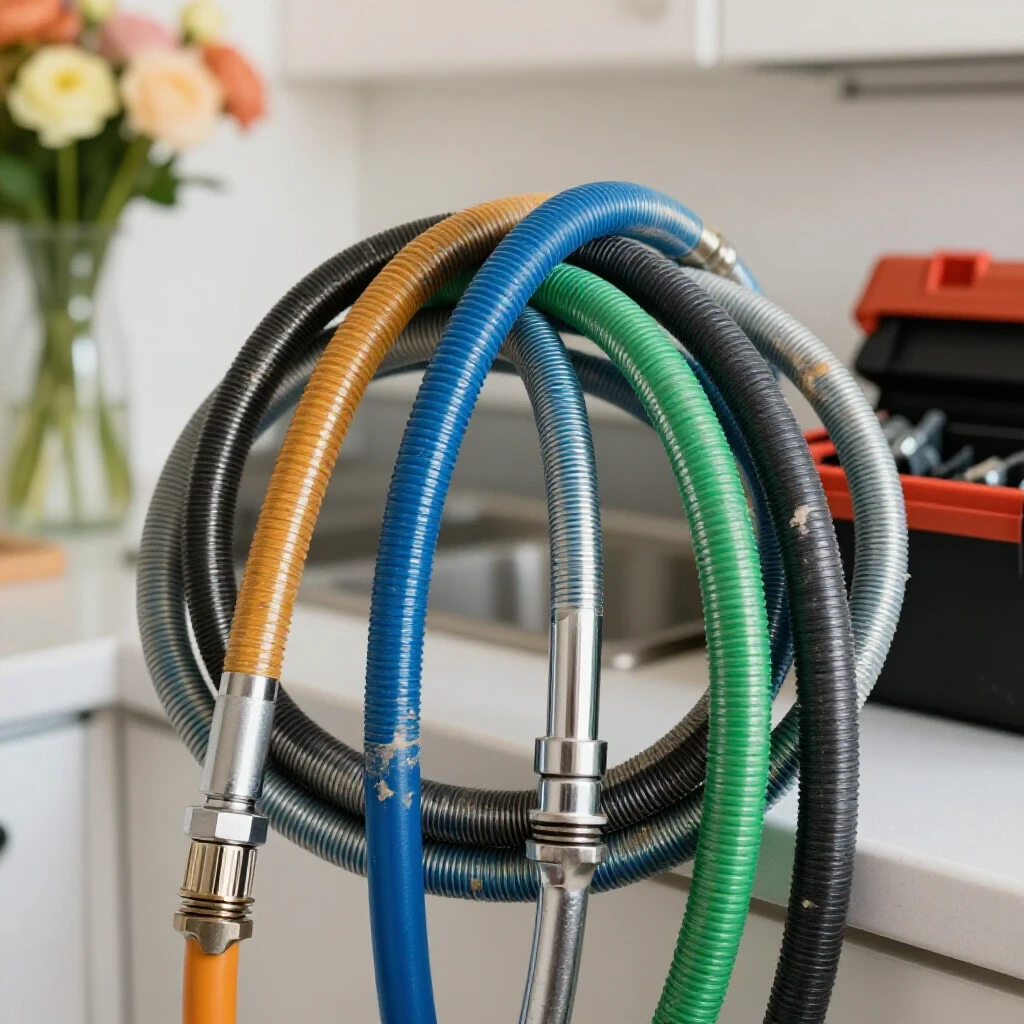
A Quick-Connect Fitting is a plastic coupling that snaps into place without the need for tools. These are common in brands like Moen or Delta. You usually press a button or pull down a collar to release them. A Threaded Compression Fitting, on the other hand, uses a brass or plastic nut that must be turned with a wrench. The Uniform Plumbing Code (UPC) requires these materials to be lead-free and rated for the specific pressure of residential water systems, which is typically between 40 and 80 PSI.
Safety Protocol and Preparation
- Clear the Workspace: Remove all cleaning supplies and items from under the sink to provide a clear exit path if a leak occurs.
- Check the Shutoff Valves: Locate the hot and cold valves under the sink. Turn them clockwise to close. If they are old “multi-turn” valves and feel stuck, do not force them, as they can snap.
- Pressure Relief: Open the faucet handle to the middle position to drain any remaining water and pressure from the lines.
- Verify Compatibility: Most hoses are brand-specific. Check the tag on your supply line or the underside of the faucet for a model number before buying a replacement.
The Removal Process: Disconnecting the Old Sprayer Line
Once the water is off and the area is clear, you can begin the physical removal. This part of the project often takes the most time because of the awkward angles involved.
First, locate the weight attached to the hose. This is usually a lead or plastic-encased block that helps the sprayer retract. Use a screwdriver to remove the screws holding the weight together, or slide it off if it is a clip-on style. This is a common point where DIYers make a mistake; if you don’t remove the weight first, the hose will be too bulky to pull through the faucet body.
Next, disconnect the hose from the faucet outlet. If it is a quick-connect, push the collar up and pull the hose down. If it is threaded, use your adjustable wrench. Be sure to hold the outlet pipe steady with a second pair of pliers to prevent the entire faucet from twisting. Once disconnected, pull the hose up through the top of the faucet. I have found that sometimes the hose gets snagged on the mounting hardware; if this happens, do not yank it. Reach under the sink and guide it through the narrow opening.
Lessons from the Field: Avoiding Cabinet Damage
During a project in my first home, I neglected to place a bucket under the connection point. When I pulled the hose, about a cup of stagnant water poured directly into the unfinished wood of the cabinet base. This led to swelling that I had to sand down later. Always keep a towel draped over the cabinet floor and a small container directly under the hose as you disconnect it.
Installing the New Pull-Down Hose and Weight
Installing the new component is essentially the reverse of the removal, but with a focus on seating the seals correctly. Modern materials are designed for specific tolerances, so “over-tightening” is a common cause of failure.
- Feed the Hose: Drop the narrow end of the new hose through the faucet spout. Ensure it slides smoothly through the guide.
- Attach the Sprayer Head: Screw the sprayer head onto the top end of the hose. Check that the rubber washer is seated flat inside the sprayer head. Hand-tighten this connection; tools can crack the plastic threads.
- Connect to the Outlet: Under the sink, push the other end of the hose into the faucet outlet until you hear a “click” (for quick-connects) or thread the nut on by hand.
- Final Tightening: If using a threaded nut, turn it hand-tight, then use a wrench for an additional 1/4 turn. This creates enough compression on the seal without deforming the gasket.
- Reattach the Weight: Place the weight on the hose. A good rule of thumb is to place it about two inches above the lowest point of the hose loop when the sprayer is docked. This ensures the hose has enough travel to reach the corners of your sink but still retracts firmly.
Understanding Torque and Seating
In facilities maintenance, we follow strict torque specifications for high-pressure lines. For a home kitchen, you don’t need a torque wrench, but you must understand “snug.” If you feel the wrench start to resist significantly, stop. Over-compressing a rubber washer can cause it to split or extrude from the fitting, which creates a leak rather than preventing one.
Verification and Leak Prevention Strategies
The final phase of the project is testing. This is where most “weekend warriors” fail by rushing to put their cleaning supplies back under the sink before verifying the integrity of the work.
Slowly turn the shutoff valves back on. I prefer to open the cold side first. Look at the connection point immediately. If it is dry, turn on the faucet and run water through the sprayer for at least two minutes. While the water is running, pull the hose out to its full length and move it around. This tests the hose under both pressure and physical movement.
Post-Installation Quality Checklist
- [ ] Sprayer head is firmly attached with no weeping at the threads.
- [ ] Quick-connect clip is fully engaged and does not wiggle.
- [ ] The hose moves freely without catching on valves or pipes.
- [ ] The weight is positioned so the sprayer docks securely.
- [ ] No water is visible on the paper towel test after 5 minutes of use.
Maintenance and Knowing When to Call a Professional
To extend the life of your new hardware, avoid storing heavy chemicals or bulky items directly against the flexible lines. The constant friction of a heavy bottle of detergent rubbing against the hose every time you pull the sprayer will lead to a premature failure. I also recommend checking the connections every six months during your routine home maintenance.
There are times when a DIY approach might reach its limit. If you find that your shutoff valves are leaking from the stem when you try to turn them, or if the mounting nut for the faucet is so rusted that it won’t budge with a basin wrench, it may be time to consult a professional. Forcing these components can lead to a snapped pipe inside the wall, which is a much larger and more expensive repair.
Project ROI and Long-Term Value
By completing this repair yourself, you have not only saved on labor costs but also gained a better understanding of your home’s plumbing. The tools you purchased, like the basin wrench or adjustable pliers, are now part of your kit for future upgrades, such as swapping out a bathroom faucet or fixing a toilet fill valve. This incremental building of skills is what turns a busy professional into a confident home maintainer.
Frequently Asked Questions
How do I know if my hose is a “quick-connect” or threaded? Look at where the hose meets the central pipe under the sink. If you see a plastic block (often blue, green, or white) with a clip or button, it is a quick-connect. If you see a metal nut that requires a wrench, it is a threaded connection.
Can I use any brand of hose as a replacement? No. Most kitchen faucets use proprietary connections. A Moen hose will rarely fit a Delta or Kohler faucet. Always match the replacement part to your specific faucet brand and model number.
Why is my new sprayer hose not retracting properly? This is usually due to the weight being placed incorrectly. If the weight is too high, it won’t pull the hose down. If it is catching on other pipes under the sink, you may need to clear the area or adjust the loop of the hose.
Do I need to use plumber’s putty for this job? Generally, no. Plumber’s putty is used for sealing the base of the faucet to the countertop or for sink drains. Flexible hoses rely on rubber O-rings or gaskets to create a seal.
What should I do if the shutoff valve won’t turn? Do not use a hammer or excessive force. Try a small amount of penetrating oil and wait 15 minutes. If it still won’t budge, you may need to shut off the main water valve to the house and replace the shutoff valve itself.
How tight should the sprayer head be? Hand-tight is usually sufficient. If you use pliers, you risk cracking the plastic housing of the sprayer head. If it leaks, check if the internal rubber washer is missing or crooked.
Is it normal for the hose to have a “break-in” period? A new braided hose might feel a bit stiff for the first few days. As warm water runs through it and it is flexed during use, it will become more pliable.
What is the best way to clean the hose to prevent sticking? Wipe the hose down with a damp cloth and a small amount of silicone spray or mild dish soap. Avoid harsh chemicals that can degrade the nylon or metallic braiding.
Are there building codes I should be aware of? Most residential codes (like the IPC) require that any replacement parts meet NSF/ANSI 61 standards for drinking water safety. Ensure your replacement hose is certified for potable water.
How long do these flexible hoses typically last? In a standard household, a high-quality flexible hose should last 5 to 10 years. However, high-use kitchens or those with very hard water may see failures sooner.
(This article was written by one of our staff writers, Robert Callahan. Visit our Meet the Team page to learn more about the author and their expertise.)