How to Replace a Toilet Seat for Comfort and Stability (Guide)

I remember a Saturday morning three years ago when a simple home task turned into a frustrating ordeal. I was managing a busy maintenance schedule for a large office complex during the week, so I wanted my weekend projects to be fast and effective. My guest bathroom had a cracked plastic hinge that squeaked every time the lid moved. I thought I could swap it out in ten minutes before my kids’ soccer game. Instead, I spent an hour wrestling with a corroded metal bolt that eventually snapped, sending my pliers into the drywall. That experience taught me that even a basic hardware swap requires the right tools and a solid plan to avoid a call to an expensive plumber.
Assessing Your Current Bathroom Hardware
Evaluating the size, shape, and condition of your existing fixture ensures a new component fits correctly without gaps or movement. Before you head to the home center, you must identify what you currently have to avoid the frustration of a mid-project return trip.
In my 12 years of facilities management, I have learned that “eyeballing” a measurement is the quickest way to fail. Standard residential toilets in North America come in two primary shapes: round and elongated. A round bowl is usually about 16.5 inches long, while an elongated bowl is roughly 18.5 inches. To be certain, take a tape measure and find the distance from the center of the two mounting holes at the back of the bowl to the very front edge of the porcelain.
You should also check the hole spacing. Most modern fixtures use a standard 5-1/2 inch spread between the mounting holes. If you live in an older home with vintage plumbing, this distance might vary. Checking this now prevents the “wobble” that occurs when hinges do not align with the factory-drilled holes in the porcelain.
Measuring for a Proper Fit
Measuring involves finding the length and width of the porcelain rim to ensure the new topper covers the bowl completely. This step is critical for both aesthetics and the structural integrity of the seat hinges.
- Length: Measure from the center of the bolt holes to the front outer edge of the bowl.
- Width: Measure the widest point of the bowl rim.
- Spacing: Confirm the distance between the centers of the two bolt holes is 5-1/2 inches.
| Feature | Round Dimensions | Elongated Dimensions |
|---|---|---|
| Standard Length | 16.5 inches | 18.5 inches |
| Common Width | 14 to 14.5 inches | 14 to 14.5 inches |
| Bolt Spacing | 5.5 inches | 5.5 inches |
Material Comparisons for Daily Comfort
A look at the physical properties of different materials helps you choose between weight, temperature retention, and durability. Each material offers a different “feel” and reacts differently to the ambient temperature of your bathroom.
When I select hardware for my own home, I weigh the pros and cons of molded wood versus high-impact plastic. Molded wood is often heavier and feels more substantial. It tends to stay closer to room temperature, which is a significant comfort factor during winter months. However, if the protective coating chips, the wood fibers underneath can absorb moisture and swell over time.
Plastic options, specifically polypropylene or thermoset resins, are incredibly durable and resistant to chemical cleaners. They are lighter and often include “slow-close” features that prevent the lid from slamming. The trade-off is that plastic can feel colder to the touch in a chilly room. For those seeking maximum softness, cushioned seats exist, though they require more frequent replacement as the vinyl covers can crack with heavy use.
Weight and Durability Benchmarks
Understanding how different materials hold up under daily stress helps you estimate the lifespan of your upgrade. Durability is often tied to the hinge design and the density of the seat material itself.
- Molded Wood: High density, rigid feel, prone to moisture damage if the finish is compromised.
- Solid Plastic: Lightweight, chemically resistant, almost impossible to stain, but can flex under high weight loads.
- Cushioned Vinyl: Maximum initial comfort, high “give,” but lowest lifespan due to material fatigue.
The Essential DIY Tool List
A curated list of hand tools and protective equipment is necessary to remove old hardware and secure new fasteners without damaging the porcelain. Having everything ready on a tray prevents you from running back and forth to the garage with messy hands.
- Adjustable Wrench: Used for gripping and turning the mounting nuts underneath the bowl.
- Multi-bit Screwdriver: A large flat-head or Phillips head is often needed to hold the top of the bolt steady while you turn the nut below.
- Deep-well Socket Set (Optional): If the mounting nuts are recessed deeply into the porcelain, a socket can reach where a wrench cannot.
- Putty Knife: Useful for gently prying up old plastic bolt covers that have become stuck with mineral deposits.
- Penetrating Oil: Essential for older metal bolts that have rusted or “seized” over time.
- Disposable Gloves: Protects your hands from grime and old hardware buildup.
Step-by-Step Replacement Guide
This logical sequence of actions takes you from removing the old lid to calibrating the new hinges for a stable, centered fit. Following these steps prevents the common mistake of over-tightening or misaligning the hardware.
Phase 1: Removing the Existing Hardware
Begin by popping open the plastic covers located at the back of the seat. These usually flip up with a fingernail or a flat-head screwdriver. Underneath, you will see the heads of the mounting bolts. Reach underneath the bowl to find the nuts. In many cases, these are plastic wing nuts that you can loosen by hand. If they are metal and rusted, apply a drop of penetrating oil and let it sit for five minutes.
Hold the top bolt head steady with your screwdriver while turning the nut counter-clockwise with your wrench. Once both nuts are removed, lift the old seat straight up. This is the best time to perform a deep clean of the porcelain deck. Mineral deposits often hide under the old hinges and can prevent the new seat from sitting flush.
Phase 2: Aligning the New Components
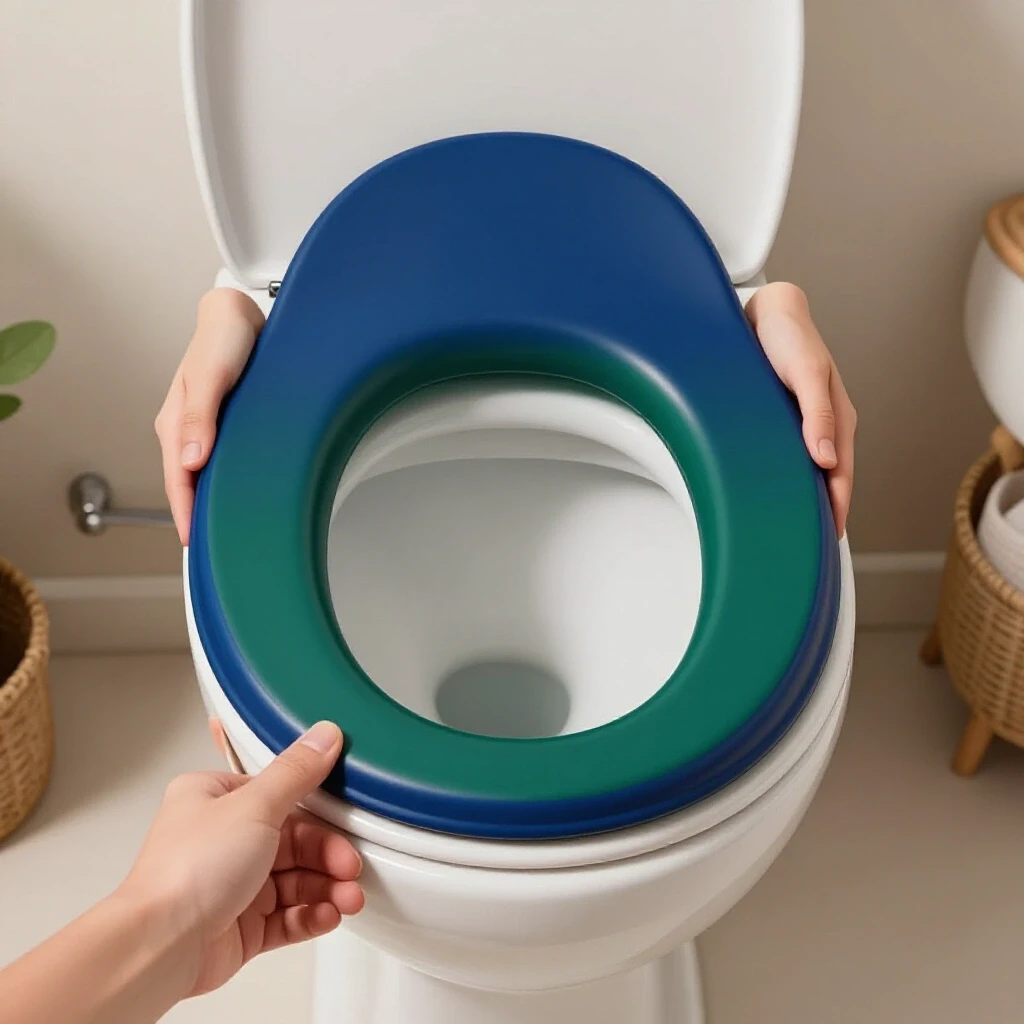
Place the new seat onto the bowl, lining up the hinge holes with the holes in the porcelain. I always recommend a “dry-fit” first. This means placing the seat without tightening anything to ensure the edges of the seat align with the curve of the bowl. If the seat hangs over the front or sits too far back, adjust the hinges. Many modern kits have adjustable plates that allow you to slide the seat forward or backward by half an inch.
Phase 3: Securing the Fasteners
Drop the new bolts through the hinges and the bowl holes. From underneath, thread the nuts onto the bolts. Spin them up until they are finger-tight. Check the seat alignment one last time to ensure it is centered. Use your wrench to snug the nuts down. Warning: Do not over-tighten. Porcelain is brittle. Most manufacturers recommend turning the nut only half a turn past finger-tight. If your kit includes “snap-off” nuts, tighten them until the bottom portion of the nut shears off, which indicates the correct torque has been reached.
Why Stability Matters: Avoiding the “Wobble Factor”
Addressing the mechanical failure of loose hinges involves exploring hardware solutions like top-mount versus bottom-mount fasteners. A seat that shifts when you sit down is not just annoying; it puts lateral stress on the bolts, which can lead to breakage.
In my facilities experience, the number one cause of seat failure is loose hardware. When the seat moves, the bolts saw against the porcelain holes. To prevent this, look for “no-slip” kits that include rubber bushings or expanding anchors. These fill the gap in the porcelain hole, creating a tighter friction fit. If your new seat doesn’t come with these, you can often find universal rubber washers at the hardware store to add that extra layer of stability.
| Stability Feature | Benefit | Best For |
|---|---|---|
| Rubber Bushings | Fills the hole gap to prevent sliding | Standard DIY kits |
| Snap-off Nuts | Prevents over-tightening and cracking | Beginners |
| Top-Fix Anchors | Allows installation from above the bowl | Hidden-hole toilets |
DIY vs. Professional Labor Comparison
A breakdown of the financial and time investments shows the value of doing this project yourself. While a professional plumber ensures the job is done correctly, the cost for such a simple task is often hard to justify for a capable DIYer.
Most professional plumbers charge a minimum service call fee, which can range from $75 to $150 just to walk through the door. The actual labor might only take 15 minutes, but you are paying for their time and travel. By doing it yourself, you only pay for the materials.
| Factor | DIY Approach | Professional Plumber |
|---|---|---|
| Material Cost | $25 – $60 | $40 – $80 (Markup) |
| Labor Cost | $0 | $75 – $150 |
| Time Investment | 30 – 45 Minutes | 1 – 2 Hours (Waiting) |
| Tool Requirement | Basic Hand Tools | Professional Grade |
Troubleshooting Common Installation Hurdles
Even with a plan, you might encounter issues like stripped threads or mismatched shapes. Knowing how to pivot when things go wrong keeps the project on track and prevents a Sunday night emergency.
If you find that the bolts are spinning but the nut isn’t moving, the threads may be stripped. In this case, you may need to use a pair of locking pliers to grip the nut firmly while you turn the bolt from above. If the bolts are completely seized and won’t budge with oil, a small hacksaw blade can be used to carefully cut through the plastic or metal bolt between the hinge and the bowl. Just be extremely careful not to scratch the porcelain.
Another common issue is the “creaking” sound. This usually happens when the seat bumpers (the little feet under the seat) aren’t all touching the bowl at the same time. Check to see if the bowl is level. If it isn’t, you may need to adjust the hinge tension to even out the weight distribution.
Maintenance and Long-Term Care
Proper cleaning and periodic hardware checks extend the life of your bathroom upgrades. Using the wrong chemicals can degrade plastic hinges or strip the finish off molded wood.
Avoid using abrasive scouring pads or harsh bleach-based cleaners on the hinges. These can cause the plastic to become brittle or the metal plating to peel. A simple solution of mild dish soap and warm water is usually sufficient. Every six months, I recommend checking the tightness of the mounting nuts. House vibrations and regular use can cause them to back off slightly. A quick quarter-turn with a wrench can prevent a wobbly seat from becoming a broken one.
Project Planning Checklist
Use this list to ensure you have covered all bases before, during, and after the installation.
- [ ] Measured bowl length (Round vs. Elongated).
- [ ] Confirmed bolt hole spacing (Standard 5-1/2″).
- [ ] Purchased replacement seat and verified all hardware is in the box.
- [ ] Gathered tools: Screwdriver, wrench, and cleaning supplies.
- [ ] Removed old hardware and cleaned the mounting surface.
- [ ] Dry-fitted the new seat to check for overhang.
- [ ] Tightened fasteners to manufacturer torque specs (not over-tight).
- [ ] Tested the “slow-close” feature or lid movement.
- [ ] Disposed of old materials responsibly.
Upgrading your bathroom seating is a high-impact, low-cost project that improves your daily routine. By taking the time to measure accurately and select the right materials, you avoid the common pitfalls that frustrate many homeowners. The satisfaction of a rock-solid, comfortable seat is well worth the 30 minutes of focused effort on a Saturday morning.
Frequently Asked Questions
How do I know if I have a round or elongated bowl?
Measure from the center of the mounting holes to the front tip of the bowl. If the measurement is approximately 16.5 inches, it is round. If it is closer to 18.5 inches, it is elongated. Elongated bowls are more common in newer homes and provide a larger seating area.
What should I do if the old metal bolts are rusted and won’t turn?
Apply a penetrating oil, such as WD-40 Specialist or PB Blaster, to the nut and bolt threads. Let it soak for at least 10 to 15 minutes. If it still won’t budge, you may need to use a hacksaw with a fine-tooth blade to carefully cut the bolt. Place a piece of cardboard on the porcelain to protect it from scratches while you saw.
Is a wood seat better than a plastic one?
It depends on your preference. Molded wood is heavier and feels sturdier, often staying warmer in cold weather. Plastic is more durable against moisture and harsh cleaners. For high-traffic bathrooms, plastic is often the more practical choice due to its longevity.
Why does my new seat keep sliding to the side?
Sliding usually happens because the bolts are slightly smaller than the holes in the porcelain. This creates a gap that allows for movement. You can fix this by using a “no-clog” or “no-slip” installation kit that includes rubber gaskets or bushings to fill that extra space and grip the porcelain.
How tight should I tighten the mounting nuts?
You want them snug but not forced. Over-tightening is a leading cause of cracked porcelain bowls. A good rule of thumb is to tighten them by hand until they stop, then give them one-half turn with a wrench. If the seat still moves, check the alignment of the washers rather than just tightening more.
Can I reuse the old bolts with a new seat?
It is not recommended. New seats come with hardware specifically designed for their hinges. Old bolts may be fatigued, rusted, or the wrong size for the new hinge assembly. Always use the fresh hardware provided in the kit for the safest result.
What is a “slow-close” seat and is it worth it?
A slow-close (or soft-close) seat has specialized hinges that use tension to lower the lid slowly. This prevents the loud “slam” and protects the seat and bowl from impact damage. For busy households with children, it is a highly recommended upgrade for both safety and noise reduction.
Why are there two different sets of holes on some hinges?
Some manufacturers use universal hinges that allow the seat to be mounted on both round and elongated bowls, or to provide an inch of “play” to account for different toilet brands. Always check the instruction manual to see which set of holes provides the best alignment for your specific bowl shape.
Do I need to use plumber’s putty or silicone during installation?
No, you should not use putty or silicone for a standard seat installation. These materials can make future removals very difficult and are unnecessary for a dry-mount hardware setup. The rubber or plastic washers included in the kit provide all the friction and protection needed.
How often should a toilet seat be replaced?
Most residential seats last between 5 and 10 years. However, you should replace yours immediately if you notice cracks in the material, if the hinges become loose and cannot be tightened, or if the protective finish has worn away, exposing the underlying material to moisture.
(This article was written by one of our staff writers, Robert Callahan. Visit our Meet the Team page to learn more about the author and their expertise.)