DIY Flooring Upgrade: 12-Month Performance Results (Step-by-Step Guide)

When you decide to replace the floors in your home, the best option is rarely the fastest or the cheapest. Instead, the most successful path involves balancing high-quality materials with a rigorous, code-compliant installation process that accounts for how the house settles over time. By focusing on long-term durability rather than immediate visual gratification, you can ensure that your work remains functional and attractive long after the initial weekend of labor is over.
In my twelve years as a facilities manager, I have overseen the maintenance of thousands of square feet of flooring. I have also renovated two of my own homes during my time off. One thing I have learned is that a floor is only as good as the preparation beneath it. I once spent three weekends installing a beautiful floating floor in a living room, only to have it start “clicking” and “bouncing” four months later because I rushed the subfloor leveling. That mistake taught me that a year of daily use will expose every shortcut you take during the installation. This guide is designed to help you avoid those pitfalls by focusing on the technical realities of a year-long material assessment.
Laying the Groundwork for a Year of Durability
Substrate preparation is the process of cleaning, leveling, and repairing the surface beneath your new flooring to ensure it is structurally sound. A flat, dry, and stable subfloor prevents the finished material from shifting, cracking, or making noise as you walk on it. Skipping this step is the most common reason for project failure within the first six months.
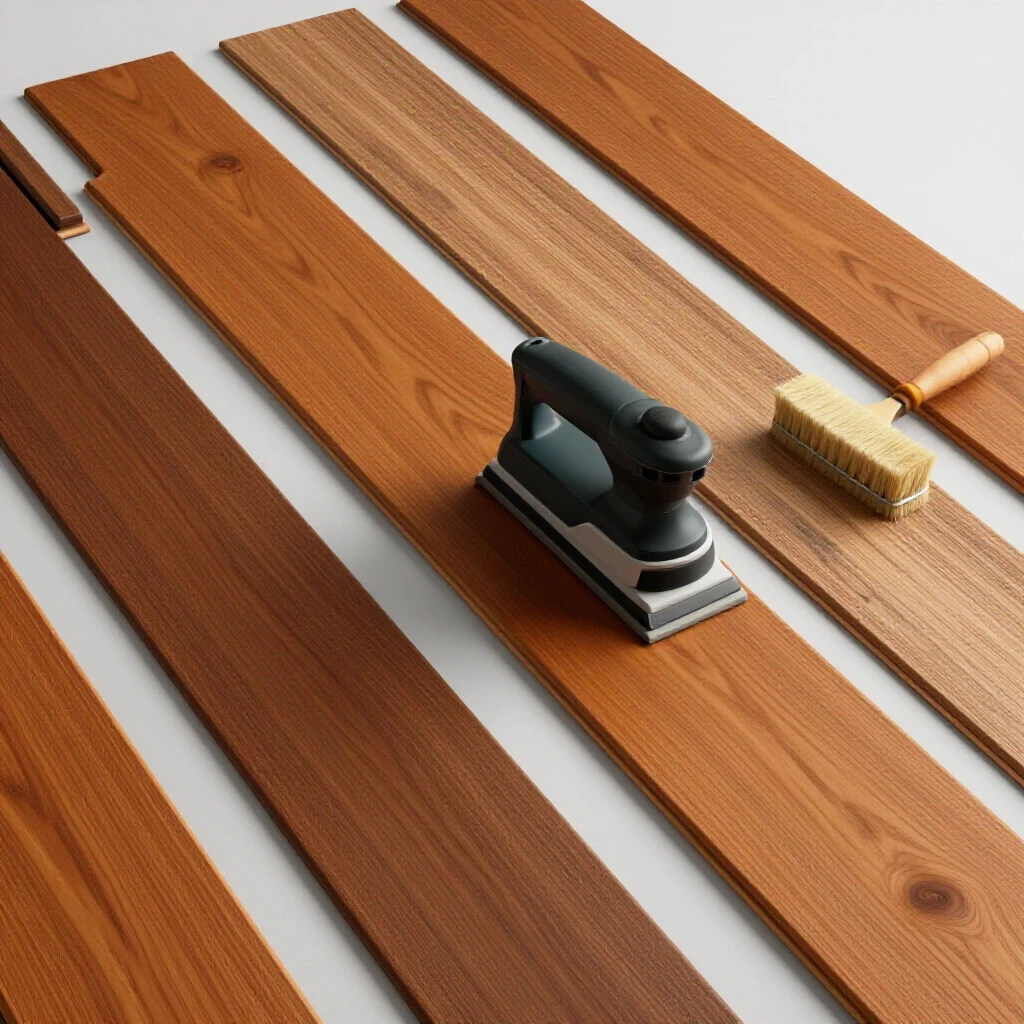
Before you even open a box of planks, you must evaluate the subfloor. Most manufacturer technical guides require a flatness tolerance of 3/16 of an inch over a 10-foot radius. I use a 10-foot straightedge or a long level to identify high spots and “valleys.” If you find a dip deeper than 3/16 of an inch, you must fill it with a cement-based self-leveling underlayment. If you find a high spot on a wooden subfloor, you will need to sand it down using a floor edger or a belt sander.
Moisture is another silent killer of DIY home improvement projects. Even if your subfloor looks dry, it can hold hidden moisture that will warp your new planks over a full seasonal cycle. I recommend using a pinless moisture meter to check multiple areas of the room. For concrete slabs, the industry standard is the Calcium Chloride test (ASTM F1869), which measures the moisture vapor emission rate. If the moisture levels are too high, you must install a 6-mil poly film moisture barrier to protect your investment from the ground up.
- Subfloor Flatness: 3/16″ over 10 feet.
- Moisture Content (Wood): Within 2-4% of the new flooring material.
- Concrete Moisture: Below 3 lbs per 1,000 sq. ft. per 24 hours.
Essential Tools for Code-Compliant Floor Installations
A successful installation requires a specific tool inventory that goes beyond a standard hammer and screwdriver. Using the right diagnostic and cutting equipment ensures that your cuts are precise and your joints are tight, which is critical for maintaining the integrity of the floor over a 12-month period. Investing in these tools now prevents costly rework later.
In my experience, many weekend DIY projects fail because the person lacks a proper tapping block or pull bar. These tools allow you to lock planks together without damaging the delicate “tongue and groove” edges. I also suggest a high-quality miter saw with a fine-tooth blade for clean crosscuts. If you are working with luxury vinyl or laminate, a specialized floor cutter can save time and reduce the amount of dust in your home.
- Diagnostic Tools: Pinless moisture meter, 10-foot straightedge, and a laser level.
- Cutting Tools: Miter saw (with 80-tooth blade), jigsaw (for intricate cuts around door jambs), and a utility knife.
- Installation Kit: Tapping block, rubber mallet, pull bar, and 1/2-inch expansion spacers.
- Safety Gear: N95 respirator, knee pads, and ANSI-rated safety glasses.
| Tool Type | Essential vs. Optional | Purpose | Estimated Cost |
|---|---|---|---|
| Laser Level | Essential | Mapping subfloor high/low spots | $40 – $120 |
| Pull Bar | Essential | Closing gaps at the end of a row | $15 – $25 |
| Floor Edger | Optional | Sanding down wood high spots | $60 (Rental) |
| Moisture Meter | Essential | Preventing long-term warp/mold | $35 – $80 |
Step-by-Step Installation Phases for Lasting Results
The execution phase involves the physical layout and locking of the flooring material according to the manufacturer’s specific locking mechanism. This phase requires a “dry-fit” test to plan the layout and ensure that the final row of planks isn’t too narrow. Proper execution during this stage determines how the floor will handle foot traffic and furniture weight.
One of the most important steps I follow is the “dry-fit.” This means laying out several rows of planks without actually clicking them together. This allows you to see how the patterns look and, more importantly, where your cuts will fall. According to the International Residential Code (IRC), you should avoid having any “slivers” or planks narrower than 2 inches at the edges of the room. If your dry-fit shows a 1-inch gap at the far wall, you should rip down the first row of planks to balance the room.
When you start the actual installation, always work from left to right. Place your 1/2-inch spacers against the starting wall to maintain an expansion gap. This gap is vital because every home expands and contracts with changes in temperature and humidity. If you butt the flooring tight against the wall, the floor will “peak” or buckle when the summer humidity hits. I have spent many hours in my facility management career fixing floors that buckled because someone forgot to leave room for the material to breathe.
- Acclimation: Let the material sit in the room for 48-72 hours before starting.
- Expansion Gap: Maintain a minimum of 1/4″ to 1/2″ around all vertical surfaces.
- Staggering: Ensure end joints are at least 6 to 8 inches apart between adjacent rows.
Managing Thermal Expansion and Environmental Shifts
Thermal expansion is the physical tendency of matter to change its shape, area, and volume in response to a change in temperature. In residential flooring, this also includes hygroscopic expansion, where wood and composite materials swell as they absorb moisture from the air. Understanding these forces is key to a year-long material assessment.
Over a 12-month period, your home will go through at least four distinct climate shifts. In the winter, the air is dry, and the floor will shrink. In the summer, the air is humid, and the floor will expand. If you install your floor in the dead of winter and don’t leave an expansion gap, the floor will have nowhere to go in July. This results in “tenting,” where the planks lift off the subfloor.
To manage this, I always consult the manufacturer’s technical guide for the specific “expansion coefficient” of the material. Some materials require a transition strip (T-molding) in doorways or in rooms longer than 40 feet. Even if you prefer a seamless look, ignoring these requirements can void your warranty and lead to structural failure. Building codes often require these transitions to be secure and “trip-free,” meaning they must be flush enough to prevent someone from catching their toe.
12-Month Performance Review: What Actually Happens After a Year?
A year-long material assessment provides a realistic look at how your DIY home improvement handles the rigors of daily life, including pets, spills, and heavy furniture. This period reveals whether the material’s wear layer is sufficient for your lifestyle and if your installation techniques held up. It is the ultimate test of your workmanship and material choice.
I kept a log of a flooring project I completed in my hallway, which is the highest-traffic area of my house. At the three-month mark, everything looked like new. However, at the six-month mark—right as summer peaked—I noticed a slight “creak” near the bathroom door. Because I had used a laser level to prep the subfloor, I knew it wasn’t a leveling issue. Instead, the transition strip had become slightly loose. A quick fix with some construction adhesive solved it, but it showed me that even small components need checking.
By the 12-month mark, the floor had survived a full cycle of heating and cooling. The expansion gaps I hidden under the baseboards worked perfectly; the floor moved as a single unit without any gaps opening between the planks. I also noted that the wear layer held up against my two dogs, with only minor micro-scratches visible in direct sunlight. This confirmed that the material I chose was appropriate for the “load tolerance” of my household.
| Month | Observation | Action Taken |
|---|---|---|
| Month 1 | Initial “settling” sounds | None (Normal) |
| Month 4 | First heavy spill (Kitchen area) | Immediate cleanup; no seam swelling |
| Month 7 | Peak humidity expansion | Monitored expansion gaps; no buckling |
| Month 12 | Visual inspection of high-traffic zones | Minor cleaning; checked transition strips |
Troubleshooting Common Mid-Project and Post-Project Hurdles
Troubleshooting is the systematic process of identifying and fixing errors that occur during or after the installation. Common issues include planks that won’t lock, uneven seams, or “hollow” sounds when walking. Addressing these problems immediately prevents them from becoming permanent defects that require a total teardown.
If you find a plank that refuses to click into place, do not force it with a hammer. Usually, there is a piece of debris or a broken plastic tab inside the groove. I keep a small, stiff brush handy to clean out the grooves before I join the planks. If a gap appears in the middle of the floor months later, you can often use a “floor gap fixer” block—a tool with double-sided tape that allows you to tap the plank back into position without taking the whole floor apart.
Another common hurdle is the “hollow spot.” This happens when the subfloor has a slight dip that you missed during prep. If the floor feels “spongy,” you can sometimes fix this by drilling a tiny hole in a discreet area (like a closet) and injecting a specialized floor repair adhesive beneath the plank. This fills the void and stabilizes the floor. However, the best troubleshooting is prevention through meticulous substrate preparation.
- Issue: Plank won’t lock. Fix: Clean the groove; check for factory defects.
- Issue: Floor feels spongy. Fix: Inject floor adhesive or re-level the subfloor.
- Issue: Gaps appearing. Fix: Use a suction-cup gap closer or a tapping block.
Maintenance and Long-Term Care for DIY Home Improvements
Long-term care involves the routine cleaning and protection of your floor to extend its lifespan and maintain its aesthetic value. Proper maintenance prevents the wear layer from breaking down prematurely. Following manufacturer-recommended cleaning protocols is essential for keeping your warranty valid and your home looking its best.
For the first year, I strictly followed the manufacturer’s cleaning guide. This meant avoiding steam mops, which can force moisture into the seams of laminate or wood floors and cause “peaking.” Instead, I used a microfiber mop and a pH-neutral cleaner. I also placed felt pads on the bottom of every piece of furniture. In my facility management role, I’ve seen beautiful floors ruined in a single afternoon because someone dragged a heavy chair without protection.
I also recommend a “maintenance walk” every six months. Check the caulking around your baseboards and the tightness of your transition strips. If you have a floating floor, ensure that no heavy appliances (like a kitchen island) have been permanently bolted through the floor, as this “pins” the floor and prevents the natural expansion we discussed earlier. Keeping the floor free to move is the secret to it lasting for decades rather than just a few years.
Knowing When to Call a Professional
While most flooring projects are well within the reach of a dedicated DIYer, some situations require specialized skills or equipment. Recognizing these limits is a sign of a smart home improver, not a failure. Calling a pro for a specific, difficult task can save you from a mistake that costs thousands of dollars to fix.
If your subfloor is severely out of level—meaning you have dips of an inch or more—you may need a professional to install a new plywood subfloor or pour a large-scale leveling compound. Similarly, if you discover asbestos tiles during demolition (common in homes built before 1980), stop immediately. Asbestos mitigation is a hazardous job that requires certified professionals and specialized vacuum systems to prevent toxic fibers from entering your home’s air supply.
- Structural Issues: If the floor joists are sagging or rotting.
- Hazardous Materials: Presence of asbestos or lead-based adhesives.
- Complex Layouts: Circular rooms or intricate custom patterns.
- Extensive Leveling: When the entire house has shifted significantly.
By following these steps and respecting the technical requirements of the materials, you can complete a project that you will be proud of every time you walk across the room. The satisfaction of a year-long material assessment that shows zero failures is the ultimate reward for your hard work and attention to detail.
FAQ: Common Questions About Long-Term Floor Success
How long should I wait for my flooring to acclimate before installation? Most manufacturers recommend 48 to 72 hours. You should stack the boxes flat in the room where they will be installed, away from direct sunlight or heating vents. This allows the material to reach the “equilibrium moisture content” of your home, preventing drastic shrinking or swelling after it is laid down.
What is the “1/8-inch rule” for subfloors? The 1/8-inch rule typically refers to the maximum allowable gap under a 6-foot straightedge. For a 10-foot straightedge, the tolerance is usually 3/16 of an inch. If you can slide a stack of two quarters under your straightedge at any point, the floor is too uneven and needs to be leveled.
Can I install a new floor over my old one? You can often install floating floors over existing tile or vinyl, provided the old floor is flat, well-adhered, and not “cushioned.” However, you should never install a new floor over existing carpet or a floating floor that is already in place, as this creates an unstable base.
Why do I need a 6-mil poly film for concrete? Concrete is porous and constantly “breathes” moisture. A 6-mil polyethylene film acts as a vapor barrier, stopping that moisture from reaching the underside of your flooring. Without it, the moisture can cause mold growth or delamination of the planks over the first 12 months.
What happens if I don’t leave an expansion gap? If you don’t leave a gap, the floor will eventually hit the wall as it expands. Since it has nowhere else to go, the pressure will cause the planks to lift in the center of the room, creating a “peak” or a bubble. You would then have to remove your baseboards and trim the edges of the floor while it is already installed.
Is a steam mop safe for my new DIY floor? Generally, no. Most manufacturers of laminate, engineered wood, and even some luxury vinyl planks warn against steam mops. The high heat and pressurized moisture can penetrate the seams, causing the core material to swell and the edges to “cup” or peel.
How do I fix a scratch in my new floor? For minor scratches, you can use a manufacturer-approved touch-up pen or wax filler stick that matches your floor’s color. For deeper gouges, you may need to replace the individual plank. This is why I always recommend buying 10% more material than you need and saving the leftovers.
How do I calculate how much flooring I need to buy? Measure the length and width of the room to get the square footage, then add 10% for “waste” (cuts and mistakes). If the room has many angles or a complex layout, add 15%. It is much better to have a few extra boards than to run out and find that the store is out of that specific “dye lot.”
What is a “floating floor” exactly? A floating floor is not nailed or glued to the subfloor. Instead, the planks lock together and “float” as a single heavy mat on top of an underlayment. This allows the entire floor to expand and contract as one unit, which is ideal for DIY home improvement in varying climates.
Do I really need to remove my baseboards? Yes, for a professional look and proper function. Removing the baseboards allows you to hide the necessary expansion gap. If you leave them on and use “quarter-round” molding to hide the gap, it often looks like an afterthought and can be less effective at holding the floor in place.
(This article was written by one of our staff writers, Robert Callahan. Visit our Meet the Team page to learn more about the author and their expertise.)