DIY Laundry Room Makeover Guide for a Functional Space (Tips)

Introducing flooring as art was a concept I first encountered while managing a luxury high-rise project in the city, but it applies just as much to a small utility space at home. When you treat every surface with that level of intentionality, a room used for chores suddenly feels like a planned part of the house rather than a forgotten corner. During my 18 years as a construction project coordinator, I have seen how even the smallest residential renovation planning can fail without a clear sequence. I have personally renovated two of my own homes, and the lessons I learned in the utility room were just as vital as those from the kitchen.
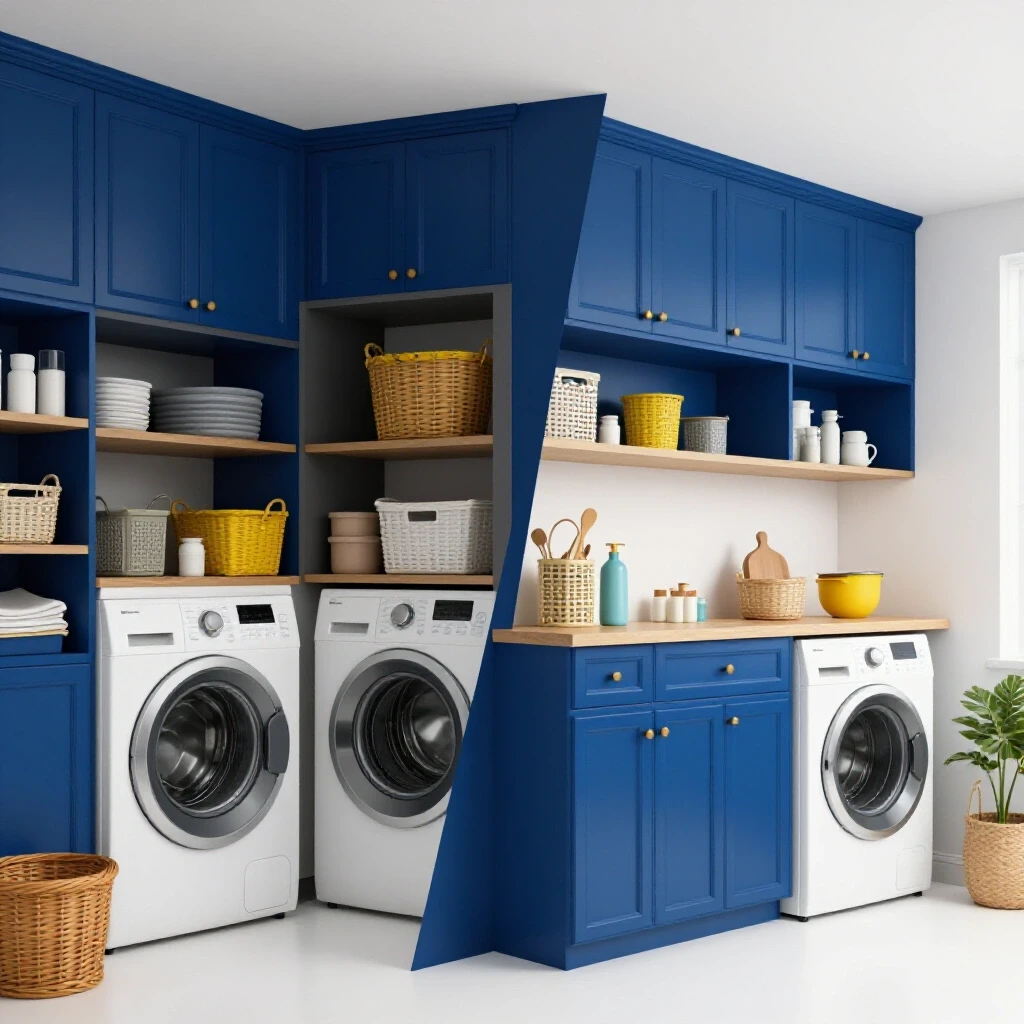
A successful update of a functional space requires more than just buying new bins. It demands a professional approach to scope and budget. My experience has taught me that the biggest risks are not the tasks you plan for, but the ones you ignore. Whether it is discovering moisture damage behind an old baseboard or realizing a shelf does not fit the wall studs, preparation is the only way to minimize friction.
Defining the Scope of Work for a Utility Space Refresh
A Scope of Work (SOW) is a detailed document that describes every task, material, and expectation for a project. In a professional build, this prevents disputes; in a DIY project, it prevents “scope creep,” which is when a small project slowly grows into a massive, expensive headache.
When I refreshed my own laundry area, I started by listing every surface. I decided to focus on three pillars: storage efficiency, surface durability, and lighting clarity. By defining these boundaries early, I avoided the temptation to start moving walls or changing the floor plan, which would have required permits and professional plumbing help.
- Surface Refinishing: Sanding and painting existing cabinets or installing a new countertop over the machines.
- Storage Solutions: Adding vertical shelving and hanging rods to maximize every inch of wall space.
- Organizational Systems: Implementing a sorting station that fits the specific flow of your household.
- Aesthetic Updates: New hardware, lighting fixtures, and a fresh coat of moisture-resistant paint.
Establishing a Realistic Budget and Contingency Fund
A budget is a financial roadmap that accounts for every screw, gallon of paint, and unforeseen hurdle. Using RSMeans construction data, I estimate that a high-quality refresh of a standard utility room typically costs between $1,500 and $3,500, depending on the materials chosen.
I always recommend a contingency fund of 15% to 25%. This is a “just in case” pot of money used for hidden surprises. In my second home renovation, I pulled back a piece of old vinyl flooring only to find a soft spot in the subfloor. Without that 20% buffer, that discovery would have paused the project for weeks while I scrambled for funds.
| Expense Category | Estimated Cost (Mid-Range) | Contingency (15-20%) | Total Allocation |
|---|---|---|---|
| Paint & Supplies | $150 – $250 | $30 – $50 | $180 – $300 |
| Shelving & Hardware | $400 – $800 | $80 – $160 | $480 – $960 |
| Countertop Materials | $300 – $600 | $60 – $120 | $360 – $720 |
| Lighting & Small Fixtures | $200 – $400 | $40 – $80 | $240 – $480 |
| Total Project | $1,050 – $2,050 | $210 – $410 | $1,260 – $2,460 |
Construction Sequencing: The Critical Path to Success
Construction sequencing is the order in which tasks must be completed to ensure no work has to be redone. In the industry, we call this the “critical path.” If you paint the walls after installing new open shelving, you will spend twice as much time cutting in around the brackets.
In my professional career, I once saw a project fall behind by a month because the flooring was installed before the heavy cabinetry arrived. The cabinets scratched the new floor, and the whole thing had to be refinished. For a small room refresh, the sequence is just as vital.
- Demolition and Cleaning: Remove old wire racks, patch holes, and scrub every surface.
- Surface Preparation: Sand the cabinets and prime the walls.
- Painting and Refinishing: Apply the topcoat to the ceiling, walls, and cabinets in that order.
- Installation of Fixed Elements: Mount the new countertop and heavy wall brackets.
- Storage and Organization: Install the shelves, hanging rods, and bins.
- Lighting and Hardware: Swap out the old light fixture and add new cabinet pulls.
Why Structural Inspection Checklists Matter Even for Small Jobs
A structural inspection checklist is a tool used to identify issues like rot, mold, or failing supports before you cover them up with pretty new materials. Even if you are not moving walls, you must inspect what is already there.
During a project in a 1940s bungalow, I noticed a slight discoloration on the drywall behind the washing machine. Most would have painted over it. Because I used a checklist, I cut a small “inspection hole” and found a slow-leaking valve that had been rotting the stud for years. Catching it then cost $50 in lumber; catching it a year later would have cost thousands.
- Check for “soft” spots in the drywall or floor which indicate moisture.
- Look for black or green spotting (mold) near water lines.
- Ensure wall studs are located at 16-inch or 24-inch intervals for secure shelf mounting.
- Verify that existing shelving is not sagging, which suggests over-loading or poor installation.
Surface Refinishing Strategies for High-Traffic Areas
Surface refinishing involves restoring or changing the top layer of a material without replacing the core structure. In a room that sees high humidity and heavy use, your choice of finish is a functional decision, not just a design one.
I have found that using a high-quality “cabinet-grade” enamel paint is a game-changer. Standard wall paint will peel under the stress of laundry baskets sliding across it. For countertops, a moisture-resistant laminate or a sealed butcher block can provide a folding surface that lasts for decades.
Selecting Materials with Lead-Time Calculations
A lead-time calculation is the amount of time it takes from ordering a product to having it in your hands. Many homeowners fail because they start a project on a Saturday only to realize the specific shelf brackets they want are on a three-week backorder.
- Custom-cut wood shelving: 1 to 2 weeks.
- Specialized cabinet hardware: 5 to 10 business days.
- High-durability epoxy kits: 3 to 5 days.
- In-stock paint and basic lumber: Same day.
Always verify your inventory before you pick up a crowbar. I once had a client who lived without a functional laundry space for six weeks because they demolished their storage before checking if the new modular system was in stock. It wasn’t.
Maximizing Vertical Storage and Organizational Systems
Vertical storage refers to using the height of the walls to move items off the floor. In small utility rooms, the floor is premium real estate. By installing shelves that go all the way to the ceiling, you create space for seasonal items that you don’t need every day.
In my own home, I replaced a single wire rack with a series of deep plywood shelves. I used 12-inch depth for the lower shelves and 16-inch depth for the higher ones. This allowed me to store large detergent jugs at eye level and bulky baskets up high.
- Use heavy-duty brackets rated for at least 50 lbs each.
- Install a hanging rod between two cabinets for air-drying clothes.
- Incorporate “dead space” solutions, like a slim rolling cart between the machines.
- Label every bin to ensure the organizational system is maintainable for the whole family.
Quality Control Benchmarks for DIY Execution
Quality control benchmarks are specific standards that a finished task must meet to be considered successful. When I was coordinating multi-million dollar builds, we had “punch lists” for every room. You should have one for your utility space too.
- Paint finish: No visible brush strokes or “holidays” (missed spots) under bright light.
- Shelf stability: No movement or wobbling when a 20-lb load is applied.
- Level surfaces: Use a 4-foot level to ensure countertops and shelves are perfectly flat.
- Hardware alignment: All handles and pulls must be perfectly centered and level with each other.
Managing Change Orders and Scope Adjustments
A change order is a formal amendment to the project plan that alters the cost or timeline. Even when you are the one doing the work, you must manage these carefully. If you decide halfway through to add a custom drying rack, you are creating a change order.
I track these changes in a simple spreadsheet. It helps me see how a “small $50 addition” can quickly turn into a $500 budget overrun. In my 18 years of experience, I have never seen a project that didn’t have at least one change. The key is to acknowledge the cost and time impact immediately rather than being surprised at the end.
| Proposed Change | Estimated Material Cost | Added Labor Time | Impact on Schedule |
|---|---|---|---|
| Add Under-Cabinet Lighting | $85 | 3 Hours | +1 Day |
| Upgrade to Hardwood Shelves | $220 | 5 Hours | +2 Days (Sourcing) |
| Replace All Baseboards | $110 | 4 Hours | +1 Day |
Post-Occupancy Evaluation: Learning from the Results
A post-occupancy evaluation (POE) is a review conducted a few months after a project is finished to see how the space actually performs. This is a standard practice in commercial building that works wonders for homeowners.
Six months after I finished my laundry refresh, I realized that the shelf I placed above the dryer was too high for my spouse to reach comfortably. Because I had used a modular track system instead of fixed brackets, I was able to adjust it in ten minutes. This flexibility is something I always recommend in residential renovation planning.
- Is the lighting sufficient for spotting stains on clothing?
- Do the bins fit the actual amount of laundry the family generates?
- Has any paint chipped or peeled in high-moisture areas?
- Is the folding surface at a comfortable height (standard is 36 inches)?
Key Takeaways for a Smooth Project
Navigating a home update requires a blend of professional management and hands-on effort. By following a strict sequence and respecting the budget, you can transform a utility room into an efficient workspace without the stress of a full-scale renovation.
- Always start with a written Scope of Work to prevent project bloat.
- Maintain a 15-25% contingency fund for hidden issues like moisture or rot.
- Follow a logical sequence: prep, paint, then install.
- Verify material lead times before beginning any demolition.
- Use high-durability finishes designed for high-traffic, humid environments.
Frequently Asked Questions
How do I know if I need to replace my shelves or just paint them?
Check for structural integrity first. If a shelf is sagging in the middle or the wood is “bowed,” painting it will not fix the issue. In my experience, if the material is particle board and it has ever been wet, it is better to replace it with plywood or solid wood to avoid future failure.
What kind of paint is best for a high-humidity laundry area?
You should look for a semi-gloss or satin finish with “anti-microbial” properties. These paints are designed to resist mold and mildew growth. For cabinets, use a water-based alkyd enamel; it goes on like oil paint but cleans up with water and provides a very hard, durable surface.
How much weight can standard wall-mounted shelves actually hold?
A shelf mounted into drywall with plastic anchors might only hold 10-20 lbs before failing. However, a bracket screwed directly into a wooden wall stud with 2.5-inch screws can often support 50-100 lbs. Always aim for the studs to prevent your laundry supplies from crashing down.
Why is a 20% contingency fund necessary for a cosmetic update?
Even in a cosmetic refresh, you are disturbing old materials. You might find outdated wiring that needs a simple fix or a small area of mold behind a cabinet. That 20% ensures you can buy the necessary supplies to fix the problem correctly rather than just “hiding” it.
How can I make a small laundry room feel larger without moving walls?
Focus on vertical storage and lighting. Replacing a dim, yellow light bulb with a “daylight” LED (4000K-5000K) can make the space feel much more open. Also, keeping the floor clear by using wall-mounted drying racks and shelves creates the illusion of more square footage.
What is the standard height for a folding counter over a washer and dryer?
The standard height for a kitchen counter is 36 inches, which works well for most people. However, if you have front-loading machines on pedestals, your counter will be much higher. Ensure you test the height before final installation to make sure it is comfortable for folding.
How do I avoid “scope creep” during my project?
Write down your goals before you spend a single dollar. If your goal is “freshen surfaces and add shelves,” then a new $400 sink is outside the scope. Refer back to your written plan every time you feel the urge to add a new task to the list.
Can I install a countertop directly on top of my washing machine?
No, you should never rest a countertop directly on the appliances. The vibration from the spin cycle will damage both the machine and the counter. Instead, build a simple “cleat” system on the walls or use gable ends (side panels) to support the counter just an inch above the machines.
What are the most common hidden issues in utility rooms?
The most frequent problems I see are slow water leaks, dryer vent clogs, and improper wall support. Check your dryer vent for lint buildup while the machines are moved; it is a major fire hazard. Also, look for signs of “parging” or crumbling masonry if your laundry is in a basement.
How long does a typical DIY refresh of this scale take?
If you have all your materials ready, a thorough refresh usually takes two consecutive weekends. The first weekend is for demolition, cleaning, and painting. The second weekend is for installing the shelving, countertops, and final organizational bins. This allows for proper paint drying time in between.
(This article was written by one of our staff writers, David Langford. Visit our Meet the Team page to learn more about the author and their expertise.)