How to Downsize With Kids: Family Decluttering Guide (Step-by-Step)

Have you ever wondered why your home feels more crowded after a weekend of cleaning than it did before you started? When my family moved from a spacious suburban house to a home with nearly forty percent less square footage, I expected a challenge. However, as an operations professional, I quickly realized that the problem wasn’t the lack of shelves, but the friction in our systems.
In my eleven years managing logistics, I have learned that a system is only as good as its weakest link. In a family home, that link is usually the “retrieval friction”—the number of steps it takes to put something away. When we transitioned to a smaller footprint with our children, we had to stop looking at organization as a way to hide things and start looking at it as a way to move things. We shifted our focus from “where does this fit?” to “how easily can this be managed by a six-year-old?”
The Spatial Psychology of Compact Family Living
This concept explores how our physical surroundings influence our mental state and why smaller, high-density environments require specific layouts to prevent sensory overload. Understanding the link between visual clutter and stress helps families design spaces that promote calm rather than anxiety.
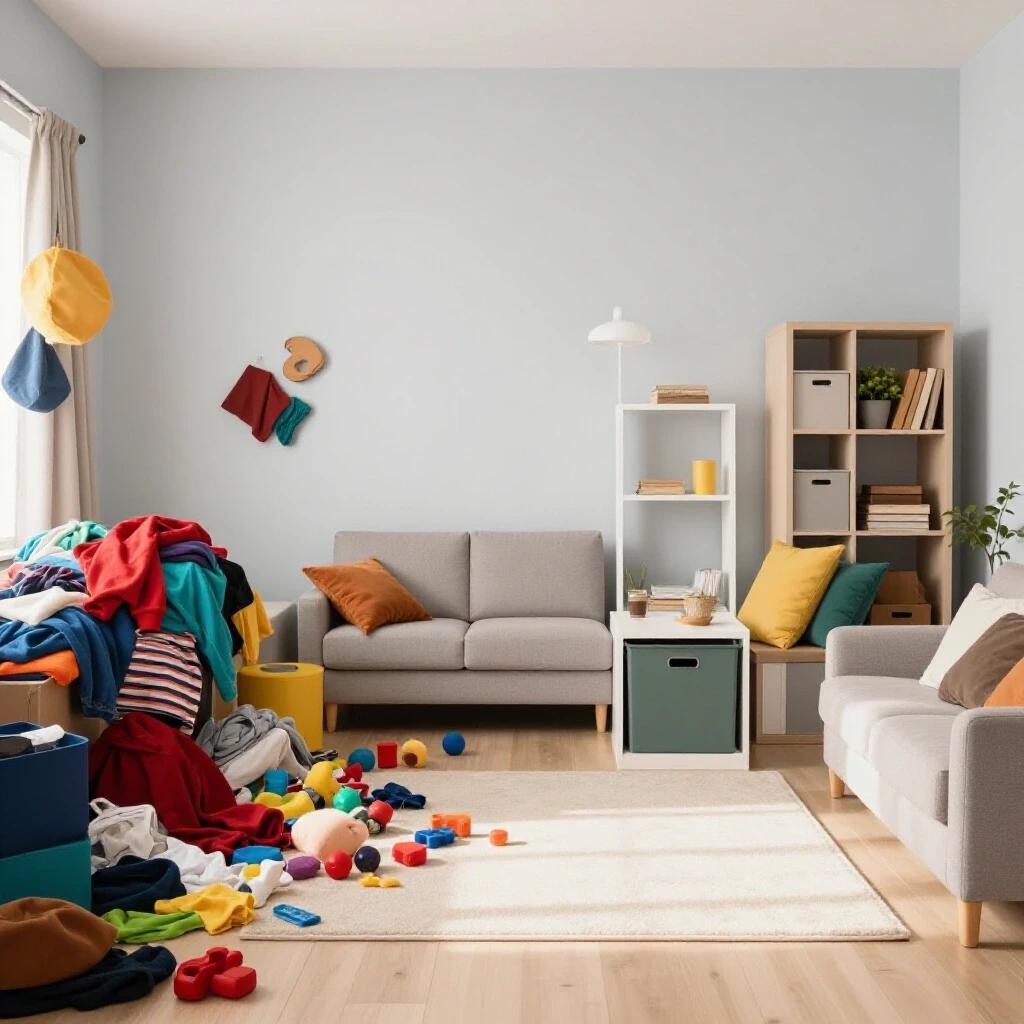
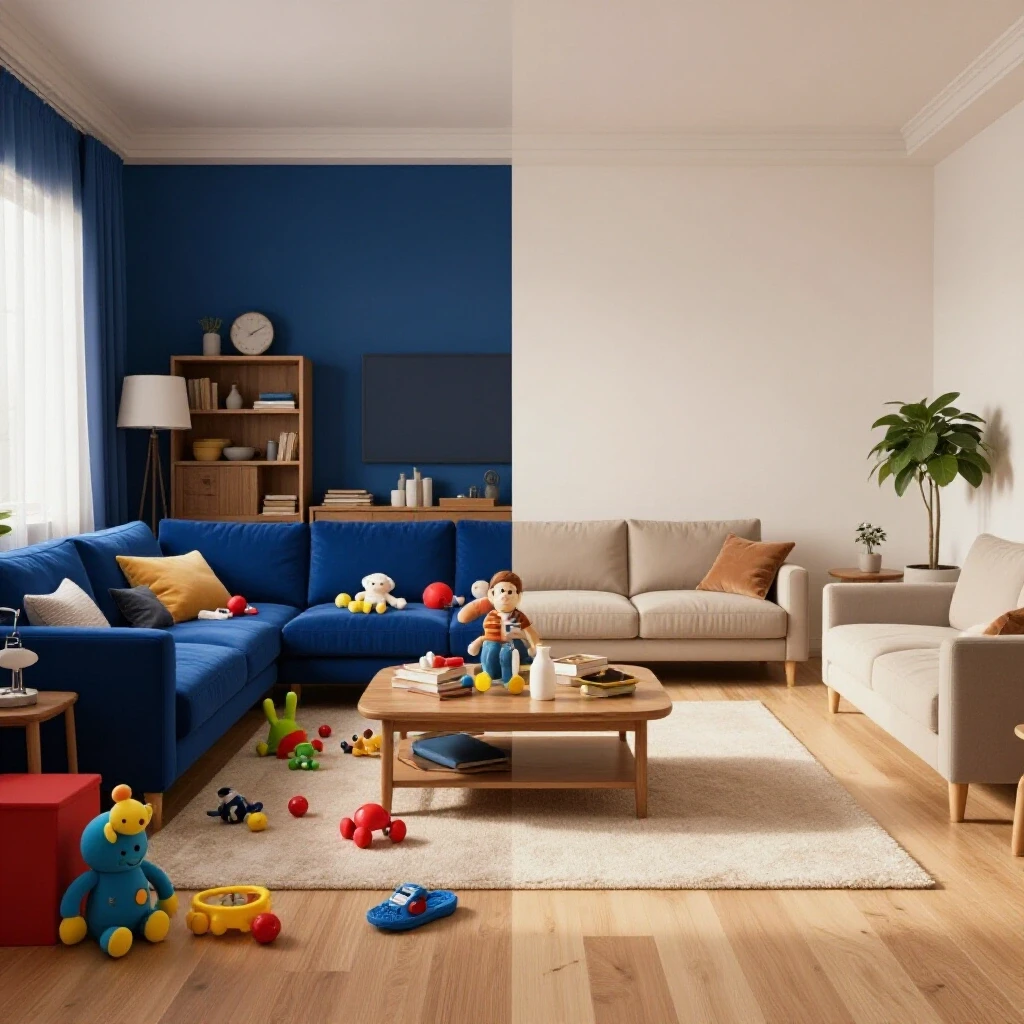
Environmental psychology research suggests that visual noise—too many items competing for our attention—increases cortisol levels, especially in parents. When we scaled back our living space, the “visual weight” of our belongings became much heavier. In a large room, a pile of toys is a nuisance; in a compact shared space, it is an obstacle. We found that by reducing the number of visible surfaces, we could lower the collective “mental load” of the household.
Why High-Friction Systems Fail in Small Homes
High-friction systems are storage methods that require multiple steps to complete, such as unstacking boxes or navigating complex lids. In a busy home, these systems inevitably collapse because the effort to maintain them exceeds the time available during a typical day.
I once installed beautiful, matching bins with tight-fitting lids in our children’s shared room. Within three days, the toys were back on the floor. The “friction” was too high. To a child, or even a tired professional, opening a lid is a barrier. We replaced these with open-topped, sturdy baskets. The sorting speed increased instantly because the physical “cost” of tidying up was reduced to a single motion: the drop.
Implementing the Inflow and Outflow Framework
This logistical approach treats the home like a processing center where every item must have a clear entry and exit path. By managing the rate at which items enter the home, families can prevent the “spatial bottleneck” that occurs when belongings accumulate faster than they are removed.
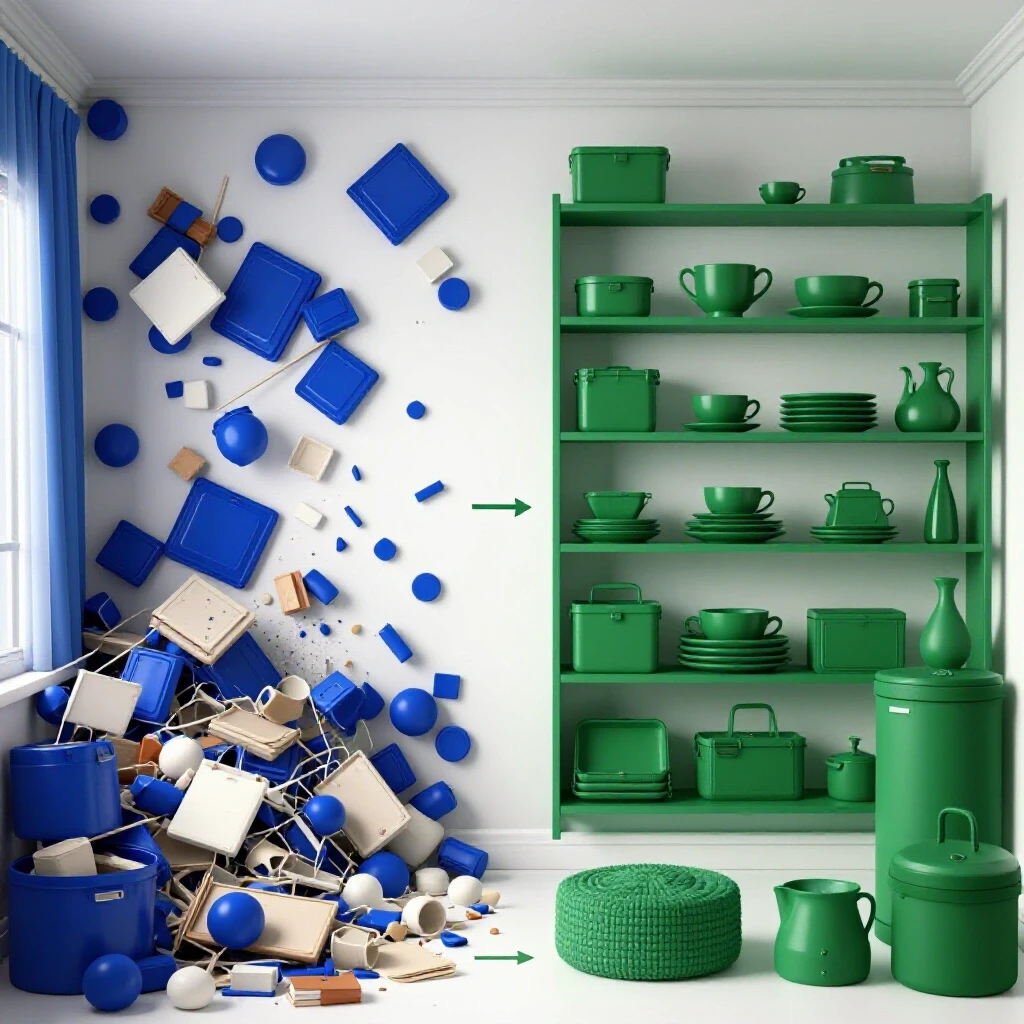
In logistics, we monitor “flow rates.” If more inventory arrives at a warehouse than leaves it, the system crashes. I applied this to our home by creating a “One-In, One-Out” rule that the kids could understand. If a new toy arrived, an old one had to be designated for the “outflow” bin. This prevented our storage volume from exceeding the physical capacity of our shelves.
The Storage Friction Index
This metric ranks different storage types based on how many physical actions are required to store or retrieve an item. Lower friction scores indicate systems that are more likely to be maintained by children and busy adults over long periods.
| Storage Type | Steps to Store | Friction Level | Best Use Case |
|---|---|---|---|
| Open Bin/Basket | 1 (Drop) | Low | Daily toys, shoes, frequently used gear |
| Pull-out Drawer | 2 (Open, Drop) | Medium | Clothing, office supplies, kitchen tools |
| Lidded Box (Stacked) | 4+ (Move top boxes, Open lid, Place, Replace) | High | Seasonal decor, long-term archives |
| Labeled Cabinet | 3 (Open door, Place, Close) | Medium | Dishes, board games, cleaning supplies |
Creating Functional Zones in Shared Children’s Spaces
Zoning is the practice of dividing a single room into distinct areas based on activity rather than just furniture placement. This strategy is essential for families in smaller homes to ensure that play, sleep, and study areas do not overlap and create chaos.
When our children started sharing a bedroom, we used DIY room dividers—specifically open-backed shelving units—to create a sense of individual territory. These units served two purposes: they acted as a physical wall and provided multifunctional storage. We assigned the lower shelves to the younger child and the higher ones to the older child, aligning the “spatial capacity” with their physical reach.
Visual vs. Functional Organization
Visual organization focuses on how a space looks, often prioritizing aesthetics, while functional organization focuses on how a space works. For a family, a functional system is always superior because it accounts for human behavior and the reality of daily life.
- Visual Focus: Hidden bins, color-coded books, and minimalist surfaces that look good in photos.
- Functional Focus: Clear labels, accessible heights, and “drop zones” for high-frequency items.
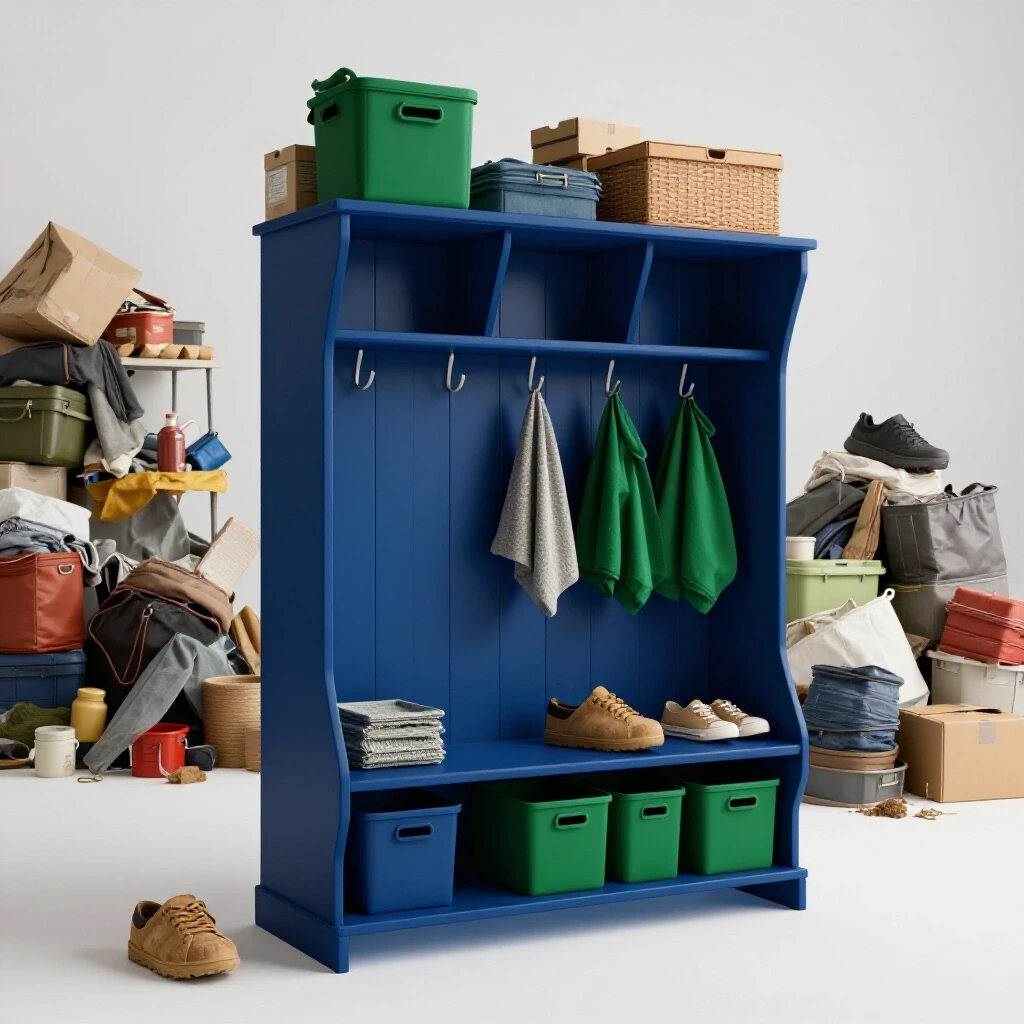
- The Balance: We found that using uniform colors for open bins provided the “visual calm” we wanted without adding the “friction” of lids.
The Sorting Matrix for Rapid Decluttering
A sorting matrix is a decision-making tool that helps families quickly categorize items during a cleanup session. By using pre-defined criteria, you can reduce decision fatigue and speed up the process of clearing out unnecessary belongings.
During our system redesign, I used a “Sorting Log” to track how long it took to clear specific rooms. We found that the biggest bottleneck was “decision fatigue”—the mental exhaustion of deciding what to keep. To solve this, we created a simple three-category system for every item:
- Active Inventory: Items used at least once a week. These stay in “Prime Real Estate” (waist-to-eye level).
- Reserve Inventory: Items used monthly or seasonally. These go to “Secondary Storage” (high shelves or under beds).
- Dead Stock: Items not used in six months. These are immediately moved to the “Outflow” zone for donation.
Daily Maintenance Timelines by Family Size
These timelines represent the average amount of time required to reset a home to its functional baseline. Maintaining order in a smaller space requires shorter, more frequent “sprints” rather than long, exhausting cleaning sessions.
- Family of 3: 10 minutes (Morning Reset), 15 minutes (Evening Reset).
- Family of 4: 15 minutes (Morning Reset), 20 minutes (Evening Reset).
- Family of 5+: 20 minutes (Morning Reset), 30 minutes (Evening Reset).
Selecting Sustainable Storage Gear
This section details the physical tools and containers that best support a low-maintenance home. Choosing the right materials and designs can significantly reduce the amount of time spent reorganizing the same spaces repeatedly.
We learned the hard way that “pretty” storage often fails. In our logistics audit, we looked for three things: durability, visibility, and modularity. We moved away from flimsy plastic drawers that off-track easily and toward heavy-duty, stackable units that could grow with the children.
- Canvas Baskets: Great for soft items like stuffed animals; they are light and safe for toddlers.
- Clear Acrylic Bins: Perfect for “micro-sorting” small items like building blocks or art supplies because the kids can see exactly what is inside.
- Wall-Mounted Rails: These utilize “vertical real estate,” keeping floor space clear in smaller rooms.
- Digital Inventory Apps: For items stored in the garage or attic, we use simple QR code labels. Scanning the code shows us a photo of the contents without us having to move a single box.
Building Habit Loops for Lasting Order
Habit loops are three-part cycles consisting of a cue, a routine, and a reward. By integrating organization into existing daily patterns, families can maintain their home systems with minimal conscious effort.
The most successful system we implemented was the “Transition Sweep.” In logistics, we call this a “clearing of the line.” Before moving from one activity to the next—such as finishing homework and starting dinner—everyone spends exactly three minutes returning their current “tools” to their zones. Because we reduced the friction of our storage, three minutes is actually enough time to reset the main living area.
Common Mistakes in Family Organization
Identifying frequent errors helps avoid the “reversion trap,” where a home returns to a cluttered state shortly after being organized. Avoiding these pitfalls ensures that the effort put into downsizing remains effective over time.
- Over-Categorizing: Creating twenty categories for toys when three would suffice. This increases the “sorting time” and leads to abandonment of the system.
- Ignoring Reach Zones: Placing children’s items on high shelves. This forces the adult to be the “retrieval agent,” increasing the adult’s workload.
- Buying Bins Before Sorting: Purchasing containers before knowing the volume of the “Active Inventory.” Always sort first, then measure, then buy.
Actionable Metrics for Your Home Audit
Metrics provide objective data to help you evaluate the efficiency of your living space. By measuring things like retrieval steps and item density, you can make informed adjustments to your storage systems.
- Retrieval Step Count: Aim for 2 steps or fewer for daily items.
- Space Utilization Percentage: Aim for 80% capacity in cabinets. If a shelf is 100% full, it is impossible to maintain without frustration.
- Sorting Time-Box: Set a timer for 15 minutes. If a category takes longer than this to sort, the category is too broad or you have too much “Dead Stock.”
Conclusion: The Path to a Functional Home
Transitioning to a more compact lifestyle with children is not about deprivation; it is about optimization. By applying logistics principles—like reducing friction and managing flow—my family turned a potentially stressful move into a sustainable way of living. We found that when we stopped fighting the physical limits of our space and started working with them, the mental fatigue of “cleaning up” largely vanished.
The goal is not a house that looks like a museum. The goal is a home that resets easily, allowing you to spend less time managing your “inventory” and more time living your life. Start by identifying your highest-friction area today. Remove one lid, clear one “Prime Real Estate” shelf, or set a three-minute timer. Small, logical changes are the ones that actually stick.
Frequently Asked Questions
How do I handle the influx of new toys and gifts in a smaller home?
The most effective method is establishing a firm “One-In, One-Out” policy. Before birthdays or holidays, conduct a “pre-emptive sort” with your children to identify items they have outgrown. This creates physical and mental space for new items without exceeding your home’s spatial capacity.
What are the best ways to create privacy for children sharing a small room?
Use “functional dividers” like open shelving units or tall headboards. These provide a physical boundary and extra storage without blocking light or making the room feel closed in. Curtains mounted on ceiling tracks are also a low-cost, flexible way to give each child a “private” zone.
How can I stop my home from reverting to a mess within days?
Reversion usually happens because the “retrieval friction” is too high. Check if your storage requires too many steps to use. If you have to move three things to put one away, you will eventually stop doing it. Simplify your bins and ensure everything has a designated “home” within reach of the person who uses it.
Is minimalist decor practical for a family with young kids?
Yes, but it must be “functional minimalism.” This means choosing furniture with built-in storage and keeping surfaces clear of non-essential items. Reducing visual noise helps children focus better and makes the daily “reset” much faster for parents.
How do I decide what to keep and what to get rid of?
Use the “Active Inventory” rule. If an item hasn’t been touched in six months and doesn’t have significant sentimental value, it is “Dead Stock.” In a smaller home, every square foot has a “rental cost” in terms of your time and energy. Only keep what earns its place.
What labels work best for children who cannot read yet?
Picture labels are highly effective. Use a small printer or even hand-drawn icons to show what belongs in each bin (e.g., a picture of a car for the toy car bin). This empowers children to participate in the “outflow” process without needing adult assistance.
How do I manage paper clutter and school projects in a compact space?
Implement a “Stationary Buffer Zone.” Use one single basket for all incoming paper. Once a week, sort through it. Digitizing school art with a quick photo can preserve the memory without the physical bulk. Keep only a small “Portfolio” for the very best physical pieces.
Can a small home really be low-maintenance with multiple children?
Absolutely. Smaller homes often require less maintenance because there is less “drift space” for clutter to hide. By using high-efficiency sorting and low-friction storage, the time spent cleaning is significantly reduced compared to a larger, less-organized house.
(This article was written by one of our staff writers, Christopher Bennett. Visit our Meet the Team page to learn more about the author and their expertise.)