Driveway Repair Budget Guide: Cost Breakdown & Long-Term Fixes (Tips)

Maintaining the exterior of a home often requires a balance between environmental responsibility and fiscal discipline. Choosing eco-friendly sealants and permeable repair materials reduces chemical runoff into local waterways while extending the life of existing surfaces. By focusing on sustainable, incremental upkeep, homeowners can avoid the massive carbon footprint and financial burden associated with full-scale demolition and repaving.
Establishing a Sustainable Financial Framework for Pavement Care
A sustainable financial framework involves categorizing home maintenance costs into predictable, recurring line items rather than emergency expenses. This approach uses historical data and localized material pricing to create a “sinking fund” that covers minor repairs before they escalate into structural failures. It prioritizes liquidity and long-term asset preservation over cosmetic perfection.
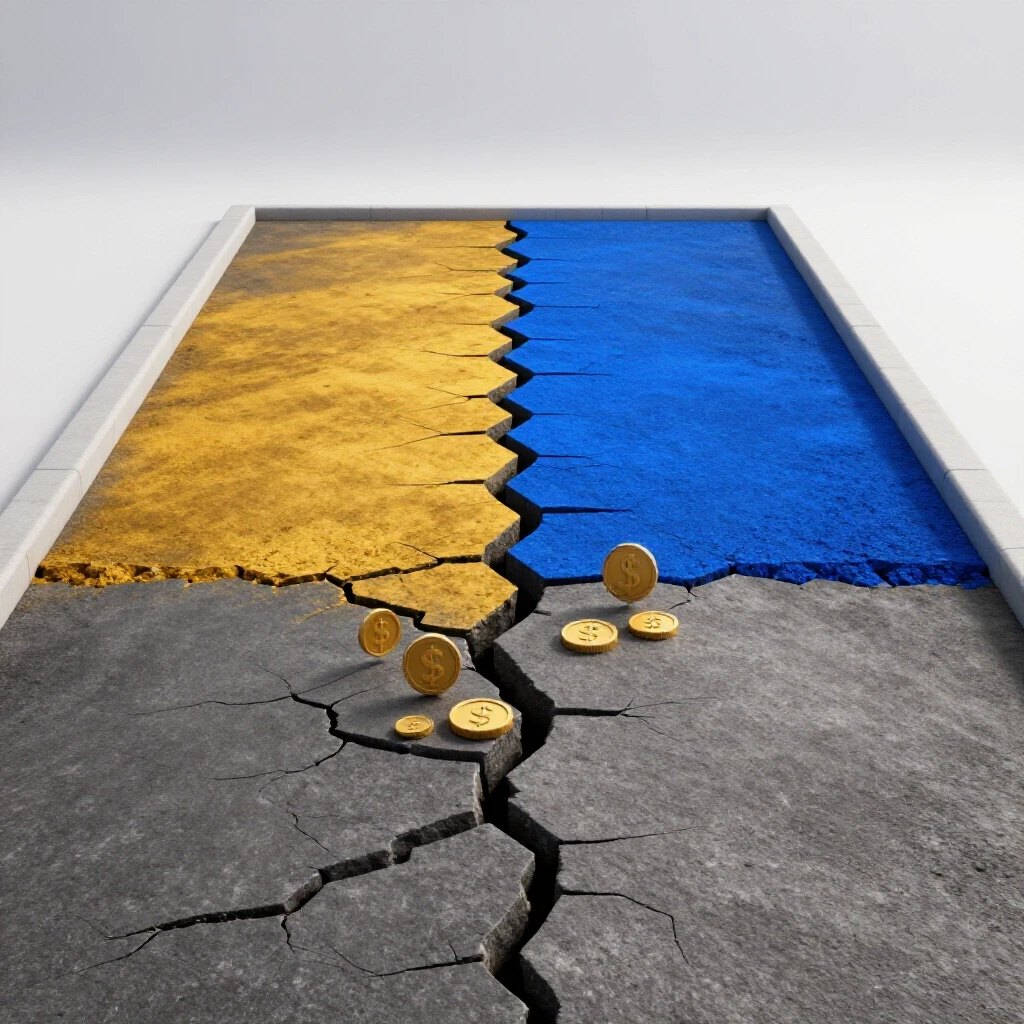
I have spent years refining my own spreadsheets to account for the way exterior surfaces degrade. In my experience, most homeowners fail to treat their driveway as a depreciating asset that requires a dedicated maintenance sub-account. When I first began tracking my own home renovation budget, I realized that small, annual investments in high-quality crack fillers and sealants were significantly more cost-effective than a total overhaul.
Building a financial model for your home requires looking at the “useful life” of your current surface. If a standard asphalt or concrete path lasts 20 to 30 years with proper care, your goal is to maximize that timeline through disciplined, low-cost interventions. By setting aside a small monthly amount, you ensure that the funds are available when the weather permits work, preventing the need for high-interest credit use.
The Sinking Fund Method for Exterior Upkeep
The sinking fund method is a personal finance strategy where you save a specific amount of money over a set period for a future known expense. In the context of home maintenance, this means calculating the total cost of tools and materials needed every three to five years and dividing that by the number of months in between.
- Identify the total cost of a DIY resealing kit and crack repair supplies.
- Divide that total by 36 months to determine your monthly contribution.
- Automate the transfer to a dedicated “House Maintenance” savings account.
- Adjust the contribution annually based on the Producer Price Index for construction materials.
Line-Item Audits for DIY Surface Restoration
A line-item audit is a granular breakdown of every material, tool, and permit required to complete a specific project phase. This process removes the guesswork from a cost breakdown guide by forcing the homeowner to research current retail prices for items like bitumen-based fillers, specialized brushes, and cleaning agents. It serves as the primary defense against mid-project budget “creep.”
When I audited my first major surface restoration project, I discovered that I had underestimated the volume of crack filler needed by nearly 40%. This was a common error I later saw in many client consultations. We often look at the surface and see the big cracks, but we ignore the micro-fissures that consume material rapidly.
To avoid this, I recommend a “test patch” approach to budgeting. Buy one unit of your chosen filler and see exactly how many linear feet it covers on your specific surface. This data-driven method allows you to scale your material orders accurately, reducing waste and multiple trips to the hardware store.
| Item Category | Estimated Cost (DIY) | Actual Cost (My Ledger) | Variance |
|---|---|---|---|
| Asphalt Crack Filler (Liquid) | $150.00 | $210.00 | +$60.00 |
| Professional Grade Sealant | $300.00 | $285.00 | -$15.00 |
| Degreaser & Cleaning Agent | $40.00 | $55.00 | +$15.00 |
| Application Tools (Squeegee/Brushes) | $60.00 | $72.00 | +$12.00 |
| Total Project Cost | $550.00 | $622.00 | +$72.00 |
Quantifying Sweat Equity and Tool Depreciation
Sweat equity is the non-monetary contribution a homeowner makes to a project through their own labor, which increases the property’s value without a corresponding cash outlay. Tool depreciation accounts for the wear and tear on equipment like pressure washers or blowers, which must eventually be repaired or replaced.
- Calculate your “hourly rate” based on what you would pay a professional, then track your hours.
- Factor in a 10% annual depreciation rate for any power tools purchased specifically for the task.
- Compare the total “value” of your labor against the material costs to see the true investment.
- Use this data to decide if future repairs are worth your time or if they should be deferred.
Managing Hidden Variables in Ground Maintenance
Hidden variables are the unforeseen factors that can inflate a remodeling expense tracker, such as underlying drainage issues, soil instability, or municipal regulations. Identifying these risks early prevents financial strain by allowing the homeowner to allocate a contingency buffer. This section focuses on the “unseen” elements that affect the durability of surface repairs.
During one of my early projects, I ignored a small area of standing water near the edge of the pavement. I applied a high-quality patch, but because the drainage issue wasn’t addressed, the repair failed within a single winter. I had to spend twice as much the following spring to fix both the sinkhole and the grading that caused it.
This taught me that ground-level projects are rarely just about the surface. You must look at how water moves across your property. A financially prudent homeowner invests in the “prep work” first, as ignoring the foundation of the project is the fastest way to waste money on materials.
Regional Climate Impacts on Material Longevity
Regional climate impacts refer to how local weather patterns—such as freeze-thaw cycles, extreme heat, or heavy rainfall—dictate the lifespan of repair materials. Understanding these patterns helps in financial planning for homeowners by determining the necessary frequency of maintenance cycles.
- High-heat regions require sealants with greater UV resistance to prevent brittleness.
- Areas with harsh winters need flexible fillers that can expand and contract without cracking.
- Coastal zones must account for salt air, which can accelerate the degradation of certain binders.
- Consult local weather data to time your repairs during optimal temperature windows (usually 50-90°F).
Calculating the Real Return on Maintenance Investment
The return on investment (ROI) for home maintenance is calculated by comparing the cost of ongoing repairs to the avoided cost of a total replacement and the impact on property resale value. Unlike a kitchen remodel, which has a visible “lifestyle value,” exterior maintenance is a protective investment. It preserves the home’s “curb appeal” and structural integrity.
According to Remodeling Magazine’s Cost vs. Value reports, basic exterior maintenance consistently ranks high for cost recovery. While it might not be as exciting as a new deck, a well-maintained entry path signals to future buyers that the home has been cared for. In my financial planning practice, I advise clients that every dollar spent on prevention saves roughly five to ten dollars in future capital expenditures.
The “lifestyle value” here is the peace of mind that comes from a safe, trip-free surface. From a strictly financial perspective, maintaining your existing driveway is an exercise in “loss aversion.” You are protecting the $10,000 to $15,000 value of your current pavement for a few hundred dollars a year.
| Maintenance Strategy | Annual Cost | Estimated Lifespan Extension | Cost Per Year of Life |
|---|---|---|---|
| Neglect (Zero Upkeep) | $0 | 15 Years | $1,000 (Based on $15k replacement) |
| Basic DIY Crack Filling | $75 | +5 Years | $787 |
| Full DIY Sealcoating (Every 3 yrs) | $150 | +12 Years | $592 |
| Optimized Maintenance Plan | $225 | 30+ Years | <$500 |
A Decade of Data: My Personal Maintenance Ledger
A maintenance ledger is a historical record of all home-related expenses, providing a data-backed view of how much a property actually costs to own. This case study utilizes my own tracking spreadsheets to show the variance between initial budget estimates and long-term actual expenditures. It highlights the importance of consistency over “one-and-done” fixes.
Over the last ten years, I have tracked every bag of cold patch and every gallon of sealer used on my property. Interestingly, the years where I spent the least on maintenance were often followed by the most expensive repair years. This “pendulum effect” is a common trap for cost-conscious planners who try to save money by skipping a season of work.
My ledger shows that material prices have risen approximately 4% annually, slightly outpacing general inflation. By buying materials in the “off-season” (late autumn) and storing them in a climate-controlled space, I managed to lower my total costs by 12%. This level of detail is what separates a realistic budget from a hopeful guess.
- Year 1: Initial deep-clean and major crack filling ($180).
- Year 3: First full sealcoat application ($320).
- Year 5: Edge reinforcement and drainage adjustment ($110).
- Year 7: Second full sealcoat and minor patching ($350).
- Year 10: Surface remains functional with no structural cracks.
Strategic Budgeting Tools for the Prudent Homeowner
Strategic budgeting tools include software, spreadsheets, and checklists that help homeowners organize their financial data and project timelines. These resources allow for “what-if” scenarios, such as comparing the cost of different material grades or adjusting for potential price hikes. They are essential for keeping project budgets on track.
- The Multi-Year Maintenance Spreadsheet: Create columns for “Projected Year,” “Material Estimate,” and “Actual Spend.” This helps you see the long-term trend of your home’s needs.
- Inventory Log: Keep a digital record (with photos) of the specific brands and colors of fillers you use. This ensures consistency in future repairs and prevents “patchwork” aesthetics.
- Local Material Price Index: Create a simple list of prices from three local hardware stores. Update this twice a year to catch seasonal sales or price jumps.
- Weather-Window Calendar: Mark your calendar with the historical “dry weeks” in your area. Timing your work correctly prevents wasted materials due to unexpected rain.
When you use these tools, you move from being a reactive homeowner to a proactive asset manager. You no longer worry about running out of money mid-project because the money was already allocated and the costs were verified. This disciplined approach is the foundation of financial freedom for any property owner.
Conclusion
The most effective way to manage the costs of exterior surface care is through a combination of data-driven planning and consistent, small-scale action. By treating your driveway as a long-term financial commitment rather than a one-time chore, you protect your home’s value and your bank account. Start by auditing your current surface today, and build your first maintenance ledger to turn those observations into a concrete financial plan.
Frequently Asked Questions
How much should I set aside annually for driveway maintenance?
A safe financial guideline is to allocate approximately $0.10 to $0.20 per square foot of surface area each year. For a standard 600-square-foot driveway, this amounts to $60 to $120. This fund should cover the cost of high-quality crack fillers and the eventual purchase of bulk sealant every few years.
Does DIY repair actually increase my home’s resale value?
While DIY maintenance rarely “adds” value in the same way a new kitchen does, it prevents “value subtraction.” Appraisers and buyers often deduct the cost of a full replacement if a driveway is riddled with cracks. By spending $500 over five years, you may be protecting $5,000 to $10,000 of your home’s market value.
What is the most common hidden fee in these types of projects?
The most common hidden cost is “prep-work equipment.” Many homeowners budget for the sealant but forget they need a high-pressure nozzle, a specialized stiff-bristle broom, or oil-spot primer. These small items can easily add $50 to $100 to a budget that was originally only calculated for the liquid materials.
Is it better to buy expensive materials or cheaper ones more often?
From a financial planning perspective, mid-to-high-grade materials usually offer the best ROI. Cheaper fillers often shrink or pull away from the edges within one season, forcing you to spend more on labor and materials the following year. I recommend looking for “professional grade” labels at specialized masonry or paving supply stores rather than the cheapest options at big-box retailers.
How do I know if my driveway is past the point of simple repair?
If more than 20% of the surface is covered in “alligator cracks” (small, interconnected scales), the sub-base has likely failed. In this case, continuing to spend money on surface sealants is a “sunk cost fallacy.” At that point, it is more financially prudent to stop minor repairs and begin a much larger sinking fund for a professional replacement.
Should I worry about permits for minor surface repairs?
Generally, minor repairs like crack filling and sealcoating do not require municipal permits. However, if your repair involves changing the “footprint” of the driveway or altering the way water drains into the street, some cities may require a minor works permit. Always check your local building department’s website to avoid unexpected fines.
How does the “Cost vs. Value” report apply to my DIY work?
The report typically tracks professional installations, but you can use the data to find the “ceiling” for your neighborhood. If the report says a full replacement in your area only recovers 60% of its cost, you should be even more motivated to use low-cost DIY maintenance to avoid that 40% loss on a new installation.
What is the best way to track these expenses for tax purposes?
While maintenance is generally not tax-deductible for a primary residence, keeping a detailed ledger is vital if you ever convert the home to a rental property. Save your receipts and log your hours in a simple spreadsheet. These records can also be used to show prospective buyers the “pride of ownership” and the care the property has received.
(This article was written by one of our staff writers, Steven Fletcher. Visit our Meet the Team page to learn more about the author and their expertise.)