Which Countertops Stain? Guide to Durable Surfaces (Comparison)

Focusing on accessibility in home remodeling means understanding that the materials you choose must survive your actual lifestyle, not just look good in a showroom. After 18 years in construction coordination, I have seen many homeowners select surfaces based on aesthetics, only to face immediate regret when a spilled glass of wine or a drop of lemon juice leaves a permanent mark.
Navigating Surface Vulnerabilities in Residential Renovation Planning
Surface vulnerability refers to how easily a material absorbs liquids or reacts chemically with common household items like oils and acids. Understanding these weaknesses early in your project allows you to choose materials that align with how you actually use your kitchen or bathroom.
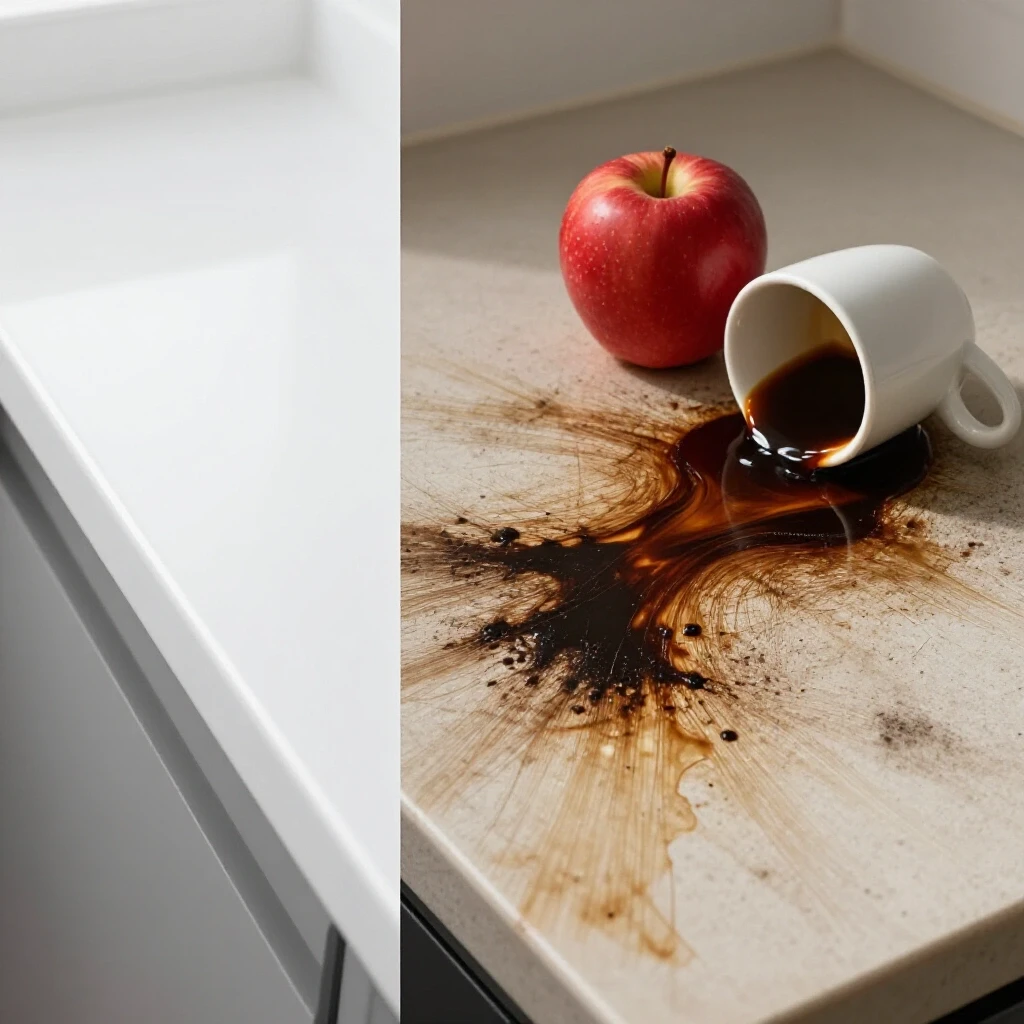
In my experience overseeing dozens of residential projects, homeowners often overlook the “porosity” of a surface. Porosity is a measure of the tiny holes or voids within a material. Think of it like a sponge; the more pores a stone has, the more likely it is to suck in beet juice or coffee. During the planning phase, I always advise clients to request small samples of their top choices. We then perform a “stress test” by leaving a drop of balsamic vinegar and olive oil on the surface overnight. This simple step has saved more budgets and heartaches than almost any other part of the design process.
When you are gathering estimates, don’t just look at the material itself. Ask your contractor about the specific sealants they intend to use. A high-quality impregnating sealer can narrow the gap between a high-maintenance stone and a low-maintenance synthetic, but it is not a permanent shield.
Managing Expectations for Kitchen and Bath Surface Performance
Managing expectations involves recognizing that no surface is entirely bulletproof against all types of chemical reactions or pigment absorption. It is the process of balancing the visual appeal of a material with the reality of daily spills and cleaning routines.
I remember a specific project where the homeowner insisted on a white Carrara marble for their high-traffic kitchen. Marble is a “calcitic” stone, meaning it is made of calcium carbonate. When it touches something acidic, like a tomato or a lemon, a chemical reaction occurs called “etching.” This isn’t just a stain; it actually eats away a tiny layer of the stone, leaving a dull, cloudy spot. Even with the best professional sealers, marble will etch.
On the other hand, engineered surfaces like quartz are non-porous because they are bound together with resin. In my own second home renovation, I opted for quartz because I knew I didn’t want to worry about coffee rings on the counter every morning. Below is a breakdown of how various materials typically perform when exposed to common household staining agents.
| Material Type | Coffee/Tea Resistance | Red Wine Resistance | Cooking Oil Resistance | Citrus/Acid Resistance |
|---|---|---|---|---|
| Quartz (Engineered) | Excellent | Excellent | Good | Excellent |
| Granite (Sealed) | Good | Good | Fair | Good |
| Marble (Natural) | Poor | Poor | Poor | Very Poor |
| Laminate | Good | Fair | Excellent | Excellent |
| Butcher Block | Poor | Very Poor | Fair | Fair |
The Chemical Reality of Sealing and Protection
Sealing is the application of a liquid chemical treatment designed to fill the pores of a natural stone to prevent liquid penetration. It acts as a temporary barrier that gives you more time to wipe up a spill before it becomes a permanent part of the material.
Many people believe that once a surface is sealed, it is “waterproof.” This is a dangerous assumption. Most sealers are “breathable,” meaning they allow water vapor to escape but slow down the absorption of liquid. In my professional coordination career, I’ve found that the “water bead test” is the best way to verify if a surface is properly protected. If you drop water on the surface and it doesn’t bead up into tight droplets, the sealer has failed or was never applied correctly.
For those planning a whole-house remodel, the timing of sealing is a critical construction sequencing step. It should happen after the material is installed but before other subcontractors, like painters or electricians, begin their “finish” work. I once saw a beautiful granite island ruined because a painter set a can of oil-based primer on an unsealed slab. The oil seeped into the stone, creating a dark ring that no amount of poultice could fully remove.
- Always verify the “cure time” for sealers; most require 24 hours of zero contact.
- Use pH-neutral cleaners to avoid stripping the protective layer.
- Plan to re-seal natural stones every 12 to 24 months depending on usage.
Why Hidden Structural Surprises Impact Surface Decisions
Structural surprises are unexpected issues found during demolition, such as mold behind a backsplash or rotted subfloors beneath a heavy island. These issues can shift your material choices if the weight of a specific stone requires more floor reinforcement than your budget now allows.
During a renovation in an older 1940s home, we discovered that the floor joists under the kitchen were significantly undersized. This meant we couldn’t use a heavy, thick-slab stone without expensive structural work. We had to pivot to a lighter material. This is why a structural inspection checklist is vital. If your subfloor isn’t level and stable, a rigid material like quartz or granite can actually crack over time, and those cracks are prime spots for liquids to enter and cause deep-seated staining that is impossible to clean.
I recommend a 15-25% contingency buffer in your planning specifically for these types of discoveries. If you find rot or outdated wiring that needs immediate attention, you might need to choose a surface that requires less specialized maintenance or one that is more forgiving of a slightly imperfect base.
Contractor Vetting for Material Care and Handling
Contractor vetting is the process of interviewing and checking the references of professionals to ensure they have the specific skills needed for your chosen materials. This includes their ability to protect the surfaces during the remaining phases of construction.
When interviewing contractors, ask them specifically about their “site protection” plan. A common rookie mistake is for a contractor to install a beautiful, stain-sensitive surface and then leave it uncovered while they finish the rest of the room. I have seen metal shavings from ductwork or drips of wood stain from cabinetry ruin brand-new surfaces because the contractor didn’t tape down protective cardboard or “Ram Board.”
- Ask for photos of past projects specifically showing how they protect surfaces during work.
- Check if they provide a written warranty on the initial sealing process.
- Confirm they have experience with the specific material you’ve chosen, as marble requires different handling than laminate.
Establishing Quality Control Benchmarks for Surface Integrity
Quality control benchmarks are specific, measurable standards that a material or installation must meet before you sign off on a project phase. These benchmarks ensure that the “finish” stage of your remodel meets the expectations set during the design phase.
One of my standard benchmarks is the “stain-free handover.” Before the final payment is made, I walk through the project with the homeowner and a high-powered flashlight. We look for any signs of “ghosting” (faint stains) or etching that might have occurred during the construction process. If a subcontractor spilled a chemical or left a wet tool on the surface, this is the time to identify it.
Another benchmark is the “sealer verification.” I ask the installer to demonstrate the water bead test in front of me. If the water soaks in, the job isn’t done. This level of oversight minimizes friction and prevents disputes later on when you find a stain that occurred because the sealer wasn’t applied evenly.
- Inspect the slab for pre-existing marks under bright, angled light.
- Verify that all seams are tight and filled with color-matched epoxy that resists staining.
- Perform a water-drop test on three different areas of the surface.
- Review the manufacturer’s approved cleaning list to ensure no warranty-voiding chemicals are used.
Establishing a Realistic Contingency Plan for Material Failures
A contingency plan is a secondary strategy used when the primary plan runs into trouble, such as a material becoming unavailable or a sample failing your stain tests. It involves having a “Plan B” material that offers similar performance characteristics.
During one of my personal renovations, I had my heart set on a specific light-colored granite. However, the sample I tested failed the oil-absorption test miserably; it left a dark smudge that wouldn’t lift. Because I had a contingency plan, I quickly pivoted to a high-density quartz that looked similar but offered the non-porous qualities I needed for a busy kitchen.
This is part of smart residential renovation planning. Don’t wait until the week of installation to find out your material choice is a maintenance nightmare. Use your project schedule float time—the extra days built into a schedule for delays—to thoroughly vet your materials.
| Project Phase | Potential Surface Risk | Mitigation Strategy |
|---|---|---|
| Demolition | Dust and debris scratching/clogging pores | Seal off the kitchen with plastic sheeting |
| Cabinet Install | Tool drops and wood stain drips | Cover surfaces with heavy-duty floor protection |
| Plumbing Rough-in | Pipe glue or solder splatter | Ensure sinks are covered during installation |
| Final Finish | Cleaning chemical overspray | Use only pH-neutral cleaners for construction cleanup |
Post-Occupancy Evaluation: What Stained in the Real World
A post-occupancy evaluation is a review conducted six to twelve months after the project is finished to see how the materials are performing in daily life. This is where the “real world” data comes from, moving beyond laboratory tests.
In my evaluations of past projects, I’ve found that tomato sauce and turmeric are the two biggest enemies of light-colored surfaces. Even quartz, which is highly resistant, can occasionally “take” a stain from turmeric if it sits for too long. Interestingly, I’ve seen that many “stains” on laminate are actually burns or chemical melts from harsh cleaners, which then trap dirt and look like stains.
For butcher block, the evaluation is often a mixed bag. Homeowners who are diligent about oiling the wood every month find it beautiful and relatively stain-resistant. Those who skip the maintenance find that water rings and wine stains become permanent features of the wood grain within the first year.
Essential Tools for Managing Your Surface Selection
Managing a remodel requires more than just a good eye for design; it requires a systematic approach to tracking information and timing.
- Digital Material Log: A spreadsheet or app where you store photos of the exact slabs you picked, along with the manufacturer’s care instructions.
- Stain Test Kit: A collection of coffee, wine, oil, and lemon juice used on samples before you commit to a purchase.
- Moisture Meter: A tool used by contractors to ensure the subfloor is dry before installation, preventing mold that could eventually affect surface health.
- Project Management App: Tools like CoConstruct or Buildertrend (or even a simple Trello board) to track when the sealer needs to be applied in the construction sequence.
- High-Lumen Flashlight: Essential for the final punch-list walk-through to see surface imperfections that normal room lighting might hide.
Conclusion: Taking the Next Steps in Your Renovation
The path to a successful remodel is paved with data and realistic expectations. You don’t need to be a construction expert to avoid the common pitfalls of surface staining and material failure. Start by identifying how you use your space. Are you a heavy cook who uses a lot of oils and acids? If so, prioritize non-porous materials like quartz or highly-rated, well-sealed granites.
Your next step should be to request samples of your top three material choices. Don’t just look at them in the light of your current kitchen; subject them to the “overnight spill test.” While you do this, review your contractor’s site protection plan. Ensuring that your surfaces are protected from the moment they arrive on-site until the day you move back in is the best way to control your financial risk and ensure a high-quality outcome.
Frequently Asked Questions
Which countertop material is the most resistant to red wine stains?
Quartz is generally the most resistant to red wine because it is an engineered, non-porous material. It does not require sealing and does not have the open pores found in natural stones like marble or granite. However, even with quartz, it is best to wipe up wine spills within a few hours to prevent any pigment from settling on the surface resin.
Does sealing granite make it 100% stain-proof?
No, sealing granite makes it stain-resistant, not stain-proof. A sealer acts as a “time buffer,” slowing down the rate at which liquids are absorbed into the stone. If you leave a pool of oil or wine on sealed granite for several hours, it can eventually penetrate the barrier and leave a mark.
Why did my marble countertop get dull spots after I spilled orange juice?
Those dull spots are likely “etching,” not a traditional stain. Because marble is made of calcium carbonate, it reacts chemically with the acid in orange juice. This reaction physically dissolves a tiny portion of the stone’s surface. Sealing does not prevent etching; it only helps prevent the stone from absorbing the color of the juice.
Can I remove a coffee stain from a laminate surface?
Laminate is quite resistant to staining, but if coffee sits long enough, it can leave a faint brown mark. You can often remove this using a paste of baking soda and water. Be careful not to scrub too hard, as the abrasive nature of the baking soda can dull the laminate’s finish over time.
How often should I re-apply sealer to my natural stone?
For high-traffic areas like a kitchen, I recommend re-sealing every 12 months. For bathrooms or less-used areas, every 24 months is usually sufficient. You can perform the “water bead test” at any time to check if your sealer is still effective.
Is butcher block a good choice for someone worried about staining?
Butcher block requires the most maintenance of any common surface. If it is not regularly treated with food-grade mineral oil or a beeswax finish, it will absorb liquids very quickly. Wine and beet juice are particularly difficult to remove from wood once they soak into the fibers.
What is the best way to protect my new surfaces during the rest of the renovation?
The best method is to use a breathable but heavy-duty protection like Ram Board or thick corrugated cardboard. Ensure the surface is clean and dry before covering it, and tape the protection to itself rather than to the countertop to avoid leaving adhesive residue.
Does the color of the surface affect how much it stains?
While the material’s porosity determines if it stains, the color determines how visible that stain is. Darker granites often have a lower absorption rate than lighter granites, and they also hide small marks better. White quartz or marble will show even the slightest pigment residue much more clearly than a patterned or darker surface.
(This article was written by one of our staff writers, David Langford. Visit our Meet the Team page to learn more about the author and their expertise.)