How to Declutter Your Fabric Stash for Better Organization (Guide)

Many people believe that a large collection of materials is a spark for creativity. They think that having every possible color or texture on hand will make them more productive. In reality, an overflowing collection of sewing supplies often leads to “decision fatigue.” This is the mental exhaustion we feel when we have too many choices. For a busy family, an unmanaged inventory of craft materials becomes a source of stress rather than a source of joy.
The Logistics of Managing Large Craft Inventories
This section explores how physical space and mental energy are finite resources in a busy household. We look at the “cost of carry” for items that sit unused for years.
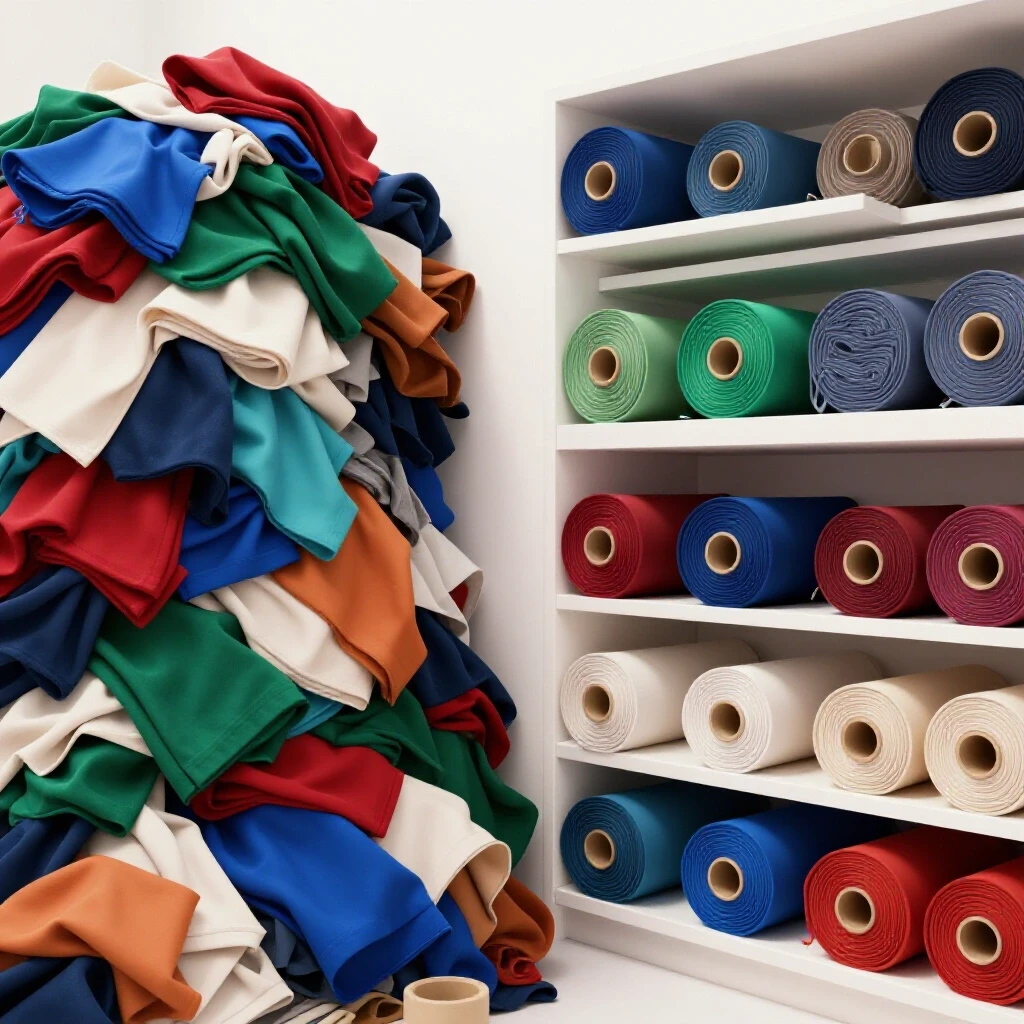
In my eleven years in logistics, I have learned that every item in a warehouse has a “holding cost.” In a home, this cost isn’t just money; it is the space you lose and the mental energy you spend looking at the mess. When my wife and I first tried to organize our home craft area, we made a common mistake. We bought beautiful, clear bins and filled them to the brim. Within a week, the table was covered in scraps again. We realized that our home organization systems were too complex. We were focusing on how things looked instead of how we actually used them.
Research in environmental psychology shows that visual clutter increases cortisol levels, the body’s stress hormone. This is especially true for parents who are already balancing work and kids. When your sewing room or craft corner is packed with “someday” projects, your brain sees a list of unfinished tasks. To achieve sustainable decluttering, we must treat our homes like efficient workspaces. This means recognizing that if you cannot find a piece of material in thirty seconds, you effectively do not own it.
Why High-Friction Storage Leads to Clutter Reversion
This concept explains why complicated filing systems or deep bins often fail. It focuses on the physical effort required to put an item away versus the effort to take it out.
In the world of logistics, we talk about “retrieval friction.” This is the number of steps it takes to get an item and, more importantly, put it back. If you have to move three boxes to get to one piece of denim, you are likely to leave that denim on the counter when you are done. This is how reducing household clutter becomes impossible. Your system is working against your natural human tendency to take the path of least resistance.
The Storage Friction Index
The table below shows how different storage methods affect your ability to maintain order. A higher score means the system is harder to keep tidy over time.
| Storage Method | Retrieval Steps | Return Steps | Friction Score (1-10) |
|---|---|---|---|
| Open Shelving / Cubbies | 1 | 1 | 2 |
| Labeled Transparent Bins | 2 | 2 | 4 |
| Stacked Opaque Totes | 4 | 5 | 9 |
| Vacuum Sealed Bags | 5 | 6 | 10 |
As you can see, stacked totes are the enemy of a functional home storage plan. They create a “barrier to entry” that discourages you from cleaning up. In our house, we moved toward shallow, open-top bins for frequently used materials. This reduced our daily cleanup time from twenty minutes to five.
Facing the Reality of Spatial Capacity Limits
Spatial capacity is the maximum amount of items a specific area can hold while remaining functional. It is a hard limit based on the square footage of your shelves or cabinets.
One of the hardest truths in managing a textile collection is that your house does not grow. Most people try to fit their inventory to their desires rather than fitting their inventory to their shelves. This leads to “overflow,” where items bleed into the living room or dining table. To start a successful decluttering journey, you must first define your boundaries.
I recommend the “One-In, One-Out” rule, but with a logistical twist. Instead of just items, think about volume. If you buy three yards of heavy wool, you must remove three yards of existing material. This keeps your inventory at a “steady state.”
- Spatial Audit: Measure your dedicated craft shelf.
- Volume Metric: Calculate how many standard “bolts” or folds fit comfortably without squeezing.
- Buffer Zone: Leave 15% of the space empty to allow for easy browsing.
The Sorting Framework: Moving from Emotion to Logic
This framework provides a step-by-step method for evaluating materials based on their utility rather than their potential. It helps overcome the “I might need this” trap.
When sorting through a large collection of fabric, many people get stuck in the “sentimental loop.” They remember the dress they planned to make five years ago. To break this, I use a “Sorting Logic Gate.” This is a series of yes/no questions that remove the emotional weight of the decision.
- Have I touched this in 24 months? If no, it moves to the “outbound” pile.
- Does this fit a specific project on my calendar for the next 6 months? If no, it is “dead stock.”
- Is the material still in good condition? Check for fading or dry rot.
Textile Inventory Sorting Log
Use this log to track your progress during a high-speed sorting session. Aim for 30 items every 15 minutes.
| Material Type | Keep (Active) | Donate/Swap | Repurpose | Decision Time (Sec) |
|---|---|---|---|---|
| Cotton Prints | 15 | 10 | 5 | 10 |
| Upholstery | 2 | 8 | 0 | 15 |
| Scraps (< 1/4 yard) | 0 | 0 | 20 | 5 |
By timing yourself, you prevent your brain from overthinking. In my family, we found that setting a loud timer created a “game” atmosphere that reduced the mental fatigue of making hundreds of small choices.
Designing High-Efficiency Zoning Maps
Zoning is the practice of dividing a room into specific areas based on the frequency of use. It ensures that the tools you need most are the easiest to reach.
In a professional warehouse, high-velocity items are placed near the shipping dock. In your home, your most used materials should be in the “Golden Zone.” This is the area between your knees and your shoulders. Anything stored above your head or on the floor is “cold storage.”
- Zone A (Active): Materials for current projects. Must be reachable without a stool.
- Zone B (Secondary): Basics like linings, interfacings, or neutral colors.
- Zone C (Archive): Seasonal fabrics or heirloom pieces. These can go in higher or lower spots.
When we redesigned our home system, we realized that 80% of our clutter came from Zone A items being mixed with Zone C items. By separating them, we stopped “digging,” which is the primary cause of a room becoming messy again.
Selecting Low-Maintenance Storage Gear
This section discusses the physical tools needed to maintain order. It focuses on durability and ease of use rather than aesthetic trends.
The market is full of “pretty” storage solutions that are impractical for a busy parent. Wicker baskets snag delicate fabrics. Cardboard boxes collapse. For a functional home storage system, you need modular, stackable, and cleanable units.
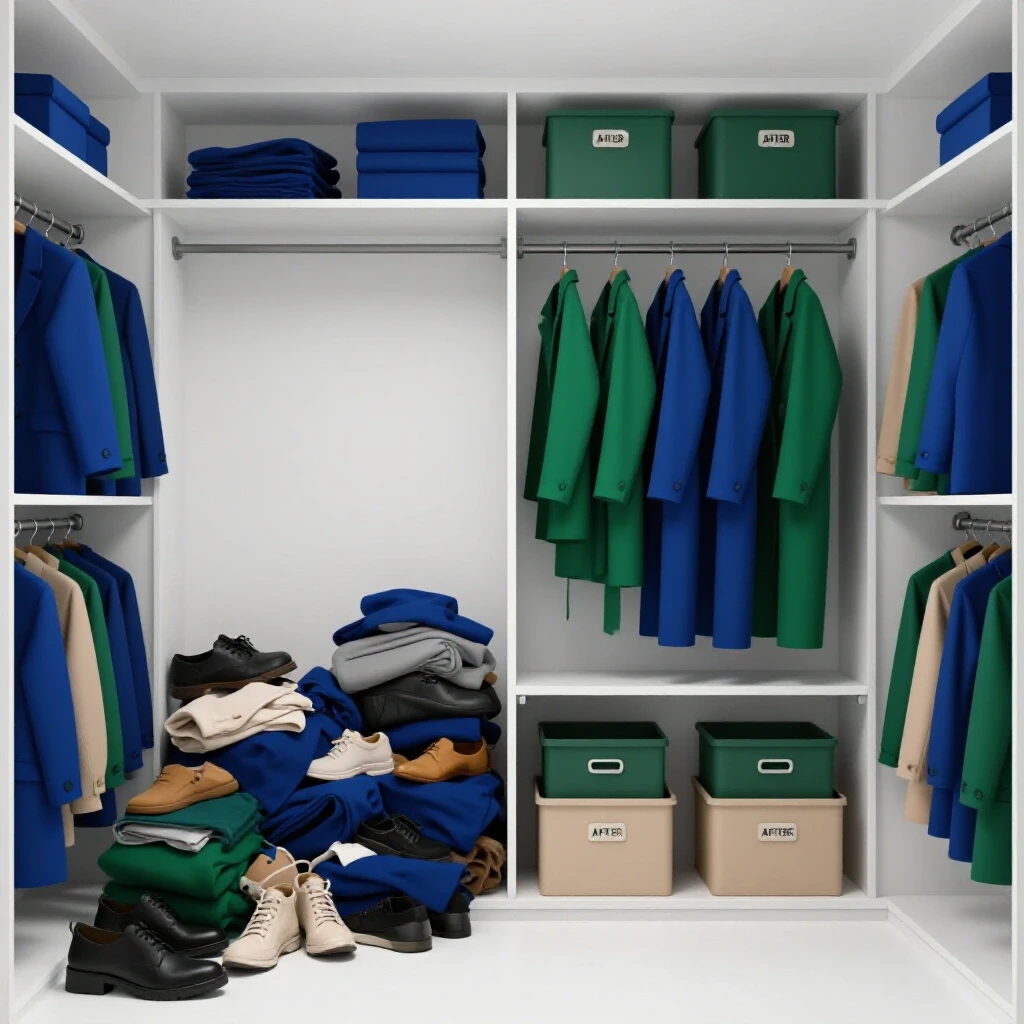
- Uniformity: Use the same brand and size of bin. This allows them to stack perfectly and maximizes every inch of shelf space.
- Visibility: Transparent bins are superior for textiles because they allow you to see colors and patterns without opening the lid.
- Labeling: Use a high-contrast label maker. Labels should describe the contents (e.g., “Floral Cottons”) rather than just “Fabric.”
We once tried using decorative wooden crates. They looked great on social media, but we couldn’t see what was at the bottom. We ended up buying duplicates of things we already owned because they were hidden. Switching to clear, uniform bins saved us money and reduced our “search time” by 70%.
Building Systematic Habit Loops for the Whole Family
Habit loops are small, repeatable actions that keep a system running. They focus on the “outflow” of items to prevent future accumulation.
A system is only as good as the people using it. If your kids or spouse can’t follow the rules, the system will fail. We use “Micro-Cleanups” in our house. These are two-minute intervals where everyone returns five items to their proper “home.”
- Trigger: Finishing a sewing session or before dinner.
- Action: Fold and place three pieces of fabric back in their bins.
- Reward: A clear workspace for the next day.
Research in organizational behavior suggests that “small wins” build the momentum needed for long-term success. Don’t try to organize the whole room in one day. Focus on maintaining one shelf for a week. Once that becomes a habit, move to the next.
Modern Tracking and Digital Inventory Methods
This explains how technology can help manage a large collection without taking up physical space. It focuses on “digital decluttering.”
If you have a very large collection, consider a digital inventory. There are apps available where you can take a photo of your fabric and record the yardage. This allows you to “shop” your own house while you are at the store.
- Photo Catalog: Take a quick snap of the fabric against a ruler.
- Tagging: Use tags like “knit,” “woven,” or “wool.”
- QR Codes: Some advanced systems allow you to put a QR code on a bin. Scanning it shows you a list of everything inside on your phone.
This prevents “over-buying,” which is a major contributor to household clutter. In our experience, knowing exactly what we have stopped the cycle of bringing new materials into an already full space.
Key Takeaways for Long-Term Success
To keep your home functional, you must accept that you cannot keep everything. The “hard truth” is that your time is more valuable than your fabric.
- Limit your inventory to what fits in your designated Zone A and B.
- Reduce friction by using open or easy-access bins.
- Audit quarterly to remove “dead stock” that you no longer love.
- Focus on flow, ensuring that materials move from “stored” to “finished project” at a steady rate.
By applying these logistics principles, you can transform a stressful, cluttered room into a peaceful, productive workspace. The goal isn’t a perfect house; it is a house that serves your family’s needs without causing mental fatigue.
Frequently Asked Questions
How do I decide which fabrics to get rid of if I still like them all? Focus on your “production capacity.” Calculate how many hours you sew each week and how many yards you actually use. If you have 500 yards of fabric but only sew 10 yards a year, you have a 50-year supply. Keeping more than a 2-year supply often leads to storage degradation and outdated styles.
What is the best way to handle small scraps? Scraps are the highest-friction items in a collection. Set a “minimum size” rule. If a piece is smaller than a 10-inch square, compost it, use it for stuffing, or donate it to a school. Small scraps take up as much mental space as large bolts but offer much less utility.
How can I involve my children in keeping the craft area tidy? Use “Visual Cues.” Color-code your bins so even a child who can’t read knows where things go. Make the “return” process a game with a timer. If the system is simple enough for a child to use, it is a sustainable system for a busy adult.
Should I wash fabric before storing it? From a logistics standpoint, only wash it if you plan to use it immediately. Unwashed fabric is often easier to fold and stack neatly. However, ensure the storage area is climate-controlled to prevent mold or pests.
How do I stop feeling guilty about the money I spent on my collection? The money is already spent; it is a “sunk cost.” Keeping the item won’t bring the money back. In fact, keeping it “costs” you more in terms of space and stress. Think of donating it as a way to let someone else enjoy the value of that material.
What is the most common mistake in home organization systems? The most common mistake is buying containers before sorting. People buy bins to “fix” the clutter, but they just end up with organized clutter. Always sort and reduce your inventory by at least 30% before you buy a single storage box.
How do I manage “project kits” that have multiple components? Use “Project Bags.” Keep the fabric, thread, and pattern together in a single clear zipper bag. This reduces the number of items you have to track and ensures that when you have an hour to sew, you aren’t spending forty minutes looking for the matching zipper.
Is it better to fold or roll fabric? Folding is generally more space-efficient for shelves. Rolling is better if you are using deep drawers, as it allows you to see every piece from the top (the “file-folder” method). Choose the one that matches your specific furniture to minimize retrieval friction.
How often should I do a “deep clean” of my supplies? If your daily maintenance habits are strong, you should only need a deep audit once or twice a year. Use the change of seasons as a trigger. For example, audit your heavy wools in the spring and your light cottons in the autumn.
What should I do with high-value fabrics I’m afraid to cut? This is “perfection paralysis.” If a fabric is too “nice” to use, it isn’t a supply; it’s a decoration. Give yourself permission to make mistakes. Materials are meant to be transformed into something useful for your family.
(This article was written by one of our staff writers, Christopher Bennett. Visit our Meet the Team page to learn more about the author and their expertise.)