How to Organize a Gift Closet for Stress-Free Storage (Guide)

A survey by the National Association of Productivity and Organizing Professionals suggests that 80% of the items we keep in our homes are never used. For many busy families, a significant portion of this unused volume consists of items intended for others, such as birthday presents, host gifts, and seasonal cards. When these items lack a dedicated, logical home, they migrate across the house, creating visual noise and mental fatigue.
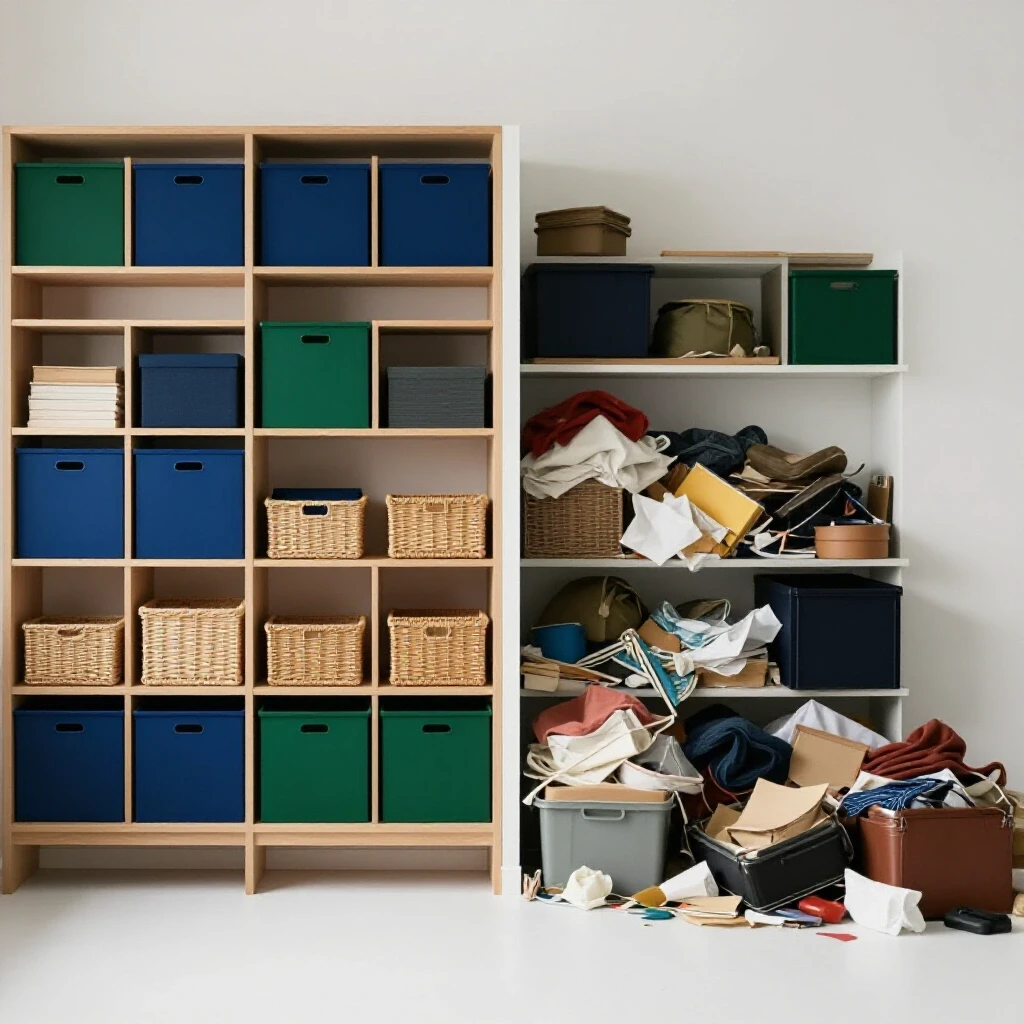
In my eleven years working in operations and logistics, I have learned that a system only works if the effort to maintain it is lower than the effort to ignore it. My family once struggled with what we called the “Gift Pile.” It was a chaotic mix of half-filled bags and loose items shoved into the back of a hallway closet. Every time a birthday party or holiday arrived, we spent twenty minutes digging through the mess, only to realize we had forgotten we already bought a gift months ago. This was a classic logistics bottleneck. We had the inventory, but we lacked the retrieval efficiency to make it useful.
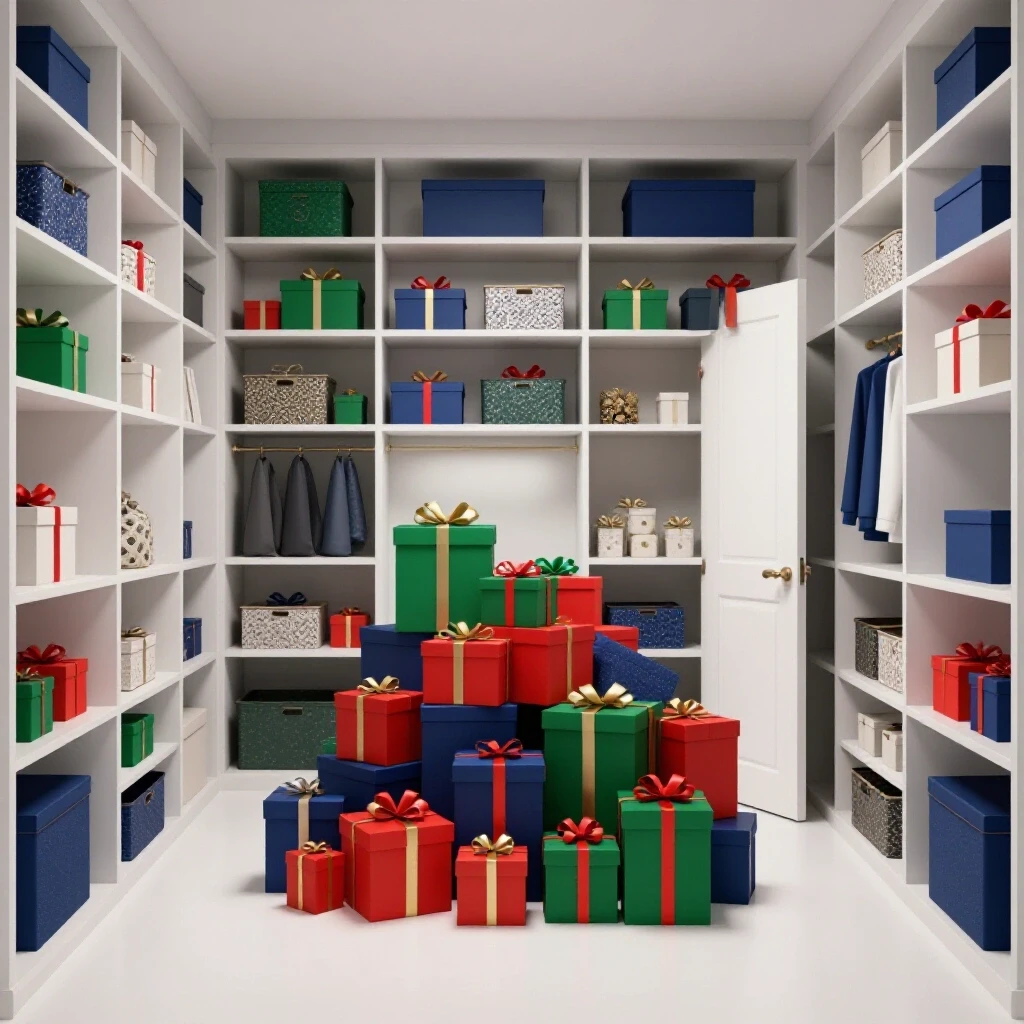
By applying spatial management principles, we transformed that chaotic pile into a functional inventory system. This guide focuses on how to build a sustainable storage area for gifts and supplies that actually lowers your daily stress. We will look at how to reduce the friction of putting things away and how to ensure the system survives the reality of a busy household.
The Logistics of Preparedness: Why Centralized Systems Often Fail
This section examines the fundamental reasons why storage areas for seasonal items and gifts often revert to clutter. We look at the gap between how we think we will use a space and how we actually interact with it during a busy week.
Most household storage fails because of “retrieval friction.” In logistics, this refers to the number of steps required to get an item in or out of its designated spot. If you have to move three boxes to reach a stack of birthday cards, you will eventually stop putting the cards away. Instead, you will leave them on the kitchen counter, adding to the visual clutter that causes mental fatigue.
Another common failure point is the lack of “inflow control.” We often buy items on sale or ahead of time without a plan for where they will sit. Without a defined spatial capacity, the inventory grows until it spills out of the closet. Research in environmental psychology shows that this kind of visual overstimulation can increase cortisol levels, particularly in parents. When your storage system is overstuffed, your brain perceives it as a “to-do” list rather than a helpful resource.
Understanding Spatial Capacity and Flow
In a professional warehouse, every shelf has a weight and volume limit. Your home should be no different. Spatial capacity is the maximum amount of items a designated area can hold while still allowing for easy access. If a bin is 100% full, the friction to remove one item increases significantly. I recommend a “75% Rule” for gift storage. When a bin or shelf is three-quarters full, it is at its functional limit. This extra 25% of “air” allows you to see what you have without digging.
| System Component | Definition | Impact on Stress |
|---|---|---|
| Inflow | The rate at which new gifts and supplies enter the home. | High inflow without a system leads to surface clutter. |
| Outflow | The rate at which items are given away or used. | Consistent outflow prevents spatial capacity overages. |
| Retrieval Friction | The physical and mental effort to find and remove an item. | High friction leads to “re-buying” items you already own. |
| Visual Load | The amount of visible “stuff” that the brain must process. | High visual load increases daily mental fatigue. |
Designing a High-Efficiency Zoning Map
A zoning map is a spatial plan that dictates where items live based on how often you need them. This section explains how to divide your storage area into logical zones to minimize the time spent searching and sorting.
When I redesigned our family’s gift storage, I mapped the closet based on “pick frequency.” In logistics, the items that move the fastest are placed at waist-to-shoulder height. In a home setting, this means your most common items, like standard birthday gifts for children or “thank you” cards, should be in the “Prime Zone.” Items used once a year, like specific holiday decorations or large seasonal boxes, go to the “Deep Storage Zone” on the highest or lowest shelves.
The Three Zones of Gift Management
- The Prime Zone (Waist to Shoulder Height): This is for items you touch once a month or more. It includes all-occasion cards, gift bags, and standard “emergency” gifts like candles or toys. By placing these at eye level, you reduce the cognitive load of searching.
- The Low-Friction Zone (Below Waist): This is ideal for heavier items or larger gift bags. Since you have to bend down, use open-top bins here so you can drop items in quickly without dealing with lids.
- The Archive Zone (Top Shelves): This is for seasonal items used only once a year. Because these items have a low flow rate, they can be stored in lidded bins to prevent dust, as the occasional effort to reach them is worth the protection.
Building on this, a clear zoning map helps the whole family. When my children know exactly which bin holds the “friend birthday gifts,” they can help prepare for a party without asking me where everything is. This reduces the “managerial load” on parents, which is a primary source of household frustration.
Selecting Low-Maintenance Storage Gear
Not all bins are created equal. This section covers the technical aspects of choosing containers that support a long-term system rather than just looking good on a shelf.
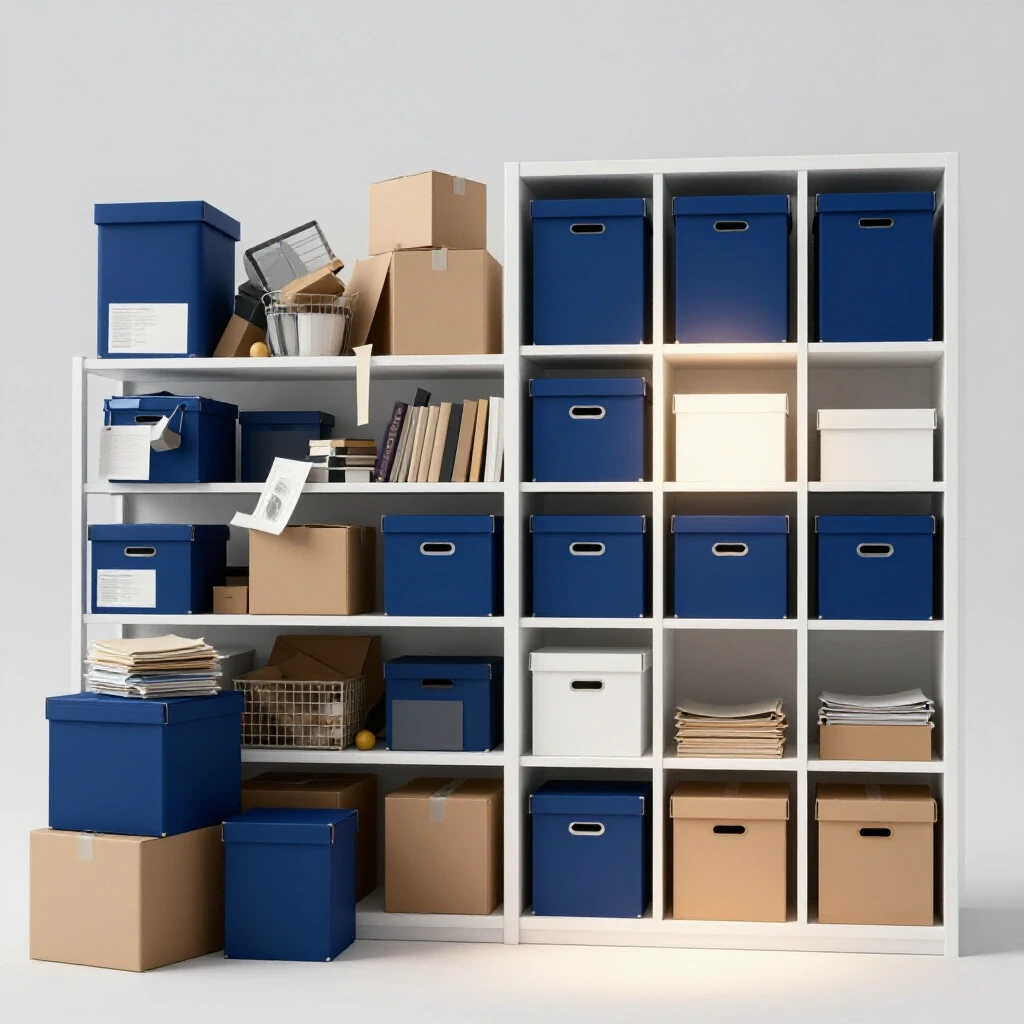
In the world of logistics, we look at “container compatibility.” For a home gift closet, this means using bins that maximize the available shelf depth. Many people make the mistake of buying round baskets or decorative bins that leave “dead space” behind them. Square or rectangular bins are more efficient because they utilize 100% of the shelf’s footprint.
I have found that clear bins are almost always superior to opaque ones for gift storage. Visual transparency acts as a “passive inventory” system. You can see your stock levels at a glance without opening a single lid. This prevents the “out of sight, out of mind” trap that leads to overbuying.
Storage Friction Index by Bin Type
| Bin Type | Friction Level | Best Use Case | Maintenance Need |
|---|---|---|---|
| Open-Top Clear Bin | Low | Gift bags, tissue paper, cards | Very Low |
| Lidded Transparent Box | Medium | Small toys, fragile items | Low |
| Opaque Decorative Basket | High | Hidden items, non-categorized | High (Needs Labels) |
| Deep “Action” Trays | Very Low | Items waiting to be processed | Moderate |
Interestingly, adding a lid increases the steps to access an item by 100%. You have to remove the bin, unlatch the lid, and then reverse the process. For items you use frequently, like greeting cards, an open-top divider is much more sustainable. We switched to open-top bins for our cards three years ago, and we haven’t had a “card pileup” on the counter since.
Industrial Sorting Metrics for the Home
Applying measurable standards to your decluttering journey can help you stay on track. This section introduces simple metrics to track the health of your storage system.
One metric I use is “Search Time.” If it takes more than 60 seconds to find a specific item in your gift closet, the system is failing. Another is “Density.” If you have to move more than two items to get to a third, the density is too high. In a professional setting, we call this “shuffling,” and it is considered wasted labor.
The Decluttering Sorting Log
Before you start organizing, it helps to understand what you actually have. Use a simple log to categorize your inventory. This isn’t about counting every ribbon, but about understanding the volume of each category.
- Category: Kids’ Birthdays
- Current Volume: 2 large bins
- Frequency of Use: 10 times per year
- Target Volume: 1.5 bins (to allow for 25% “air” space)
By setting a target volume, you create a physical boundary for your shopping. If the “Adult Gifts” bin is full, you cannot buy another item until one moves out. This creates a natural “One-In, One-Out” rule that requires zero extra paperwork.
Building Systematic Habit Loops
A system is only as good as the habits that support it. This section details how to create low-effort routines that prevent the closet from reverting to a cluttered state.
In organizational behavior, a “habit loop” consists of a cue, a routine, and a reward. For gift management, the “cue” is coming home with a new purchase. The “routine” is placing it immediately into the designated zone. The “reward” is the feeling of a clear kitchen counter and the knowledge that you are prepared for the next event.
To make this work for a busy family, you need to reduce the “decision fatigue” associated with tidying. Labeling is the best tool for this. However, avoid overly specific labels. A label that says “Gifts for 5-Year-Old Boys” is too specific and will become obsolete in a year. Instead, use broad categories like “Kids’ Toys,” “Stationery,” or “Hostess Gifts.”
Practical Labeling and Tracking Methods
- Broad Category Labels: Use large, easy-to-read text. This allows even younger children to understand where things go.
- The “Last One” Marker: For supplies like tape or specific cards, place a small red dot on the second-to-last item. When you see the dot, you know it’s time to add that item to your shopping list.
- Digital Inventory (Optional): For very busy professionals, a simple photo of the open closet once a month can serve as a visual inventory. Before you go to the store, check the photo on your phone to see if you actually need more gift bags.
In our home, we established a “Five-Minute Reset” every Sunday evening. We check the gift area, straighten any tipped-over bags, and ensure nothing was shoved in the wrong spot. Because the system is designed for low friction, this reset rarely takes more than two or three minutes.
Why High-Friction Systems Lead to Rapid Reversion
Many families find themselves reorganizing the same closet every few months. This section explains the “Reversion Cycle” and how to break it by simplifying your storage gear.
The reversion cycle happens when a system is designed for how we wish we lived rather than how we actually live. We see beautiful photos of color-coded closets and try to mimic them. But if that system requires you to fold every piece of tissue paper into a perfect square, it will fail the moment you are tired or in a hurry.
A sustainable system prioritizes “Ease of Put-Away” over “Beauty of Display.” If you can toss a gift bag into a bin from two feet away and it lands in the right category, the system is robust. If you have to carefully slot it into a narrow vertical divider, the system is fragile.
Visual vs. Functional Organization Systems
| Feature | Visual-Focused (Fragile) | Functional-Focused (Sustainable) |
|---|---|---|
| Sorting Criteria | Color or size | Frequency of use and category |
| Container Type | Opaque, decorative, mismatched | Transparent, stackable, uniform |
| Labeling | Small, aesthetic, specific | Large, bold, broad |
| Maintenance | High (requires constant “fixing”) | Low (designed for “toss-in” ease) |
By choosing a functional-focused model, you reduce the mental load of maintenance. You aren’t “cleaning” the closet; you are simply following a logical flow. This shift in perspective is what prevents the frustration and burnout often associated with household chores.
Actionable Steps for a Stress-Free Storage System
Redesigning your gift management area doesn’t have to happen in one day. You can break it down into manageable logistical phases.
- The Audit (30 Minutes): Empty the space completely. Group items into broad categories. Discard anything damaged or that you know you will never give.
- The Measurement (10 Minutes): Measure the height, width, and depth of your shelves. Note any obstructions like door hinges or light fixtures.
- The Zoning (15 Minutes): Assign your categories to the Prime, Low-Friction, and Archive zones based on how often you use them.
- The Container Fit (Variable): Select bins that maximize your shelf depth. Remember the 75% Rule—leave room for the system to “breathe.”
- The Labeling (10 Minutes): Apply broad, clear labels. Ensure they are visible from the front of the shelf.
Once these steps are complete, the system should run on “autopilot.” The goal is to move from a state of “active organizing” to “passive maintenance.” When you no longer have to think about where a gift goes, you have successfully applied logistics to your home.
Daily Habit Tracking for Families
- Day 1-7: Focus on immediate “put-away.” Every new item must go to its zone immediately.
- Day 14: Conduct a quick visual check. Are the bins staying under the 75% capacity limit?
- Day 30: Evaluate the “Search Time.” Can you find a birthday card in under 60 seconds?
Conclusion
Creating a sustainable system for managing gifts and seasonal items is not about achieving a magazine-perfect look. It is about reducing the daily friction that leads to household stress and mental fatigue. By understanding spatial capacity, reducing retrieval friction, and choosing low-maintenance containers, you can build a closet that serves your family rather than one that demands your constant attention.
The key is to start with logic and logistics. When you treat your home’s storage like a high-efficiency warehouse, you reclaim the time and mental energy wasted on searching for lost items. This allows you to focus on the joy of giving rather than the stress of the “stuff” behind it.
Frequently Asked Questions
How do I handle odd-sized gifts that don’t fit in standard bins? In logistics, we call these “non-conveyable” items. Do not try to force them into your standard bins, as this creates clutter and high friction. Instead, designate one shelf or a specific floor area for “Oversized Inventory.” Keep this area limited; if it fills up, it’s a sign that your inflow is too high for your current space.
What is the best way to store gift bags without them getting crushed? Use a deep, open-top bin and store them vertically, like files in a cabinet. This is the “File Folder” method. It allows you to flip through the bags to find the right size without pulling the whole stack out. This significantly reduces retrieval friction and keeps the bags in good condition.
How often should I audit my gift inventory? A twice-yearly audit is usually sufficient—once before the winter holidays and once in the spring. This aligns with the major “inflow” periods for most families. During the audit, check for items that have sat in the “Prime Zone” for more than a year. If you haven’t given it away in twelve months, move it to the “Archive Zone” or donate it.
My closet is very small. How can I still use these principles? Focus on verticality. Use stackable, clear drawers instead of bins with removable lids. This allows you to access the bottom items without moving the top ones. In small spaces, the “Prime Zone” becomes even more important. Keep only your top three most-used categories in that small closet and move the rest to a secondary storage area.
How do I get my spouse and children to follow the system? The “Path of Least Resistance” is your best friend here. If the bin is easy to reach and the label is clear, they are more likely to use it. If you find they are still leaving things on the counter, ask them why. Often, it’s because a lid is too hard to open or a bin is too high. Adjust the system to match their natural movements.
Should I keep a digital list of what is in the closet? For most people, a digital list is a “high-maintenance” task that eventually fails. Unless you are managing a very large volume of items, a visual inventory (clear bins) is much more sustainable. If you must use a list, keep it simple—a single note on your phone with broad categories like “3 Kids’ Toys, 2 Candles, 5 Thank You Cards.”
What if I have too many supplies for the space available? This is a “Spatial Capacity” issue. You must either increase the space (unlikely in most homes) or decrease the inventory. Use the “75% Rule” as your guide. If you can’t fit it in while keeping the bin 25% empty, you have too much. It is better to have a small, functional inventory than a large, inaccessible one.
Is it worth buying expensive organizing sets? From a logistics standpoint, consistency is more important than price. You want bins that stack well and use the full depth of your shelf. Often, basic hardware store bins or simple clear plastic containers perform better than expensive “designer” sets because they are designed for durability and standardized sizing.
How do I manage items like ribbon and tape? Treat these as “Consumables.” Store them in a small, divided tray within your Prime Zone. Because they are small and “fidgety,” they tend to get lost. Keeping them in a dedicated tray prevents them from migrating to the bottom of larger bins, which reduces the search time when you are in a rush.
How do I stop the “reversion” to clutter after a few weeks? Reversion is almost always caused by “System Friction.” If you find the closet getting messy, identify where the “pile” is starting. If things are being shoved on top of bins, it’s a sign that the lids are a barrier. Remove the lids. If items are in the wrong bins, the labels might be too specific. Broaden the categories. Listen to what the clutter is telling you about the system’s flaws.
(This article was written by one of our staff writers, Christopher Bennett. Visit our Meet the Team page to learn more about the author and their expertise.)