How Decluttering Transforms Cleaning Routines (Step-by-Step Guide)

When we look at the cost of our homes, we often think about the mortgage or rent. However, the real value for money is found in the usable square footage we actually enjoy every day. Over my 11 years in operations and logistics, I have learned that a home functions much like a warehouse or a distribution center. If the inventory levels exceed the facility’s capacity, the entire system grinds to a halt. For a family, this looks like spending every Saturday morning “resetting” a house that will be messy again by Tuesday. My own family spent years in this cycle until I began applying industrial spatial management principles to our living room and kitchen.
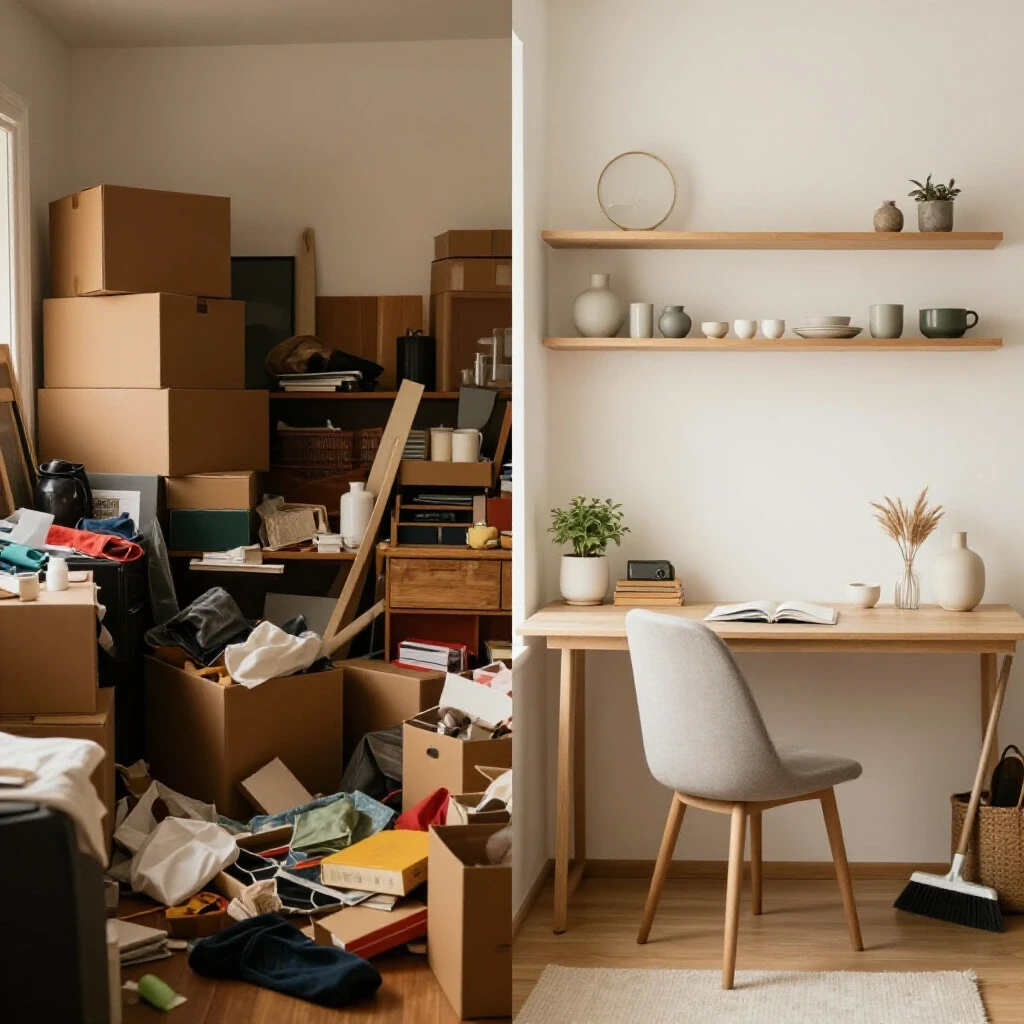
By treating my home as a logical system rather than just a place to store stuff, I discovered that the sheer volume of items was the primary bottleneck. Every object you own demands a small tax on your time. You have to clean it, move it, or organize it. When we reduced our total household inventory, the time required for daily maintenance dropped significantly. We went from spending two hours on a “quick clean” to a functional 15-minute evening sweep. This shift was not about achieving a minimalist aesthetic; it was about reclaiming 10 hours of my week.
Why Excess Inventory Sabotages Your Daily Schedule
Excess inventory in a home acts as physical drag, slowing down every movement and task you attempt to complete. When surfaces are crowded, even a simple wipe-down requires moving five or six objects, effectively tripling the time spent on the task.
The Hidden Logistics of Retrieval Friction
Retrieval friction is the number of physical steps and mental decisions required to take an item out or put it away. High friction is the leading cause of “clutter piles” because the effort to store an item exceeds the energy we have at the end of the day.
In my early days of managing family logistics, I thought the answer was more bins. I bought color-coordinated containers and stacking drawers. However, I soon realized that every lid and every stack added a “step” to the process. If a child has to move two boxes to reach the third one at the bottom, they won’t do it. Instead, the item stays on the floor. We reduced our friction by ensuring that 80% of our daily-use items could be accessed or stowed with one hand in under three seconds. This simple metric changed how we viewed our storage solutions for families.
Environmental Psychology and Visual Overload
Environmental psychology journals suggest that visual clutter competes for our neural resources, leading to increased cortisol levels and mental fatigue. When our brains are constantly processing “unfinished business” in the form of piles, our ability to focus on family or work diminishes.
In a home with too many items, the brain never truly rests. Research indicates that women, in particular, show a strong hormonal response to a cluttered home environment. By reducing the number of items on open surfaces, we provide our nervous systems with a “visual break.” This is why a clear counter feels so much more relaxing than one covered in appliances, even if the appliances are neatly lined up. The goal of sustainable decluttering is to lower this cognitive load so that the home becomes a place of recovery rather than a source of stress.
Implementing a High-Efficiency Volume Reduction Framework
A volume reduction framework is a systematic method for evaluating whether an item earns its place in your home’s limited footprint. Instead of asking if an item “sparks joy,” we look at its utility and the cost of the space it occupies.
Industrial Sorting Metrics for the Modern Home
Industrial sorting involves categorizing items based on their frequency of use and the speed at which they need to be accessed. This approach prevents bottlenecks in high-traffic areas like the kitchen or the entryway.
I applied a “Flow Rate” analysis to our kitchen. We realized that while we had 24 coffee mugs, we only ever used six before the dishwasher was run. The other 18 mugs were “dead stock.” They sat in the back of the cabinet, requiring us to move them every time we wanted to find a specific travel tumbler. By removing the dead stock, we increased our storage efficiency by 40%. We weren’t just “cleaning”; we were optimizing the flow of the room.
| Item Category | Current Count | Target Count | Weekly Cleaning Savings |
|---|---|---|---|
| Kitchen Counter Decor | 12 | 2 | 15 Minutes (Dusting/Moving) |
| Kids’ Plastic Cups | 30 | 10 | 10 Minutes (Dishwasher Tetris) |
| Throw Pillows | 8 | 2 | 5 Minutes (Daily Bed Making) |
| Entryway Shoes | 15 | 4 | 20 Minutes (Sorting/Tripping) |
The 80% Capacity Rule for Functional Home Storage
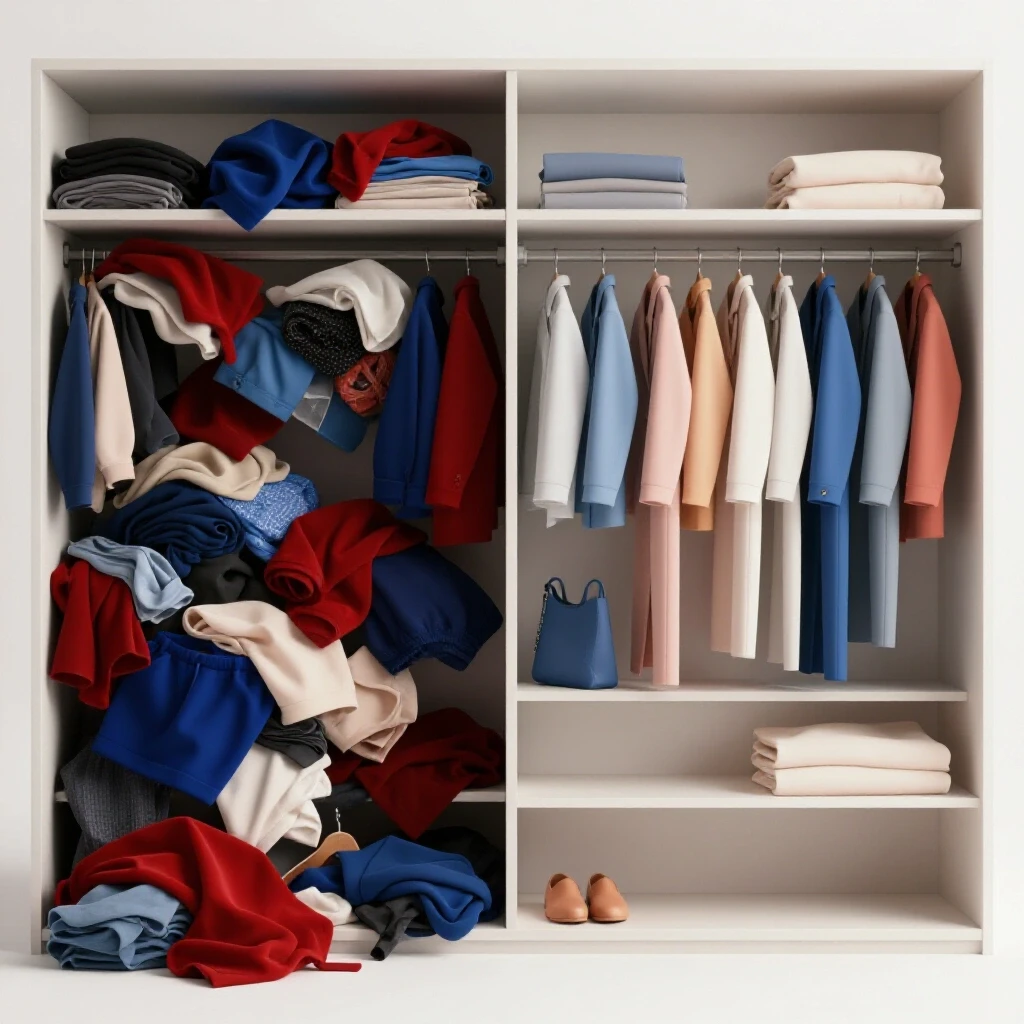
The 80% capacity rule states that a storage unit is functionally “full” when it reaches 80% of its physical volume. Leaving 20% of the space empty allows for easy retrieval and prevents the “Jenga effect” where pulling one item out causes others to fall.
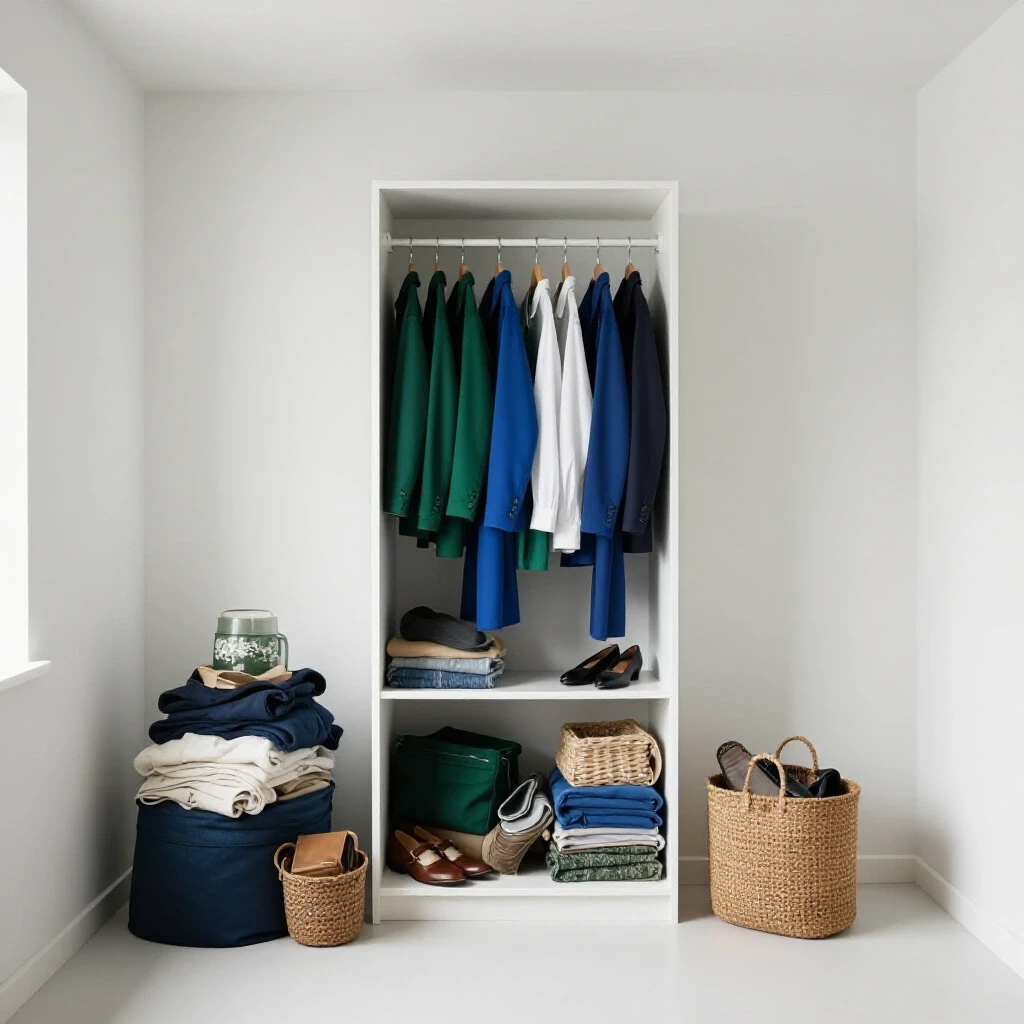
When we overfill our closets and drawers, we create a high-stress environment. I found that my children were much more likely to put their clothes away when the drawers were only three-quarters full. They didn’t have to fight the fabric to close the drawer. This small buffer in our home organization systems significantly reduced the daily friction of laundry. It turns out that having fewer clothes made the remaining ones much easier to manage.
Designing Low-Friction Home Organization Systems
Low-friction systems are designed to work with human nature rather than against it. They prioritize the speed of putting items away over the visual perfection of the storage unit.
Choosing Sustainable Storage Solutions for Families
Sustainable storage is any system that a tired parent or a six-year-old can maintain on a Tuesday night without thinking. Complex systems with nested boxes or intricate labels often fail because they require too much “operating energy.”
In my professional work, we look for “poka-yoke” or mistake-proofing designs. In the home, this means using open bins for high-frequency items. We replaced our lidded toy boxes with open-top baskets. The time it took to clean up the playroom dropped from 20 minutes to four minutes. We didn’t need the kids to “organize” the toys; we just needed them to “contain” the toys. By lowering the barrier to entry, the system became sustainable.
- Open Bins: Use for shoes, toys, and frequently used linens.
- Clear Containers: Only use for items that are not used daily, so you can see inventory without opening.
- No Lids: Remove lids from daily-use bins to save two seconds per interaction.
- Low Placement: Keep heavy or frequently used items at “strike zone” height (between the waist and shoulders).
The One-Handed Rule for Bin Selection
The one-handed rule dictates that any item used daily should be accessible and returnable using only one hand. If you have to use two hands—one to hold a lid and one to place the item—the system is too complex for a busy household.
When I audited our bathroom, I realized my wife and I were leaving our daily vitamins on the counter because they were tucked behind a lidded box in the cabinet. We moved them to a simple tiered shelf. This eliminated two steps: moving the box and opening the lid. By reducing the “transaction cost” of the task, we kept the counter clear. This is a core principle in reducing household clutter: make it easier to put the item away than to leave it out.
Behavior-Based Systems for Long-Term Maintenance
Behavior-based systems focus on the habits of the people living in the home. Instead of trying to change your family’s personality, you change the environment to suit their natural movements.
Aligning Household Habits with Spatial Logistics
Spatial logistics is the study of how people move through a space. By placing storage exactly where a “drop zone” naturally forms, you can capture clutter before it spreads.
My family used to leave mail on the kitchen island. I could have fought them on this for years, but instead, I placed a small, open basket right at the end of the island. Now, the mail is contained. It’s not “perfect,” but it is organized. We also mapped our “retrieval step counts.” If it takes more than five steps to put an item away, it usually ends up on the nearest flat surface. We moved our most-used items closer to their point of use, which slashed our evening tidy-up time.
Daily Maintenance Timelines by Family Size
The amount of time required to maintain a home is directly proportional to the number of residents and the volume of items they interact with. However, by reducing item count, the “per person” time investment drops.
| Family Size | High-Volume Maintenance (Daily) | Low-Volume Maintenance (Daily) | Weekly Time Saved |
|---|---|---|---|
| 2 Adults | 45 Minutes | 15 Minutes | 3.5 Hours |
| 2 Adults, 1 Child | 75 Minutes | 25 Minutes | 5.8 Hours |
| 2 Adults, 2+ Children | 120 Minutes | 40 Minutes | 9.3 Hours |
As shown in the table, a family of four can save nearly 10 hours a week just by reducing the volume of items they have to manage. This is the “logistics dividend” of owning less.
Case Study: The Entryway Bottleneck Redesign
Our entryway was a constant source of frustration. With four people coming and going, the floor was always covered in shoes, bags, and coats. We initially tried a “cubby” system where everyone had a specific slot. It failed within three days because the cubbies were too small and required precise folding of jackets.
I redesigned the space using a “High-Flow Zone” model. We installed heavy-duty hooks at different heights and replaced the cubbies with two large, open baskets—one for shoes and one for sports gear. We also reduced our shoe inventory, keeping only two pairs per person at the door.
- Audit: We found 22 pairs of shoes in a space designed for eight.
- Purge: We moved out-of-season footwear to a secondary storage area.
- Simplify: We swapped individual bins for “bulk” baskets.
- Result: The time spent looking for shoes in the morning dropped from five minutes per person to zero. The floor stayed clear because the “cost” of putting shoes in a basket was nearly zero.
Strategic Steps for a Sustainable Decluttering Journey
Starting a decluttering journey can feel overwhelming, but using a logistical approach breaks it down into measurable tasks. Focus on the areas that generate the most daily work first.
- Identify High-Friction Zones: Look for the areas you have to clean most often. These are usually the kitchen counters, the entryway, and the coffee table.
- Measure Your “Reset Time”: Time how long it takes to tidy a room. If it takes more than 10 minutes, you have too much inventory for that space.
- Implement a “One-In, Two-Out” Rule: For every new item that enters the home, remove two existing items until you reach your target volume.
- Use Visual Cues: If you can’t see an item, you won’t use it, but if you see too many items, you’ll be stressed. Use clear bins for deep storage and open bins for daily use.
- Standardize Your Containers: Using the same type of bin throughout the house makes them interchangeable and reduces visual noise.
By focusing on the “flow” of your home rather than just the “look” of it, you create a space that serves your family. The goal is to spend less time managing your possessions and more time enjoying your life. When you own less, you don’t just save space; you save the most valuable resource you have: your time.
Frequently Asked Questions
How does owning fewer items actually reduce cleaning time? When you have fewer items, you have fewer surfaces to dust, fewer objects to move when wiping counters, and less laundry to fold. It also simplifies the decision-making process. You don’t spend time “sorting” through piles because there are no piles. Every object has a clear, accessible home, making the act of putting things away almost instantaneous.
What is the “One-Handed Rule” in home organization? The one-handed rule is a design principle where any frequently used item should be accessible or stored using only one hand. This means avoiding lids, latches, or stacked boxes for things you use every day. If you can’t put it away with one hand, the “friction” is too high, and the item is likely to be left on a counter or the floor.
How do I get my children to follow these new systems? Children respond well to low-friction systems. Use open baskets without lids and place hooks at their eye level. Label bins with pictures instead of words if they are young. The key is to make the “right way” to store an item the “easiest way.” If they can toss a toy into a basket from across the room, they are much more likely to clean up.
What should I do with items that I only use once a year? These items are “seasonal inventory” and should not occupy your “prime real estate.” Move holiday decor, camping gear, or heavy winter coats to a secondary storage area like a garage, attic, or high closet shelf. This keeps your daily living areas clear and reduces the amount of stuff you have to shift around to find daily essentials.
Why do my rooms get messy again so quickly after I organize them? This usually happens because the system is too complex or the volume of items is too high for the space. If every shelf is 100% full, there is no room for the “ebb and flow” of daily life. Aim for 80% capacity. Also, check for “retrieval friction.” If it’s hard to put something away, it will stay out.
Is minimalism the only way to achieve a low-maintenance home? No, you don’t have to be a minimalist. You just need to find your “maintenance threshold.” This is the volume of items you can comfortably manage within your available time. For some, that might be a lot of items; for a busy professional family, it is usually much fewer than they currently own.
How do I decide what to get rid of during a decluttering journey? Focus on “dead stock”—items you haven’t used in the last 12 months. Use industrial metrics: if you have 20 of something but only use five at a time, you can safely reduce your inventory. Don’t focus on the “what if I need it” scenario; focus on the “what is it costing me now” in terms of time and stress.
What are the best storage solutions for families with limited space? The best solutions are modular and vertical. Use wall-mounted hooks, over-the-door organizers, and shelving that goes all the way to the ceiling. However, the most effective “storage solution” is always volume reduction. No bin can fix the problem of having more items than square footage.
How can I maintain these systems when I’m busy? Build a “15-minute reset” into your evening routine. Because your systems are now low-friction and your inventory is lower, 15 minutes should be enough to return the house to a functional state. The system is designed to handle the “bad days” when you don’t have the energy for a deep clean.
Does organizing actually help with mental fatigue? Yes. Studies in environmental psychology show that “visual noise” from clutter keeps the brain in a state of low-level “fight or flight.” By reducing the number of items your brain has to process, you lower your cognitive load. This leads to better focus, lower stress, and more mental energy for your family and work.
(This article was written by one of our staff writers, Christopher Bennett. Visit our Meet the Team page to learn more about the author and their expertise.)