How to Rotate Seasonal Gear for Space-Saving Storage (Guide)

Walking into a home where winter coats still crowd the entryway in July creates an immediate sense of mental weight. This visual clutter sends a signal to the brain that the household is behind schedule, triggering a subtle but constant stress response. After eleven years in logistics and operations, I have learned that a home functions much like a warehouse. If the “inventory” on the floor doesn’t match the current “operational needs” of the season, the system breaks down. My own family struggled with this for years until I applied industrial flow principles to our closets and garage. We stopped trying to organize everything at once and started focusing on the movement of items in and out of active use.
The Psychological Impact of Visual Inventory Overload
Visual inventory overload refers to the mental fatigue caused by seeing too many items that are not currently useful. When our line of sight is filled with off-season gear or unused tools, our brains struggle to filter out the noise. This leads to increased cortisol levels and a feeling of being trapped in one’s own living space.
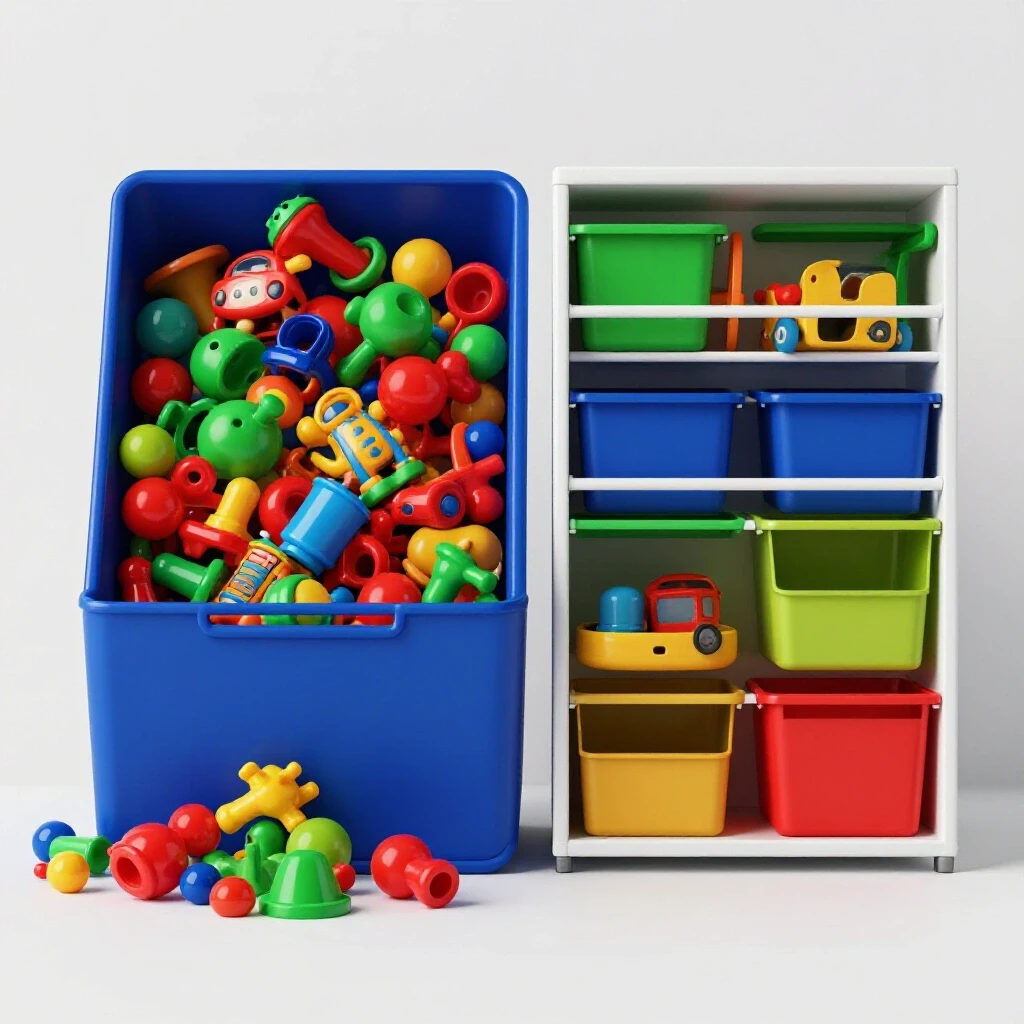
In my professional life, a cluttered floor is a safety hazard and a sign of poor throughput. At home, it is a sign of “stagnant inventory.” Environmental psychology research suggests that when a space is crowded with items that serve no immediate purpose, our ability to focus diminishes. I noticed this clearly with my children. When their summer toys were mixed with winter sleds in the playroom, they stopped playing with both. The sheer volume of choices caused decision fatigue. By removing what wasn’t needed for the current weather, we reclaimed their attention and our floor space.
Interestingly, a study in the Journal of Environmental Psychology found that people who describe their homes as “cluttered” or full of “unfinished projects” were more likely to be depressed and tired. This isn’t just about being neat; it is about the cognitive load of managing objects. Every item you own requires a small amount of mental energy to track. When you cycle items out of your daily view, you effectively lower that energy cost.
Why High-Friction Storage Leads to System Failure
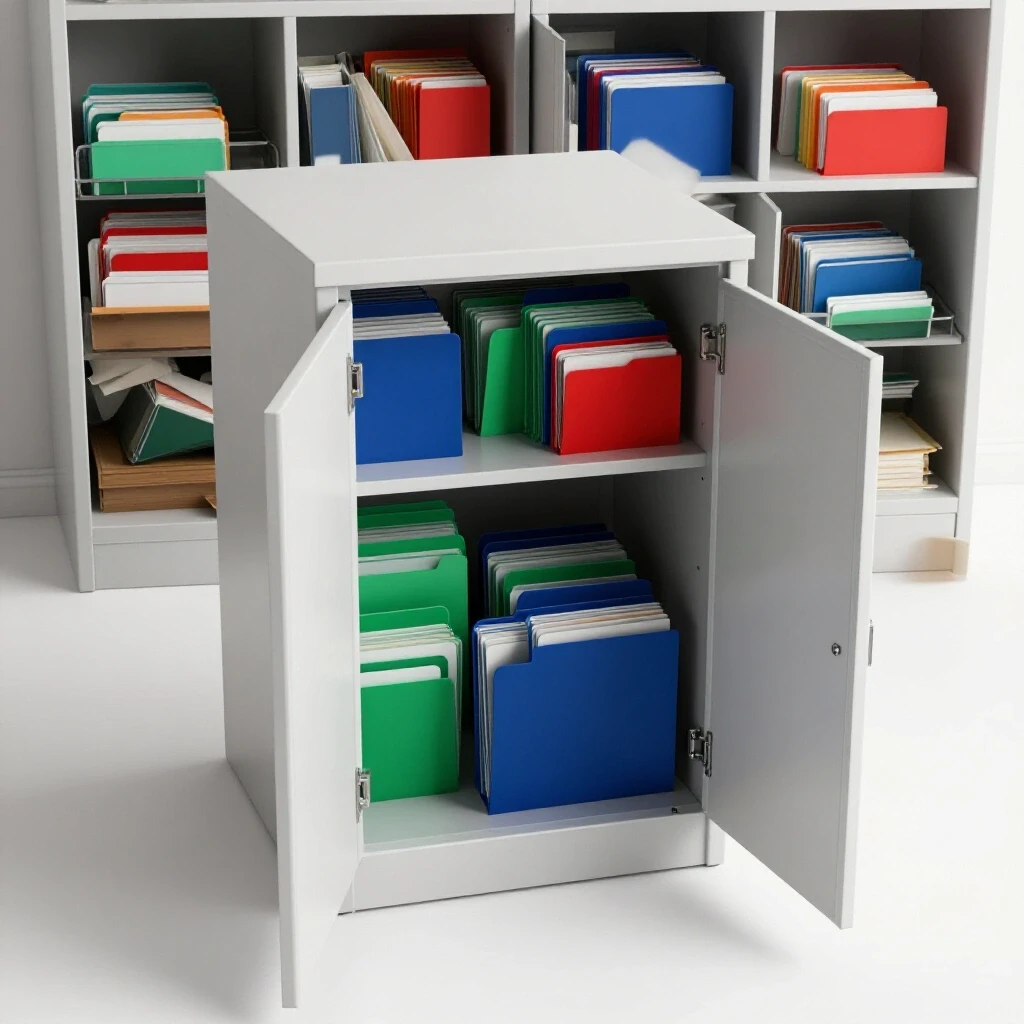
Retrieval friction is the amount of physical and mental effort required to get an item out of storage or put it away. If a system requires moving three boxes to get to one bin, the friction is too high. High-friction systems are the primary reason most home organization projects fail within a week.
I once designed a complex shelving unit for our holiday decorations that looked beautiful but was a logistical nightmare. To get to the Halloween lights, I had to move four heavy crates of summer camping gear. As a result, the camping gear often ended up sitting on the garage floor for months because putting it back was too difficult. We call this “system bypass.” To fix this, I began measuring our storage by “step counts.”
- One-step storage: Items used daily (coats, shoes).
- Two-step storage: Items used weekly (sports equipment).
- Three-step storage: Items used seasonally (holiday decor, heavy parkas).
By ensuring that seasonal items were moved to “three-step” areas only when they were truly off-season, we kept the “one-step” areas clear for high-traffic needs.
Storage Friction Index by Container Type
| Container Type | Access Speed | Visibility | Durability | Best Use Case |
|---|---|---|---|---|
| Open Front Bins | High | High | Medium | Active seasonal clothing |
| Latching Clear Totes | Medium | High | High | Off-season gear in attic |
| Cardboard Boxes | Low | None | Low | Short-term sorting only |
| Vacuum Bags | Very Low | High | Medium | Bulk linens and sweaters |
| DIY Wooden Crates | Medium | Medium | Very High | Heavy outdoor equipment |
The Sorting Framework for Periodic Item Swapping
A sorting framework is a logical set of rules used to categorize household objects based on their utility and frequency of use. Instead of deciding what to “keep” or “toss,” this framework focuses on where an item should live during different times of the year. It moves the focus from decluttering to flow management.
In my household, we use a “Four-Zone” logic. This prevents the common mistake of trying to fit a year’s worth of life into a single closet. When the seasons change, we don’t just move things; we audit their performance. If a piece of gear wasn’t used during its prime season, it loses its spot in the rotation.
- Zone 1: The Active Core. Items in use right now.
- Zone 2: The Near Reserve. Items used occasionally (e.g., rain gear in spring).
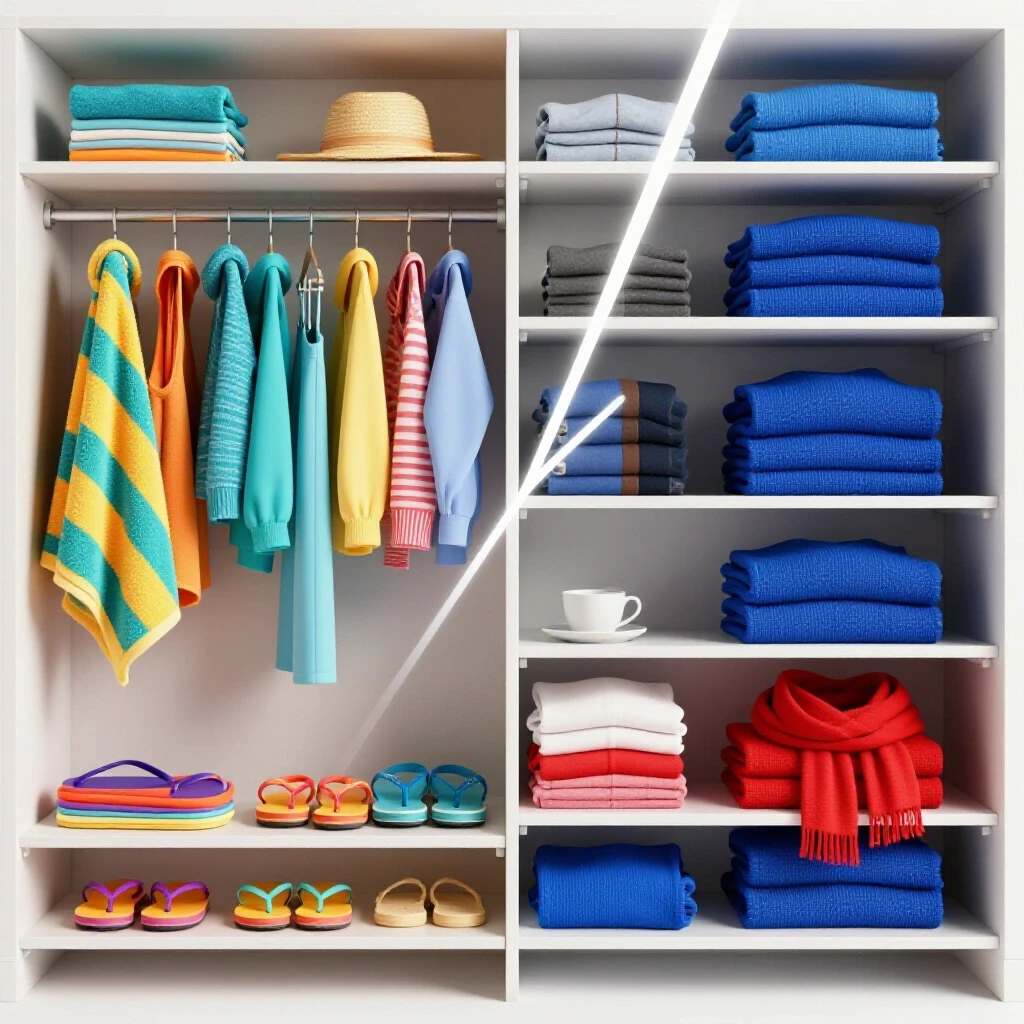
- Zone 3: The Deep Archive. Items for the opposite season (e.g., swimsuits in winter).
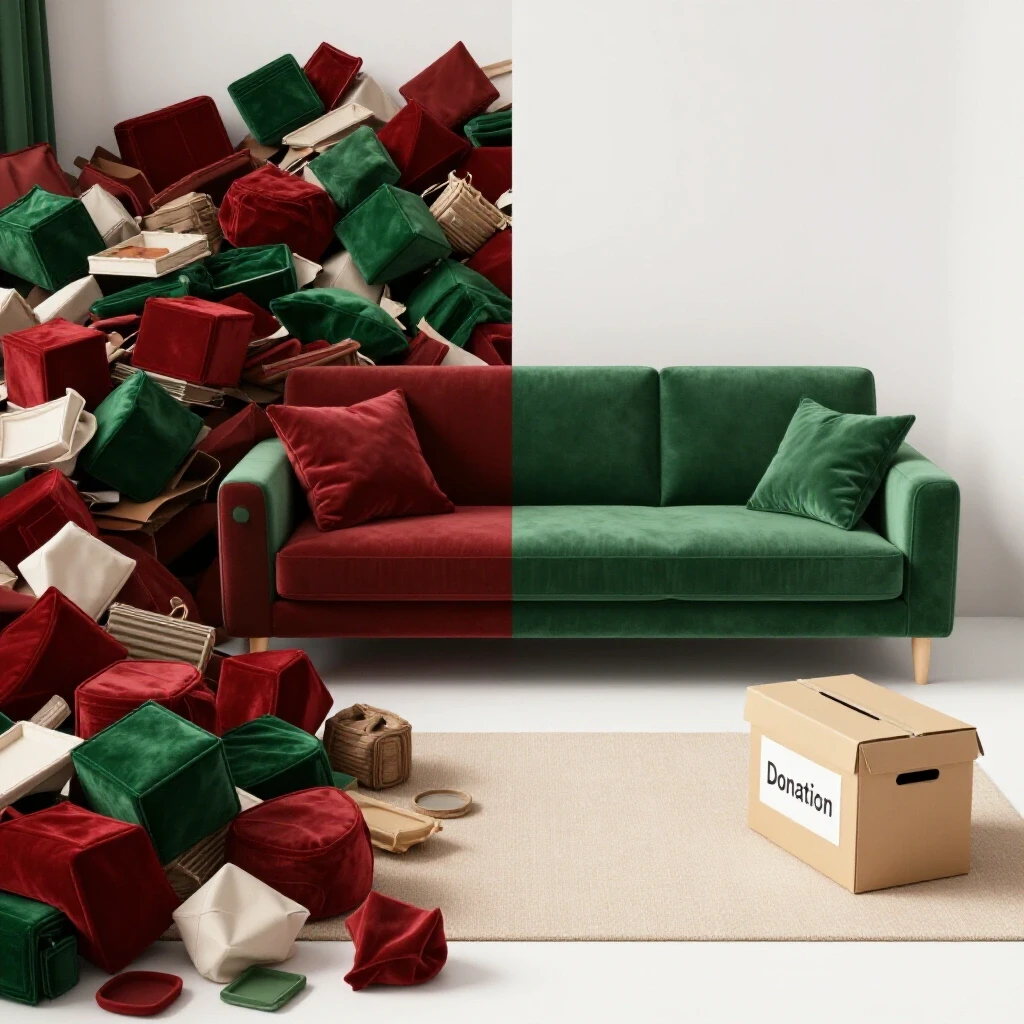
- Zone 4: The Exit Ramp. Items to be donated or repaired.
Item Density Guidelines for Family Spaces
To maintain a functional home, I recommend following these density metrics. Overfilling a space by even 10% can increase the time it takes to find an item by nearly 50%.
- Closet Rods: 20% empty space to allow for easy sliding and visibility.
- Shelf Capacity: Never exceed 80% of the shelf’s physical volume.
- Floor Space: 90% clear in high-traffic hallways and entryways.
- Bin Weight: Keep under 30 pounds for safe retrieval from high shelves.
Designing High-Speed Zoning Maps for Your Home
A zoning map is a mental or physical diagram that assigns specific functions to different areas of the home based on spatial ergonomics. It ensures that the most valuable “real estate” in your house is reserved for items that provide the most daily value. This prevents the “junk drawer” effect from spreading to entire rooms.
When I mapped our garage, I realized we were storing old paint cans in the most accessible spot, while the kids’ bikes—which they used every day—were buried in the back. We swapped them. We applied this to our bedroom closets too. The top shelves, which require a ladder, became the home for vacuum-sealed winter blankets during the summer.
- Vertical Mapping: Store heavy, rarely used items low. Store light, rarely used items high. Keep daily items between hip and eye level.
- The Golden Square: The area directly in front of you in a closet or pantry. This should only hold items used in the current 30-day window.
- Transition Zones: Use the mudroom or entryway as a “staging area” for items moving in or out of the house.
Selecting Sustainable Storage Solutions Without Buying New
Sustainable storage solutions involve repurposing existing containers or building simple DIY structures to maximize vertical and hidden spaces. The goal is to create a system that is sturdy enough for family life but flexible enough to change as children grow or hobbies evolve. Avoiding new purchases reduces both financial cost and environmental impact.
We stopped buying flimsy plastic drawers that cracked under the weight of winter boots. Instead, I built simple wooden “totes” from scrap plywood that fit perfectly under our beds. These are low-friction because they slide easily on the carpet. For the attic, we repurposed old suitcases to hold off-season linens. Suitcases are great because they are durable, have handles, and provide a fixed volume that prevents “storage creep.”
Numbered lists for organizing tools: 1. Uniform Bin Sizing: Using the same size containers allows for stable stacking and predictable spatial use. 2. Tension Rods: These can be used in small nooks to create extra hanging space for light seasonal items like scarves or hats. 3. Heavy-Duty Hooks: Wall-mounting gear like bicycles or garden tools clears floor space and makes cleaning easier. 4. Labeling Tape: Clearly marking the contents of a bin on at least two sides ensures you don’t have to unstack everything to find one item.
Managing the Logistics of the Seasonal Exchange
The seasonal exchange is the scheduled process of swapping out active inventory for stored items. This is not a deep clean but a logistical reset that happens four times a year. By treating it as a routine maintenance task rather than a major project, you reduce the mental fatigue associated with home organization.
In our house, the “Great Swap” takes exactly two hours. We set a timer. My wife handles the clothing, I handle the garage and outdoor gear, and the kids are responsible for their own toy bins. We use a simple checklist to ensure nothing is forgotten. This “time-boxing” prevents the project from dragging on and leaving the house in a state of mid-sort chaos.
- The 15-Minute Daily Reset: Every evening, we spend 15 minutes putting items back in their assigned zones.
- The Quarterly Audit: Before bringing the “new” season’s gear in, we look at the “old” gear. If it’s broken or outgrown, it goes to Zone 4 immediately.
- Feedback Loops: If we find ourselves constantly tripping over a specific item, we acknowledge the system has failed and adjust the zoning.
Daily Maintenance Timelines by Family Size
| Family Size | Daily Reset Time | Weekly Zone Audit | Quarterly Swap Duration |
|---|---|---|---|
| 2 People | 10 Minutes | 20 Minutes | 1 Hour |
| 4 People | 20 Minutes | 45 Minutes | 2.5 Hours |
| 6+ People | 35 Minutes | 1 Hour | 4 Hours |
Why Functional Systems Outperform Visual Ones
Functional organization focuses on how easily an item can be used and put away, whereas visual organization focuses on how “pretty” the storage looks. For a busy family, a functional system is much more sustainable because it accounts for human laziness and the rush of daily life. A “perfect” looking pantry with decanted flour jars often fails because the effort to refill the jars is too high.
I prefer “open-top” bins for kids’ seasonal gear. They may not look as tidy as lids, but the “toss-in” factor means the gear actually ends up in the bin rather than on the floor. In my logistics experience, the more steps you add to a process, the more likely it is to fail. We applied this by removing the closet doors in the mudroom. It sounds counter-intuitive, but removing the door removed one “step” from the process of hanging up a coat. The floor stayed clearer as a result.
- Transparency over Aesthetics: Use clear bins so you can see what is inside without opening them.
- Accessibility over Symmetry: Place the most-used items where they are easiest to grab, even if it doesn’t look perfectly balanced.
- Durability over Trendiness: Choose materials that can survive being dropped or stepped on by a toddler.
Overcoming Decision Fatigue During the Sorting Process
Decision fatigue is the declining quality of decisions made by an individual after a long period of decision-making. In the context of home management, it is why you might start a closet clean-out with high energy but end up shoving everything back in a pile two hours later. Your brain simply runs out of “sorting fuel.”
To combat this, I use “pre-decided rules.” For example, if a winter coat didn’t fit a child this year, the rule is it goes to the donation box—no “maybe we can use it for a rag” or “save it for a cousin.” This removes the need to make a new decision for every item. We also limit our sorting sessions to 90 minutes. Research shows that cognitive performance peaks and then dips in these cycles.
- The “One-In, One-Out” Rule: For every new seasonal item brought into the active zone, one must be moved to storage or donated.
- The “Three-Second” Rule: If you can’t decide where an item belongs within three seconds, put it in a “holding bin” and move on. Deal with the holding bin at the very end.
- Categorical Sorting: Sort by category (shoes, then hats, then coats) rather than by location. This helps you see the true volume of what you own.
Implementing Simple Habit Loops for Long-Term Success
A habit loop consists of a cue, a routine, and a reward. To make a home organization system stick, you must build these loops into your family’s daily life. For us, the “cue” is the change in weather. The “routine” is the seasonal swap. The “reward” is a tidy, functional home and a family dinner to celebrate the work.
We involve the children by giving them “ownership” of specific zones. My son is the “Master of the Sports Bin.” He knows that when soccer season ends, his job is to clean his cleats and move them to the Zone 3 shelf. This teaches him the logistical principles of spatial management and reduces the burden on us as parents.
- The Entryway Audit: Check the hooks every Sunday night. Anything not needed for the upcoming week’s weather gets moved.
- The Labeling Game: Use a simple masking tape and marker system. Let kids write the labels so they feel invested in the system.
- The “Sweep” Routine: Before bed, do a quick walk-through to ensure the “Active Core” is ready for the next morning.
Moving Forward with a Low-Maintenance System
Managing a home is a continuous process of adjusting to the flow of life. There is no “final” state of organization, only a system that works for your current needs. By applying these logistical principles—reducing friction, mapping zones, and managing inventory volume—you can create a space that supports your family rather than draining your energy.
The most important step is to start small. Don’t try to reorganize the whole house this weekend. Pick one high-friction area, like the entryway or the coat closet, and apply the zoning and sorting frameworks there. Once you feel the relief of a clear floor and an easy morning routine, the motivation to tackle the next zone will come naturally. Your home should be a place of rest, and a well-managed flow of seasonal items is the foundation of that peace.
Frequently Asked Questions
How do I handle items that are used in multiple seasons, like light jackets? These items belong in your “Near Reserve” (Zone 2). Keep them in a secondary closet or a slightly less accessible part of your main closet. They don’t need to be vacuum-sealed, but they shouldn’t be taking up prime “Golden Square” real estate when they aren’t being used daily.
What is the best way to store bulky winter gear in a small apartment? Verticality is your best friend. Use the space above your doors by installing simple shelves. Vacuum-sealing bags are also highly effective for down jackets and comforters, reducing their volume by up to 75%. Store these under the bed or on the highest shelf possible.
How can I get my spouse or children to follow the system? Focus on “reducing friction” for them. If they aren’t hanging up their coats, maybe the hooks are too high or the hangers are too annoying. Ask them why they find it hard to put things away. Usually, it’s a physical bottleneck that can be fixed with a simpler container or a better location.
How often should I realistically be swapping out items? I recommend a quarterly approach aligned with the four seasons. However, if you live in a climate with only two major weather shifts, a bi-annual swap is sufficient. The key is to do it before the new season fully arrives so you aren’t caught unprepared.
What should I do if my storage areas (attic/garage) are already full? This is a sign that your “outflow” is not matching your “inflow.” You must perform a rigorous audit. Use the “One-Year Rule”: if a seasonal item stayed in the box through its entire season without being touched, it is stagnant inventory and should be removed from your home.
Is it worth it to buy specialized organizers for things like gift wrap or ornaments? Only if those items are high-volume for your family. Often, a simple DIY cardboard divider in a standard bin works just as well. Specialized organizers can sometimes be “too specific,” making them high-friction if your needs change next year.
How do I keep track of what is in which bin without using an app? The “Two-Side Labeling” method is best. Use a large, clear label on the front and the side of every bin. List the broad category (e.g., “Winter Accessories”) and three or four key items inside (e.g., “Ski Goggles, Wool Hats, Heavy Gloves”).
What is the most common mistake people make when storing off-season gear? Over-packing bins. If a bin is too heavy or too full to close properly, you will avoid moving it. This leads to the “stagnant pile” on the floor. It is better to have two half-full, manageable bins than one massive, heavy one.
(This article was written by one of our staff writers, Christopher Bennett. Visit our Meet the Team page to learn more about the author and their expertise.)