How to Set Boundaries to Prevent Clutter Spread at Home (Guide)

Focusing on the ease of change is the most important step in creating a home that stays tidy. Many families approach organization as a one-time event, a “sprint” where they buy matching bins and spend a weekend labeling everything. However, as someone who has spent 11 years in operations and logistics, I have seen these systems fail because they don’t account for the daily “flow” of a real household. In my own home, I realized that our clutter wasn’t a result of laziness; it was a result of high-friction systems. Items would migrate from one room to another because the “home” we created for them was too hard to reach.
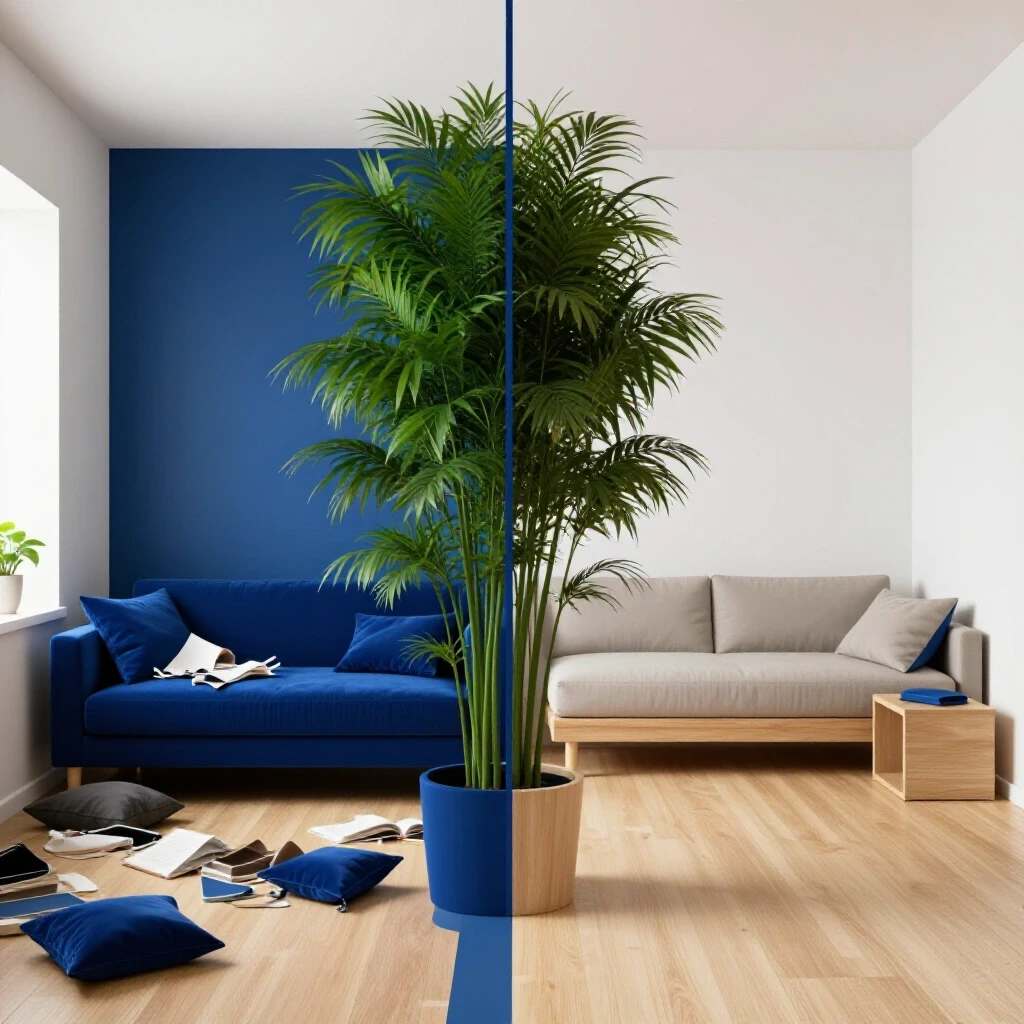
When we treat our homes like a distribution center, we start to see that every item has a “travel cost.” If it takes more than two steps to put an object away, that object will likely end up on the kitchen counter or the back of a chair. By establishing clear spatial anchors, we can stop the spread of belongings and create a sustainable environment that works for busy parents and professionals alike.
The Logistics of Spatial Drift: Why Items Wander
Spatial drift is the tendency for items to migrate away from their intended locations and settle in high-traffic areas due to convenience or lack of clear boundaries. This occurs when the energy required to return an item exceeds the perceived benefit of a tidy space.
In logistics, we look at “bottlenecks”—places where movement stops. In a home, these are often flat surfaces like dining tables or entry benches. I remember a time when my family’s shoes would pile up right in the middle of the hallway. We had a beautiful shoe cabinet with doors, but it was three steps too far from the door, and the doors were heavy. The “travel cost” was too high. Items wander because they lack a defined landing pad that aligns with natural human movement. When we don’t have hard borders for specific categories of items, the entire house becomes a “catch-all” zone. This leads to visual overwhelm and mental fatigue, as our brains constantly process the unfinished task of “putting things away.”
Understanding Retrieval and Put-Away Friction
Friction is the physical or cognitive effort required to complete a task, such as finding a tool or returning a toy to its shelf. High friction leads to system abandonment, while low friction encourages long-term maintenance.
If you have to move three boxes to get to the one you need, that is high retrieval friction. If you have to unlatch a lid to put a remote back, that is high put-away friction. In my experience, put-away friction is the primary cause of household clutter. We are often willing to work hard to get something, but we are rarely willing to work hard to stow it. Reducing these steps is the key to creating a home that stays organized.
| Storage Type | Retrieval Steps | Put-Away Friction | Sustainability Rate |
|---|---|---|---|
| Open Baskets | 1 | Low | 95% |
| Lidded Bins | 2-3 | Medium | 60% |
| Stacked Containers | 5+ | High | 15% |
| Drawer Dividers | 1 | Low | 90% |
Mapping Your Home: Establishing Functional Anchors
Functional anchors are designated areas within a room where specific activities occur and the necessary tools for those activities are permanently housed. These anchors act as a “home base” that prevents items from leaking into other parts of the house.
To stop the spread of clutter, you must define the purpose of every square foot. In my home, we used a “Zoning Map” to identify where items were naturally congregating. We stopped fighting the “drift” and started placing anchors where the family already dropped things. For example, if mail always ends up on the kitchen island, that island needs a dedicated, bordered tray for incoming paper. By creating a physical border—like a tray or a basket—you signal to the brain that the “clutter” has a specific, limited capacity.
The Three-Zone Framework for Household Flow
A three-zone framework categorizes storage based on the frequency of use, ensuring that daily items are the easiest to access while seasonal items are tucked away. This reduces the daily cognitive load of navigating your home.
- Primary Zone (High Velocity): Items used daily. These must be at waist-to-eye level and require zero to one step to put away. Think of coffee mugs, school bags, and car keys.
- Secondary Zone (Medium Velocity): Items used weekly or monthly. These can be on higher shelves or in lidded bins. Examples include baking supplies or specialized cleaning tools.
- Deep Storage (Low Velocity): Items used once or twice a year. These belong in the garage, attic, or top-most shelves. This includes holiday decor or camping gear.
Why High-Friction Systems Lead to Rapid Reversion
System reversion happens when an organization model is too complex for the users to maintain, causing the space to return to its original cluttered state within days. This is often caused by prioritizing aesthetics over functional logistics.
I once spent an entire weekend setting up a color-coded filing system for our home office. It looked like a magazine spread. Within two weeks, the desk was covered in paper again. Why? Because opening a drawer, finding the right folder, and sliding a paper in was a five-step process. I had built a high-friction system. For a busy professional, a simple “To Process” basket is much more effective. It provides a boundary for the paper without demanding immediate, complex sorting.
The 80% Capacity Rule in Residential Logistics
The 80% capacity rule states that a storage area should never be more than 80% full to allow for easy retrieval and the natural “breathing room” required for a functional system. Overfilled spaces lead to “clutter spills.”
In warehouse management, a 100% full facility is considered “broken” because you cannot move anything without moving something else first. The same applies to your closet or pantry. When a shelf is packed tight, the friction of putting something back increases exponentially. You end up leaving the item on the floor or a nearby counter instead. Aim for 20% “white space” in every bin and on every shelf.
- Visual Check: If you have to “dig” to find an item, the zone is over capacity.
- Maintenance Metric: It should take less than 30 seconds to return any daily-use item to its anchor point.
Designing for Family Behavior: The Path of Least Resistance
Family behavior alignment involves creating storage solutions that cater to the natural habits of children and adults rather than trying to force new, difficult behaviors. This minimizes the “nagging” factor and increases system compliance.
If your children drop their backpacks by the front door, putting hooks in their bedrooms won’t solve the problem. The “path of least resistance” is the floor by the door. To fix this, we installed heavy-duty hooks exactly where the bags were already landing. We didn’t change the behavior; we changed the infrastructure to support the behavior. This is a core principle of spatial ergonomics: design the environment to fit the human, not the other way around.
Reducing Sorting Fatigue for Busy Parents
Sorting fatigue is the mental exhaustion caused by making constant decisions about where an item belongs. Clear, simple boundaries eliminate this decision-making process by providing an obvious “yes/no” location for every object.
When we are tired after a long work day, our “executive function” is low. We don’t want to decide if a toy goes in the “Action Figure” bin or the “Superhero” bin. A single, large “Toy Trunk” with no lid is a low-fatigue solution. By simplifying the categories, you reduce the mental energy required to maintain the home.
| Family Member | Typical Bottleneck | Low-Friction Solution | Resulting Time Saved |
|---|---|---|---|
| Toddler/Child | Toy parts on floor | Large, open-top floor bins | 10 mins/day |
| Busy Professional | Mail and keys | Entryway “Drop Zone” tray | 5 mins/day |
| Student | School papers | Single-slot vertical wall file | 5 mins/day |
| Household Lead | Laundry “Mount Everest” | Divided hampers (Lights/Darks) | 15 mins/week |
Implementing the “Stop-Gap” Boundary System
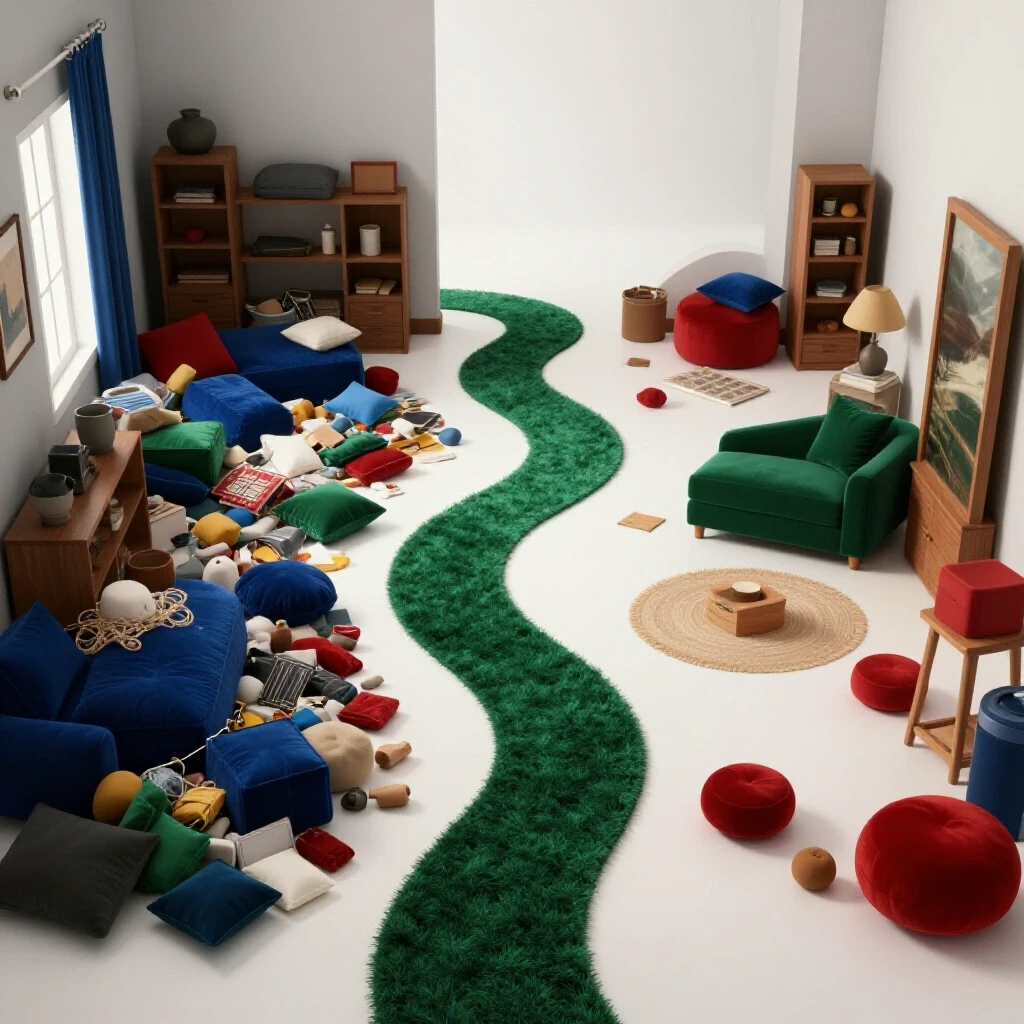
A stop-gap boundary system uses physical markers—like trays, rugs, or bins—to create “islands of order” that prevent items from spreading across a larger surface. These markers define the limit of how much clutter is allowed in a specific area.
In my home, we use the “Tray Method” for the kitchen counter. We have one wooden tray. Anything that isn’t a permanent kitchen fixture (like the toaster) must fit on that tray. If the tray is full, something must be moved to its permanent home. This creates a visual and physical limit. It prevents the “creeping” effect where one coffee mug leads to a pile of mail, which leads to a stack of school projects.
Step-by-Step: Creating Your First Anchor Zone
- Identify the Leak: Find a surface that is always cluttered (e.g., the end of the kitchen counter).
- Measure the Flow: Observe what items land there over a 48-hour period.
- Define the Border: Place a physical container (a basket, tray, or bin) that fits 80% of those items.
- Label the Intent: Use a clear label (e.g., “Daily Action Items”) so everyone knows what belongs there.
- Set the Capacity: Establish a rule that once the container is full, it must be cleared before more items are added.
The Role of Visual Processing in Household Stress
Visual processing overload occurs when the brain is forced to scan a large number of disorganized objects, leading to increased cortisol levels and a sense of “background noise” that prevents relaxation.
Research in environmental psychology shows that our brains are constantly “scanning” our environment for tasks. A cluttered room is a room full of “reminders” of things we haven’t done. By using opaque bins for secondary storage and clear boundaries for primary zones, we reduce the amount of visual data our brains have to process. This is why a room feels “calmer” even if the items are still there, just tucked into defined zones.
- Sensory Design Tip: Use uniform colors for bins to reduce visual “noise.”
- The “Hidden” Rule: Store items behind cabinet doors if they aren’t used daily to lower the visual load.
Maintaining the System: The “Inflow vs. Outflow” Log
Inflow and outflow control is the practice of monitoring how many items enter the home versus how many leave. To maintain a stable environment, the outflow must equal or exceed the inflow.
As a logistics professional, I know that you cannot manage what you do not measure. I kept a simple log for one month to see how much “stuff” was coming into our house. Between Amazon deliveries, school papers, and gifts, we were bringing in roughly 15 new items a week. If we didn’t remove 15 items, the “density” of our home would increase. We now have a “One-In, One-Out” rule for specific categories like clothing and toys.
Weekly Maintenance Metrics for Families
- The 10-Minute Reset: A daily family activity where everyone returns items to their designated anchors.
- The Sunday Sweep: A 30-minute weekly audit to clear out “Deep Storage” items that migrated to “Primary Zones.”
- Density Audit: Once a month, check if any bin is exceeding the 80% capacity rule.
Case Study: Redesigning the “Mudroom” Bottleneck
In my own home, our entryway was a disaster. We had four people trying to use a space designed for two. The “wandering clutter” included coats on chairs, bags on the floor, and mail on the stairs. I applied logistics principles to redesign the flow.
First, I mapped the “touchpoints.” Each person needed a dedicated “hook and bin” combo. We moved the mail sorting to a wall-mounted unit to free up floor space. We replaced a lidded bench with open cubbies. By reducing the steps to put away a coat from four (open closet, find hanger, hang coat, close closet) to one (toss on hook), the floor stayed clear for the first time in years. We reduced the daily “cleanup” time from 20 minutes to just 3 minutes.
Sustainable Storage: Choosing the Right Tools
The “right” tools are those that minimize friction and match the durability needs of a high-traffic household. Avoid “pretty” containers that are fragile or difficult to clean.
- Heavy-Duty Open Baskets: Best for toys, shoes, and blankets.
- Vertical Wall Files: Best for school papers and active mail.
- Clear Stackable Drawers: Best for craft supplies or bathroom items where visibility is key.
- Industrial Shelving: Best for garage or pantry “Deep Storage” to maximize vertical space.
Why Smart Labeling Matters
Labeling isn’t about being “neat”; it’s about reducing the cognitive load of “where does this go?” Use broad categories rather than specific ones. A bin labeled “Building Blocks” is easier to maintain than three bins labeled “Lego,” “Duplo,” and “Wooden Blocks.” For children, use picture labels to empower them to follow the system without needing to ask for help.
Frequently Asked Questions
How do I stop my kids from ignoring the zones?
Kids ignore zones when the friction is too high. If a toy bin has a lid or is stored on a high shelf, they won’t use it. Move the storage to floor level and remove the lids. Use “broad-category” sorting so they don’t have to think too hard about where an item goes.
What if my house is too small for “zones”?
Zoning isn’t about having more space; it’s about defining the space you have. Even a small studio can have a “Work Zone” and a “Rest Zone” separated by a rug or a specific shelf. Use vertical space to create boundaries without taking up floor area.
How do I handle items that don’t seem to fit anywhere?
These are “homeless items.” If an item doesn’t fit into an existing zone, it either needs a new zone or it needs to leave the house. Usually, these items are “Utility” items (like a random tool or a spare bulb). Create a “Utility Anchor” for these miscellaneous but necessary objects.
How often should I “reset” the boundaries?
A daily 10-minute reset is the most effective way to prevent “clutter creep.” If you wait until the weekend, the task becomes overwhelming. Think of it like washing the dishes; it’s easier to do a few every day than a mountain once a week.
What is the best way to deal with “paper drift”?
Paper is high-velocity clutter. Establish a “One-Touch” rule. When mail comes in, it goes directly to the trash, the “Action” tray, or the “File” bin. Never put a piece of paper down on a flat surface like a counter or table.
Why do my storage bins always end up as “junk drawers”?
This happens when the bin is too large or the category is too vague. If a bin is labeled “Miscellaneous,” it will become a junk drawer. Narrow the category slightly (e.g., “Electronic Cables”) and use smaller containers to prevent items from getting lost at the bottom.
How can I get my spouse on board with these systems?
Focus on the “benefit” rather than the “rule.” Show them how much faster it is to find their keys when they are always on the hook. Make the system so easy that it’s actually harder not to use it.
Can I use digital tools to help with physical organization?
Digital inventory apps can be helpful for “Deep Storage” (like knowing exactly what is in a Christmas box in the attic), but for daily “Primary Zones,” physical boundaries and visual cues are much more effective than any app.
What should I do if a zone keeps failing?
A failing zone is a sign of high friction or poor placement. If the “Laundry Zone” is always overflowing, you either need more frequent “outflow” (doing more loads) or a larger “buffer” (a bigger hamper). Analyze the bottleneck and adjust the infrastructure.
How do I maintain order during busy seasons like the holidays?
During high-stress times, expand your “buffer” space. Allow for a temporary “Gift Zone” or “Decoration Zone.” The key is to give these temporary items a defined border so they don’t take over the entire living room.
Does everything really need a “home”?
Yes. If an item doesn’t have a specific home, it will occupy “prime real estate” on your counters or tables. Even “homeless” items need a designated “Miscellaneous Tray” to prevent them from wandering.
How do I handle the “mental fatigue” of constant tidying?
The goal of low-friction zoning is to turn tidying into a “habit loop” that requires zero thought. When the system is designed correctly, putting an item away becomes a subconscious action, like closing a door when you leave a room. This significantly reduces mental fatigue.
(This article was written by one of our staff writers, Christopher Bennett. Visit our Meet the Team page to learn more about the author and their expertise.)