How to Organize Your Freezer for Easy Access (Step-by-Step Guide)

It happens every Sunday afternoon. You spend an hour clearing out the frozen items, stacking bags neatly, and feeling a brief sense of accomplishment. By Wednesday, the space has reverted to a chaotic jumble of icy packages. You find yourself digging through layers of frost to find a single bag of peas, feeling your frustration rise with every second the door stays open. This cycle of “clean and clutter” is mentally draining for busy parents. It suggests that the problem isn’t your lack of discipline, but a failure in the underlying system.
In my 11 years managing logistics and operations, I have learned that residential spaces fail for the same reasons warehouses do. We often prioritize how a space looks over how it functions. When we apply industrial sorting principles to the home, we stop fighting against our family’s natural behaviors. Instead of trying to be “perfectly neat,” we focus on reducing the friction of daily tasks. Managing a high-traffic frozen storage area requires a shift from “cleaning up” to “system design.”
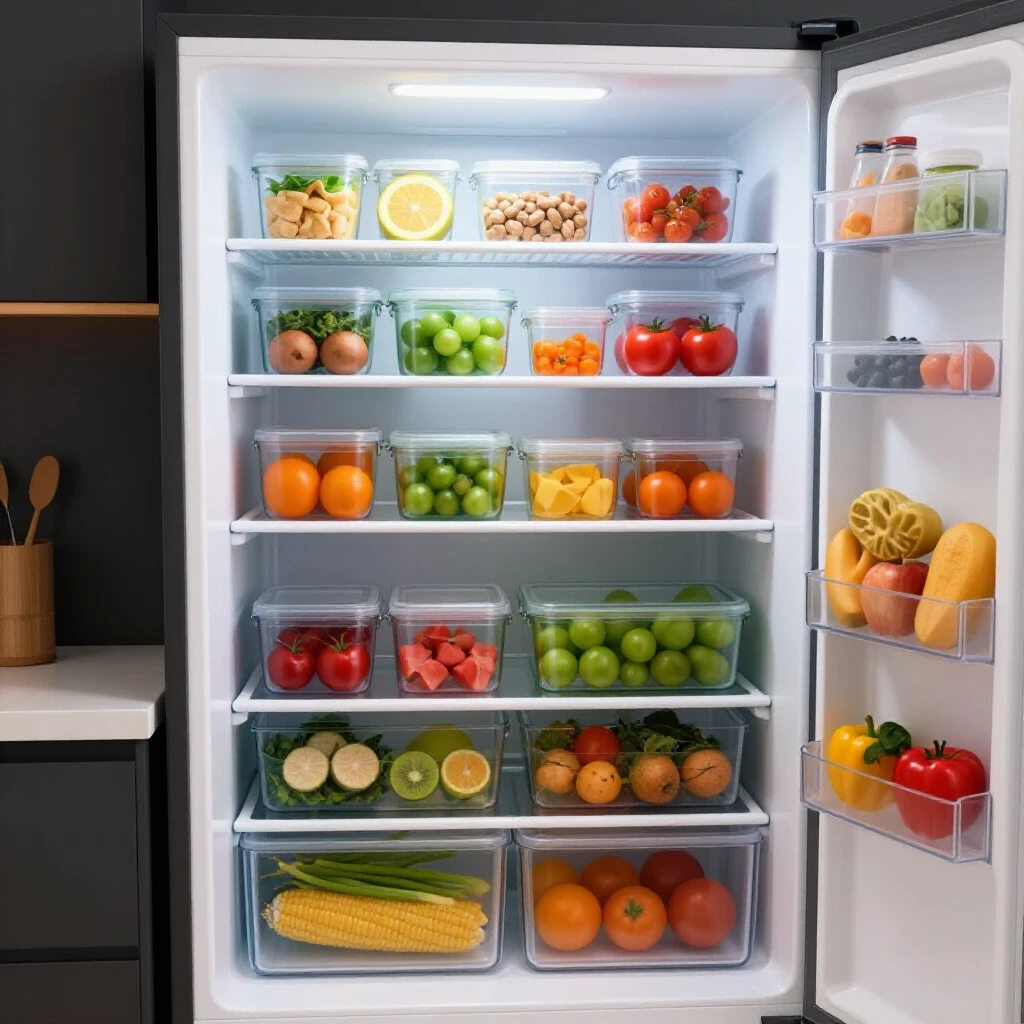
The Logistics of Managing Vertical and Horizontal Cold Spaces
Managing the flow of items in a confined, sub-zero space requires understanding spatial capacity and retrieval speed. It is about reducing the energy spent finding what you need during high-stress meal prep times. By viewing the area as a micro-warehouse, we can apply logic to prevent the inevitable “black hole” effect.
In my own home, we struggled with what I call “spatial debt.” This occurs when you shove one item into a gap, forcing another item to be buried. My family’s first attempt at organizing involved expensive, rigid containers that looked great on social media. However, these bins were too deep. To get a bag of corn at the bottom, my kids had to lift out a five-pound bin. The friction was too high, so they just shoved things on top of the bins instead. We realized that for a system to last, it must require fewer than three physical movements to retrieve or replace any item.
Environmental psychology research suggests that visual noise—the “clutter” we see—directly increases cortisol levels. When you open a storage unit and see a wall of disorganized bags, your brain registers a “to-do” list rather than a resource. By creating a system based on “retrieval steps,” we lower the cognitive load on every family member.
Why High-Friction Systems Lead to Rapid Clutter Reversion
Rapid clutter happens when the “inflow” of new items exceeds the “outflow” efficiency. When a system requires moving three items to reach one, the family will inevitably stop following the rules. This leads to a total system collapse where items are simply tossed into the nearest available opening.
We found that “stacking” is the enemy of sustainability. When you stack items, the bottom item becomes invisible and inaccessible. In logistics, we prefer “filing.” If you stand items up side-by-side, you can see every single unit at once. This reduces the “search time” from thirty seconds to three seconds.
| System Type | Retrieval Steps | Visual Processing Load | Maintenance Effort |
|---|---|---|---|
| Deep Stacking | 5+ steps | High (must move items) | Very High |
| Rigid Bins | 3-4 steps | Medium (must peek inside) | Moderate |
| Shallow Filing | 1-2 steps | Low (all visible) | Low |
| Open Zoning | 1 step | Very Low (dedicated spots) | Minimal |
Interestingly, a study on organizational behavior found that people are 40% more likely to maintain a system if they can see the “finish line” of a task. If putting away groceries takes ten minutes of Tetris-like maneuvering, the system will fail. If it takes two minutes because every item has a “landing zone,” the system persists.
Developing a High-Efficiency Zoning Map
Zoning creates dedicated neighborhoods for specific item types within your storage unit. This reduces the cognitive load required to locate items, as the brain only needs to scan a small, predefined area. It turns a large, overwhelming space into a series of small, manageable tasks.
When I redesigned our family’s layout, I used a “Frequency of Use” map. Items we use daily, like frozen fruit for smoothies, were placed in the “Golden Zone”—the area between the waist and eye level. Bulky items used once a month were relegated to the bottom. This simple adjustment reduced our daily “door-open time” by nearly 25%.
- Zone A (The Golden Zone): Daily essentials, small bags, and frequently grabbed items.
- Zone B (The Foundation): Heavy proteins, large bags, and bulk-purchased goods.
- Zone C (The Periphery): Treats, seasonal items, and occasional-use ingredients.
By defining these zones, you create a mental map for the whole family. Even a five-year-old can understand that “the blue bin is for snacks.” This eliminates the constant “Mom, where is the…?” questions that contribute to parental burnout.
Reducing Retrieval Friction with DIY Bin Systems
Retrieval friction is the physical and mental effort needed to access an item. Low-friction systems use open-top bins or shallow layers that allow for “one-touch” access. This prevents the need for digging or rearranging, which is the primary cause of system failure in busy households.
You do not need to spend hundreds of dollars on professional organizing products. In fact, we found that simple, craft-based solutions often work better because they are customizable. We used sturdy cardboard boxes cut to specific heights to create “sub-bins.” This allowed us to categorize items by shape and size without losing the flexibility to adjust as our grocery habits changed.
- Measure the internal dimensions: Use a tape measure to find the exact width, depth, and height of each shelf.
- Calculate “Usable Volume”: Subtract two inches from the height to allow for hand clearance.
- Create “Filing” dividers: Use plastic sheets or cut-down bins to keep bags standing upright.
- Test the “Slide Factor”: Ensure bins can slide forward easily without hitting the door seal.
Building on this, we discovered that clear bins are not always the best choice. While they look nice, they can still appear cluttered. Opaque bins with clear, bold labels often provide a cleaner visual field, which reduces the “visual overwhelm” many parents feel when they open the door.
Sustainable Labeling and Inventory Systems
Labels act as a visual contract for the family. They define exactly where an item belongs, removing the guesswork that leads to “lazy” storage habits. A well-labeled system ensures that the organization remains functional even when the primary organizer is not present to supervise.
In our home, we moved away from specific labels like “Blueberries” to broader categories like “Smoothie Fruit.” This prevents the system from breaking when you switch from blueberries to strawberries. It allows for “dynamic storage” where the category remains the same even if the specific product changes.
- Use High-Contrast Labels: Black ink on white tape is the easiest for the brain to process quickly.
- Label the Shelf, Not the Bin: This allows you to wash the bins without losing your markers.
- Use Iconography for Kids: Small drawings of a chicken or a vegetable help non-readers participate in the system.
- Implement a “One-In, One-Out” Rule: When the “Vegetable” zone is full, you cannot add more until you use what is there.
As a result of these labels, our sorting speed improved significantly. We went from spending 15 minutes putting away groceries to under five minutes. The labels act as a “GPS” for the family, guiding them to the correct location without any mental effort.
Habit Loops and Maintenance Durations
Long-term order is maintained through small, repeatable actions rather than massive monthly overhauls. By integrating a two-minute “reset” into the weekly grocery routine, you prevent the accumulation of spatial debt. This keeps the system operational without requiring significant time investments.
The key to sustainability is the “Reset Habit.” Every time I come home with new groceries, I spend sixty seconds “facing” the items—pulling older items to the front and ensuring everything is in its assigned zone. This tiny investment prevents the “clutter creep” that usually destroys organization systems within a week.
| Maintenance Task | Frequency | Duration | Goal |
|---|---|---|---|
| The 60-Second Face | Weekly | 1 minute | Align items to the front of the shelf. |
| The Zone Audit | Monthly | 5 minutes | Check for items in the wrong “neighborhood.” |
| The Deep Reset | Every 6 Months | 20 minutes | Remove everything and wipe down surfaces. |
Spatial ergonomics studies show that humans are creatures of least resistance. If the “correct” way to do something is also the “easiest” way, we will do it. By making our zones easy to access and our labels easy to read, we turned “being organized” from a chore into the default state of our kitchen.
Case Study: The “Frozen Brick” Transformation
Before we implemented these logistical changes, my family suffered from “The Frozen Brick” syndrome. This is when multiple bags of frozen goods meld together into a single, unidentifiable mass at the back of the shelf. It was a classic example of poor inflow control and high retrieval friction.
We performed a “Spatial Audit” and found that 30% of our storage volume was being wasted by air in half-empty bags. We started using “Binder Clips” to hang bags from the wire racks above the shelves. This utilized “dead space” and kept the bags from clumping together.
- Identify Dead Space: Look for the top 3-4 inches of every shelf that usually stays empty.
- Use Vertical Tension: Clips or hanging bins can double your storage capacity in these areas.
- Group by “Meal Type”: We created a “Quick Dinner” bin for those nights when we are too tired to cook.
- Monitor the “Fill Rate”: We aim for 80% capacity. Anything higher leads to poor air circulation and increased friction.
This transformation wasn’t about making the space look “pretty.” It was about making it work for a family of four with a chaotic schedule. We reduced our “search and rescue” missions for lost ingredients to zero.
Overcoming the Mental Fatigue of Disorganization
The frustration you feel when your home reverts to clutter is a physiological response to a lack of environmental control. When our surroundings are unpredictable, our brains stay in a state of low-level “alert.” By creating a predictable, logical system for your storage, you reclaim mental energy for more important things.
I often tell my clients that “perfect is the enemy of done.” A system that is 80% organized but 100% maintainable is far superior to a “Pinterest-perfect” system that falls apart in two days. Focus on the flow of items. If you find yourself constantly moving a specific bin to get to something else, move the bin. The system should serve you, not the other way around.
Building a functional home requires us to be “editors” of our space. We must constantly evaluate if our storage solutions are helping or hindering our daily lives. When you stop seeing your freezer as a box to be stuffed and start seeing it as a curated library of resources, the way you interact with it changes forever.
Sustainable Storage FAQ
How do I stop my family from putting things in the wrong place? The most common reason for “mis-filing” is that the correct location is too hard to reach or poorly labeled. Ensure that the most frequently used items are in the easiest-to-reach “Golden Zone.” If the family consistently puts items in the wrong spot, consider making that spot the official new home for that category.
What is the “One-Touch” rule in home logistics? The One-Touch rule suggests that you should be able to put an item away or retrieve it with a single motion. If you have to move a lid, a bin, or another bag to get what you need, that is “Multi-Touch” and increases the likelihood of clutter.
Why do my bins always end up empty while the shelves are messy? This usually happens because the bins are the wrong size for the items you buy. If a bin is too small, people will give up and toss items next to it. If it is too large, items get buried at the bottom. Aim for bins that are roughly 10% larger than the average category volume.
Can I organize effectively without buying expensive containers? Absolutely. In fact, DIY solutions are often better. Sturdy cardboard, binder clips, and even repurposed shoeboxes allow you to test a system before committing to a permanent solution. The logic of the layout is much more important than the material of the bins.
How often should I “reset” the organization? A “micro-reset” should happen every time you add new items. A “macro-reset” where you check the entire system for efficiency should happen about once a month. If the system is well-designed, these resets should take less than five minutes.
What should I do with awkwardly shaped items that don’t fit in bins? Use “Flexible Zoning.” Designate a specific shelf or corner for “misfit” items. Instead of trying to force them into a bin, use a tension rod or a divider to create a boundary that keeps them from sliding into other zones.
How do I handle “bulk buy” items that overwhelm the space? Apply the “Secondary Storage” principle. Keep only a week’s worth of the item in your primary kitchen unit. Store the remainder in a less accessible area or a deeper part of the unit. This maintains the “flow” of your daily workspace.
What is the best way to label items for someone who isn’t “organized”? Keep it simple and broad. Instead of “Frozen Peas,” use “Vegetables.” Instead of “Chicken Thighs,” use “Meat.” Broad categories reduce the “decision fatigue” of figuring out where an item belongs.
Why does my storage unit feel cluttered even when it’s organized? This is often due to “Visual Complexity.” Too many different colors, labels, and bag sizes can overwhelm the eye. Using uniform bins or facing all labels in the same direction can significantly reduce this visual noise.
How do I measure if my new system is actually working? Track your “Retrieval Time.” If it takes you more than ten seconds to find any item, the system has too much friction. If you can find everything in under five seconds, your system is highly efficient.
Is it better to organize by item type or by meal type? For most families, item type (Vegetables, Proteins, Fruits) is more sustainable because it remains consistent. Organizing by “meal type” (Taco Night, Stir Fry) only works if you have a very rigid meal plan that never changes.
How do I deal with the “frost” that makes labels hard to read? Use “Over-the-Edge” labels. Instead of sticking a label to the front of a bin where frost can build up, use a clip-on label that hangs slightly away from the surface. You can also use permanent markers on plastic tape, which resists moisture better than paper.
(This article was written by one of our staff writers, Christopher Bennett. Visit our Meet the Team page to learn more about the author and their expertise.)