Shared Bedroom Storage Solutions That Work (Step-by-Step Guide)

When two or more people share a sleeping space, the hidden benefit of a structured system isn’t just a pretty room; it’s the restoration of mental energy. By optimizing how items are stored and retrieved, we reduce the cognitive load that comes from navigating a crowded environment. This leads to better sleep quality and smoother morning transitions for everyone involved.
In my eleven years managing logistics for both warehouses and my own family, I have found that the most successful home organization systems are those that account for human behavior. In our house, we moved away from deep, opaque bins in the kids’ room because they created a “black hole” effect. Instead, we shifted to shallow, clear containers that allowed for immediate visual recognition. This small change reduced the time spent searching for socks by nearly 70%, proving that simple adjustments can yield significant time savings.
The Logistics of Multi-User Sleeping Quarters
This section explores the fundamental principles of spatial capacity and flow rates within a room occupied by multiple people. It focuses on how to balance the physical volume of belongings with the available square footage to prevent system collapse. Understanding these logistical boundaries is the first step toward a functional home.
In logistics, we often talk about “spatial capacity limits.” This is the point where a storage unit becomes so full that you cannot remove one item without disturbing three others. In a room shared by siblings or partners, this limit is reached twice as fast. To manage this, we must treat the room like a high-efficiency fulfillment center where every square inch is accounted for.
We also look at “retrieval friction,” which is the number of physical steps required to access an item. If a child has to move a chair and open two lids to find a toy, they likely won’t put it back. By reducing the Retrieval Step Count (RSC) to two or fewer, we ensure that the system remains sustainable for busy professionals and tired parents alike.
- Inflow/Outflow Control: For every new item that enters the room, one must exit to maintain equilibrium.
- Vertical Volume: Using wall-mounted units increases storage capacity by 30% without consuming floor space.
- Clearance Zones: Keeping a 36-inch path around beds ensures safe movement and reduces visual chaos.
Environmental Psychology and Visual Processing Overload
This topic examines how the brain reacts to disorganized environments and why certain layouts feel more peaceful than others. It highlights research on how visual clutter contributes to stress and decision fatigue in shared living areas. By applying these psychological insights, we can create a more restful atmosphere.
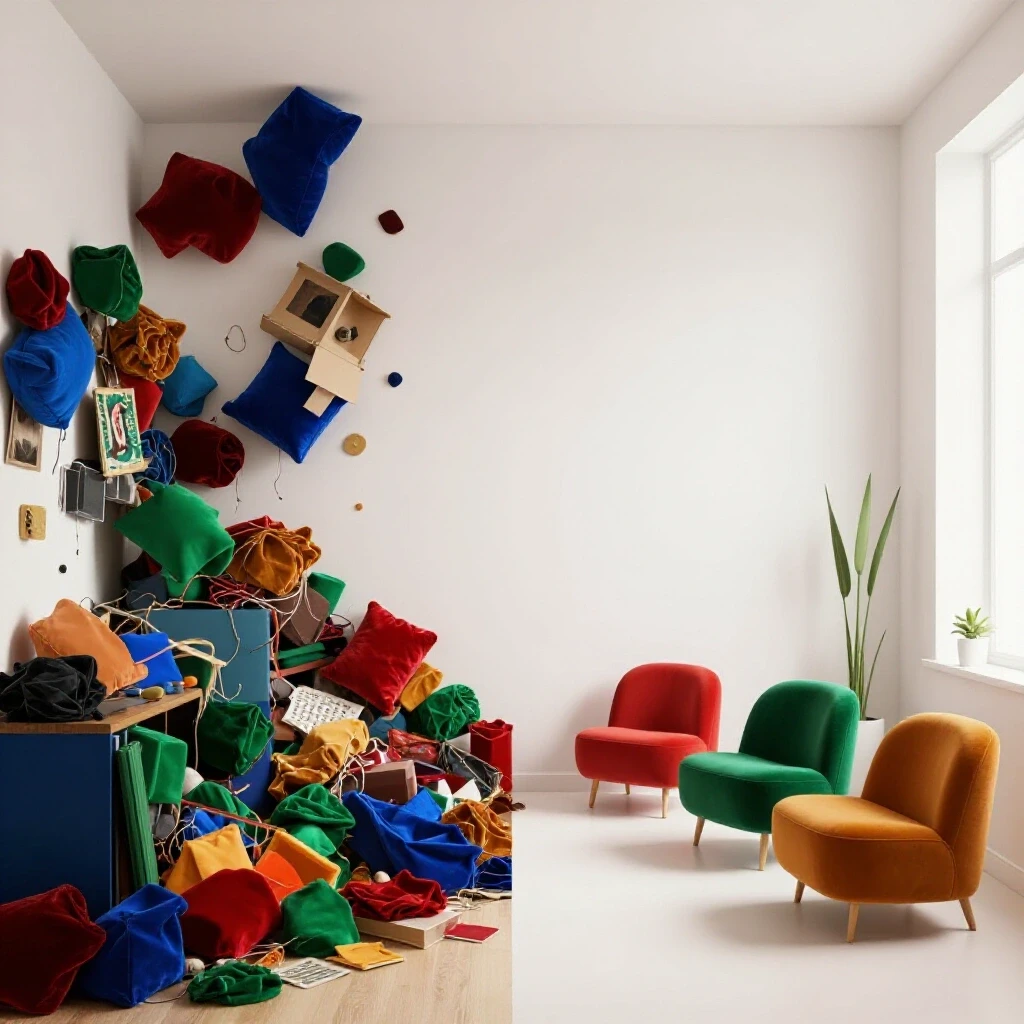
Environmental psychology journals suggest that “visual noise” triggers a low-grade stress response in the brain. When we see a pile of unsorted laundry or a shelf overflowing with books, our minds treat it as an unfinished task. This is particularly taxing in a bedroom, which should serve as a recovery zone for the nervous system.
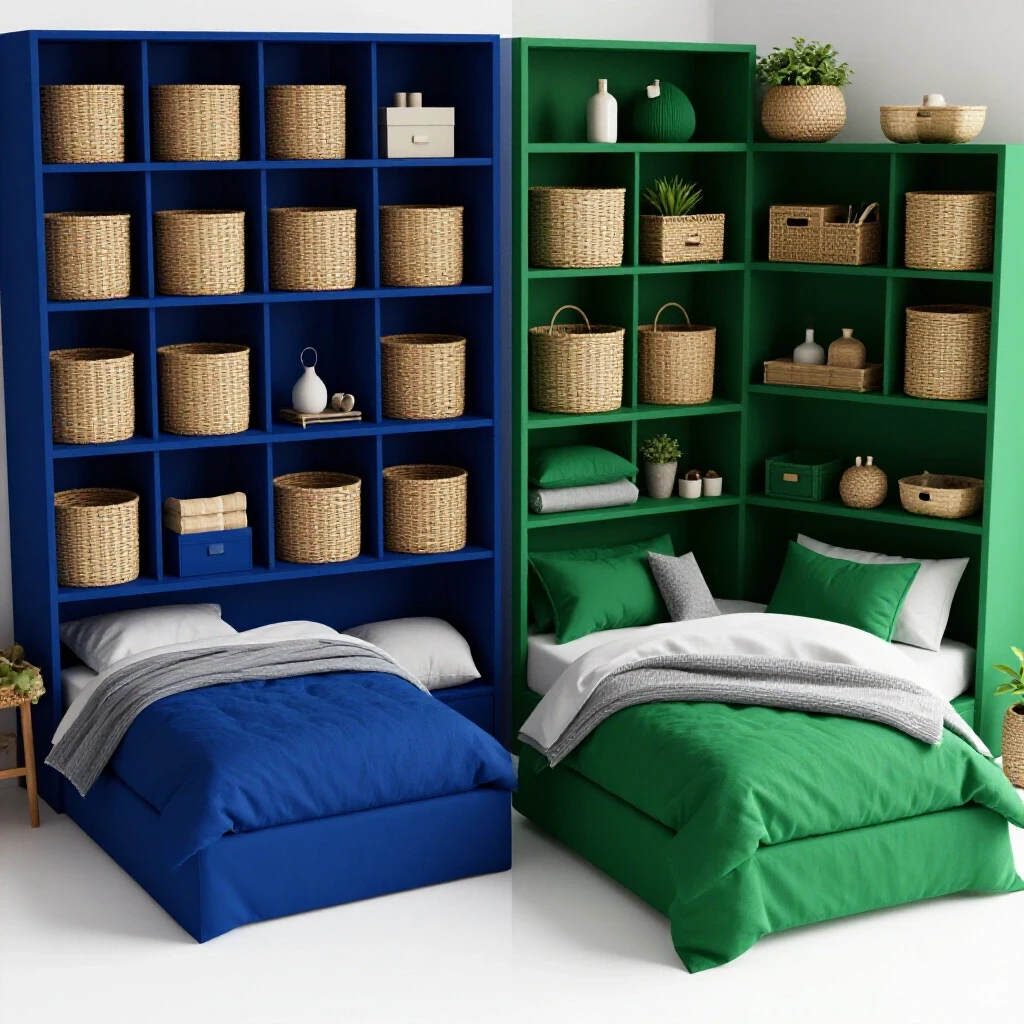
Spatial ergonomics studies show that shared spaces benefit from “clear boundaries.” When each occupant has a defined territory, even if it is just a specific shelf or a side of the bed, the brain feels more in control. This sense of ownership reduces friction between roommates or siblings and makes daily maintenance feel less like a chore and more like a personal responsibility.
| Concept | Definition | Impact on Shared Rooms |
|---|---|---|
| Visual Complexity | The amount of detail the eye must process. | High complexity leads to mental fatigue. |
| Territoriality | The need to claim and defend a specific area. | Clear zones reduce interpersonal conflict. |
| Affordance | The physical properties of an object that suggest how to use it. | Open bins “ask” to be filled correctly. |
The High-Speed Sorting Framework for Shared Areas
This framework provides a step-by-step method for categorizing and organizing belongings in a room with multiple owners. It emphasizes speed and efficiency, using time-boxed intervals to prevent the process from becoming overwhelming. This approach ensures that the decluttering journey remains focused and productive.
When we redesigned our children’s shared room, we used a “Sorting Time-Box” of 20 minutes. We found that after 20 minutes, decision fatigue sets in, and the quality of organization drops. By breaking the room into small quadrants, we were able to complete the entire space over a weekend without the typical burnout associated with large projects.
The key to this framework is the “Four-Category Method.” Every item is immediately placed into one of four zones: Active Use, Seasonal Storage, Relocate, or Donate. This prevents the “piling effect” where items are moved from one spot to another without actually being organized.
- Empty the Zone: Clear a 4×4 foot area completely to see the actual space available.
- Rapid Categorization: Spend no more than 5 seconds deciding on any single item.
- Density Check: Ensure that the storage unit is only filled to 80% capacity to allow for easy retrieval.
- Labeling: Use large, clear font or icons so every family member knows where items belong.
Designing Custom Zoning Maps for Dual Occupancy
Zoning maps are visual guides that dictate where specific activities and items belong within a shared room. This section explains how to create these maps to maximize flow and minimize interference between occupants. It is a practical tool for establishing long-lasting storage solutions for families.
In a shared bedroom, “Zoning Principles” act as the traffic laws of the room. We designate a “Primary Zone” for items used daily, such as school uniforms or work clothes. These are placed at eye level or in the top drawers. “Secondary Zones” hold items used weekly, like sports gear, and are placed in lower or higher areas.
By mapping the room, you can identify “Hot Spots” where clutter tends to accumulate. Often, these are near the entrance or the foot of the bed. By placing a specific, low-friction bin in these spots, you catch the clutter before it spreads. This proactive approach is a hallmark of functional home storage.
- Individual Zones: Dedicated drawers or shelves for each person to maintain a sense of autonomy.
- Common Zones: Shared areas for items like books or media that both occupants use.
- Transition Zones: A designated hook or basket for items that are “in-between,” like a jacket worn once.
Selecting Low-Friction Gear for Shared Spaces
Choosing the right containers is a critical component of any sustainable decluttering plan. This section evaluates different types of storage gear based on their “friction score” and durability. It provides guidance on selecting units that can withstand the daily use of a busy household.
Not all storage solutions are created equal. In my experience, “High-Friction” systems, like those requiring specific folding techniques or complex lid latches, almost always fail within a week. We look for “Low-Friction” gear that allows for “drop-and-go” storage. This is especially important in shared rooms where one person’s mess can quickly affect the other.
Modular units that can be reconfigured as needs change are the gold standard for shared bedroom storage. For example, adjustable shelving allows you to change the height of bins as children grow or as seasonal wardrobes shift. This flexibility ensures that your investment in home organization systems lasts for years rather than months.
Storage Friction Index by Bin Type
| Bin Type | Access Steps | Visibility | Sustainability Score |
|---|---|---|---|
| Open Canvas Bin | 1 (Drop) | Low | High |
| Clear Plastic with Lid | 3 (Lift/Remove/Replace) | High | Medium |
| Labeled Drawer | 2 (Pull/Push) | Medium | High |
| Woven Basket (No Lid) | 1 (Drop) | Low | High |
Implementing Family Behavior Systems and Maintenance Loops
A storage system is only as good as the habits that support it. This section details how to build routine maintenance loops that the whole family can follow. It focuses on reducing the effort required to keep the room tidy and functional over the long term.
To make our room systems stick, we implemented a “Daily 5-Minute Reset.” This is a scheduled time before bed where each person returns five items to their designated zones. Because the system is low-friction, this takes very little effort. We track this using a simple chart on the back of the door, which provides a visual feedback loop of our success.
We also use “Item-Density Guidelines” to prevent overcrowding. For a standard 12-inch shelf, we aim for a density of no more than five books or three bins. When the density exceeds this, we know it is time for a quick cull. This prevents the “clutter creep” that often happens in busy professional households.
- Trigger: Link the cleanup to an existing habit, like brushing teeth.
- Action: Perform the 5-minute reset using the zoning map.
- Reward: Enjoy a clear, calm space for sleeping.
- Audit: Conduct a monthly 15-minute review to ensure the system still fits the occupants’ needs.
Case Study: A 15-Minute Daily Reset for Sibling Rooms
This real-world example illustrates how applying logistical principles transformed a messy shared bedroom into a functional space. It provides measurable data on sorting times and retrieval steps before and after the system was implemented. This case study serves as a blueprint for other families.
In our home, my two sons share a 12×12 bedroom. Before we applied these principles, the floor was often covered in toys, and finding a matching pair of socks took an average of three minutes. We redesigned the space using open-front “cubby” style shelving and color-coded bins.
After the redesign, we measured the “Cleanup Duration Average.” It dropped from a frustrated 25 minutes to a manageable 6 minutes. The “Retrieval Step Count” for daily clothing went from five steps down to one. This change not only reduced household clutter but also significantly lowered the morning stress levels for both the kids and us as parents.
- Initial Sorting Time: 4 hours (one-time setup).
- Daily Maintenance Time: 6 minutes.
- Storage Volume Increase: 25% through vertical shelving.
- System Adherence: 90% over six months.
Practical Steps for Immediate Improvement
If you are feeling overwhelmed, start small. Choose one “Hot Spot” in the shared bedroom—perhaps the top of a dresser or a bedside table. Apply the low-friction principles by clearing the surface and adding a single, open-top tray for daily essentials. This immediate win provides the momentum needed to tackle larger zones.
Remember that the goal is not a showroom appearance but a functional environment that supports your lifestyle. As you move through the room, keep the “80% Rule” in mind: never fill a shelf or drawer more than 80% full. This extra space is the “buffer” that allows your system to handle the natural ebb and flow of daily life without reverting to chaos.
- Step 1: Identify the highest-friction area in the room.
- Step 2: Remove items that haven’t been used in 30 days.
- Step 3: Swap a lidded container for an open bin to test the friction reduction.
- Step 4: Label the new bin with the occupant’s name.
Frequently Asked Questions
How do we handle different levels of tidiness between two people? The best approach is to create clearly defined individual zones. By using physical dividers or separate shelving units, the tidier person is not affected by the other’s habits. This reduces conflict and allows each person to manage their own space according to their comfort level.
What is the best way to store bulky items like extra blankets in a shared room? Utilize the “Tertiary Zone,” which is typically under the bed or on the highest closet shelves. Use vacuum-sealed bags to reduce the volume of these items by up to 50%. This keeps them out of the way of daily traffic while remaining accessible when needed.
How often should we update the organization system? A quick audit every six months is usually sufficient. Life stages change, especially with children, and what worked for a toddler will not work for a school-aged child. Look for signs of “system friction,” such as items consistently being left on the floor, as a cue to adjust the layout.
Do labels really make a difference in a bedroom? Yes, labels act as a “cognitive map” for the room. They remove the need to remember where things go, which is vital when you are tired or in a rush. For children, using picture labels alongside words helps them participate in the maintenance loop independently.
What if the room is too small for traditional furniture? Focus on “Vertical Volume” and “Multi-Functional Gear.” Use over-the-door organizers for shoes or accessories and consider bed risers to create extra storage space underneath. In small rooms, every vertical surface is a potential storage opportunity.
How do I prevent the “clutter creep” from returning after a week? Establish a “Maintenance Loop” like the 5-minute reset mentioned earlier. Clutter returns when the “Outflow” of items stops. By making the return of items a daily habit, you ensure that the “Inflow” never overwhelms the spatial capacity of the room.
Should we use uniform bins for a better look? While uniform bins are visually pleasing, functionality should come first. Use clear bins for items that need to be seen (like specific toys or craft supplies) and opaque bins for items that look messy even when sorted (like socks or underwear). This balances aesthetics with practical use.
How do I involve my kids in the organization process? Give them a sense of ownership by letting them choose the color of their bins or help design the labels. Explain the “Why” behind the system—such as finding their favorite shirt faster—to help them see the benefits of keeping their shared space organized.
What are the most common mistakes in shared room storage? The most frequent errors are using containers that are too large (leading to unorganized “piles”) and choosing systems with too many steps to access items. Always aim for the lowest possible “Retrieval Step Count” to ensure the system is used consistently.
Can digital tools help with physical room organization? Yes, for long-term storage or seasonal items, using a simple digital inventory or QR code labels can be helpful. You can scan a bin to see exactly what is inside without having to pull it down from a high shelf, further reducing retrieval friction.
(This article was written by one of our staff writers, Christopher Bennett. Visit our Meet the Team page to learn more about the author and their expertise.)