How to Declutter Bookshelves and Keep Only What Matters (Guide)

Managing a home library often feels like a losing battle against gravity. We stack, we shove, and we organize, only to find the shelves overflowing again within a week. The solution isn’t just about removing items; it is about applying logistics to the items that remain to ensure the system survives daily life.
As an operations professional, I look at home organization through the lens of “system friction.” In my own home, I realized our bookshelves failed because they were designed for looks, not for the speed of a busy Tuesday night. When my children had to move three decorative objects just to put a book back, they simply didn’t do it. By shifting our focus to spatial capacity and retrieval speed, we created a sustainable decluttering model that works for the whole family.
The Science of Spatial Capacity and Visual Overload
Spatial capacity refers to the maximum volume a storage unit can hold while remaining functional and accessible. When we exceed this limit, the “retrieval cost” of an item increases, leading to a breakdown in household order.
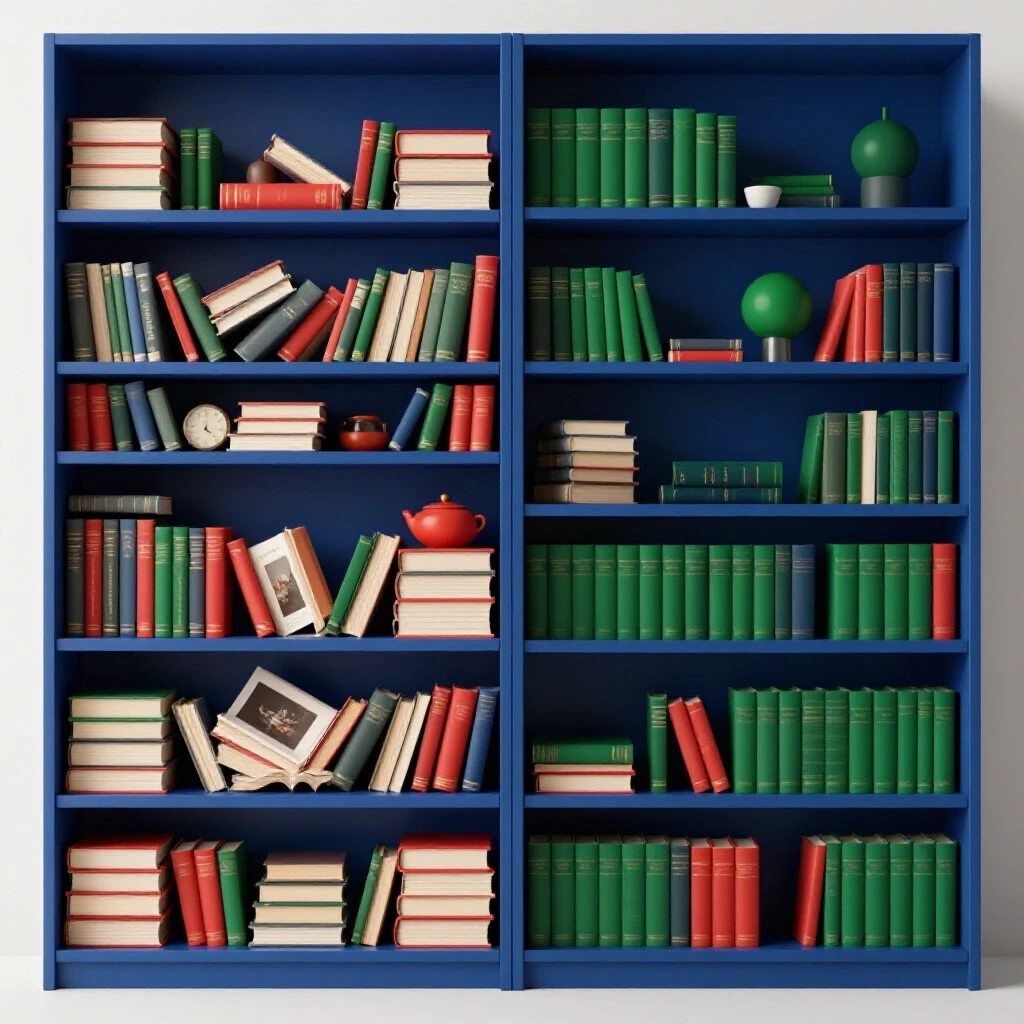
In my eleven years of managing logistics, I have found that a shelf filled to 100% capacity is a broken system. Research in environmental psychology suggests that visual clutter increases cortisol levels, the body’s primary stress hormone. When a shelf is packed tight, the brain perceives it as a single, overwhelming mass rather than a collection of useful tools. This leads to mental fatigue and a refusal to maintain the space.
To prevent this, I apply a “80% utilization rule” to our home library. Leaving 20% of the shelf space empty allows for easy browsing and prevents the visual “noise” that causes stress. This empty space acts as a physical buffer, making it easier to pull a volume out without knocking others over.
Why Visual Processing Matters for Family Systems
Visual processing is the brain’s ability to interpret information from visible light. In a home setting, a high density of different colors, heights, and textures can lead to cognitive overload.
When my family first started our reorganization, our shelves were a chaotic mix of sizes and colors. Interestingly, studies in spatial ergonomics show that we find items faster when they are grouped by shared physical traits. By organizing our remaining collection by height or color, we reduced the time it took to scan the shelves. This small change lowered the “cognitive load” for my kids, making it easier for them to identify where things belonged.
Applying Industrial Logistics to Home Book Curation
Logistics is the detailed coordination of a complex operation involving many people or supplies. In a home, this means managing the flow of items from the moment they enter the front door to where they sit on the shelf.
I treat our home library like a high-efficiency warehouse. We track the “flow rate” of our collection—how many items come in versus how many stay. If the inflow exceeds the outflow, the system will eventually fail, regardless of how many storage bins you buy. We focus on “functional home storage” that prioritizes the items we use most frequently.
Measuring Retrieval Friction on Your Shelves
Retrieval friction is the physical effort required to get an item out of storage and put it back. High-friction systems are the primary reason why homes revert to a cluttered state.
In my home, I measured how many “touches” it took to access a specific volume. If a book was behind a glass door, tucked under a stack, and blocked by a picture frame, that is a four-touch process. We redesigned our shelves to be one-touch or two-touch systems. This reduction in friction is a core part of sustainable decluttering.
| Storage Type | Retrieval Steps (Touches) | Maintenance Level | Friction Index |
|---|---|---|---|
| Open Shelf (Vertical) | 1 | Low | 1/10 |
| Labeled Bin | 2 | Medium | 3/10 |
| Stacked Horizontally | 3+ | High | 7/10 |
| Behind Decorative Items | 4+ | Very High | 9/10 |
The Sorting Framework for a Functional Library
A sorting framework is a set of rules used to decide which items earn a permanent spot in a high-traffic area. It moves the decision-making process from “do I want this?” to “does this fit the system?”
When I lead my family through a sorting sprint, we use a “speed-sorting” method. We don’t spend time debating the merits of each item. Instead, we look at physical condition and frequency of use. If a volume is falling apart or hasn’t been touched in a year, it moves out of the primary “active zone.” This keeps our home organization systems lean and manageable.
Creating a Custom Zoning Map
Zoning is the practice of dividing a space into specific areas based on the type of activity or the frequency of use. This prevents “item drift,” where objects from one part of the house end up cluttering another.
We mapped our living room shelves into three distinct zones. The “Hot Zone” is at eye level and holds items we use weekly. The “Cold Zone” is at the very top or bottom and holds reference materials we rarely need. The “Transit Zone” is a small basket near the shelf for items that need to be put away later. This map helps everyone in the family know exactly where an item lives without asking.
- Hot Zone (Eye Level): Daily reads, current projects, most-used references.
- Warm Zone (Waist Level): Hobbies, secondary interests, seasonal items.
- Cold Zone (Floor/Ceiling): Archives, oversized volumes, long-term storage.
Selecting Low-Maintenance Storage Gear
Low-maintenance storage refers to containers and shelving units that require minimal effort to clean, organize, and use. The wrong gear can actually create more work for a busy professional.
I avoid “fussy” storage solutions. This includes bins with tight-fitting lids or deep baskets where items get buried at the bottom. In our home, we switched to heavy-duty, adjustable shelving. This allows us to change the shelf height based on the physical size of the volumes we keep, maximizing every inch of space.
The Problem with Visual-First Systems
A visual-first system prioritizes how a room looks in a photo over how it functions in real life. These systems often fail because they don’t account for human behavior.
For example, many “perfectly organized” homes use color-coded shelves that look like a rainbow. While beautiful, this system is hard to maintain if you have a large collection. If you get a new book with a red spine but your red section is full, the system breaks. We use a “hybrid-density” model. We group by height first for spatial efficiency, then by broad category for easy finding. This is a much more functional home storage approach.
| Metric | Goal for Busy Families | Why it Matters |
|---|---|---|
| Item Density | 80% Capacity | Prevents overcrowding and damage. |
| Sorting Speed | 10 seconds per item | Reduces decision fatigue during cleanup. |
| Daily Reset Time | 5-10 minutes | Ensures the system stays sustainable. |
| Retrieval Time | Under 30 seconds | Minimizes frustration for parents and kids. |
Building Systematic Habit Loops for the Family
A habit loop is a neurological pattern that governs any habit, consisting of a cue, a routine, and a reward. Designing these loops is the key to reducing household clutter long-term.
In our house, the “cue” is finishing a book. The “routine” is placing it in the Transit Zone basket. The “reward” is a clear coffee table. Because the basket is low-friction, the family actually uses it. Every Sunday evening, we spend ten minutes moving items from the Transit Zone back to their permanent zones on the shelves. This small, weekly “logistics check” prevents the house from reverting to a cluttered state.
Aligning Family Behavior with Spatial Design
Behavior alignment means creating storage that matches how people naturally move and act in a space. If your kids always leave books on the floor by the couch, put a small shelf or basket right there.
I noticed my spouse often left research books on the dining table. Instead of fighting that habit, I cleared a small section of a nearby sideboard. By placing the storage where the behavior already happens, I reduced the “travel distance” for the item. This is a classic logistics move: minimize the steps to maximize efficiency.
- Observe where items naturally pile up for three days.
- Identify the “path of least resistance” for the family.
- Install a low-friction storage solution at that exact spot.
- Label the spot clearly to reinforce the new zone.
Maintaining Order Over the Long Term
Long-term maintenance is the process of keeping a system running through regular, small adjustments rather than massive, exhausting overhauls.
We use a “One-In, One-Out” rule for our curated collection. This keeps our storage volume constant. If I bring home a new professional manual, one older volume must leave the Hot Zone. This prevents the “spatial creep” that leads to visual overwhelm. By treating our shelf space as a fixed resource, we make better decisions about what stays.
The Role of Smart-Label Tracking
Labeling is the use of clear, written, or visual indicators to identify where items belong. It removes the “where does this go?” mental hurdle.
We use a simple labeling system for our shelf zones. For children, we use small icons or pictures. For adults, we use clear, printed labels on the edge of the shelf. Recently, we have experimented with smart-label systems that use QR codes. These allow us to scan a bin and see a digital list of what is inside without digging through it. This is particularly helpful for the Cold Zone items stored in opaque bins.
Conclusion: Starting Your Curated Journey
Maintaining a tidy home isn’t about achieving a static state of perfection. It is about building a system that can handle the mess of daily life and recover quickly. By focusing on spatial capacity, reducing retrieval friction, and aligning your storage with your family’s actual habits, you can create a library that serves you rather than stresses you.
Start small. Choose one shelf today. Apply the 80% utilization rule and see how it changes your stress levels. When you stop fighting the logistics of your home and start working with them, the clutter begins to take care of itself.
Frequently Asked Questions
How do I decide which books are part of the “active” collection? Focus on usage. If you have used the item in the last twelve months or plan to use it in the next six, it belongs in an active zone. If it is purely for reference and used once every few years, move it to a “Cold Zone” like a high shelf or a labeled bin in a closet.
What is the best way to prevent shelves from becoming overcrowded again? The “One-In, One-Out” rule is the most effective logistics tool. Treat your shelf space like a fixed budget. Once the budget is full, you cannot add more without removing something else. This forces you to curate your collection continuously.
How can I get my children to follow an organization system? Reduce friction. If a child has to open a heavy lid or move other items to put a book away, they won’t do it. Use open bins or forward-facing shelves where they can simply “drop” the item into its home. Labels with pictures also help younger children identify zones.
What should I do with books that don’t fit on the shelves but I want to keep? Move them to secondary storage. Not every volume needs to be in the living room. Use “zoning” to keep your primary living spaces clear. Archives can live in a basement, office, or under-bed storage, provided they are in labeled, moisture-proof containers.
How often should I perform a “system reset”? A daily five-minute reset is ideal for high-traffic areas. For the entire library, a quarterly check-in (every three months) is usually enough to ensure that the “spatial creep” hasn’t taken over and that the 80% utilization rule is still being met.
Why does my home always get messy again after I spend all weekend cleaning? This usually happens because the system has too much friction. If it takes too much effort to put things back, they will stay on the “flat surfaces” like tables and counters. You need to simplify your storage so that putting something away is as easy as leaving it out.
Is it better to organize by color or by category? For a busy family, category is usually better for finding things, but height or color can be better for “visual weight.” A hybrid approach works best: group by broad category (e.g., “Kids,” “Work,” “Hobby”), then straighten by height within those groups to reduce visual noise.
What are the most durable storage units for a large collection? Look for solid wood or heavy-duty metal shelving with adjustable heights. Avoid “particle board” units that sag under the weight of books. Sagging shelves create visual chaos and make it harder to slide volumes in and out, increasing friction.
How do I handle “item drift” from other rooms? Use a “Transit Basket.” When you find a book in the kitchen that belongs in the living room, put it in the basket. Once a day or once a week, carry the basket to the library and return everything to its proper zone. This prevents you from running back and forth all day.
Does a “minimalist” shelf actually help with mental fatigue? Yes. Environmental psychology shows that “visual complexity” tires the brain. By keeping your shelves 20% empty and aligning the items neatly, you reduce the amount of information your brain has to process every time you walk past, which lowers stress.
(This article was written by one of our staff writers, Christopher Bennett. Visit our Meet the Team page to learn more about the author and their expertise.)