How to Create Structured Organizing Systems for Lasting Order (Guide)

As the seasons shift and we move from the heat of summer into the structured pace of the school year, many families feel a sudden urge to reset their homes. We buy matching sets of plastic tubs and spend weekends labels in hand, hoping this time the order will stick. Yet, within a week, the hallway is a sea of shoes and the kitchen counters have vanished under a layer of mail and school papers.
In my 11 years working in operations and logistics, I have seen this same pattern in professional warehouses and busy family homes alike. We often mistake “containing” for “organizing.” In a logistics environment, if a bin is hard to reach or poorly labeled, the system breaks down. The same is true in your living room. My own family struggled with a “reverting” mudroom for years until I applied industrial flow principles to our daily entry routine. We didn’t need more bins; we needed a better map of how items move through our space.
The Logistics of Lasting Order
Spatial capacity limits refer to the maximum amount of physical items a designated area can hold before functionality decreases. This concept explains why simply adding more containers often fails to resolve clutter if the total volume exceeds the room’s footprint or the family’s ability to process it.
When a home quickly returns to a messy state, it is usually a sign of a “flow” problem rather than a lack of containers. In logistics, we look at the “inflow” (what enters the house) and the “outflow” (what leaves). If your inflow is higher than your outflow, no amount of storage will keep the surfaces clear.
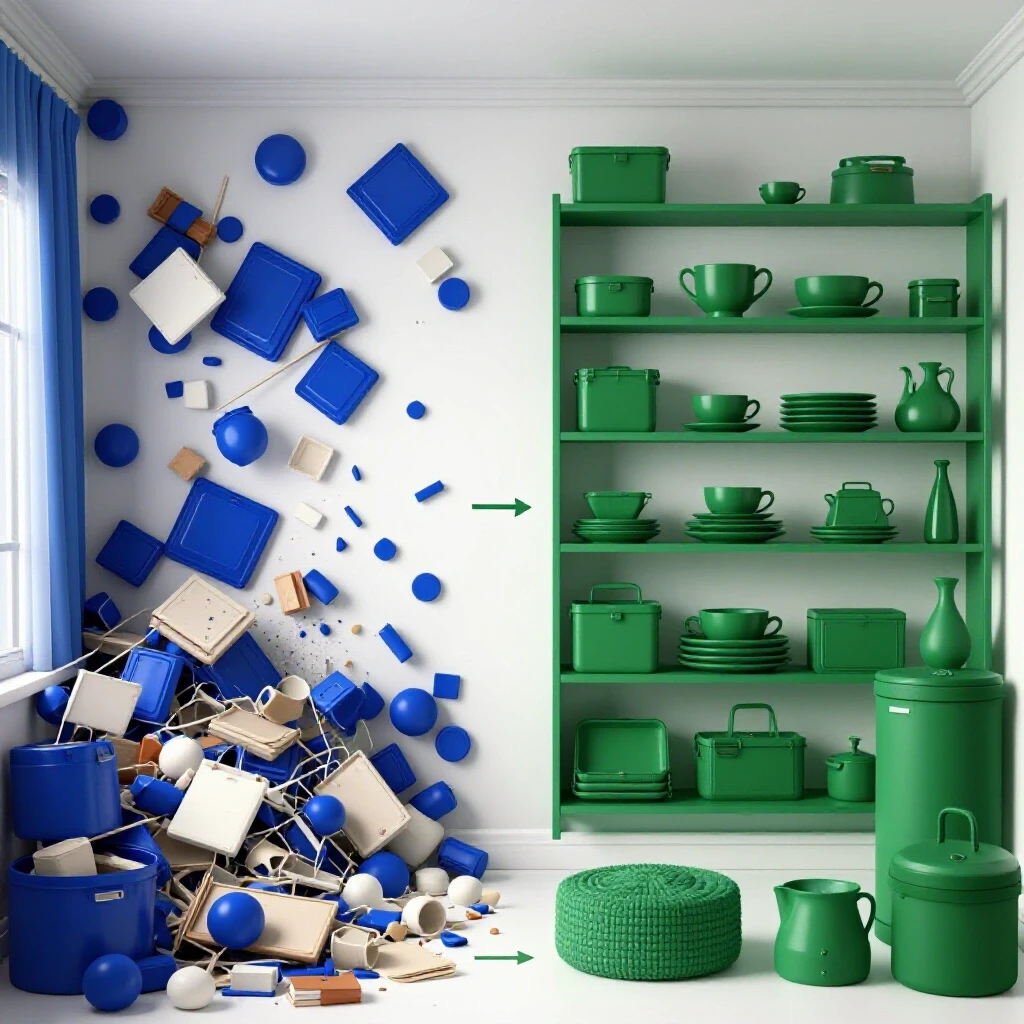
Research in environmental psychology suggests that high visual complexity—too many different shapes and colors in a small space—increases cognitive load. This leads to mental fatigue, making it harder for you to make decisions about where to put a single pair of scissors. By creating a system that limits visual noise, you reduce the brain power required to maintain the home.
- Inflow Control: Establish a “landing strip” for mail and packages to prevent them from migrating to the dining table.
- Outflow Strategy: Keep a permanent “donation bin” in a closet to ensure items leaving the home have a designated exit point.
- Spatial Density: Aim for a space utilization rate of 80%. Leaving 20% of a shelf or drawer empty allows for easier retrieval and prevents the “stuffed” look that triggers stress.
Reducing Retrieval Friction in Daily Systems
Retrieval friction is the measure of physical and mental effort required to get an item out of storage or put it back away. Systems with high friction—such as lidded bins stacked three deep—are the primary reason why homes revert to clutter within days of a cleanup.
In my home, I realized my children weren’t lazy; the bins I bought were simply too hard to use. We had beautiful wicker baskets with tight lids. To put away a toy, a child had to move a chair, lift a heavy lid, and then balance it while dropping the toy inside. This is a “three-step” process. In high-efficiency environments, we aim for “one-step” storage.
| Storage Type | Steps to Store | Friction Level | Best Use Case |
|---|---|---|---|
| Open Wall Hook | 1 Step | Low | Backpacks, Coats, Towels |
| Open Front Bin | 1 Step | Low | Daily Toys, Shoes, Laundry |
| Lidded Bin | 2 Steps | Medium | Seasonal Gear, Keepsakes |
| Stacked Lidded Bins | 3+ Steps | High | Long-term Attic Storage |
To lower the friction in your home, count the physical movements required to put an item away. If it takes more than two steps, the item will likely end up on the floor or a counter.
Zoning for High-Traffic Household Flow
Zoning principles involve dividing a home into specific areas based on the frequency of use and the type of activity performed there. This creates a predictable map for every family member, ensuring that items have a logical “home” that aligns with where they are actually used.
Think of your home as a distribution center. Items you use every day should be in the “Prime Zone”—the area between your shoulders and knees. Items used once a month go to the “Secondary Zone,” such as high shelves.
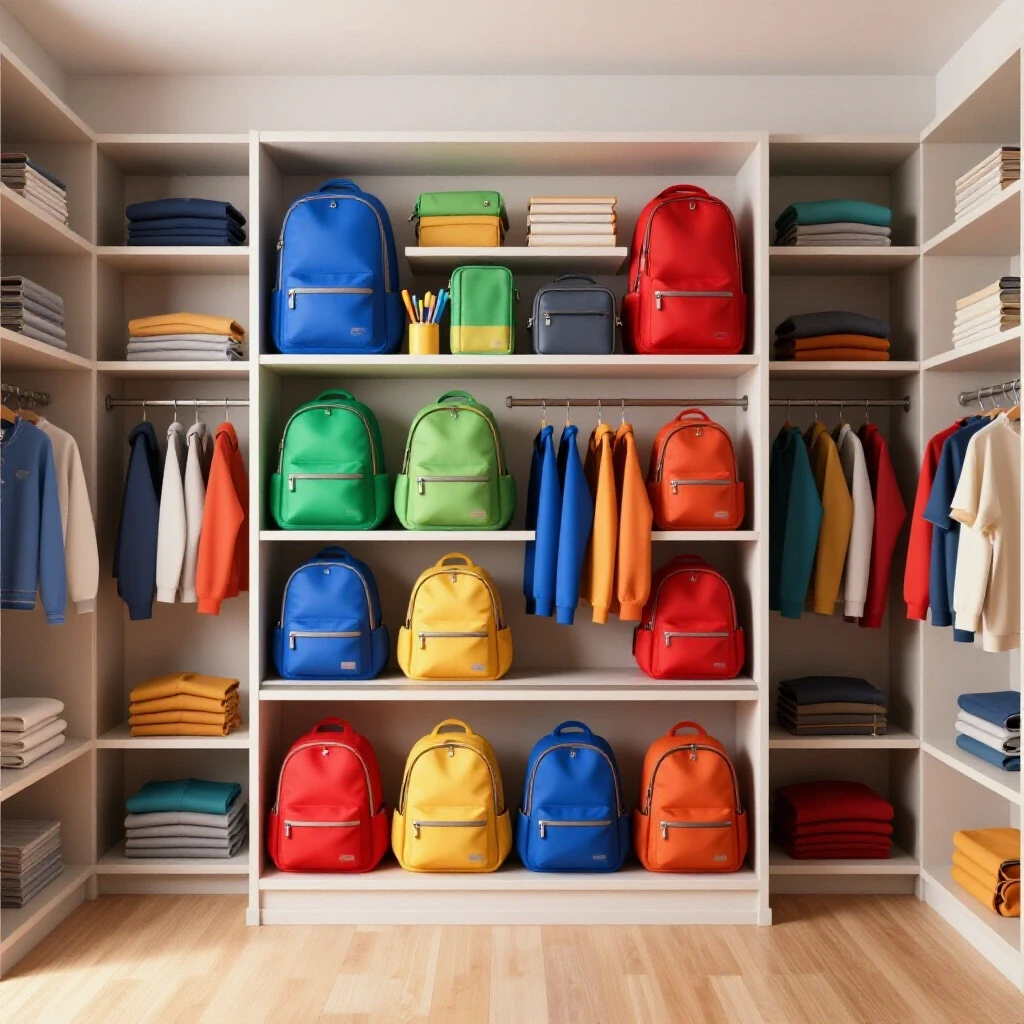
- Zone A (Active): Items used daily. Must be accessible in 1 step. (e.g., coffee mugs, school bags).
- Zone B (Passive): Items used weekly. Can be in 2-step storage. (e.g., baking supplies, vacuum).
- Zone C (Deep): Items used seasonally. Can be in high-friction storage. (e.g., holiday decor, camping gear).
When we redesigned our kitchen, I mapped out the “coffee zone.” We moved the mugs, spoons, and coffee grounds all within a 2-foot radius of the machine. This reduced the morning “sorting time” and kept the rest of the counters clear.
Selecting Equipment Based on Functional Durability
Low-maintenance storage refers to containers and shelving units that are easy to clean, offer clear visibility of contents, and can withstand frequent use without breaking. The goal is to choose gear that supports the system’s logic rather than just matching the room’s decor.
Many people buy bins because they look nice on a store shelf. However, if you can’t see what is inside, you will likely buy duplicates or forget what you own. This is known as “visual out-of-sight, out-of-mind.” For families, clear or open-topped containers are almost always superior to opaque, lidded ones.
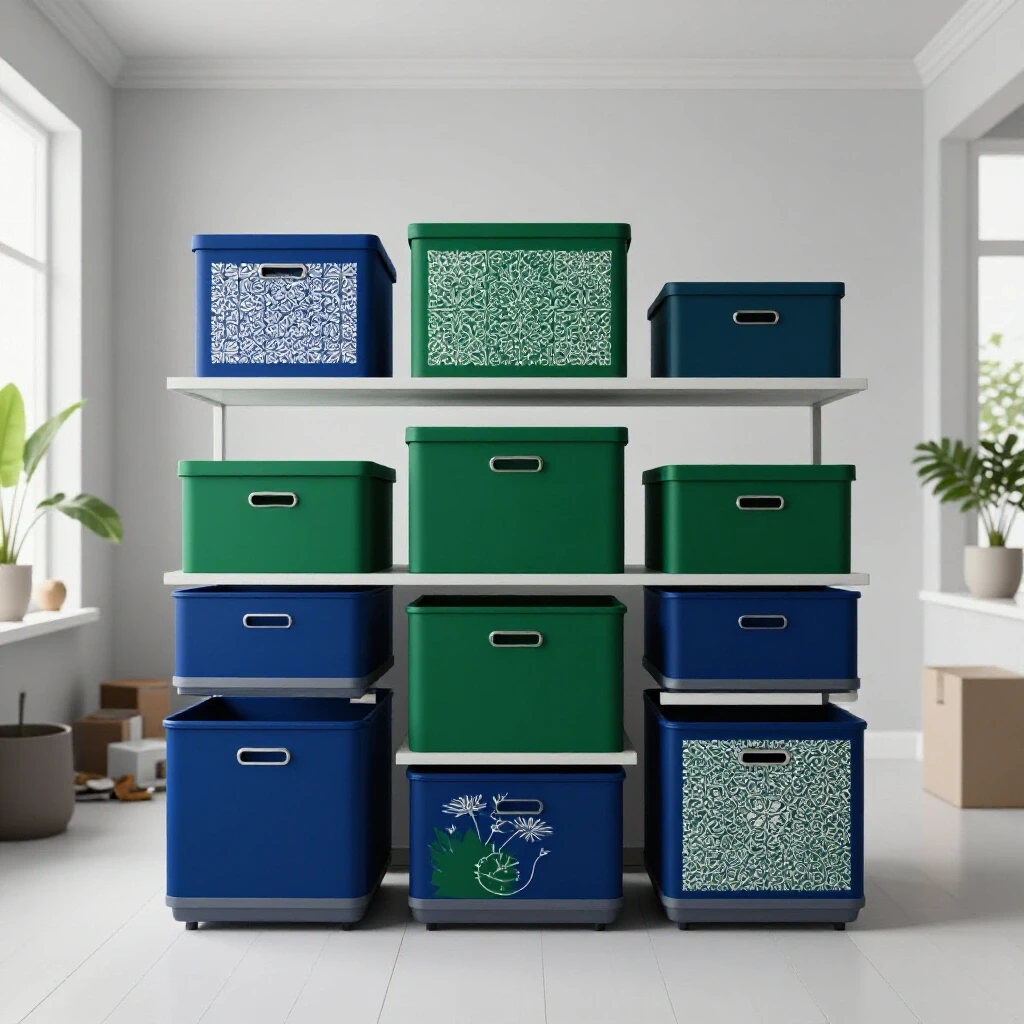
- Uniformity: Use the same style of bin within one zone. This reduces “visual static” and allows bins to be swapped easily.
- Visibility: Use clear acrylic for pantry and craft items. Use mesh for sports gear to allow for airflow.
- Labeling Hierarchy: Use large, bold text for general categories (e.g., “TRUCKS”) rather than specific ones (e.g., “BLUE TRUCKS”). This makes it easier for children to follow the system.
- Tapered vs. Straight Sides: Straight-sided bins maximize volume. Tapered bins waste up to 15% of shelf space.
Implementing Industrial Sorting Frameworks
High-speed sorting is a method of processing a large volume of items quickly by using pre-defined categories and physical boundaries. Instead of looking at an entire room, you focus on “sorting intervals” to prevent decision fatigue.
When a room is overwhelmed, the “pile method” often fails because the piles become clutter themselves. Instead, use the 15-Minute Sorting Box. Set a timer and sort items into four physical zones: Put Away (belongs in this room), Relocate (belongs elsewhere), Donate, and Trash.
- Sorting Speed: Aim to process 30 items every 10 minutes. This prevents over-thinking each object.
- Decision Rules: If you haven’t used an item in 12 months, its “utility value” is lower than the “spatial cost” of storing it.
- Item Density Guidelines: For bookshelves and pantries, never exceed three items deep. Anything behind the third row is effectively lost.
Aligning Systems with Family Behavior
System feedback loops are the ways a household system signals it is working or failing. A failing loop is a pile of mail on the counter; a working loop is a child hanging their coat on a hook because the hook is at their eye level.
In my experience, many systems fail because they are designed for the person who organized them, not the people who live in the house. If your spouse leaves their keys on the counter, don’t buy a key box with a door. Put a small bowl exactly where they naturally drop the keys. This is “path of least resistance” design.
- Height Calibration: Measure the reach of your shortest family member. Their daily items must be below that height.
- Point-of-Use Storage: Store items where the “action” happens. If you always fold laundry in front of the TV, create a permanent spot for empty baskets there.
- Visual Cues: Use color-coded bins for different family members. This assigns “ownership” of the space and makes it clear who needs to tidy a specific area.
Building Sustainable Maintenance Routines
A maintenance routine is a scheduled, low-effort check-in designed to return a system to its baseline state. These are not deep-cleaning sessions but rather “logistical resets” that prevent the backlog of clutter.
The reason most systems fail is that they require a “marathon” effort to fix. Instead, we use “sprints.” A daily 10-minute “reset” at 7:00 PM is more effective than a 5-hour cleaning session on Saturday. During this time, we move items back to their designated zones.
| Family Size | Daily Reset Time | Weekly Audit Time |
|---|---|---|
| 1-2 People | 5 Minutes | 15 Minutes |
| 3-4 People | 10 Minutes | 30 Minutes |
| 5+ People | 20 Minutes | 45 Minutes |
- The “One-In, One-Out” Rule: For every new item that enters the home, one must leave. This keeps your spatial capacity stable.
- The “Two-Minute Rule”: If a task (like putting away a pair of shoes) takes less than two minutes, do it immediately. This prevents “micro-clutter” from accumulating.
Case Study: The Entryway Redesign
In my own home, the entryway was our biggest bottleneck. We had a bench with two large baskets underneath. Every day, four people would kick off their shoes, and they would pile up in front of the bench because the baskets were “too full” or “too hard to slide out.”
We removed the baskets and installed a heavy-duty, open-shelf shoe rack. We also added individual hooks at different heights for each family member.
The Metrics of Change: * Before: 4 steps to store shoes (Stop, bend down, pull out heavy basket, place shoes, push back). * After: 1 step to store shoes (Place on open shelf). * Result: The floor remained clear for 6 months straight without me having to ask anyone to move their shoes.
By focusing on the physical effort required to maintain the space, we created a system that worked with our natural habits rather than against them.
Low-Barrier Steps to Start Today
To begin improving your home’s structural flow, do not go to the store. Instead, perform a “friction audit.”
- Identify the Hotspot: Choose the one surface that always gets cluttered (e.g., the kitchen island).
- Track the Items: For three days, look at what is in that pile. Are they keys? Mail? School forms?
- Create a One-Step Solution: If it’s mail, put an open tray right there. If it’s keys, put a bowl.
- Label the Zone: Use a physical label. It acts as a visual boundary that tells the brain, “Only mail goes here.”
- Test for One Week: If the pile returns, the friction is still too high. Simplify further.
Frequently Asked Questions
Why do my bins always end up messy inside? This usually happens because the categories are too broad or the bin is too deep. When a bin is too deep, you have to dig to find things, which messes up the rest of the contents. Use smaller, shallow bins or “dividers” to keep items from shifting.
How do I get my family to actually use the system? Design the system for the “laziest” person in the house. If they won’t open a lid, remove the lid. If they won’t walk to the closet, move the storage to where they already drop their things. Consistency comes from low effort.
What is the best type of label for a family home? Large, clear, sans-serif text is best. For younger children, use a simple line drawing alongside the word. Avoid “pretty” cursive labels that are hard to read at a glance.
Is it better to have more small bins or a few large ones? More small bins are generally better for maintaining order. Large bins tend to become “junk drawers” where items get buried and forgotten. Small bins force you to categorize more specifically.
How often should I “re-organize” a space? If a system is designed well, you should never have to “re-organize” it. You only need to “reset” it. If you find yourself needing a total overhaul every few months, the system has too much friction and needs to be simplified.
What should I do with items that don’t have a “home”? Items without a home are the primary cause of clutter. If you can’t find a logical place for an item within 30 seconds, you likely don’t have the spatial capacity for it. Consider if the item is truly necessary or if it can be donated.
How do I handle the “paper trail” of school and work? Use a vertical “action file.” Papers that stay flat on a counter get buried. Papers that stand up in a vertical sorter stay visible and are easier to process. Label them by action: “To Sign,” “To File,” “To Read.”
Can I use these systems in a small apartment? Yes. In small spaces, “vertical real estate” is key. Use wall-mounted hooks and over-the-door organizers to keep items off the floor. The same rules of friction and zoning apply regardless of square footage.
What is the “80% rule” in storage? This means you should never fill a shelf or bin more than 80% full. That extra 20% of “white space” allows you to see everything clearly and put things back without having to shove or rearrange other items.
How do I stop buying more bins? Before buying a new container, you must declutter the space first. Often, once the unnecessary items are gone, you will find you already have the storage you need. Use a “one-in, one-out” policy for the containers themselves.
(This article was written by one of our staff writers, Christopher Bennett. Visit our Meet the Team page to learn more about the author and their expertise.)