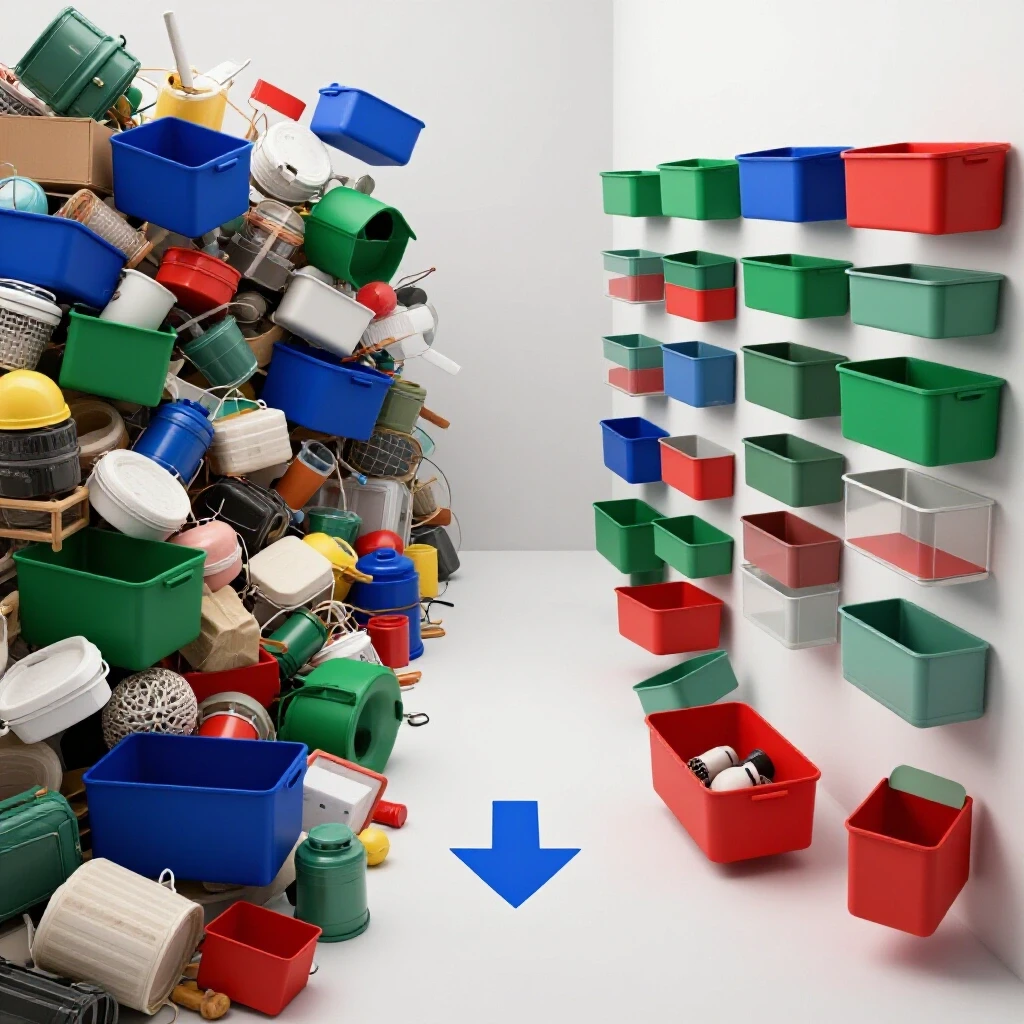
Touch It Once Rule for Home Organization: Pros, Cons & Solutions (Guide)

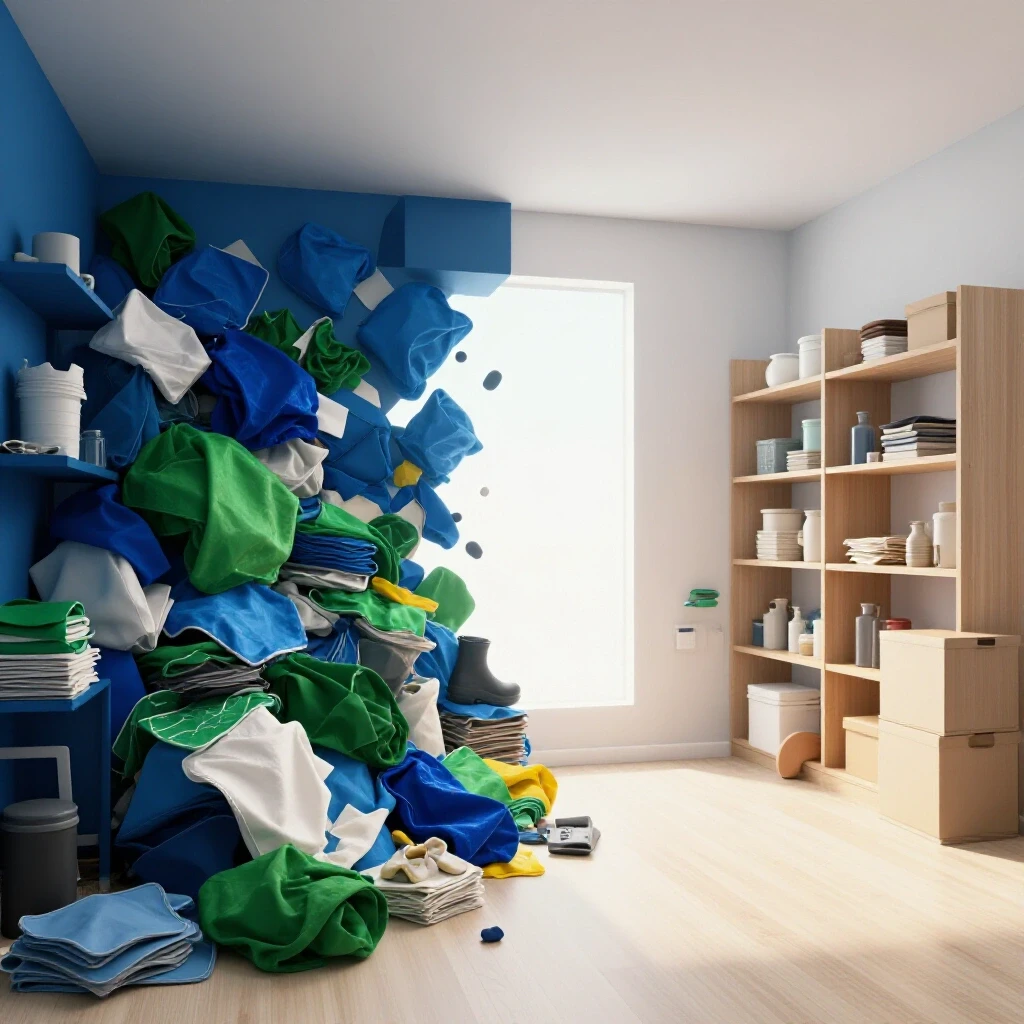
You walk through the front door after a long day, balancing a bag of groceries, a stack of mail, and your child’s stray sneaker. Your eyes land on the kitchen island, which is already buried under a mountain of school papers, half-empty water bottles, and a mysterious pile of charging cables. You know the rule: if you pick it up, put it away in its final home immediately. But as you stand there, exhausted, the thought of walking to the filing cabinet, the pantry, and the upstairs closet feels like a marathon. You set the mail on the counter “just for a second,” and within forty-eight hours, that second has turned into a permanent landslide of paper.
The Logistics of Immediate Item Processing in Busy Homes
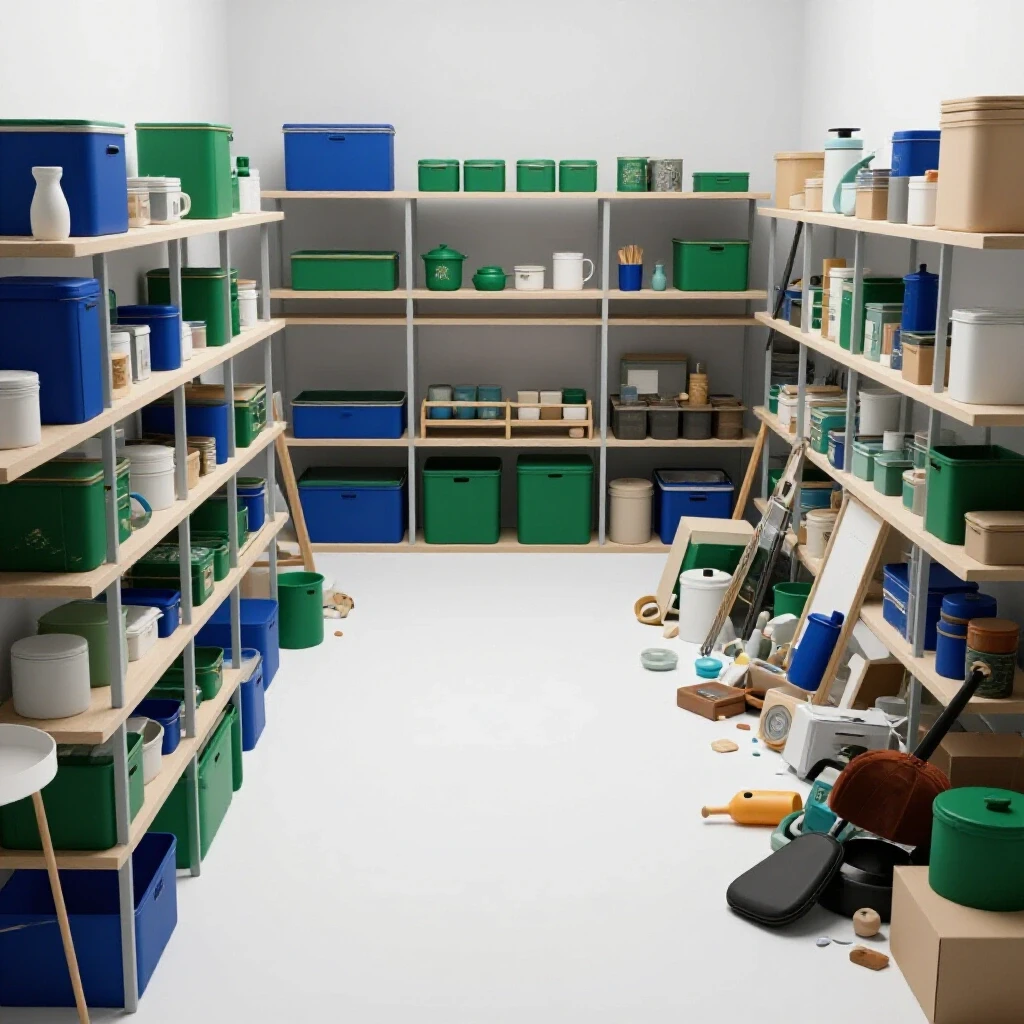
This concept suggests that any object entering your living space should be handled only once before reaching its final destination. By eliminating the “middle step” of setting things down on counters or chairs, you theoretically prevent the buildup of daily clutter and save time on future tidying.
In my eleven years managing logistics and operations, I have learned that the most efficient system on paper is often the first to break in the real world. In a warehouse, we use “cross-docking” to move items from delivery to shipping without long-term storage. However, a home is not a warehouse. A warehouse has a dedicated staff whose only job is to move items. In your home, you are the staff, the manager, and the customer, often while operating on a massive sleep deficit. The reason this “handle it once” approach feels so difficult is that it ignores the reality of cognitive load. Every time you decide where an item belongs, you expend a small amount of mental energy. By the time you get home, your “decision budget” is usually empty.
Why Single-Handling Fails During High-Stress Routines
Single-handling is the practice of completing a task in one fluid motion, such as opening mail over the recycling bin and immediately filing the bills. While this reduces the physical volume of clutter, it increases the immediate time and mental effort required for every single interaction with an object.
In my own home, I noticed our biggest bottleneck was the “entryway explosion.” My spouse and children would walk in, and the sheer number of decisions required—where does the library book go? what about this wet umbrella?—led to a total system collapse. We found that the pressure to put everything away perfectly right away actually caused more stress than the clutter itself. Research in environmental psychology suggests that visual clutter increases cortisol levels, but so does the pressure of maintaining “perfect” systems. When a system is too rigid, we stop using it entirely. This is why many families find their homes reverting to chaos just days after a major organization project.
The Concept of Retrieval Friction and Spatial Capacity
Retrieval friction refers to the number of physical and mental steps required to either put an item away or take it back out for use. Spatial capacity is the limit of how much a specific area can hold before the system loses its functionality and items begin to overlap.
When we design home organization systems, we often focus on how things look rather than how they move. If a bin has a lid, that is one extra step of friction. If that bin is stacked under another bin, that is three extra steps. In logistics, we measure “touch points.” The more touch points a process has, the more likely it is to fail. For a busy parent, a system with more than two steps is usually unsustainable. We need to reduce the “cost” of putting things away if we want the habit to stick.
| Storage Type | Retrieval Steps | Friction Level | Sustainability Rating |
|---|---|---|---|
| Open Basket/Bin | 1 (Drop) | Very Low | High |
| Labeled Drawer | 2 (Open, Drop) | Low | Medium-High |
| Lidded Box | 3 (Lift, Drop, Replace) | Medium | Medium |
| Stacked Lidded Boxes | 5+ (Move top, Lift, Drop, Replace, Restack) | Very High | Low |
Decision Fatigue and the Sorting Bottleneck
Decision fatigue is the psychological phenomenon where the quality of a person’s choices declines after a long period of decision-making. In a household context, this happens when every piece of paper or toy requires a unique “where does this go?” thought process.
I once tracked my family’s evening routine and discovered that my spouse and I were making over fifty small organizational decisions in the first hour after work. This “sorting bottleneck” is where most sustainable decluttering efforts die. If you have to think about where the batteries go every time you find one, you will eventually just leave the battery on the counter. To fix this, we must pre-decide the locations for 90% of our household items. This transforms a high-effort “decision” into a low-effort “reflex.”
The Storage Friction Index by Item Category
This index measures how much effort is required to maintain order for specific types of household goods based on their frequency of use and the complexity of their storage. Lower index scores indicate systems that are easier for children and tired adults to follow.
- Daily Essentials (Keys, Wallets): Target Friction 1. Use open bowls or hooks.
- Active Toys (Legos, Blocks): Target Friction 1-2. Use large, floor-level open bins.
- Paperwork (Mail, School Forms): Target Friction 2. Use a vertical “action” file or a simple tiered tray.
- Seasonal Items (Holiday Decor): Target Friction 5+. Stacking and lids are acceptable here because the frequency of use is low.
Designing Low-Friction Home Organization Systems
Low-friction systems are storage solutions that prioritize the ease of “putting away” over the ease of “finding.” By making it incredibly simple to clear a surface, you reduce the mental barrier to tidying up at the end of a long day.
When I redesigned our mudroom, I stopped asking my kids to hang their coats on hangers. Hangers are high-friction. Instead, I installed heavy-duty hooks at their eye level. The “touch it once” rule became easier because “putting it away” now only took half a second. We also replaced lidded toy boxes with open canvas bins. Interestingly, the room stayed tidier not because we had less stuff, but because the “cost” of being neat had dropped. We shifted our focus from visual perfection to flow rates—how fast can we move an object from the floor to its designated zone?
Mapping Your Home’s Flow Rates and Inflow Control
Flow rate is the speed at which items enter and exit your home, while inflow control refers to the strategies used to limit what crosses the threshold. Managing these logistics is essential for preventing the feeling of being “drowned” by new clutter.
In professional logistics, we call this “dock management.” If more stuff comes in than the warehouse can process, the system jams. Most busy families have a high inflow (Amazon boxes, school papers, groceries) but a very slow outflow (trash, donations, outgrown clothes). To maintain a functional home storage environment, you must balance these rates. We implemented a “one-in, one-out” policy for toys and clothing, which kept our spatial capacity at a manageable 80%. Leaving 20% of your storage space empty is a professional secret; it provides “buffer room” for those days when you don’t have the energy to be perfect.
Sustainable Decluttering Strategies for Real Families
Sustainable decluttering focuses on creating habits and systems that can survive a “bad week” or a busy season. It moves away from the idea of a one-time “purge” and toward a continuous, low-effort maintenance cycle that involves every member of the household.
One of the biggest mistakes I made early on was trying to organize for my family rather than with them. I created a complex color-coded filing system that only I understood. Naturally, it failed within a week. Now, we use “Zoning Maps.” Each room has specific zones for specific activities. The “Living Room Zone” is for relaxation, so any item that doesn’t facilitate relaxation (like a work laptop or a kitchen plate) is an “out-of-zone” item. This simplifies the decision-making process for everyone. You don’t have to know exactly where the item goes; you just have to know it doesn’t belong here.
The “Two-Touch” Compromise and Staging Areas
A staging area is a temporary, designated spot where items are placed before they are moved to their final home. The “two-touch” compromise allows for a brief pause in the movement of an item to accommodate low energy levels while still preventing total chaos.
Sometimes, the immediate-processing rule is just too hard. In our house, we use “stair baskets.” If I find something downstairs that belongs upstairs, I don’t drop everything to take it up immediately. I put it in the basket. The rule is that the basket must be emptied before bed. This is a “two-touch” system. It acknowledges that we are human and tired, but it maintains a firm boundary on how long the clutter can stay in the wrong place. This reduces the daily cleanup duration average from a constant, nagging chore to a focused ten-minute “reset” at night.
| System Type | Daily Cleanup Time | Mental Fatigue Level | Success Rate (Families) |
|---|---|---|---|
| Immediate Processing | 45+ mins (spread out) | High | 30% |
| The “Two-Touch” Reset | 15 mins (focused) | Low | 85% |
| No System (Reactive) | 120+ mins (weekend) | Extreme | 10% |
Selecting Functional Home Storage Units
Functional storage units are pieces of furniture or containers that support the natural movement of a household. They should be durable, appropriately sized for the items they hold, and easy for the least organized person in the house to use.
When choosing containers, I follow the “Visibility vs. Accessibility” rule. Items you use every day should be visible and accessible (open bins). Items you use once a week should be accessible but can be hidden (drawers). Items you use once a month can be hidden and less accessible (lidded bins on high shelves). We often make the mistake of buying beautiful, opaque boxes that hide the clutter, but if we can’t see what’s inside, we forget it exists—or worse, we just pile things on top of the lid because opening it feels like too much work.
Visual Processing and Organizational Science
Visual processing refers to how our brains interpret the environment around us. High levels of visible “random” items can lead to cognitive overload, making it difficult to focus or relax in a space.
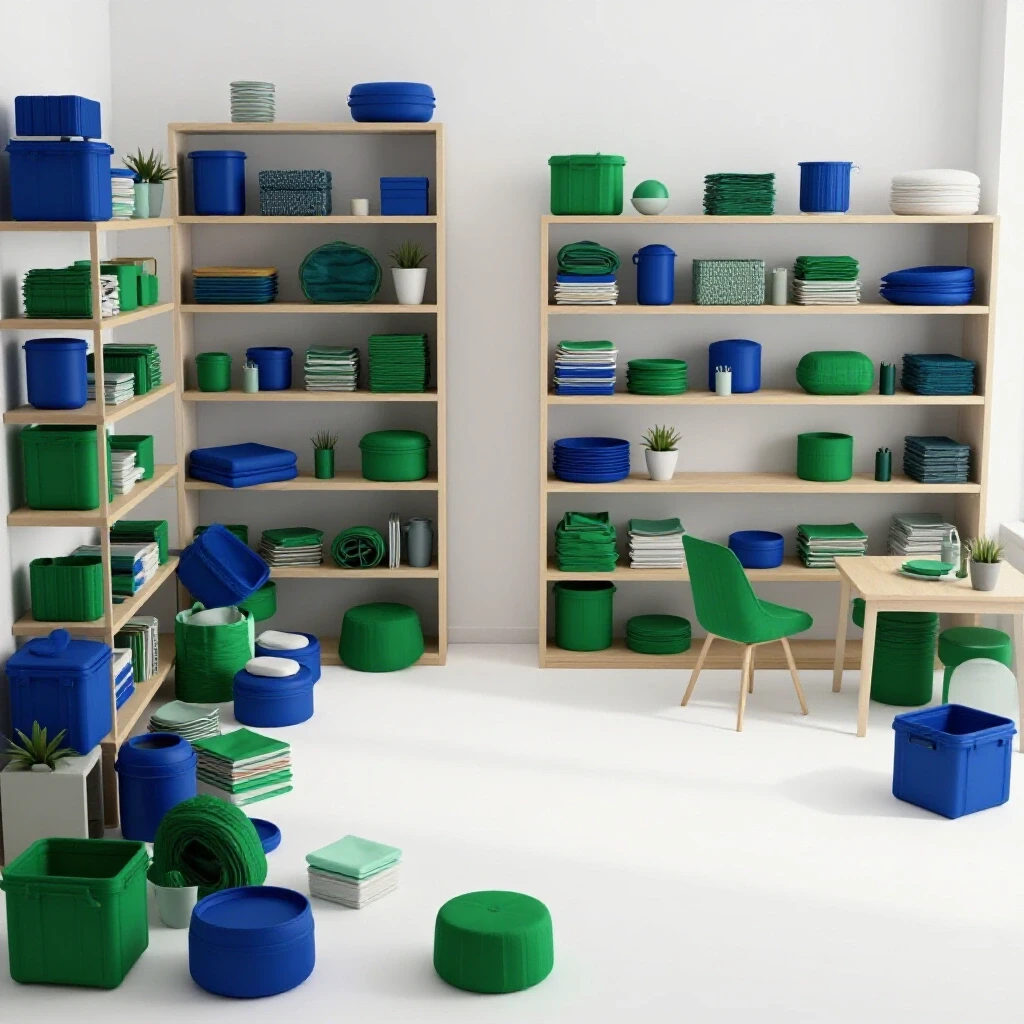
Studies in organizational behavior show that “visual noise” acts as a constant distraction. However, there is a catch: if you hide everything behind closed doors, you might trigger “out of sight, out of mind” issues, especially for children. The solution is clear labeling and “semi-open” storage. We use clear bins for things like craft supplies so the kids can see what they have, but the bins themselves are contained within a shelf to provide a clean visual line. This balances the need for a calm environment with the logistical need for item identification.
- Standardize your bins: Use the same type of bin throughout a single room to reduce visual chaos.
- Label for the lowest common denominator: If your youngest child can’t read yet, use picture labels.
- Use heavy-duty configurations: For garages or mudrooms, use metal shelving that can handle the weight of bulk buys and sports gear.
- Digital Inventory: For deep storage (like holiday bins), we use a simple numbered system on the box that corresponds to a list on our phones. No more digging through ten boxes to find the tree topper.
Why High-Friction Bins Lead to Rapid Clutter Reversion
When a storage system requires too many steps, the human brain will naturally seek the path of least resistance, which is usually the nearest flat surface. This leads to the “reversion” effect, where a room looks messy again within days of a deep clean.
I once spent a weekend organizing our pantry into beautiful, airtight glass jars. It looked like a magazine. But every time we came home from grocery shopping, the task of decanting every bag of flour and box of cereal was too much. We started leaving the bags on the floor. The system was “high-friction.” I eventually realized that the original packaging was fine; I just needed open baskets to group the packages by category (e.g., “Snacks,” “Baking”). By reducing the steps from five (open bag, get jar, pour, label, store) to one (put bag in basket), the pantry stayed organized for months.
Actionable Metrics for Your Decluttering Journey
To see if your systems are working, you need to measure them. These metrics help you identify where your household “logistics” are breaking down so you can make targeted adjustments.
- The 5-Second Rule: If it takes more than 5 seconds to put an item away, the storage location is too far or the container is too complex.
- Item-Density Guideline: No drawer or shelf should be more than 80% full. This allows for easy retrieval without “jiggling” items.
- Sorting Time-Box: Limit mail sorting and “entryway resets” to 10 minutes. If it takes longer, you have a bottleneck.
- Space Utilization Percentage: If 50% of your living room is taken up by “temporary” storage (piles), your zoning map needs a redesign.
Building Systematic Habit Loops for Maintenance
A habit loop consists of a cue, a routine, and a reward. In a home, these loops ensure that the “reset” happens automatically, preventing the slow creep of clutter that leads to mental fatigue.
In our house, the cue is the dishwasher finishing its cycle. The routine is a 10-minute “sweep” where everyone grabs five items that are out of zone and puts them back. The reward is a clean environment for our evening relaxation. We don’t aim for perfection; we aim for “functional enough.” By tying the organization to a daily event, we removed the need to “remember” to clean. It became part of the house’s operating rhythm. This approach acknowledges that while handling every item once is the ideal, a consistent, low-pressure system is what actually keeps a family home livable over the long term.
Frequently Asked Questions
Why does my house get messy again so fast after I organize it?
This usually happens because the storage systems have too much “friction.” If it is harder to put an item away than it is to leave it on the counter, the counter will always win. To fix this, switch to open bins, hooks, and “one-step” storage solutions that require less effort from tired family members.
Is the “Touch It Once” rule realistic for a family with young children?
Rarely. Children have limited impulse control and cognitive energy. A more realistic approach is “Zoning.” Instead of expecting a child to put a toy in a specific small box, expect them to put it in the “Toy Zone” (a large bin). You can do the fine-sorting later if needed, but getting it off the floor is the first priority.
How do I handle the “paper mountain” from school and mail?
Create a “One-Touch” station right where you enter. Put a recycling bin and a single “Action” tray there. As you walk in, immediately drop junk mail in the recycle bin and put bills or school forms in the tray. Don’t try to file them or act on them yet—just separate the “trash” from the “tasks” in one motion.
What is the best way to start when I feel visually overwhelmed?
Start with “Flow Control.” Stop new items from entering the main living areas. Clear one high-traffic surface, like the kitchen island, and declare it a “No-Landing Zone.” Maintaining one clear space provides a psychological “anchor” and reduces the overall feeling of chaos while you work on other areas.
Do I really need to buy expensive bins and organizers?
No. In fact, buying containers before you understand your family’s “flow” is a mistake. Use cardboard boxes or existing baskets first to test a system. Once you see that a specific spot works as a “drop zone,” then invest in a durable, easy-to-clean container that fits that space perfectly.
How do I get my partner to follow these systems?
Focus on reducing their effort. If they leave their shoes by the door, put a large, open basket exactly where the shoes usually land. Don’t ask them to change their behavior to fit a complex system; change the system to capture their natural behavior. Logistics is about making the right path the easiest path.
What should I do with items that don’t have a “home” yet?
Create a “Transit Bin.” If you don’t know where something goes, put it in the bin. Once a week, look at the bin. If you haven’t needed the items or found a home for them, they are likely candidates for donation or disposal. This prevents “homeless” items from wandering around your surfaces.
How do I maintain order when I’m exhausted at the end of the day?
Lower your standards for “organized.” A “successful” day is one where the floor is clear enough to walk on and the counters aren’t sticky. Use a 10-minute “reset” timer. When the timer goes off, you stop. This prevents the mental fatigue that comes from feeling like the work is never done.
(This article was written by one of our staff writers, Christopher Bennett. Visit our Meet the Team page to learn more about the author and their expertise.)