How to Organize Your Kitchen for Stress-Free Meal Prep (Guide)

Many people believe that a tidy kitchen requires a massive weekend overhaul or expensive custom cabinetry. In reality, one of the fastest ways to lower your daily anxiety is a simple five-minute “landing strip” audit. By clearing just the two square feet of counter space where you usually drop your keys or mail, you create an immediate visual reset that signals the start of a functional evening.
As an operations professional, I spent years optimizing supply chains before I realized my own kitchen was a logistical nightmare. My wife and I would spend our Saturdays organizing every drawer, only to find the counters buried under lids and mismatched containers by Tuesday. We weren’t lazy; our system just had too much “friction.” In logistics, friction refers to any force that slows down a process. In a home, friction is the extra step that makes you think, “I’ll just leave this on the counter for now.”
Over 11 years, I have applied industrial sorting and spatial management principles to our family home. We moved away from “pretty” systems toward “sustainable” ones. The goal isn’t a museum-quality display; it is a kitchen that supports meal prep without draining your mental energy. By focusing on flow rates and retrieval speed, we transformed our cooking space into a low-maintenance environment that actually stays organized.
The Psychological Impact of Kitchen Clutter on Mental Fatigue
Visual processing overload occurs when our brains are forced to track too many competing objects, leading to increased cortisol levels and decision fatigue during evening routines. This mental weight makes simple tasks like boiling pasta feel like an exhausting chore.
Environmental psychology suggests that our physical surroundings act as a “mirror” for our internal state. When every surface is covered, your brain cannot find a resting point. In a busy household, this is known as cognitive load. Every stray spatula or unwashed lid is a “micro-task” your brain feels it must eventually complete. Research in organizational behavior shows that when we reduce these visual cues of “unfinished business,” our ability to focus on the task at hand—like prepping a healthy dinner—increases significantly.
In our home, we noticed that my frustration levels spiked the moment I walked into the kitchen after work. It wasn’t the cooking I hated; it was the “pre-work” of moving piles just to find a cutting board. By understanding that clutter is a thief of time and energy, we shifted our focus from aesthetics to psychological relief. We began prioritizing “clear sightlines,” ensuring that the most used surfaces remained at least 80% empty at all times.
Building a Functional Kitchen Zone Map Based on Task Frequency
A kitchen zone map is a spatial strategy that groups items by how and where they are used, rather than by their category or size. This logistics-based approach reduces the number of steps taken during meal preparation and simplifies the cleanup process.
In a warehouse, the most popular items are placed at “pick height”—between the waist and shoulders—to save time. I applied this to our kitchen by creating three distinct zones. Primary zones hold items used every single day, such as coffee mugs, dinner plates, and the chef’s knife. Secondary zones are for items used two to three times a week, like the blender or baking sheets. Tertiary zones are for the “once a month” items, like the large roasting pan or holiday platters.
Why High-Friction Bins Lead to Rapid System Failure
High-friction storage involves any container that requires multiple movements to access, such as a box with a tight lid stored under another box. These systems fail because the effort to put an item away exceeds the user’s immediate energy levels.
When we first started, I bought beautiful matching bins with clip-on lids. They looked great on social media, but they were a disaster for a family with young children. To get a snack, my kids had to pull out a bin, unclip four sides, take the item, and reverse the process. Eventually, they just left the bins on the counter. We replaced these with open-top acrylic bins. The “friction” dropped to zero. If you can’t put something away with one hand in under three seconds, the system is too complex for a busy home.
The Storage Friction Index for Family Kitchens
This table helps you identify which storage methods are sustainable for high-traffic areas and which are destined to cause clutter.
| Storage Type | Retrieval Steps | Friction Level (1-10) | Best Use Case |
|---|---|---|---|
| Open-Top Bin | 1 step | 1 | Daily snacks, oils, frequently used spices |
| Drawer Divider | 1 step | 2 | Utensils, measuring cups, knives |
| Pull-Out Shelf | 2 steps | 4 | Heavy pots, small appliances (toaster, mixer) |
| Lidded Bin (Single) | 3 steps | 6 | Flour, sugar, bulk dry goods |
| Stacked Lidded Bins | 5+ steps | 9 | Seasonal items, cookie cutters, party supplies |
Reducing Retrieval Friction for Faster Meal Preparation
Retrieval friction is the measurable resistance encountered when trying to find or put away an item, often dictated by the number of physical barriers in the way. Reducing this resistance allows for a more fluid cooking experience and faster post-meal cleanup.
I tracked our “retrieval step count” for a week. To make a simple salad, I had to open three different cabinets and two drawers. By moving the salad spinner, cutting board, and oils into a single “Prep Zone” near the sink, I cut the movement by 60%. This is what we call “point-of-use” storage in logistics. If you always use the toaster in the same corner, the bread and butter knives should live within arm’s reach of that corner.
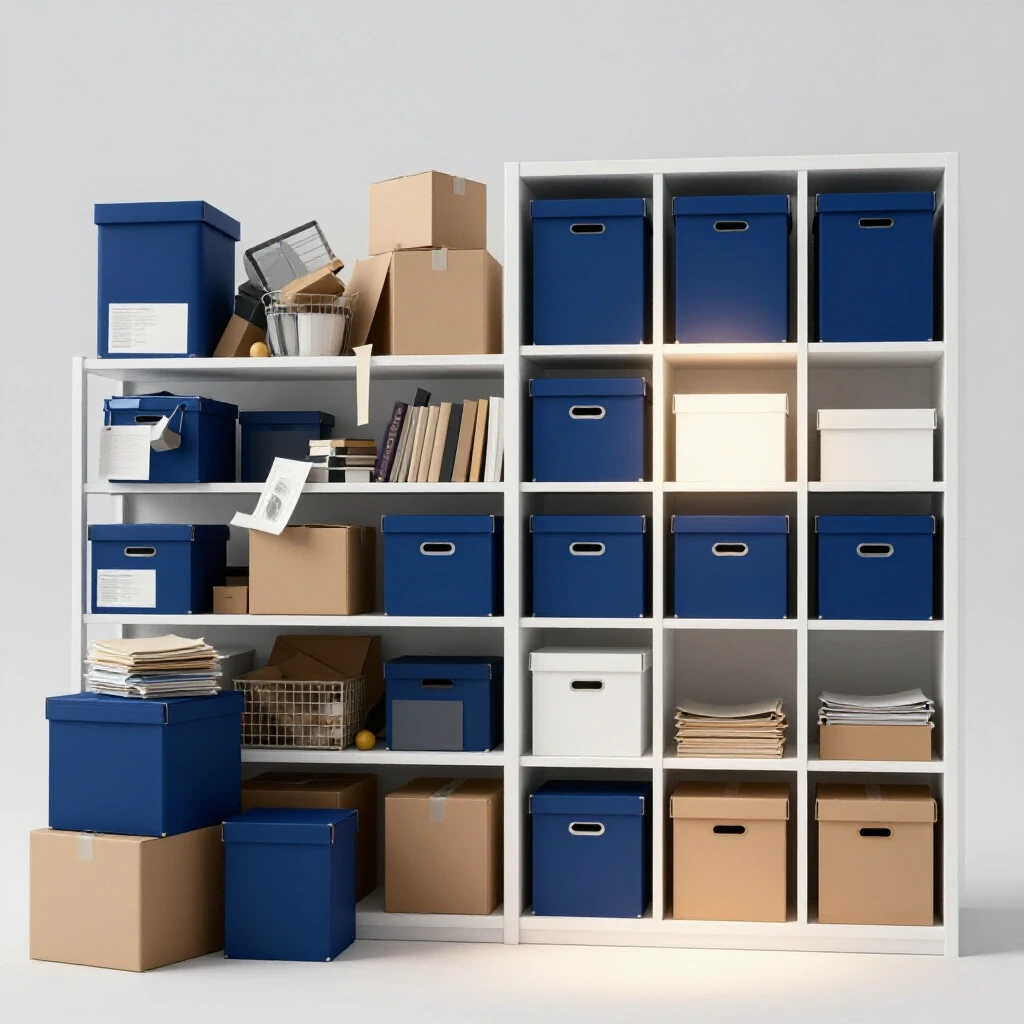
We also adopted the “80% Capacity Rule.” In logistics, a warehouse is considered “full” at 80% capacity; anything beyond that causes a massive drop in efficiency because there is no room to move items around. If your cabinets are jammed to the brim, you have to move three things to get to the one you want. By decluttering until our cabinets were only 80% full, we eliminated the “Tetris effect” of trying to put away groceries.
- Item-Density Guideline: Aim for no more than 5 items per square foot in deep cabinets.
- The 3-Second Rule: You should be able to locate and touch any daily-use item within 3 seconds.
- Verticality: Store flat items (baking sheets, cutting boards) vertically like files, not horizontally in stacks.
Designing Sustainable Habit Loops for Household Maintenance
A habit loop is a neurological pattern that governs a behavior, consisting of a cue, a routine, and a reward. In the kitchen, sustainable systems rely on loops that are so easy to follow they become automatic for every family member.
One of the biggest bottlenecks we faced was the “sink pile-up.” To solve this, we implemented a “Closing Shift” routine. Borrowing from the restaurant industry, the closing shift isn’t a deep clean; it’s a 10-minute reset. We set a timer after dinner, and the whole family participates. Because we lowered the friction of our storage (open bins, labeled zones), even my seven-year-old knows exactly where the lunchboxes go. The reward is waking up to clear counters, which significantly reduces morning stress.
The Daily Maintenance Timeline for a Family of Four
Maintaining order doesn’t require hours of work; it requires consistent, small-scale logistical resets throughout the day.
- Morning (3 Minutes): Empty the dishwasher while the coffee brews. This creates “outflow” capacity for the day’s dirty dishes.
- After School/Work (5 Minutes): Process lunchboxes and mail immediately. Use the “One-Touch Rule”—don’t put it down, put it away.
- Evening Reset (10 Minutes): Clear all “flat surfaces.” Wipe the counters and start the dishwasher.
- Weekly Audit (15 Minutes): Check the fridge for expired items before grocery shopping to maintain the 80% capacity rule.
Case Study: The Great Spice Drawer Redesign
For years, our spices were kept in a deep overhead cabinet. Every time I cooked, I would hunt for the cumin, knocking over three other jars in the process. It was a classic “high-friction” setup. I measured the time it took to find a spice: an average of 25 seconds.
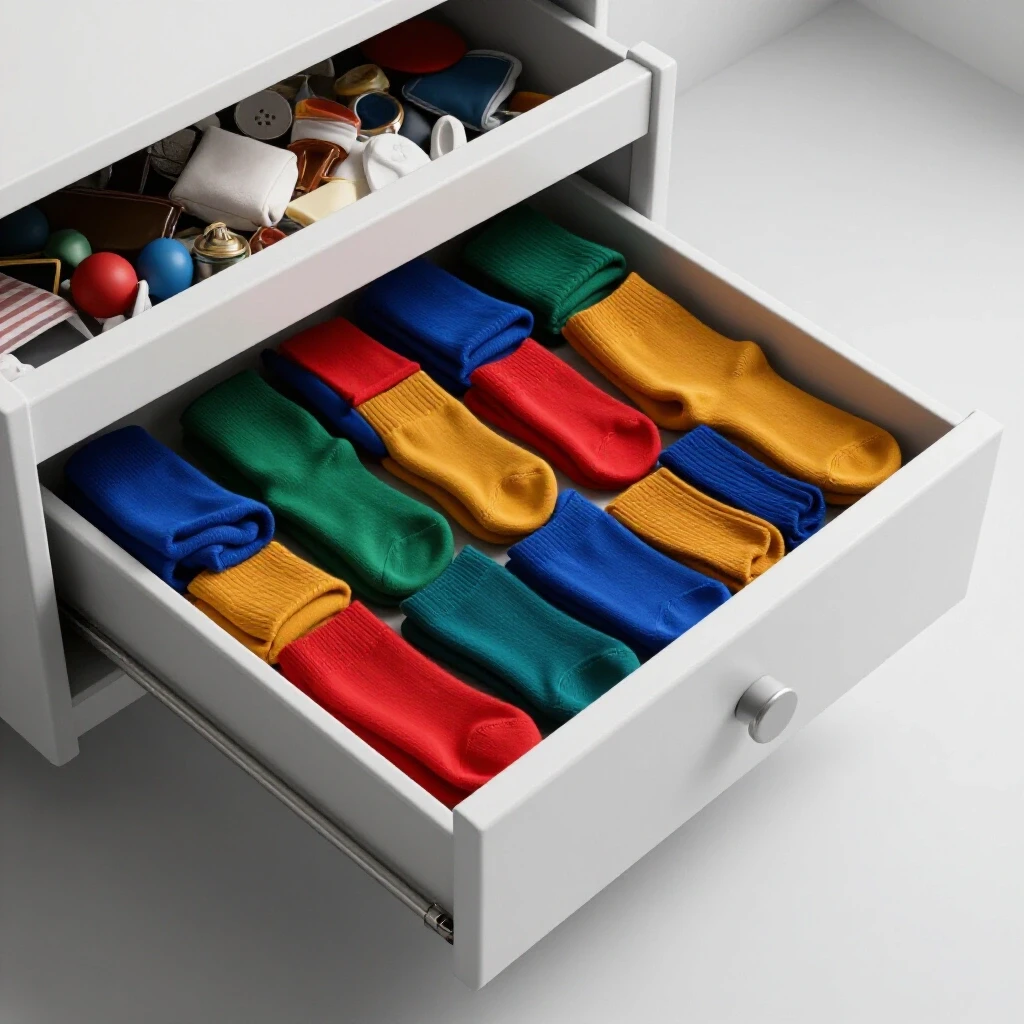
I moved the spices to a top drawer next to the stove using angled inserts. Every label was now visible at a glance. I also sorted them alphabetically. The retrieval time dropped from 25 seconds to 3 seconds. Over a year of cooking dinner five nights a week, that small edit saved us nearly two hours of searching time—and more importantly, it removed a major point of frustration during the “witching hour” of evening meal prep.
Strategic Sorting Framework for Kitchen Decluttering
When you decide to reorganize a zone, use this industrial sorting method to ensure you aren’t just moving clutter from one spot to another.
- Purge by Throughput: Look at every item and ask, “When was the last time this moved?” If it hasn’t been used in 12 months, it is “dead stock” and should be removed.
- Categorize by Task: Don’t group “all plastic things” together. Group “lunch packing things” together.
- Measure the Volume: Before buying bins, measure your drawer dimensions and the volume of the items. Most people buy bins that are too small, leading to overflow.
- Label for Others: Labels aren’t for you; they are for the people who don’t know the system. Use clear, bold text.
Choosing Low-Maintenance Gear Over Aesthetic Containers
Functional home storage prioritizes durability and ease of use over visual trends. Selecting the right tools means looking for items that can withstand daily wear and don’t require special care or complex assembly.
We found that clear acrylic bins and heavy-duty wire baskets are the “workhorses” of a functional kitchen. Unlike wicker baskets, they don’t catch dust or snag fabrics. Unlike opaque bins, they allow for “visual inventory,” meaning you can see when you are low on snacks without opening anything. For digital inventory, some families use QR code labels that link to a spreadsheet, but for most busy parents, a simple chalkboard marker on a clear bin works best.
- Modular Units: Use square or rectangular bins to maximize “cube utilization” (no wasted round corners).
- Heavy-Duty Slides: If you have deep lower cabinets, installing aftermarket pull-out drawers is the single best investment for reducing physical strain.
- Labeling: Use a standard label maker with 12mm tape for a clean, uniform look that is easy to read.
Final Steps Toward a Lower-Stress Kitchen
The journey toward a manageable home isn’t about achieving a “perfect” state; it’s about improving the “flow rate” of your daily life. Start by identifying your highest-friction area—perhaps the “everything drawer” or the tupperware cabinet. Apply the 80% rule, reduce the steps needed to put things away, and see how your stress levels respond.
Interestingly, the more we simplified our kitchen, the more we actually wanted to cook. When the environment supports the activity rather than hindering it, the psychological barrier to starting a meal disappears. Focus on the logistics, respect your mental energy, and build a system that works for your real family, not an idealized version of one.
Frequently Asked Questions
How do I keep the system from falling apart when life gets busy? The key is “low-friction” design. If a system requires you to be at your best to maintain it, it will fail during a crisis. Design your storage for your “tired self.” Use open bins and clear labels so that even when you are exhausted, putting an item away takes less effort than leaving it on the counter.
What is the best way to handle “mystery items” that don’t have a home? In logistics, we call this “quarantine.” Use one small bin for items that don’t have a clear zone. Once a week, during your 15-minute audit, empty the bin. If you still don’t know where an item goes, you likely don’t need it.
Is it worth buying matching containers for everything? Usually, no. Matching containers look good but can be expensive and inflexible. It is better to have “matching functions.” Use the same type of bin for all snacks, but don’t feel pressured to use that same bin for your heavy pots and pans. Prioritize utility over uniformity.
How do I get my spouse and kids to follow the new zones? Labels are your best friend. Most family members want to help but are afraid of putting things in the “wrong” place. Clear, visible labels remove the “decision fatigue” for them and make the expectations explicit.
What should I do if my kitchen is very small? In small spaces, “vertical volume” is your greatest asset. Use shelf risers to double your stacking space and wall-mounted racks for things like knives or spices. Remember the 80% rule is even more critical in small kitchens to prevent a feeling of claustrophobia.
How often should I declutter my kitchen cabinets? If your systems are set up correctly, you shouldn’t need a “big” declutter more than once a year. However, a “micro-purge” should happen every time you bring new items in. If you buy a new pan, one old pan must go out. This maintains your spatial capacity limits.
What is the most common mistake people make when organizing? Buying the containers before doing the sorting. People often try to “buy their way” out of clutter. You must first analyze your flow, purge the items you don’t use, and then measure your space before spending money on storage gear.
How can I reduce the time spent cleaning up after meal prep? Adopt the “Clean as You Go” logistics model. While something is sautéing or in the microwave, use those 30-second windows to put ingredients back in their high-efficiency zones. By the time the meal is served, 70% of the cleanup is already done.
Does the 80% capacity rule apply to the refrigerator too? Yes, and it’s even more important there for airflow and food safety. An overstuffed fridge leads to “hidden” food that rots in the back. Aim for clear sightlines to every item in the refrigerator to reduce food waste and decision fatigue.
What if I have items I only use once a year, like a turkey roaster? Move these to “Tertiary Storage.” This doesn’t even have to be in the kitchen. High-shelf space in a laundry room or a labeled bin in the garage is a perfectly valid place for low-frequency items, freeing up your “Primary Zones” for daily use.
(This article was written by one of our staff writers, Christopher Bennett. Visit our Meet the Team page to learn more about the author and their expertise.)