How to Organize Entryway Mail and Paper Clutter (Step-by-Step Guide)

Focusing on bold designs often leads us to overlook the functional mechanics of a home. In my 11 years as an operations and logistics professional, I have seen that the most beautiful entryway can quickly become a graveyard for envelopes and flyers if the system ignores human behavior. My own family struggled for years with a growing mountain of paper right inside the front door. We tried expensive bins and decorative folders, but the clutter always returned within forty-eight hours because the “friction” of the system was too high.
Managing the daily influx of physical documents requires more than just a place to put things; it requires a logistical strategy. In our house, we had to stop looking at the mail as a decor problem and start seeing it as a supply chain issue. By applying industrial flow principles to our front hall, we finally created a sustainable way to handle the paper trail that every busy family faces.
The Psychological Burden of Entryway Paper Accumulation
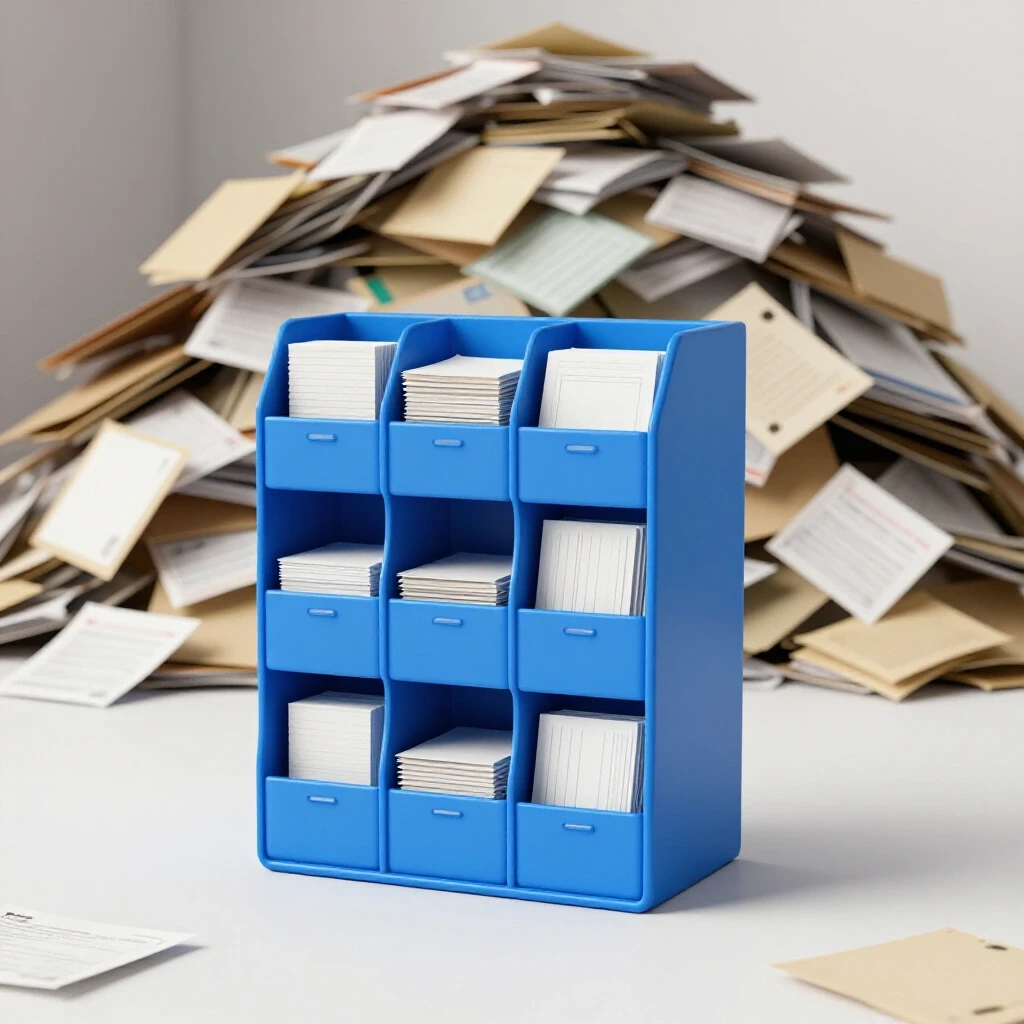
Environmental psychology suggests that visual clutter acts as a constant “to-do” list, triggering a low-level stress response in the brain. When we walk through the door after a long day and see a pile of unsorted mail, our cortisol levels can rise as our minds process each item as a pending decision.
Logistical friction is the primary reason these piles form. In logistics, friction refers to any step in a process that slows down the movement of goods. If you have to open a drawer, find a folder, and use a letter opener just to sort one envelope, you are likely to just drop the mail on the nearest flat surface. My family’s breakthrough happened when we realized that our sorting system needed to be “zero-friction”—meaning the mail could be categorized without a single extra step.
- Visual Processing Overload: Research indicates that the human brain can only track a limited number of items before experiencing decision fatigue.
- The “Drop Zone” Effect: Items naturally accumulate at the first available flat surface near an entrance.
- Decision Paralysis: Many people leave mail in a pile because they aren’t sure if it’s “trash” or “to-do,” so they choose neither.
Why High-Friction Storage Leads to System Failure
Retrieval friction and deposit friction are the two metrics that determine if a home organization system will last. Deposit friction is the effort required to put an item away, while retrieval friction is the effort to find it later. For an entryway to remain clear, the deposit friction must be near zero.
In our early attempts, we used deep baskets. While they looked nice, they were “high-friction” because items at the bottom became invisible and inaccessible. We eventually shifted to a vertical, open-top DIY wood sorter. This allowed us to see every category at a glance, reducing the mental energy required to interact with the mail.
Mapping the Flow: A Logistical Audit of Your Entryway
A spatial audit is the process of measuring how items move through a specific area to identify where they get stuck. To fix our paper problem, I tracked our mail for one week, noting exactly where each family member dropped their items and how long they stayed there.
We found that 80% of our entryway clutter was “transient” paper—items that only needed to be there for a few hours or days. By identifying this, we could design a system that prioritized quick turnover rather than long-term storage. We focused on the “flow rate,” or the speed at which paper entered and exited the entryway.
| Metric | Goal for Families | My Family’s Starting Point |
|---|---|---|
| Sorting Time | Under 60 seconds | 5-10 minutes (weekly) |
| Deposit Steps | 1-2 steps | 5+ steps |
| Visual Density | < 10% surface coverage | 80% surface coverage |
| Retention Period | < 24 hours for trash | 7+ days |
Identifying the Primary Bottlenecks
Bottlenecks occur when the “inflow” of mail exceeds the “outflow” of sorting and disposal. If you receive ten pieces of mail a day but only sort five, the pile will grow indefinitely. We realized our bottleneck was the lack of an immediate disposal point.
By placing a small, stylish recycling bin directly beneath our sorting station, we eliminated the need to carry junk mail to another room. This simple change reduced our “sorting steps” from five down to two. We no longer had to walk to the kitchen to toss a flyer; it happened at the point of entry.
Designing a Low-Maintenance DIY Mail Station
A functional mail station should be built around the way your family actually moves, not how you wish they moved. For us, this meant building a custom wall-mounted unit that utilized vertical space. This kept the limited surface area of our entryway table clear for essentials like keys and wallets.
DIY solutions are often better than store-bought ones because you can customize the dimensions to your specific paper volume. We used simple plywood and basic brackets to create three distinct zones: “Action,” “Review,” and “Outbound.” This categorization covers almost every piece of paper that enters a home without requiring complex filing.
The Three-Zone Sorting Framework
The Three-Zone Framework is a logistical method for categorizing items based on their required response time. Instead of sorting by “person,” which often leads to forgotten bills, we sorted by “urgency.” This ensured that anything requiring a signature or payment was always at eye level.
- The Action Zone: This is for items that need immediate attention, such as school permission slips or urgent bills.
- The Review Zone: This is for non-urgent reading, like magazines or catalogs that you want to look at later.
- The Outbound Zone: This is for outgoing mail, library books to be returned, or RSVPs that are ready to be mailed.
DIY Material Selection for Durability
When building your own system, choose materials that can withstand heavy daily use. We opted for a combination of stained wood and metal mesh. The mesh is particularly useful because it provides “visual transparency,” allowing you to see if a zone is becoming overfilled without having to dig through it.
- Wood Planks: Provides a sturdy base for wall mounting.
- Metal Baskets or Wire Mesh: Allows for airflow and visibility.
- Heavy-Duty Hooks: Useful for hanging small pouches that hold pens or stamps.
Reducing Friction Through Strategic Container Choice
The “Storage Friction Index” is a way to rank different types of containers based on how easy they are to use. In a busy household, any container with a lid is a failure point for daily mail. Lids add an extra movement, and in the world of logistics, every extra movement increases the likelihood of a process breakdown.
We tested several models before landing on an open-slat design. This design allows you to slide an envelope into a slot with one hand. If you have to use two hands to interact with a storage system, it is too complex for a high-traffic entryway.
Storage Friction Index by Bin Type
| Container Type | Friction Level | Why it Works (or Fails) |
|---|---|---|
| Lidded Box | High | Requires two hands; hides clutter until it’s a mess. |
| Deep Basket | Medium | Easy to drop things in, but hard to find them later. |
| Open Wall Slats | Low | Items are visible and can be sorted with one hand. |
| Clear Acrylic Trays | Low | High visibility; easy to clean and maintain. |
The “One-Touch” Rule in Practice
The “one-touch” rule is a productivity principle that states you should only handle a piece of paper once before it reaches its destination or is discarded. By having the recycling bin and the sorting slots in the same square foot of space, we were able to implement this rule effectively. When the mail comes in, it is either tossed immediately or placed in its specific slot. It never touches the counter.
Aligning Family Behavior with the System
No system can survive a family that doesn’t use it. One of the biggest mistakes I made early on was designing a system that only I understood. For a mail station to work, it must be intuitive enough for a seven-year-old and a tired spouse to use without instruction.
We held a “system walkthrough” where we timed how long it took each person to sort the mail. We found that my kids were more likely to use the system if their specific “school paper” slot was at their height. Adjusting the vertical placement of our DIY station to accommodate the shortest family member increased our success rate by 40%.
Creating a Daily Maintenance Habit Loop
Habit loops consist of a cue, a routine, and a reward. In our entryway, the “cue” is walking through the door with the mail. The “routine” is the 30-second sort into the DIY bins. The “reward” is a clear, calm entryway and the elimination of that “where is that bill?” panic.
- The Entry Cue: As soon as the door closes, the mail is in hand.
- The 30-Second Sort: Use the “Action, Review, Outbound” zones.
- The Immediate Purge: Toss junk mail into the bin below before moving into the rest of the house.
Maintenance Timelines for Different Family Sizes
| Family Size | Daily Sort Time | Weekly “Deep Clean” | System Capacity |
|---|---|---|---|
| 2 Adults | 30 Seconds | 5 Minutes | Small Wall Unit |
| 2 Adults + 2 Kids | 60 Seconds | 10 Minutes | Medium Multi-Slot Unit |
| 5+ Members | 2 Minutes | 15 Minutes | Large Modular System |
Advanced Organizational Metrics for the Home
To maintain our system over the last decade, I’ve used a few industrial metrics to keep us on track. One is “Spatial Capacity Limits.” We decided that if a mail slot is full, we cannot add more to it until we clear out the old items. This creates a natural “forcing function” that prevents the pile from ever returning to its original size.
Another metric is “Retrieval Speed.” If it takes more than ten seconds to find a specific piece of mail in our “Action” zone, the system is getting too crowded. This tells us it’s time for a five-minute purge. These small, measurable goals are much easier to hit than the vague goal of “being organized.”
- Item Density: Keep slots no more than 75% full to allow for easy finger access.
- Sorting Time-Box: Never spend more than two minutes on the initial entry sort.
- Inflow/Outflow Balance: For every new magazine that goes into “Review,” an old one must go into recycling.
Common Mistakes to Avoid in Entryway Management
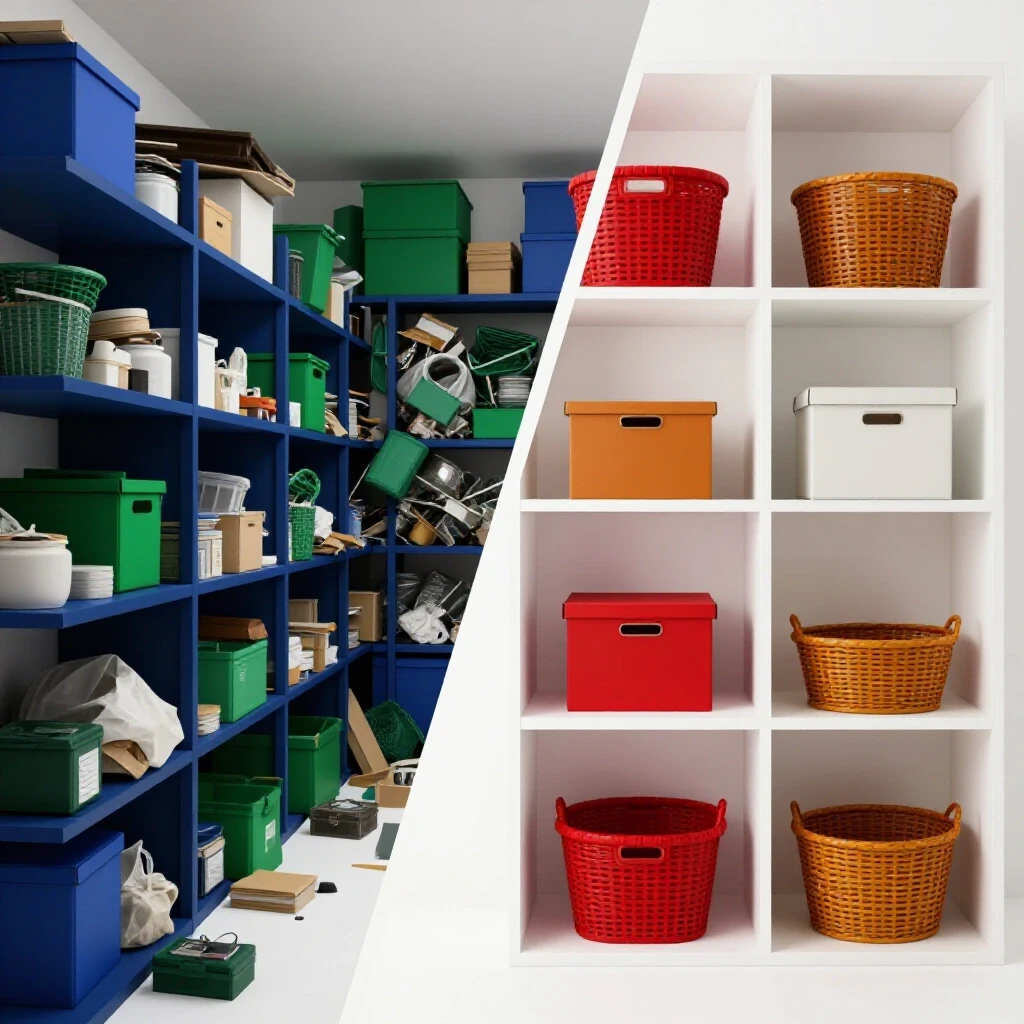
Many people fail because they try to make their entryway look like a magazine photo rather than a working part of their home. A common mistake is using opaque containers that hide the “to-do” items. If you can’t see the bill, you will forget to pay it.
Another mistake is placing the mail station too far from the door. In our house, we moved our station three times before we found the “sweet spot.” It needed to be exactly where we naturally stopped to take off our shoes. Even a three-foot difference in placement can be the difference between a clear counter and a cluttered one.
- Using Lids: As mentioned, lids are the enemy of consistency.
- Over-Categorizing: Having ten different slots for different types of mail is too complex. Stick to 3-4 broad categories.
- Ignoring the “Trash” Factor: If you don’t have a recycling bin at the point of entry, junk mail will always pile up.
- Forgetting Outbound Items: A system that only handles incoming mail is only half a system. Always include a spot for things leaving the house.
Sustaining the Order Over the Long Term
The goal isn’t to never have a pile again; the goal is to have a system that makes the pile easy to clear. Life gets busy, and there will be days when the mail station gets overwhelmed. Because we built a logical framework with clear zones, “resetting” the entryway only takes us five minutes on a Sunday evening.
We treat our entryway like a “loading dock.” It is a transition zone, not a storage zone. By maintaining this mindset, we have reduced our daily stress and created a home that feels functional from the moment we step inside.
Next Steps for Your Entryway Transformation
- Conduct a 3-day audit: Watch where everyone drops mail naturally.
- Clear the flat surfaces: Remove everything from your entryway table to see the “blank canvas.”
- Build or install a vertical sorter: Use the Three-Zone Framework (Action, Review, Outbound).
- Place a recycling bin: Ensure it is within arm’s reach of the sorter.
- Run a “test week”: Adjust the height or location based on how your family interacts with it.
Frequently Asked Questions
How do I handle mail for family members who refuse to use the system?
In my experience, “refusal” is usually a sign of high friction. If a family member won’t put mail in a slot, try an even simpler “open tray” with their name on it. If they still won’t use it, place their mail in the “Review” zone for them. Eventually, the ease of finding their items in one spot usually wins them over.
What if I have a very small entryway with no wall space?
If wall space is unavailable, use the “End-Cap” method. Attach a small, vertical DIY organizer to the side of a piece of furniture, like a coat rack or a shoe bench. The key is to keep it vertical to save the “footprint” of the room.
How do I manage large packages or bulky catalogs?
Bulky items should have a “designated landing zone” on the floor or a lower shelf directly beneath the mail station. Treat these as “high-volume” inflow and prioritize moving them out of the entryway within 24 hours.
Is it better to sort mail standing up or sitting down?
For an entryway system, always design for standing. The goal is a “high-speed sort” as you enter the home. If you have to sit down, you are more likely to delay the task.
How often should I empty the “Review” zone?
The “Review” zone should be cleared weekly. A good habit is to take the contents of the “Review” bin to a comfortable chair on Sunday morning, read what you want, and recycle the rest immediately.
What is the best way to label the DIY slots?
Use clear, bold lettering. In our house, we used a simple stencil on the wood. Avoid “cute” names and stick to functional ones like “BILLS,” “SCHOOL,” and “OUTGOING.” This reduces the cognitive load required to decide where an item goes.
Can I use this system for school papers and artwork?
Yes, but give them their own specific “Action” slot. School papers often require a signature, so they belong in the highest-visibility zone. For artwork, have a separate “Review” bin so it doesn’t clutter the urgent mail.
How do I stop the “junk mail” at the source?
While the entryway system handles what arrives, you can reduce the “inflow rate” by unsubscribing from catalogs and using “no circulars” stickers on your mailbox. Lowering the inflow makes the entryway system even easier to maintain.
What if my “Action” zone is always overflowing?
An overflowing Action zone is a sign of a “downstream” bottleneck. It means you aren’t taking the time to actually complete the tasks (paying bills, signing forms). Schedule a 15-minute “Action Session” twice a week to clear this zone.
Should I keep stamps and pens at the mail station?
Absolutely. Keeping “support tools” at the point of use reduces retrieval friction. We attached a small magnetic cup to our DIY station to hold a pen and a book of stamps for the “Outbound” zone.
(This article was written by one of our staff writers, Christopher Bennett. Visit our Meet the Team page to learn more about the author and their expertise.)