How to Reduce Family Stress by Simplifying Your Home (Guide)

For years, my family lived in a cycle of “sprint and crash” cleaning. As a logistics professional, I managed complex supply chains by day, yet I would come home to a house that felt like a bottlenecked warehouse. We would spend an entire Saturday purging and labeling, only to have the kitchen counters and playroom floor disappear under a sea of objects by Tuesday. It wasn’t a lack of effort; it was a failure of the system. We were using storage solutions designed for photos, not for a living, breathing family.
Sustainable home organization isn’t about achieving a minimalist aesthetic or buying the most expensive acrylic bins. It is about reducing the “friction” of daily life. In my 11 years of applying spatial management principles to my own home, I have learned that if a system takes more than two steps to maintain, it will fail. By focusing on flow rates and retrieval speed, we can create an environment that supports our family’s needs rather than draining our energy.
Identifying the Logistical Bottlenecks in Your Home
Logistical bottlenecks are specific points in your house where the flow of items stops, leading to piles and “clutter islands.” These interruptions usually happen at entryways, kitchen islands, or the foot of the stairs. Identifying these gaps allows us to build systems that match our family’s natural movement patterns rather than fighting against them.
The Impact of Visual Overload on Daily Focus
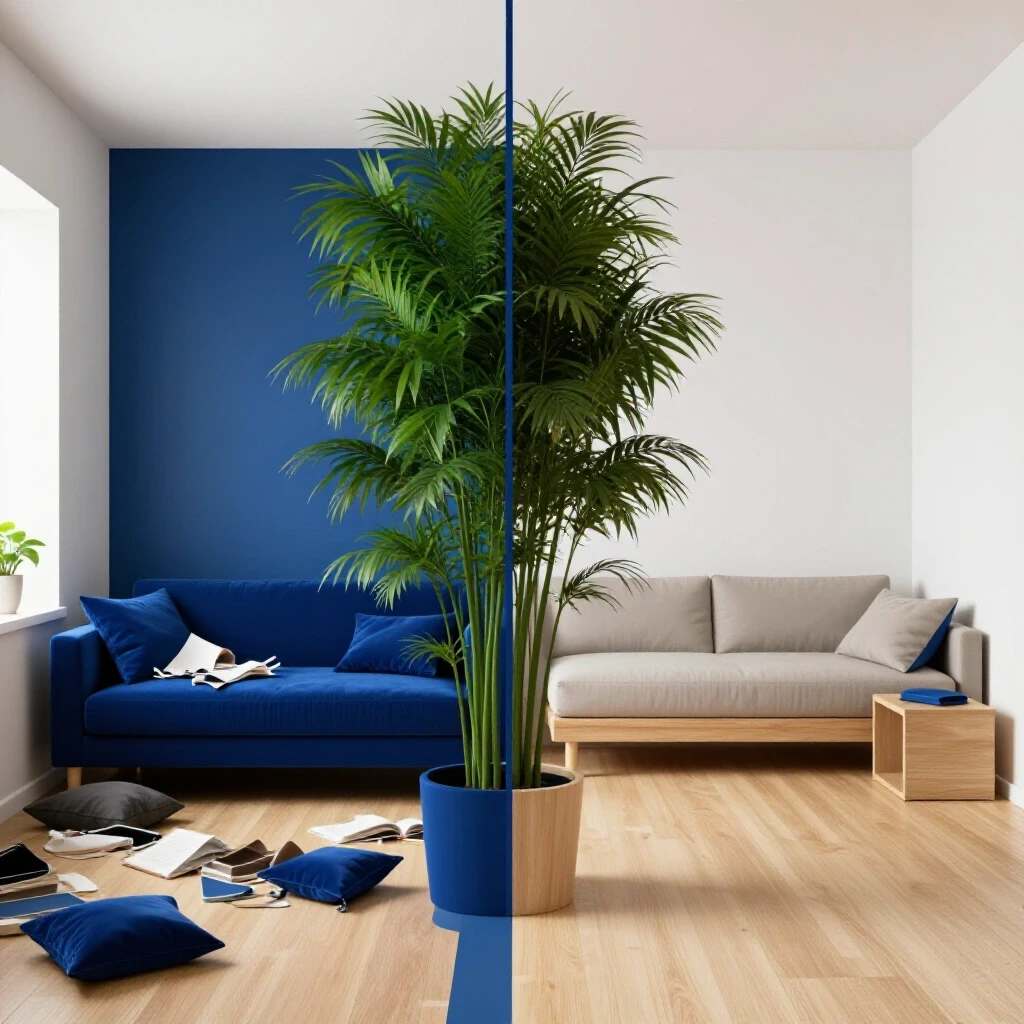
Visual overload occurs when too many objects compete for our attention in a single field of vision. Research in environmental psychology suggests that our brains have a limited capacity for processing visual stimuli. When every surface is covered, our minds constantly scan the environment, which leads to subtle but persistent mental fatigue throughout the day.
Reducing this “visual noise” isn’t just about tidying; it is about protecting your cognitive bandwidth. In our home, we found that clearing the “primary sightlines”—the first things you see when you walk into a room—immediately lowered the collective tension of the family. We stopped seeing a list of unfinished chores and started seeing a functional living space.
Why High-Friction Systems Lead to Rapid Reversion
System friction is the physical and mental effort required to put an item away or take it out. If a child has to move two other boxes to get to their building blocks, they likely won’t put them back. High-friction systems rely on willpower, which is a finite resource that most busy parents have already exhausted by 5:00 PM.
To combat this, I began measuring our “retrieval steps.” We realized our vacuum was stored behind a heavy box in a deep closet. As a result, we only vacuumed when the floor was visibly dirty. By moving it to a high-access zone, we reduced the friction and improved our home maintenance without adding more “work” to our schedule.
| Storage Type | Retrieval Steps | Friction Level | Sustainability Score |
|---|---|---|---|
| Open Bin (No Lid) | 1 Step | Very Low | 95% |
| Drawer (Single Layer) | 2 Steps | Low | 85% |
| Stacked Lidded Bins | 4+ Steps | High | 30% |
| Behind-Door Organizer | 2 Steps | Low | 90% |
| Deep Cabinet (Back) | 5+ Steps | Very High | 15% |
Measuring Your Current System Friction
Measuring system friction involves tracking the number of physical movements required to complete a task. By quantifying these actions, we can move from “feeling” overwhelmed to “diagnosing” the problem. This data-driven approach removes the guilt from decluttering and turns it into a simple engineering challenge for the household.
Defining Spatial Capacity Limits
Spatial capacity is the maximum amount of “stuff” a specific area can hold while still remaining functional. Every drawer, shelf, and closet has a limit; once you exceed 80% capacity, retrieval friction increases exponentially. Managing this requires a strict “one-in, one-out” flow to prevent the system from overflowing and breaking down.
In our home, we use the 80/20 Rule of Volume. We aim to keep 20% of every shelf empty. This “buffer space” allows for easy grasping of items and prevents the dreaded “avalanche effect” when you pull one thing out. It acts as a visual and physical shock absorber for the daily influx of mail, school papers, and groceries.
The Cost of Decision Fatigue in Sorting
Decision fatigue happens when the brain becomes exhausted from making too many choices, leading to poor sorting habits. When we try to organize a cluttered room, we often get stuck on “maybe” items. This mental labor is why a two-hour organizing session can feel as draining as a full day at the office.
To solve this, I implemented a Binary Sorting Framework. Instead of asking “Do I love this?” or “Will I need this?”, we ask, “Does this have a designated home?” If the answer is no, it either gets a home immediately or it leaves the house. This removes the emotional weight and keeps the sorting speed high.
- Sorting Time-Box: 15 minutes per zone.
- Item Density Goal: No more than 10 items per square foot of open counter.
- Success Metric: Can a guest find the scissors in under 30 seconds?
Implementing High-Speed Zoning Maps
Zoning maps are strategic layouts that designate specific areas of the home for certain activities and their related tools. By grouping items by their “use-case” rather than just their category, we reduce the distance traveled to complete daily tasks. This spatial alignment ensures that everything has a logical home based on utility.
Creating High-Traffic Utility Zones
High-traffic zones are areas like the mudroom, the coffee station, or the “launchpad” where your family prepares for the day. These zones require the lowest possible friction because they are used during high-stress times, like the morning school rush. If these areas are cluttered, the entire day starts with a sense of frantic disorder.
We mapped our entryway and realized we were all dropping mail on the kitchen table because the “mail bin” was in the home office. By moving a simple, open-top basket to the entry point, we captured the clutter before it reached the living areas. This small shift in logistics saved us 10 minutes of sorting every evening.
The Science of Point-of-Use Storage
Point-of-use storage means keeping items exactly where they are used, even if it seems unconventional. In industrial logistics, this is called “reducing travel time.” For a family, it means keeping the scissors in the kitchen where packages are opened, rather than in a distant “junk drawer” or craft room.
| Room | Current Problem | Logistics Solution | Friction Reduction |
|---|---|---|---|
| Kitchen | Spices in deep cabinet | Tiered shelf or drawer insert | 3 steps to 1 step |
| Bathroom | Daily meds in high cabinet | Open tray on counter/vanity | 4 steps to 1 step |
| Playroom | Toys in deep chests | Low, open-top cubbies | 3 steps to 1 step |
| Laundry | Detergent on high shelf | Eye-level dispenser | 2 steps to 1 step |
Selecting Low-Maintenance Storage Solutions for Families
Low-maintenance storage gear consists of durable, accessible containers that require minimal effort to use. These tools prioritize function over aesthetics, ensuring that even the youngest family members can participate in tidying. Choosing the right gear prevents the “reversion” effect common with overly complex, lid-heavy systems.
Why Open Bins Outperform Lidded Containers
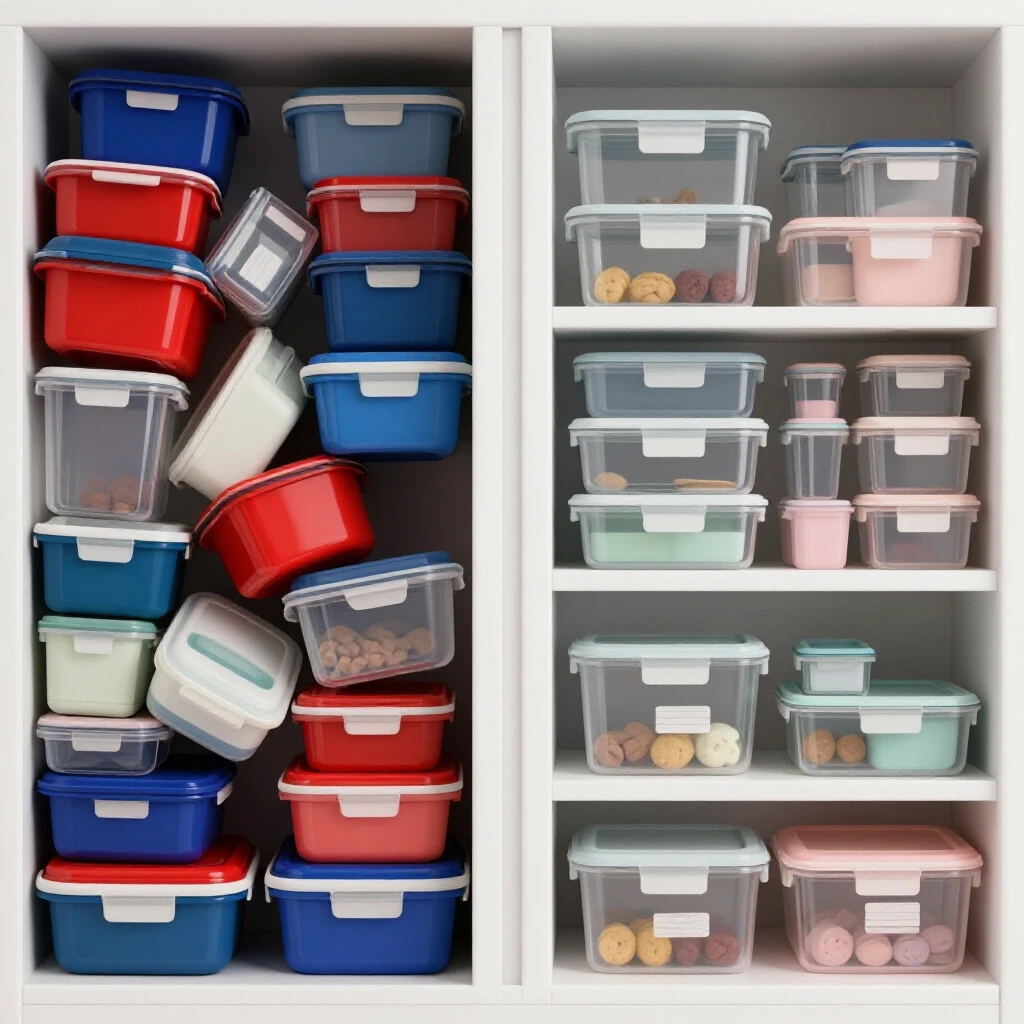
Open bins are the “gold standard” for sustainable family organization because they require only one motion to store an item. When a bin has a lid, you have to find a surface to set the lid down, place the item inside, and then replace the lid. This three-step process is often enough to make a tired parent or child leave the item on top of the bin instead.
In our playroom redesign, we swapped all lidded plastic tubs for open canvas bins. The result was immediate. The children could “drop and go,” and the floor stayed clear for days instead of hours. We sacrificed the “hidden” look of lids for the functional reality of a tidy floor.
The Power of “Broad” Labeling Systems
Detailed labels like “Blue Pens” or “Action Figures” are often too specific to maintain. When a system is too granular, it creates “sorting paralysis.” Broad labels, such as “Writing Tools” or “Small Toys,” are much more sustainable because they allow for quick, low-thought sorting that any family member can follow.
- Use High-Contrast Labels: Black ink on white tape is easiest for the brain to process quickly.
- Use Picture Labels for Kids: Non-readers can participate in the system if they see a silhouette of a car or a block.
- Label the Shelf, Not Just the Bin: This ensures the bin itself has a “parking spot” and doesn’t migrate around the room.
- Avoid Over-Categorization: Keep categories broad enough that an item can be put away in under 3 seconds.
Establishing Sustainable Habit Loops
Habit loops are repetitive sequences of behavior triggered by specific cues in your environment. In a home setting, these loops ensure that maintenance happens automatically rather than as a scheduled, painful chore. Building these small, consistent actions prevents the build-up of clutter and the mental fatigue that follows.
The “One-Touch” Rule for Daily Inflow
The “One-Touch” rule is a logistical principle where you handle an item only once before it reaches its final destination. For example, when you bring in the mail, you don’t put it on the counter; you walk it to the recycling bin or the “to-do” tray. This prevents the “piling” that leads to visual overwhelm.
We found that applying this to laundry was a game-changer. Instead of moving clean clothes from the dryer to a basket, then to the bed, then to the dresser, we started folding directly from the dryer. By eliminating the “basket” stage, we removed the possibility of a “clean laundry mountain” sitting in the hallway for three days.
Designing a 10-Minute “Evening Reset”
An evening reset is a brief, timed period where the family restores the home to its “baseline” state. This is not a deep clean; it is a logistical sweep to ensure the next morning starts with zero friction. It focuses on the kitchen counters, the entryway, and the living room floor.
- Set a Timer: 10 minutes maximum to prevent burnout.
- Focus on Surface Areas: Clear the “landing strips” where items accumulate.
- Prepare the Launchpad: Set out bags, keys, and shoes for the morning.
- Check the Inflow: Empty the dishwasher so it’s ready for breakfast dishes.
Conclusion: Starting Your Low-Friction Journey
Transitioning to a simpler, more functional home environment doesn’t happen overnight. It starts with a shift in perspective: seeing your home as a system that either serves you or drains you. By focusing on reducing retrieval friction and managing spatial capacity, you can build a space that supports your family’s busy life.
Start small. Choose one high-friction area—perhaps the shoe pile by the door or the chaotic “everything drawer” in the kitchen. Apply the principles of open storage and point-of-use placement. Observe how your family reacts. You will likely find that when the system is easy, the clutter naturally begins to recede, leaving you with more mental space and a much calmer daily routine.
Frequently Asked Questions
How do I know if my storage system is too complex? If you find yourself constantly “tidying up” the same area every few days, the system is too complex. Another sign is if family members consistently leave items near their bins rather than inside them. This indicates that the “friction” of opening the bin or finding the exact category is too high for daily use.
What is the best way to handle sentimental clutter without feeling guilty? Logistically, sentimental items should be moved out of “prime real estate” zones. Keep them in a dedicated, lidded “Memory Box” in a low-access area like a high shelf or attic. By separating functional items from emotional ones, you reduce the decision fatigue involved in daily organizing.
How can I get my children to follow these new systems? Children respond best to low-friction, visual systems. Use open-top bins at their height and clear, pictorial labels. When the “cost” of putting a toy away is just a simple drop into a basket, they are much more likely to participate without being nagged.
Is it worth buying expensive organizing products? Not necessarily. The effectiveness of a system depends on its logic, not its price tag. Simple cardboard boxes or inexpensive canvas bins often work better than high-end systems because they are easier to replace or adapt as your family’s needs change over time.
What should I do if my house is already at 100% capacity? If your shelves and closets are full, you cannot organize your way out of the problem. You must first reduce the volume until you reach roughly 80% capacity. Only then will your storage systems have the “breathing room” necessary to function without constant maintenance.
How do I manage the constant influx of paper and mail? Create a “One-Touch” station at your primary entry point. This should include a recycling bin for junk mail and a single “Action” tray for bills or school forms. By filtering the inflow immediately, you prevent paper from spreading across your living surfaces.
What is the “Two-Step Rule” in home organization? The Two-Step Rule suggests that any item should be able to be put away in two motions or fewer (e.g., open drawer, place item). If it takes three or more steps (e.g., move a box, unlatch a lid, place item, replace lid), the system is likely to fail during busy periods.
Can a simpler home environment really improve my daily focus? Yes. By reducing the number of “unmade decisions” (clutter) in your peripheral vision, you lower the cognitive load on your brain. This allows you to focus more effectively on your family or your work, rather than being constantly distracted by the physical “to-do list” surrounding you.
How often should I audit my home organization systems? I recommend a quick “spatial audit” every six months. Families change—kids grow, hobbies shift, and work routines evolve. A system that worked for a toddler won’t work for a school-aged child. Adjust your zones and bin types to match your current logistical needs.
What is the biggest mistake people make when decluttering? The biggest mistake is buying containers before they have sorted and measured their items. This often leads to “organized clutter,” where you have beautiful bins filled with things you don’t actually use, further complicating your home’s flow.
(This article was written by one of our staff writers, Christopher Bennett. Visit our Meet the Team page to learn more about the author and their expertise.)