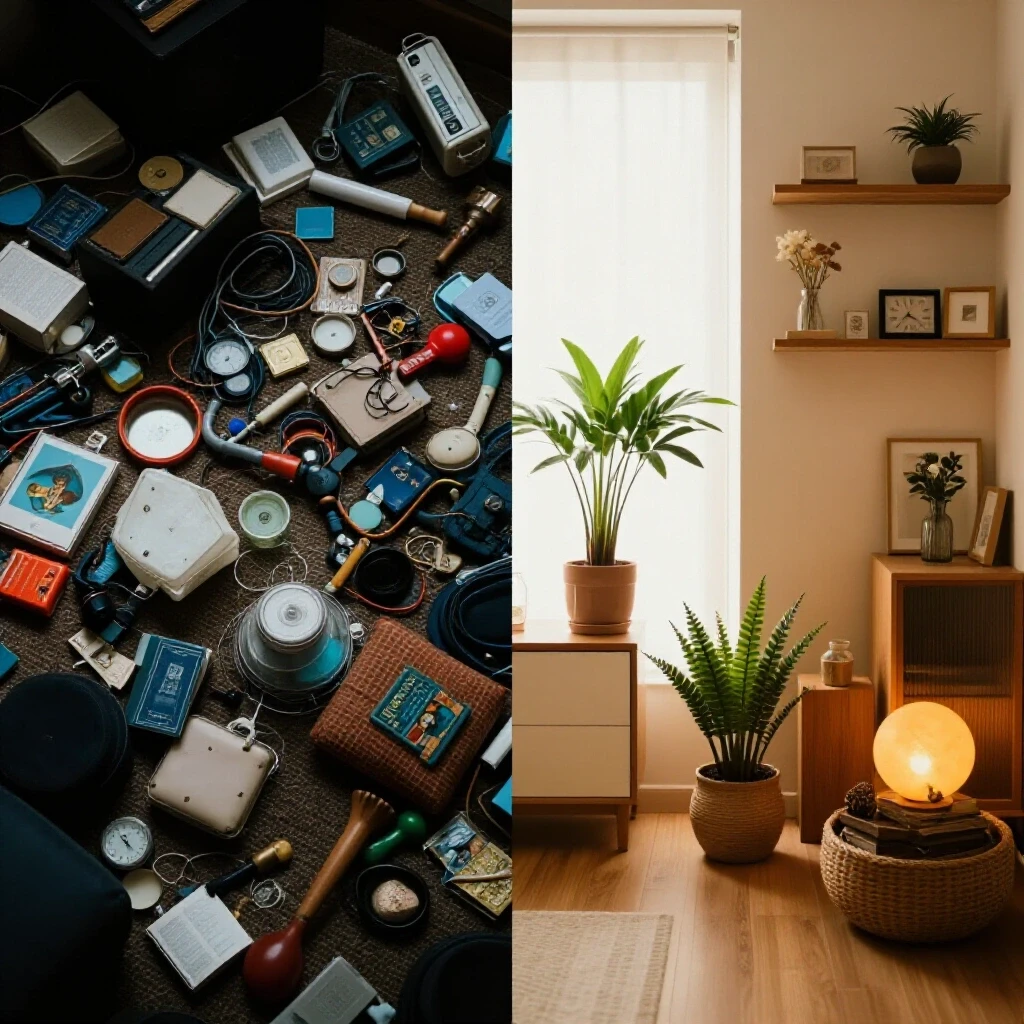
How Streamlining Your Home Increases Donations (Decluttering Guide)

Would you rather spend thirty minutes every evening tidying the same pile of toys and papers, or spend five minutes putting away a few items because your home finally has the space to breathe?
In my eleven years working in operations and logistics, I have learned that a system only works if the “flow” is faster than the “inflow.” When I applied these professional principles to my own home, I realized why our previous attempts at cleaning always failed. We were trying to organize a volume of items that exceeded our home’s spatial capacity. Once we began to reduce the total number of objects, we experienced a shift in how we viewed our belongings. This shift created a self-reinforcing cycle where the ease of maintaining a clearer space gave us the energy to remove even more unnecessary items.
Analyzing the Psychological Cost of Visual Overload
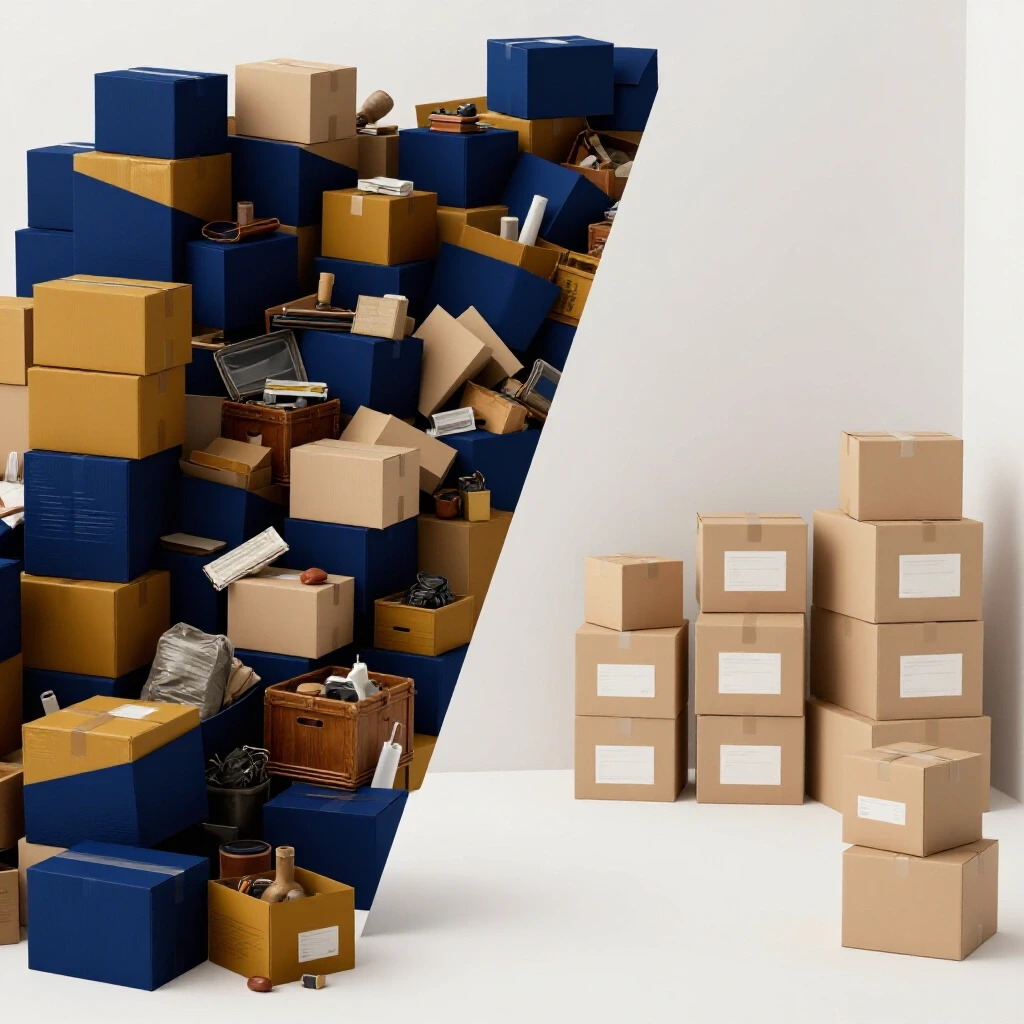
Visual overload occurs when the brain processes too many competing stimuli in a living space. This leads to decision fatigue, where the simple act of choosing where to put an item becomes mentally exhausting, eventually causing the resident to abandon organization efforts entirely.
When every surface is covered with objects, your brain never truly rests. Research in environmental psychology suggests that cluttered environments increase cortisol levels, especially in parents. In my home, I noticed that when the kitchen counters were full, my frustration levels peaked before I even started cooking. This is because our brains view clutter as unfinished tasks.
By removing the excess, you reduce the “cognitive load” of the room. This reduction in mental noise is what starts the drive toward further curation. When you see a clear shelf, you no longer see a list of chores; you see a functional space. This mental relief is a powerful motivator that makes you want to apply the same clarity to the next room.
Understanding Retrieval Friction and Spatial Capacity
Retrieval friction is the number of physical steps required to access or put away an item. Spatial capacity refers to the hard limit of how many objects a shelf or bin can hold before the system breaks down and items begin to spill into walkways.
In logistics, we measure how long it takes to move a product from a shelf to a shipping box. In a home, we should measure how many “touches” it takes to put a pair of shoes away. If you have to open a closet door, move a box, lift a lid, and then place the shoes, you have high friction. High friction is the primary reason home organization systems fail in busy households.
We found that as we lowered our item count, our spatial capacity increased. We no longer had to “Tetris” items into place. This ease of use is addictive. Once you experience a “two-step” storage process, you naturally want to get rid of the items that require “five-step” storage.
| Storage Type | Steps to Store | Maintenance Level | Success Rate |
|---|---|---|---|
| Open Bin/Hook | 1-2 | Very Low | 95% |
| Lidded Box (Stacked) | 4-5 | High | 40% |
| Nested Containers | 6+ | Very High | 10% |
| Dedicated Shelf | 1 | Low | 90% |
Why Initial Success Triggers a Positive Feedback Loop
A positive feedback loop in home management happens when the visible benefits of a cleared area provide the mental energy to tackle more complex zones. Reducing the volume of items lowers the “cost of maintenance,” making it easier to let go of more.
My family’s decluttering journey started in the mudroom. It was a high-traffic bottleneck where we tripped over shoes every day. We removed 50% of the footwear we rarely wore. Suddenly, the floor stayed clear for three days straight. That success felt so good that we moved to the kitchen pantry.
This is the “momentum effect” in action. The less you have to manage, the more time you gain. When you gain time, you have the bandwidth to look at your possessions with a more critical eye. You begin to ask, “Do I really need this?” instead of “Where can I hide this?”
- Success in one zone builds confidence.
- Reduced cleaning time provides the “work hours” for the next project.
- The visual reward acts as a dopamine hit, encouraging more sorting.
Implementing a High-Speed Sorting Framework
A high-speed sorting framework uses industrial logistics to categorize household items by frequency of use rather than just type. By prioritizing “active” items over “archival” ones, families can reduce the time spent moving objects from one surface to another.
In my professional life, we call this ABC analysis. “A” items are used daily. “B” items are used weekly. “C” items are used monthly or less. Most people fail at sustainable decluttering because they treat “C” items with the same spatial priority as “A” items.
To start this process, we used a simple sorting log. We didn’t focus on how much we liked an item, but on how often we touched it. This logical approach removes the emotional weight of letting go.
Decluttering Sorting Log Example
- Zone: Kitchen Junk Drawer
- Item Density: 45 items per square foot
- Target Volume: 10 items (75% reduction)
- Sorting Time Box: 15 minutes
- Outcome: 30 items donated, 5 trashed, 10 kept.
Creating Low-Maintenance Zoning Maps for Families
Zoning maps are visual guides that designate specific areas for certain activities and the items required for them. These maps account for the natural movement of family members, placing items exactly where they are used to minimize the effort of returning them.
When we redesigned our living room, we mapped out the “flow of items.” We realized toys were ending up in the kitchen because the toy bin was too far away from the play area. By moving the storage to the point of use, we reduced the daily cleanup time by 15 minutes.
For functional home storage, your zones should be based on human behavior, not architectural intent. If your kids always drop their bags at the front door, that is where the “Bag Zone” should be. Don’t fight the natural flow of your family; build the system around it.
- Identify “hot spots” where clutter naturally lands.
- Place open storage at these exact locations.
- Ensure every family member knows the boundary of the zone.
Selecting Storage Tools Based on System Friction
Selecting storage gear involves evaluating how many lids, latches, or stacks stand between a person and their goal. Low-friction tools like open-top bins or wall hooks are preferred over complex nesting boxes because they require less effort to use consistently.
In our home, we replaced all lidded toy boxes with open canvas bins. The result was immediate. My children, who previously struggled to “clean up,” began tossing items into the bins without being asked. The “cost” of the action was low enough that it didn’t feel like a chore.
Visual vs. Functional Organization Systems
| Feature | Visual-Focused (High Friction) | Functional-Focused (Low Friction) |
|---|---|---|
| Aesthetic | Color-coordinated, hidden | Clear, accessible, labeled |
| Ease of Use | Difficult for children | Easy for all ages |
| Maintenance | Requires constant “resetting” | Self-sustaining daily |
| Purpose | Looking good for guests | Serving the family’s needs |
Building Sustainable Habit Loops for Long-Term Clarity
Sustainable habit loops are small, repetitive actions triggered by daily events, such as clearing the kitchen counter before bed. These loops rely on the reduced volume of items to ensure that the “reset” takes less than ten minutes.
The key to reducing household clutter permanently is the “ten-minute reset.” Because we have fewer items, our nightly cleanup never exceeds ten minutes. We use a simple checklist that my 8-year-old can follow.
- Clear the Runway: Ensure all walkways are free of shoes and bags.
- Surface Sweep: Wipe down kitchen and dining surfaces.
- Reset the Zone: Return five items to their designated zones.
- Inflow Check: Process one piece of mail or school paper immediately.
By keeping the item count low, these habits become “low-stakes” activities. They don’t require a huge burst of energy, which means we actually do them every day.
Why Less Stuff Leads to Better Inventory Management
Inventory management is the process of tracking what you have so you don’t buy duplicates. When a home is over-capacity, you lose visibility of your items. This leads to “clutter creep,” where you buy a third pair of scissors because you can’t find the first two.
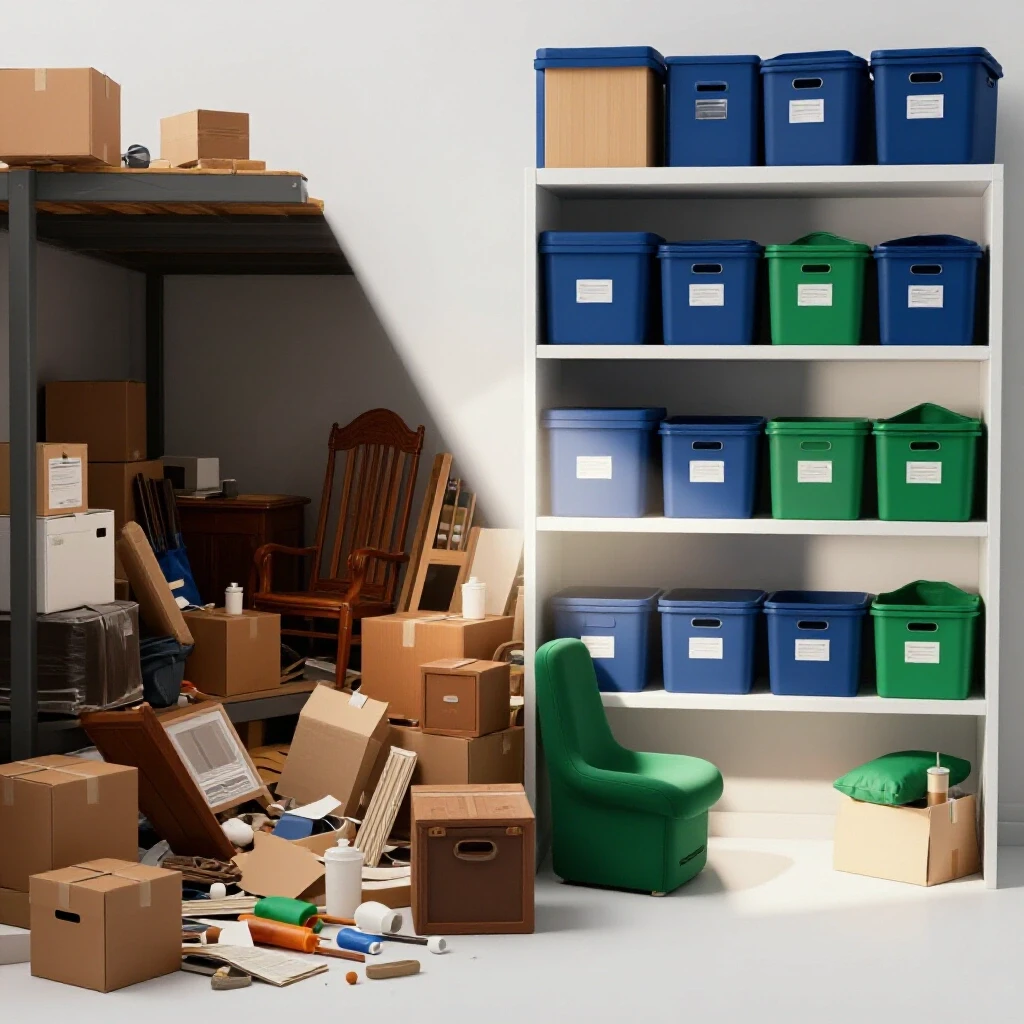
We implemented a “one-in, one-out” rule, but we also used digital tracking for our storage room. By using smart-label tracking systems (QR codes on bins), we know exactly what is in every box without opening it. This transparency makes it easier to donate more. When you can see that you have four sets of holiday lights but only use two, the decision to donate the extra two becomes a logical one rather than an emotional one.
- Maintain a 30% “buffer space” on every shelf.
- Use clear bins for items that aren’t used daily.
- Label everything with verbs (e.g., “Use for Baking” instead of “Kitchen”).
Overcoming the “Just in Case” Mentality
The “just in case” mentality is a logistical bottleneck that holds onto items based on a low-probability future need. This behavior fills up valuable “active” space with “dead” inventory, increasing the overall maintenance burden of the home.
I tell my family that if an item costs less than twenty dollars and takes less than twenty minutes to replace, it doesn’t deserve to take up space in our “Active Zone.” This rule helped us clear out the garage and the attic. Once those spaces were clear, the “momentum” felt unstoppable. We weren’t just cleaning; we were reclaiming our square footage.
Practical Steps to Start Your Own Momentum Cycle
To begin reducing household clutter, you don’t need a whole weekend. You need a small win. Start with a space that is physically small but has a high impact on your daily routine.
- The Drawer Audit: Choose one drawer. Empty it. Only put back what you used in the last month. Donate the rest.
- The Surface Rule: Keep your main dining table 100% clear for 48 hours. Notice how it changes the room’s energy.
- The Bag Method: Keep a donation bag in the trunk of your car. As you find items that cause friction, put them in the bag immediately.
- The Time-Box: Set a timer for 15 minutes. See how many items you can remove from a “hot spot” before the buzzer goes off.
As you remove the physical weight of these items, you will find that the next 15 minutes feel easier. This is the goal: a home that supports your life rather than a home that demands your constant labor.
Frequently Asked Questions
How do I know if my storage system is too complex? If you find that items are consistently left on top of a bin rather than inside it, the system has too much friction. A good system should allow you to put an item away with one hand in under five seconds.
What is the “Momentum Effect” in decluttering? It is the psychological and logistical phenomenon where the successful clearing of one area reduces the mental effort required to clear the next. As the volume of items drops, the “maintenance cost” of the home decreases, freeing up energy for further curation.
Why do my rooms get messy again so quickly? This usually happens because the volume of items exceeds the “spatial capacity” of the room. When every shelf is 100% full, there is no room for the daily “flow” of life, leading to piles on the floor and counters.
How can I get my children to follow these systems? Focus on “low-friction” storage. Use open bins, hooks at their height, and clear labels (with pictures for younger kids). If a child can’t put an item away in two steps, they likely won’t do it consistently.
What is the “One-In, One-Out” rule? This is a logistical strategy where for every new item brought into the home, an existing item must be removed. This keeps the total volume of items stable and prevents “clutter creep.”
How do I handle sentimental items? Sentimental items should be treated as “archival inventory.” They should not occupy “active zones” like your kitchen or living room. Move them to a dedicated, labeled sentimental box in a long-term storage area.
How much “empty space” should I aim for? In logistics, we aim for 20-30% “air space” on shelves. This allows for easy retrieval and prevents the “domino effect” where moving one item causes others to fall.
Should I buy new bins before I start? No. Buying containers before you reduce your item count is a common mistake. You should only select storage tools once you know the final volume and frequency of use for the items you are keeping.
What is “decision fatigue” in home organization? Decision fatigue is the mental exhaustion that comes from making too many choices. When you have too many items, every cleanup requires dozens of small decisions, which eventually leads to giving up.
How do I maintain the house when I’m busy? Focus on the “ten-minute reset.” If your item volume is low enough, you should be able to return your main living areas to a functional state in ten minutes or less each night.
Is it better to organize by category or by room? From a logistics standpoint, it is best to organize by “zone of use.” Keep all items required for a specific task (like making coffee or doing homework) in the exact location where that task happens.
What should I do with items I might need “someday”? Apply the 20/20 rule. If you can replace it for less than $20 in less than 20 minutes, it is not worth the “rent” it is paying in your home’s storage space.
(This article was written by one of our staff writers, Christopher Bennett. Visit our Meet the Team page to learn more about the author and their expertise.)