How to Organize a Large Home: Real Solutions for Big Spaces (Guide)

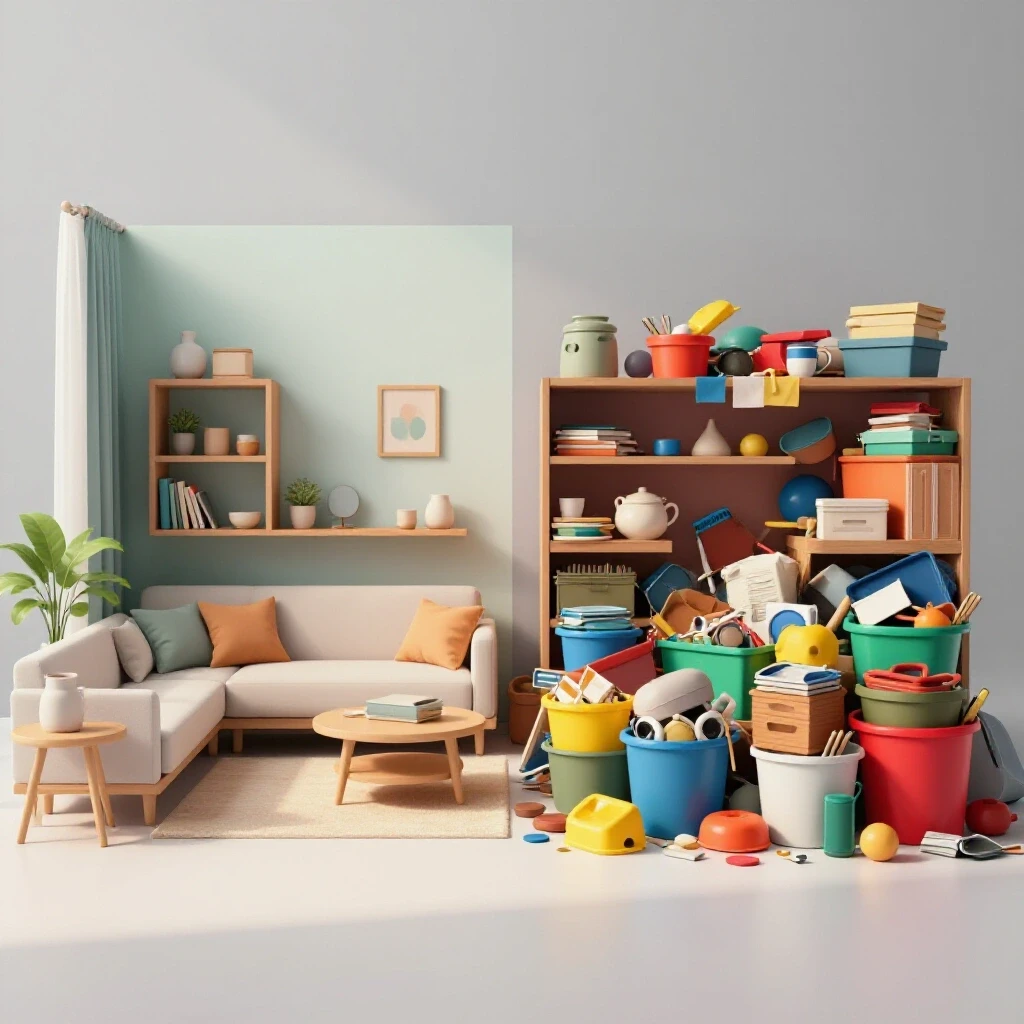
Across social media, we see a growing trend of homes featuring clear bins and color-coded books. While these images look peaceful, they often hide the logistical reality of managing a residence with significant square footage. Many families find that despite spending weekends on massive cleanups, the clutter returns within a week. This cycle occurs because most systems focus on how a room looks rather than how items move through it.
In my eleven years working in operations and logistics, I have learned that a home is essentially a micro-warehouse. In a large house, the distance between where an item is used and where it is stored can be vast. When I first tried to organize our 3,200-square-foot family home, I made the mistake of using deep, lidded bins for everything. I quickly realized that if it took more than two steps to put something away, my children and even my spouse would simply leave it on the counter. We had to shift our focus from “pretty storage” to “low-friction flow.”
The Logistics of High-Square-Footage Residential Management
This field of study examines how people, objects, and information move within a large living environment. It focuses on reducing the physical and mental effort required to maintain order in spaces where the sheer volume of items can easily overwhelm a standard cleaning routine.
When managing a large home, you face a unique problem called “spatial expansion.” Because you have more room, it is easier to let items accumulate in “dead zones” like guest rooms or basements. Research in the Journal of Environmental Psychology indicates that visual clutter can increase cortisol levels, leading to chronic stress. In a large home, this stress is amplified because the “clutter footprint” is physically larger.
To combat this, we must look at “retrieval friction.” This is the number of physical steps required to get an item out or put it away. In my own home, I mapped out our daily paths. I found that our “drop zones”—the places where mail, shoes, and bags land—were too far from their designated storage. By moving the storage closer to the natural path of travel, we reduced the daily sorting time by 15 minutes.
Understanding Visual Processing and Cognitive Load
Cognitive load refers to the amount of mental effort being used in the working memory. In a large, disorganized home, your brain is constantly processing “unfinished tasks” every time you see a stray item, which leads to mental fatigue and decision paralysis.
When you walk through a large house, your brain scans every surface. If those surfaces are covered in items without a clear home, your brain views them as “errors.” This constant error-reporting is why you feel exhausted even when you aren’t physically working. We found that by using opaque bins in high-traffic areas, we could reduce the “visual noise” that was draining our energy.
Reducing Retrieval Friction in High-Volume Areas
Retrieval friction is the measurement of effort, including reaching, unlatching, and moving objects, to access a specific item. Lowering this friction is the most effective way to ensure that a storage system remains functional for a busy family over the long term.
In logistics, we use a “Storage Friction Index” to decide which containers to use. If an item is used daily, it should have a friction score of 1. If it is used once a year, a score of 5 is acceptable. Most families fail because they put daily-use items, like school supplies, in high-friction containers like lidded bins on high shelves.
| Storage Type | Physical Steps to Access | Friction Level | Best Use Case |
|---|---|---|---|
| Open Basket/Hook | 1 (Grab/Drop) | Low | Daily shoes, coats, toys |
| Drawer (No Divider) | 2 (Open, Grab) | Low-Mid | Clothes, kitchen tools |
| Lidded Bin (Stacked) | 4+ (Move top bin, Unlatch, Grab) | High | Seasonal decor, old files |
| Cabinet with Child Lock | 3 (Unlock, Open, Grab) | Mid-High | Cleaning supplies, medicine |
The Five-Second Rule for Sustainable Decluttering
The five-second rule in home logistics states that any daily-use item should be able to be put away in five seconds or less. If the process takes longer, the system will eventually fail because the “cost” of the action exceeds the perceived benefit.
I applied this to our laundry room. We used to have one large hamper, which required a 20-minute sorting session every Sunday. I replaced it with a three-compartment sorter. This changed the “sorting time” from a 20-minute block to a 2-second choice when dropping clothes. This small shift in the flow rate of laundry prevented the “mountain of clothes” that used to sit in our hallway for days.
Creating Functional Zoning Maps for Large Floor Plans
Zoning is the process of dividing a large home into specific sectors based on the frequency and type of activity performed there. Effective zoning prevents “item migration,” where objects from one end of the house end up cluttering the other end.
In a large home, you cannot treat every room the same. You need a “Zoning Map” that dictates where items live based on their “activity density.” For example, a kitchen is a high-density zone, while a guest bedroom is a low-density zone.
- Zone 1 (High Frequency): Entries, kitchen, and main bathrooms. These need daily maintenance and open-access storage.
- Zone 2 (Medium Frequency): Home offices, playrooms, and laundry rooms. These need weekly resets and labeled bins.
- Zone 3 (Low Frequency): Basements, attics, and guest closets. These can use high-density, stacked storage.
Implementing a “Point-of-Use” Storage Model
The point-of-use model dictates that items should be stored exactly where they are used, even if that means having duplicate items in different parts of a large home. This reduces the travel distance and the likelihood of items being left out.
In our home, we struggled with cleaning supplies. Carrying a heavy bucket from the basement to the second floor was a major friction point. We moved to a “Satellite Station” model. Each bathroom now has its own small kit of essential cleaners. While this required buying a few extra bottles, it reduced our cleaning “startup time” to zero. We no longer had to search for the glass cleaner; it was already where the mirrors were.
Selecting Sustainable Storage Gear for Busy Families
Choosing the right hardware involves evaluating materials and designs based on their ability to withstand heavy use while remaining easy to navigate. The goal is to select units that support the family’s natural habits rather than forcing them to change.
When you have a large home, you might be tempted to buy matching sets of beautiful baskets. However, logistics teaches us that visibility is key to speed. For kids, if they can’t see what’s in the bin, they will dump the whole thing on the floor to find one toy.
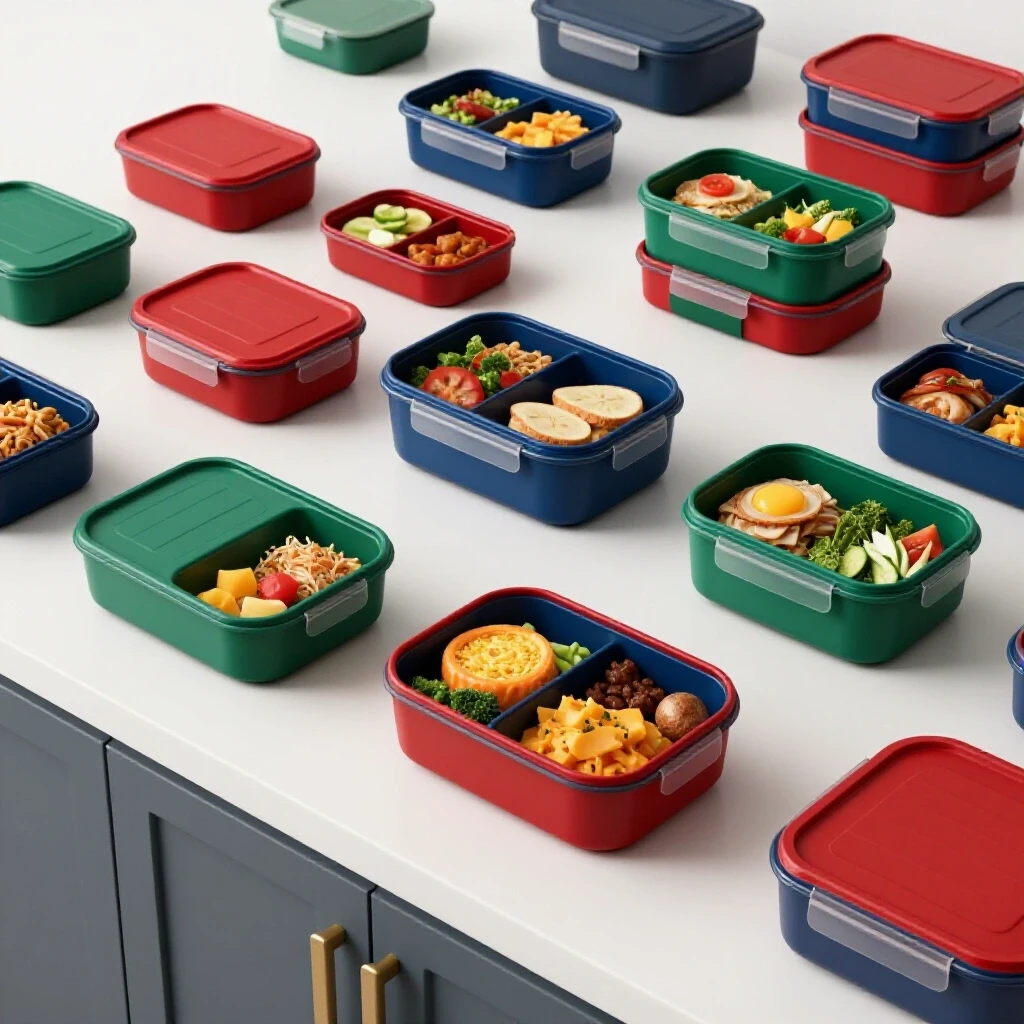
- Clear Modular Bins: Best for pantries and craft rooms where you need to see inventory levels.
- Open-Top Canvas Bins: Ideal for toys and shoes because they are “drop-friendly.”
- Industrial Wire Shelving: Best for garages and basements to maximize vertical space utilization.
- Uniform Hangers: These reduce visual friction in large closets and allow clothes to slide more easily.
Standard Item-Density Guidelines for Shelving
Item density refers to how much of a shelf’s surface area is covered. In a warehouse, 100% density is efficient, but in a home, it leads to “clutter creep” and makes it impossible to put things back quickly.
We aim for an 80% capacity rule. When a shelf or bin is more than 80% full, it becomes difficult to remove one item without disturbing others. This “buffer space” is critical for maintaining a functional home storage system. If your pantry shelves are packed tight, you will stop rotating your stock, leading to expired food and wasted money.
Building Maintenance Habit Loops for Long-Term Order
A habit loop is a repeatable cycle of behavior that maintains the integrity of an organizational system. These loops transition the home from a state of “constant cleaning” to a state of “continuous flow.”
The biggest challenge in a large home is the “reset time.” If you wait until the end of the week to tidy a 4,000-square-foot house, it will take hours. Instead, we use “Micro-Resets” based on industrial maintenance schedules. These are small, timed intervals where each family member handles a specific zone.
- The Morning Launch (10 mins): Clearing the kitchen counters and starting one load of laundry.
- The After-School Sweep (5 mins): Moving backpacks and shoes to their Zone 1 storage.
- The Evening Reset (15 mins): A whole-family walkthrough to return “migrated” items to their home zones.
Using System Feedback Loops to Identify Failure Points
A feedback loop is a way to see where your system is breaking down. If you notice a pile of papers consistently forming on the dining table, that is a “system failure signal.” It means your current paper management system has too much friction.
Instead of getting frustrated, look at the logistics. Is the recycling bin too far away? Is the filing cabinet too hard to open? When we saw mail piling up, we realized our “office” was too far from the front door. We placed a small, attractive “Action Tray” right by the entry. The mail now goes there immediately, and the dining table stays clear.
Practical Metrics for Household Efficiency
To manage a large home effectively, you need to track a few simple numbers. These metrics help you understand if your systems are working or if they need a redesign.
- Sorting Speed: How many items can you put away in 60 seconds? (Goal: 10+ items).
- Daily Cleanup Duration: How long does the evening reset take? (Goal: Under 20 minutes for the whole family).
- Space Utilization Percentage: How much of your storage is actually being used? (Goal: 70-80%).
- Step Count for Common Tasks: How many steps does it take to put away groceries? (Goal: Minimize this by optimizing the path from the garage to the pantry).
By focusing on these numbers, you remove the emotion from decluttering. It isn’t about being “neat”; it’s about being efficient. When our “Evening Reset” started taking 45 minutes, I knew we had too much “inflow” of new items and needed to do a spatial audit.
Designing for Family Behavior Alignment
Behavior alignment is the practice of creating systems that work with, rather than against, the natural tendencies of the people living in the home. It acknowledges that children and busy adults will often take the path of least resistance.
In our home, I noticed my kids never hung up their coats on hangers. The “hanger friction” was too high. I replaced the closet rod with a row of sturdy hooks. The floor stayed clear. We didn’t change the children; we changed the hardware to match their behavior. This is the secret to reducing household clutter in a large home: make the “right” choice the “easiest” choice.
- Label Everything: Use large, clear text or pictures for children. This removes the “where does this go?” decision fatigue.
- Zone-Specific Trash Cans: Ensure every room has a waste bin within five steps of the main activity area.
- The “One-In, One-Out” Rule: For every new item brought into a high-density zone, one must leave. This maintains your 80% capacity.
- Digital Inventory for Low-Frequency Zones: Use a simple spreadsheet or app to track what is in your basement bins. This prevents “duplicate buying” when you can’t find something.
Key Takeaways for Sustainable Home Systems
Managing a large home is a marathon, not a sprint. The goal is to build a system that can handle the “surges” of busy life—like holidays or sports seasons—without collapsing.
- Prioritize low-friction storage for daily items.
- Keep your storage density at or below 80%.
- Map your home into functional zones to prevent item migration.
- Use micro-resets to keep the “recovery time” manageable.
- Adjust your hardware (hooks vs. hangers) to match family habits.
By treating your home like a well-oiled logistics center, you can reduce the mental fatigue that comes with constant tidying. You stop fighting the house and start living in it.
Frequently Asked Questions
Why does my large home get messy again so quickly after I organize it?
This usually happens because the system has too much “retrieval friction.” If it is harder to put an item away than it is to leave it on a counter, the item will stay on the counter. Large homes also suffer from “item migration,” where things move across long distances and never make it back to their home zones.
What is the best way to start organizing a 3,000+ square foot home?
Start by creating a “Zoning Map.” Don’t try to organize every room at once. Focus on “Zone 1” (high-traffic areas like the kitchen and entry) first. Once these areas have low-friction systems, the rest of the house will feel more manageable because the “launch points” of your day are clear.
How do I get my kids to follow a new organization system?
Make the system “drop-friendly.” Use open baskets instead of lidded bins and hooks instead of hangers. Use clear labels with both words and pictures. If a child can put something away in under three seconds, they are much more likely to do it consistently.
How much should I spend on storage containers?
You don’t need expensive systems. Focus on functionality. Industrial wire shelving and simple canvas bins are often more durable and effective than “luxury” acrylic organizers. The value of the system is in the flow it creates, not the price of the plastic.
What is the “80% capacity rule” and why does it matter?
The 80% rule states that storage should never be more than 80% full. This leaves “buffer space” so you can easily pull items out and put them back. When shelves are at 100% capacity, you have to move three things to get to one, which increases friction and leads to system failure.
How do I handle “dead zones” like the basement or guest room?
Treat these as “High-Density Storage Zones.” Use uniform, stackable bins and keep a digital inventory. Because you don’t visit these rooms daily, you can afford higher friction (lids and stacking), but you must have a clear map of what is inside each bin to avoid “ghost clutter.”
What are “micro-resets” and how often should I do them?
Micro-resets are short, timed tidying sessions (5-15 minutes) done at specific points in the day. Instead of one long cleaning session, these small bursts prevent clutter from reaching a “critical mass.” They are most effective when done after school/work and before bed.
Is it better to have clear or opaque bins?
It depends on the zone. In kitchens or craft rooms, clear bins are better for seeing inventory. In living rooms or bedrooms, opaque bins are better because they reduce “visual noise,” which helps lower stress and cognitive load.
How do I stop “item migration” in a large house?
Implement “Point-of-Use” storage. If you find yourself constantly carrying scissors from the kitchen to the office, buy a second pair for the office. Reducing the distance an item needs to travel is the best way to ensure it gets put back.
What is “retrieval friction”?
Retrieval friction is the total physical and mental effort required to access or store an item. It includes steps like walking to another room, opening a door, unlatching a lid, and moving other objects. The lower the friction, the more sustainable the organization system will be.
(This article was written by one of our staff writers, Christopher Bennett. Visit our Meet the Team page to learn more about the author and their expertise.)