Open Shelving vs Closed Storage: Best Organization Solutions (Guide)

Choosing sustainable decluttering methods is not just about a tidy room; it is an act of environmental responsibility. When we establish functional home storage that actually works, we stop the cycle of over-consumption and the constant disposal of items lost in the depths of a messy house. In my eleven years managing logistics for both global supply chains and my own family of five, I have learned that the most eco-conscious home is one where every object is visible to the mind but protected from the eye. By creating systems that prioritize durability and ease over temporary trends, we reduce the mental fatigue that leads to “panic buying” duplicates of things we already own but cannot find.
The Hidden Cost of Exposed Storage in Family Homes
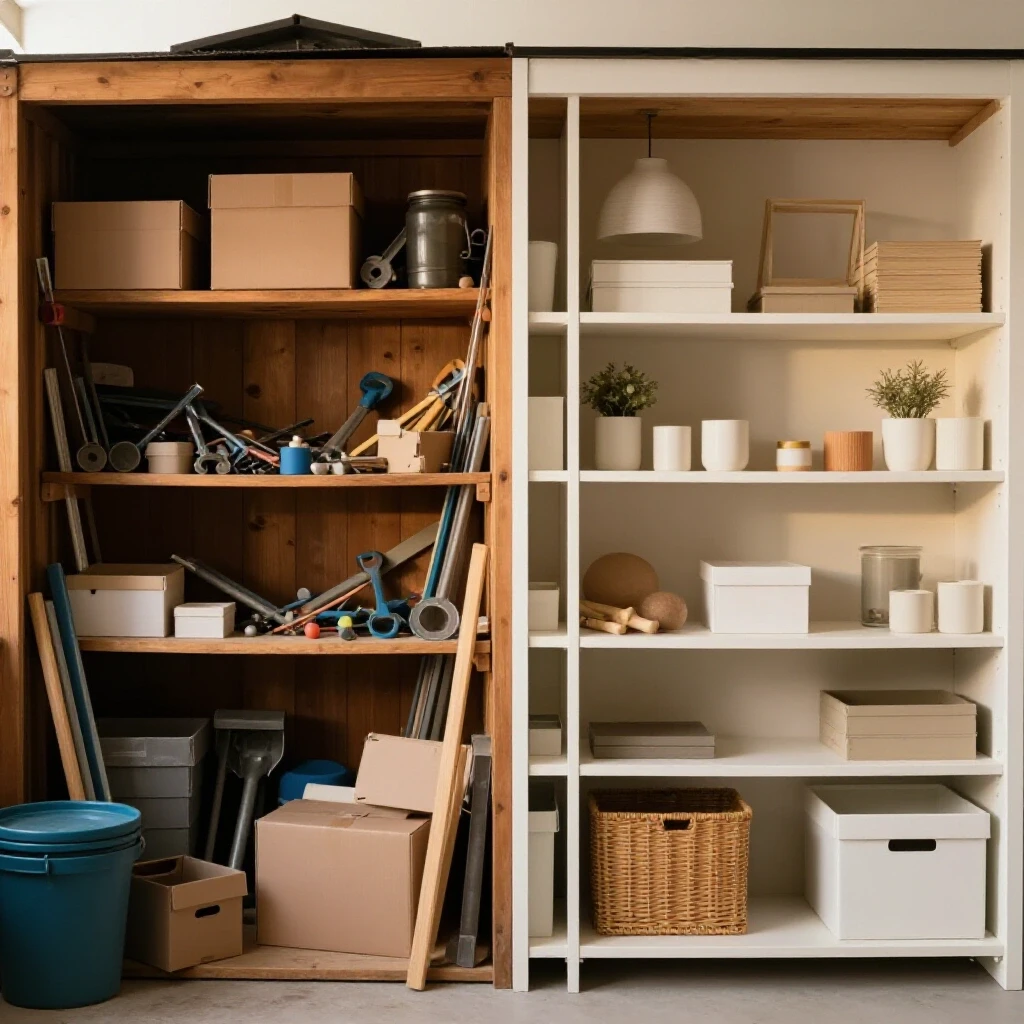
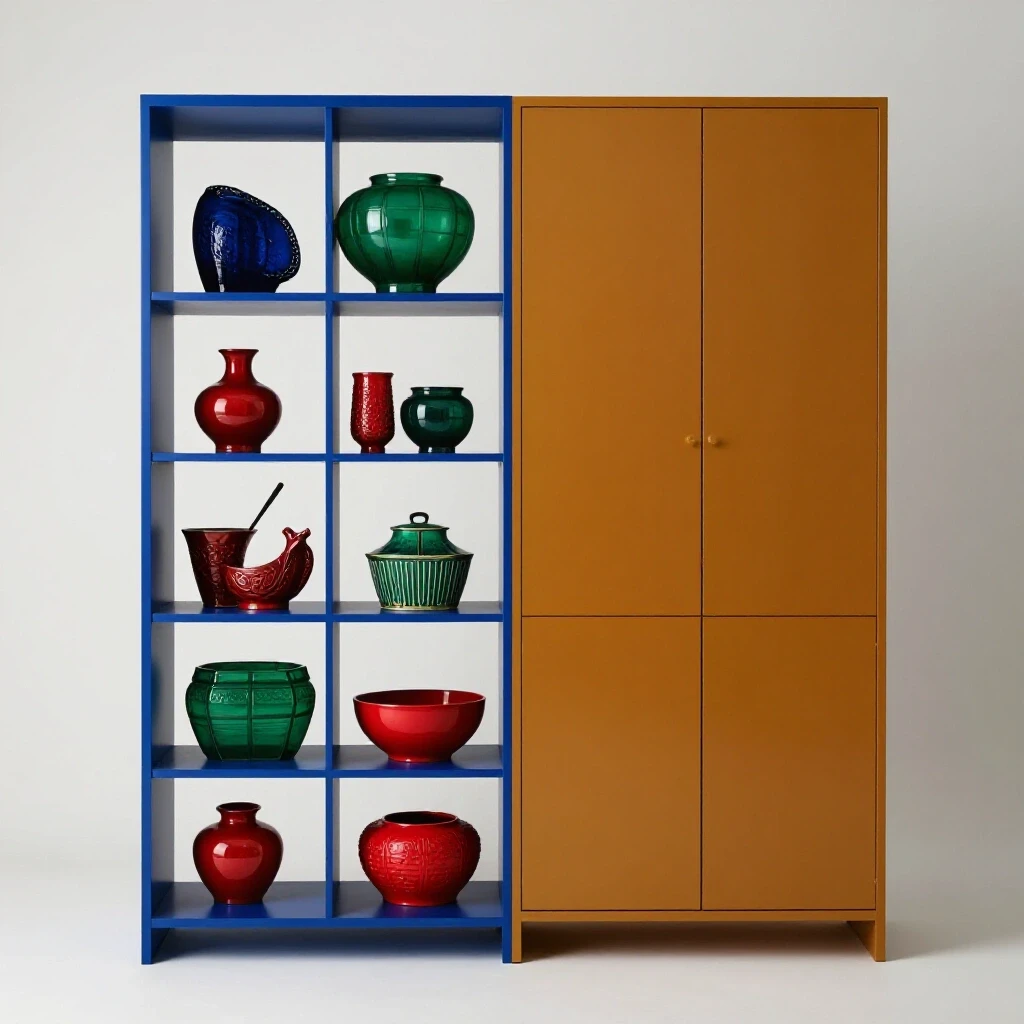
Exposed storage refers to shelving units where items are visible and unprotected. While often marketed for aesthetics, these systems frequently fail in high-traffic households due to the high cognitive load of visual clutter and the physical maintenance required to keep items looking orderly.
In my early years of managing a busy household, I fell for the charm of seeing everything at once. I thought that if I could see my kitchen tools and my children’s toys on open ledges, we would stay organized. Interestingly, the opposite happened. Research in environmental psychology journals suggests that “visual noise”—the sheer volume of different shapes, colors, and textures—can spike cortisol levels, especially in parents who are already multitasking.
Our family’s decluttering journey hit a wall when I realized my wife and I were spending thirty minutes every evening “straightening” shelves rather than actually cleaning. This is a classic example of high-maintenance logistics. In a professional warehouse, you do not display goods for beauty; you store them for protection and retrieval speed. When we applied this to our home, we saw that exposed surfaces acted as dust magnets and required a level of “perfect” alignment that no busy professional can sustain.
- Visual Noise Metric: A room with 50% exposed storage often feels 80% more cluttered than one with enclosed cabinets.
- Dust Accumulation Rate: Items on open ledges require cleaning 3 to 4 times more often than those behind doors.
- Decision Fatigue: Seeing 20 different toy sets at once makes it harder for a child to choose one, leading to “dumping” behavior.
Visual Processing Overload and Decision Fatigue
Visual processing overload occurs when the brain is forced to analyze too many stimuli at once. In a home setting, seeing every book, toy, and kitchen gadget on a shelf creates constant mental background noise that drains energy and increases daily stress levels.
Building on this, the brain treats every visible object as a task to be processed. When I looked at our open pantry, I didn’t just see pasta; I saw a crooked box that needed fixing, a half-empty bag that looked messy, and a lack of symmetry. This is what we call “cognitive load.” For a professional returning from a long day, this load is the primary driver of frustration.
By switching to opaque bins and closed cabinetry, we reduced the number of “visual tasks” our brains had to perform. This shift allowed us to focus on our family rather than the items we owned. We found that by limiting the visual field, our children were calmer and our own mental fatigue decreased significantly.
Analyzing Retrieval Friction and System Failure
Retrieval friction is the measure of effort required to access or put away an item. High-friction systems involve multiple steps or precise placement, which often leads to family members leaving items on surfaces rather than returning them to their designated homes.
In logistics, we talk about “touches.” Every time you touch a product, it costs time and money. In a home, every “touch” or step required to put a toy away increases the likelihood that the toy will end up on the floor instead. Exposed shelving actually increases friction because you cannot just “toss” an item back; you have to place it carefully so the shelf doesn’t look like a disaster.
| Storage Type | Retrieval Steps | Precision Required | Friction Index (1-10) |
|---|---|---|---|
| Open Shelving | 1 (Direct) | High | 8 |
| Opaque Bins (No Lids) | 1 (Drop-in) | Low | 2 |
| Lidded Clear Bins | 2 (Open/Drop) | Medium | 4 |
| Deep Cabinets | 2 (Open/Place) | Low | 3 |
| Nested Containers | 4+ (Complex) | High | 10 |
As shown in the table above, the “drop-in” method using opaque bins has the lowest friction. This is why our previous home organization systems failed. We were asking our children to be curators of a museum (high precision) instead of just putting things away.
Why High-Friction Bins Lead to Rapid Clutter Reversion
High-friction bins are containers that require multiple actions to use, such as unlatching heavy lids or unstacking other boxes. When a system is too hard to use, the “flow rate” of items returning to their homes drops to zero, causing clutter to pile up on flat surfaces.
I noticed that our “sustainable decluttering” efforts lasted only three days because I had bought beautiful, interlocking clear boxes with tight lids. To put away a single Lego set, my son had to move two other boxes, unclip four latches, and align the lid perfectly. As a result, the Legos stayed on the rug.
We transitioned to a “one-motion” system. This means that for 80% of our daily items, the action to put them away should take less than three seconds. If it takes longer, the system is flawed and will eventually fail. We replaced the complex boxes with deep, pull-out drawers and open-top baskets hidden inside cabinets. This reduced household clutter almost overnight because the “cost” of being tidy became negligible.
Designing Functional Home Storage with Zoning Maps
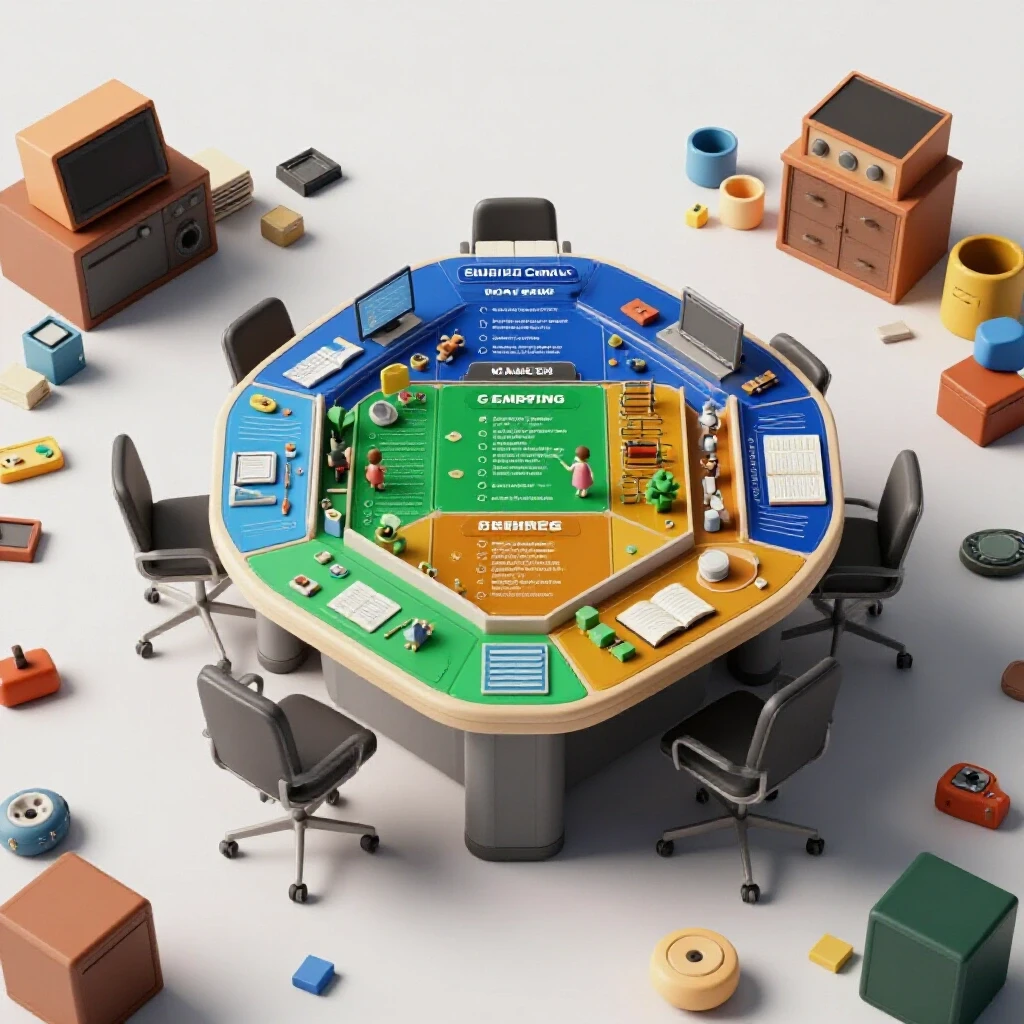
Zoning is the practice of dividing a living space into specific areas based on the frequency of use and the type of activity. A custom zoning map ensures that high-use items are in “Prime Real Estate” (between waist and shoulder height) while seasonal items are moved to “Deep Storage.”
To fix our home, I treated our floor plan like a distribution center. We mapped out “High-Flow Zones” like the entryway and kitchen. We realized that our previous storage solutions for families were misplaced. We had heavy winter coats in the main hallway (taking up space) and daily backpacks in the back closet (too far to walk).
- Zone 1 (Prime): Items used daily. Must be accessible in 1-2 steps.
- Zone 2 (Secondary): Items used weekly. Can be in lower or higher cupboards.
- Zone 3 (Deep): Items used monthly or seasonally. Top shelves or basement.
High-Speed Zoning Maps for Busy Parents
A high-speed zoning map prioritizes the “path of least resistance” for family members. By placing storage exactly where a mess naturally forms, you capture the clutter before it spreads across the house.
Interestingly, we found that a “dump zone” was necessary. Instead of fighting the fact that kids drop their mail and school papers on the counter, we installed an enclosed “Action Drawer.” This drawer hides the mess but keeps it contained to one square foot. This is a logistical “buffer” that prevents the entire kitchen from feeling disorganized.
We also measured our “sorting time-box intervals.” We found that if a zone took more than five minutes to reset at night, the density of items in that zone was too high. We had to either remove items or increase the capacity of the hidden storage.
The Sorting Framework: Reducing Household Clutter for Good
A sorting framework is a logical process for evaluating every item in a home based on its utility and the “cost” of its space. Effective frameworks focus on flow—how items enter the home and how they exit—rather than just moving piles around.
When we began our most successful decluttering journey, we used a “Logistics Audit.” We didn’t just ask, “Does this spark joy?” We asked, “When was the last time this item moved?” If an item hasn’t moved in six months, it is “dead stock.” In a warehouse, dead stock is a liability because it takes up valuable “pallet positions” (shelf space).
- Identify Inflow: Stop the “leak” by evaluating what comes into the house (mail, hand-me-downs, impulse buys).
- Categorize by Velocity: Group items by how fast they are used and replaced.
- Execute Outflow: Create a permanent “Exit Bin” near the door for donations and returns.
Using Industrial Sorting Metrics for Residential Use
Industrial sorting involves categorizing items by “SKU density” and “pick frequency.” In a home, this means keeping similar items together in a way that maximizes the number of items you can store without making them hard to reach.
We found that by using “uniform containerization”—using the same size opaque bins for everything in a closet—we increased our space utilization by 30%. When bins are mismatched, you lose “air space” between them. Uniform bins stack perfectly and create a clean visual line, even if the contents inside are a bit messy.
| Metric | Target Goal | Family Reality |
|---|---|---|
| Item Density | 80% shelf capacity | 95% (Overcrowded) |
| Sorting Speed | 10 items per minute | 2 items per minute |
| Space Utilization | 70% of available volume | 40% (Poorly stacked) |
By tracking these numbers, I realized we weren’t “running out of room.” We were just using our volume inefficiently. By switching from open, thin shelves to deep, enclosed units, we nearly doubled our usable cubic feet.
Selecting Low-Maintenance Storage Gear
Low-maintenance storage gear consists of durable, easy-to-clean, and opaque containers that hide visual clutter while organizing contents. This gear should prioritize function over fashion, ensuring it can withstand daily use by children and adults.
I have found that the best storage solutions for families are those that don’t require a manual to use. We moved away from wicker baskets, which shed fibers and are hard to dust, toward smooth, wipeable polymer bins. We also prioritized “integrated cabinetry” with soft-close hinges. This small mechanical detail reduces the “sensory impact” of tidying up.
- Avoid: Open wire shelving (items fall through, looks messy).
- Avoid: Small, specialized organizers (too rigid for changing needs).
- Choose: Deep drawers with adjustable dividers.
- Choose: Large, uniform opaque bins with clear labels.
Why Opaque Bins Outperform Clear Containers
Opaque bins provide a “visual shield” that hides the varied shapes and colors of stored items. While clear bins allow you to see the contents, they also contribute to visual noise, making a closet look cluttered even when it is technically organized.
In our home, we discovered that clear bins actually increased our stress. Even when the toys were “away,” we could still see the 500 pieces of mismatched plastic through the sides of the box. Switching to solid white and grey bins created a “blank slate” look. We used a simple labeling system so we still knew what was inside, but the mental weight of seeing the mess vanished.
Building Systematic Habit Loops for Maintenance
A habit loop is a three-part process consisting of a cue, a routine, and a reward. In home organization, this means creating triggers that make tidying up a natural, subconscious part of the day rather than a chore.
The reason most homes revert to clutter within days is a lack of “feedback loops.” In logistics, if a shipment is misplaced, a system alert goes off. In a home, the “alert” is often a frustrated parent yelling. We replaced the yelling with “Spatial Audits.” Every Sunday, we spend 15 minutes checking our high-flow zones.
- The Entryway Reset: Every time we walk through the door (cue), we place shoes in the hidden cabinet (routine), leading to a clear path (reward).
- The “One-In, One-Out” Rule: For every new toy or clothing item that enters, one must go into the Exit Bin.
- Digital Inventory: For high-value or seasonal items, we use a simple spreadsheet or a smart-label tracking system. A quick scan of a QR code tells us exactly which bin holds the holiday lights.
Reducing Daily Sorting Friction for Children
To make a system stick, it must be designed for the least disciplined member of the household. If a five-year-old can’t maintain it, the system is too complex.
We simplified our children’s rooms by removing all “display” elements. We replaced their open bookshelves with “Book Troughs” where books can just be dropped in. We also used “Category Sorting” rather than “Specific Sorting.” Instead of a bin for “Blue Cars” and “Red Cars,” we have one big bin for “Things with Wheels.” This reduces the “decision count” for the child, making it 500% more likely they will actually clean up.
Practical Steps to Transition Your Home
Transitioning from a high-maintenance, exposed system to a functional, enclosed one doesn’t have to happen overnight. It is a series of logical steps designed to reclaim your space and your sanity.
- Step 1: The Visual Audit. Take a photo of your most cluttered room. Identify how many “exposed” items are drawing your eye.
- Step 2: Contain the Chaos. Buy five large, matching opaque bins. Clear off your open shelves and put everything into these bins. Notice the immediate reduction in mental fatigue.
- Step 3: Close the Doors. If possible, add doors to open shelving units or replace them with standalone cabinets.
- Step 4: Label for Logic. Use a bold, easy-to-read labeling system. This ensures that “out of sight” does not become “out of mind.”
By focusing on these logistical principles, we transformed our home from a source of stress into a place of recovery. We stopped chasing the “perfect” look and started building a system that worked for our real, messy, busy lives. The result was not just a tidier house, but a more present and peaceful family.
Frequently Asked Questions
Why does my house get messy again so quickly after I organize it? This usually happens because the “retrieval friction” is too high. If your system requires too many steps to put an item away—like opening a lid, moving a box, or precisely aligning an item on an open shelf—your brain will choose the path of least resistance and leave the item on a counter. You need a “drop-in” system using enclosed storage to make tidying effortless.
Is open shelving always a bad idea for families? While it can look nice in magazines, it is rarely functional for busy families. It requires constant “curating” and dusting. For most, it leads to visual processing overload. If you love the look, limit it to one or two “display only” items and use enclosed cabinets for everything else.
How do I start decluttering when I feel overwhelmed? Start with “Inflow Control.” Stop more items from entering the house first. Then, pick one “High-Flow Zone,” like the kitchen counter or entryway. Clear it completely and move items into opaque, hidden storage. The immediate visual relief will give you the energy to continue.
What are the best types of bins for a “low-maintenance” home? Look for opaque, straight-walled polymer bins. Opaque bins hide the visual mess, and straight walls (rather than tapered) maximize your shelf space. Avoid wicker or fabric, as they are harder to clean and can wear out over time.
How can I get my kids to follow an organization system? Reduce the “decision count.” Instead of specific bins for every tiny toy, use large category bins (e.g., “Blocks,” “Dolls,” “Art”). Use picture labels if they are young. The goal is to make “putting away” a single-motion action.
What is “visual noise” and how does it affect my stress? Visual noise is the clutter of different colors, shapes, and textures that your brain has to process every time you look at a room. Research shows that high levels of visual noise can increase cortisol (the stress hormone) and make it harder to focus or relax.
How do I handle items that I use every day but look messy? Use “Dedicated Hiding Spots.” This could be a specific drawer or a basket inside a cabinet that is at waist height. You get the ease of quick access without the stress of seeing the item all day.
Do I need a professional organizer to fix my home? Not necessarily. Most professional organizers focus on aesthetics. As a logistics professional, I recommend focusing on “flow” and “friction.” If you simplify the path of an object from “in use” to “put away,” the house will naturally stay tidier.
What is the “one-touch rule” in home logistics? The goal is to only touch an item once to put it away. If you have to move three things to get to the bin, that’s four touches. Aim for systems where you can put an item in its home with a single motion.
How often should I “reset” my storage systems? If your system is functional, you should only need a “5-minute reset” daily and a “15-minute audit” weekly. If it takes longer than that, your system is too complex or you have too much “stuff” for the capacity of your home.
(This article was written by one of our staff writers, Christopher Bennett. Visit our Meet the Team page to learn more about the author and their expertise.)