How to Streamline Chores for Busy Families: Organization Tips (Guide)

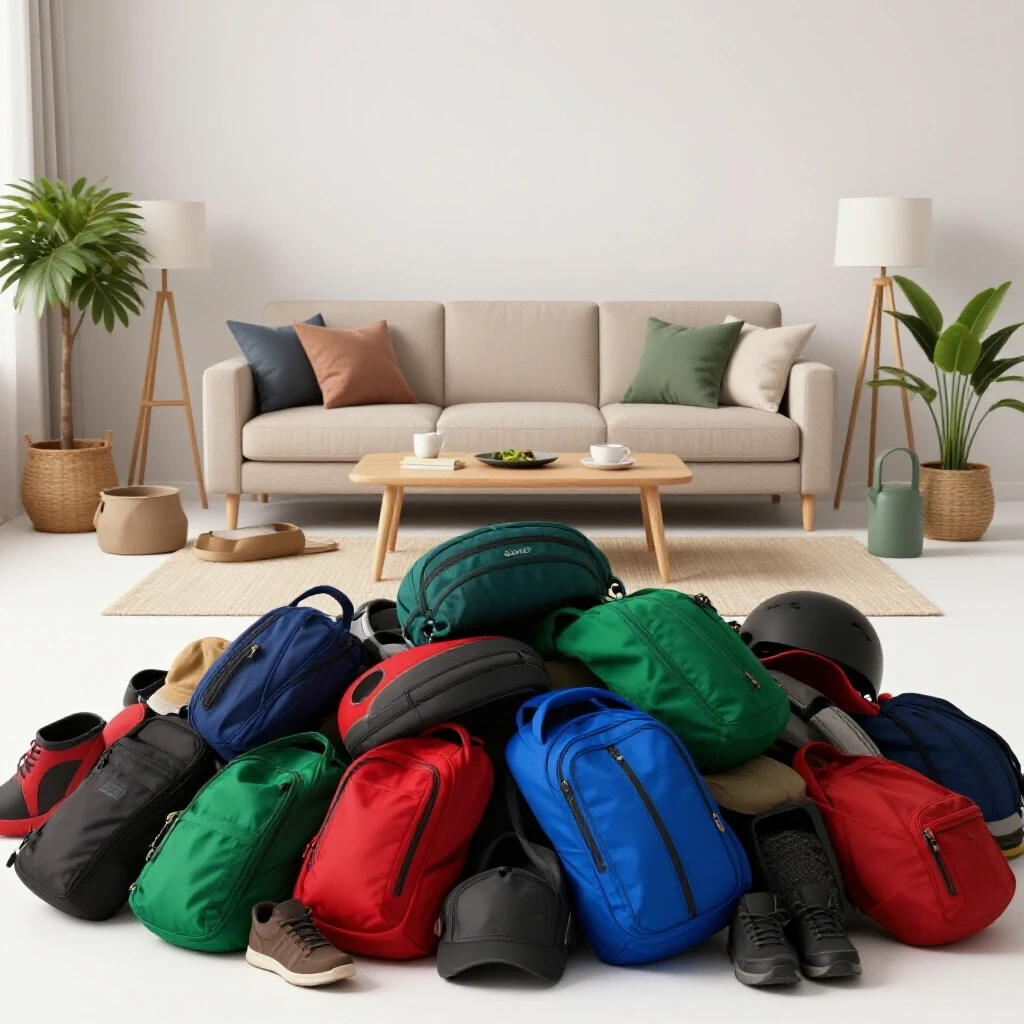
How does your home feel when you walk through the door after a long day? For many of us, the entryway isn’t a place of peace, but a reminder of unfinished tasks. You might see a pile of mail on the counter, shoes scattered across the rug, and a kitchen table buried under school papers. If you find yourself cleaning the same rooms every weekend only to see them revert to chaos by Tuesday, you aren’t failing at tidying. You likely have a system that doesn’t account for the reality of a moving, breathing family.
As someone who has spent over a decade in operations and logistics, I look at a home differently. I don’t see “mess”; I see bottlenecks and high-friction zones. In a warehouse, if a process takes too many steps, it fails. The same is true for your living room. My own journey toward sustainable decluttering began when I realized my family was struggling with systems I had designed for “looks” rather than “logic.” We had beautiful, opaque baskets with heavy lids that looked great in photos but were impossible for my kids to use. By applying spatial management principles, we shifted from a cycle of constant cleaning to a steady state of functional order.
The Science of Spatial Logistics and Why Homes Revert to Clutter
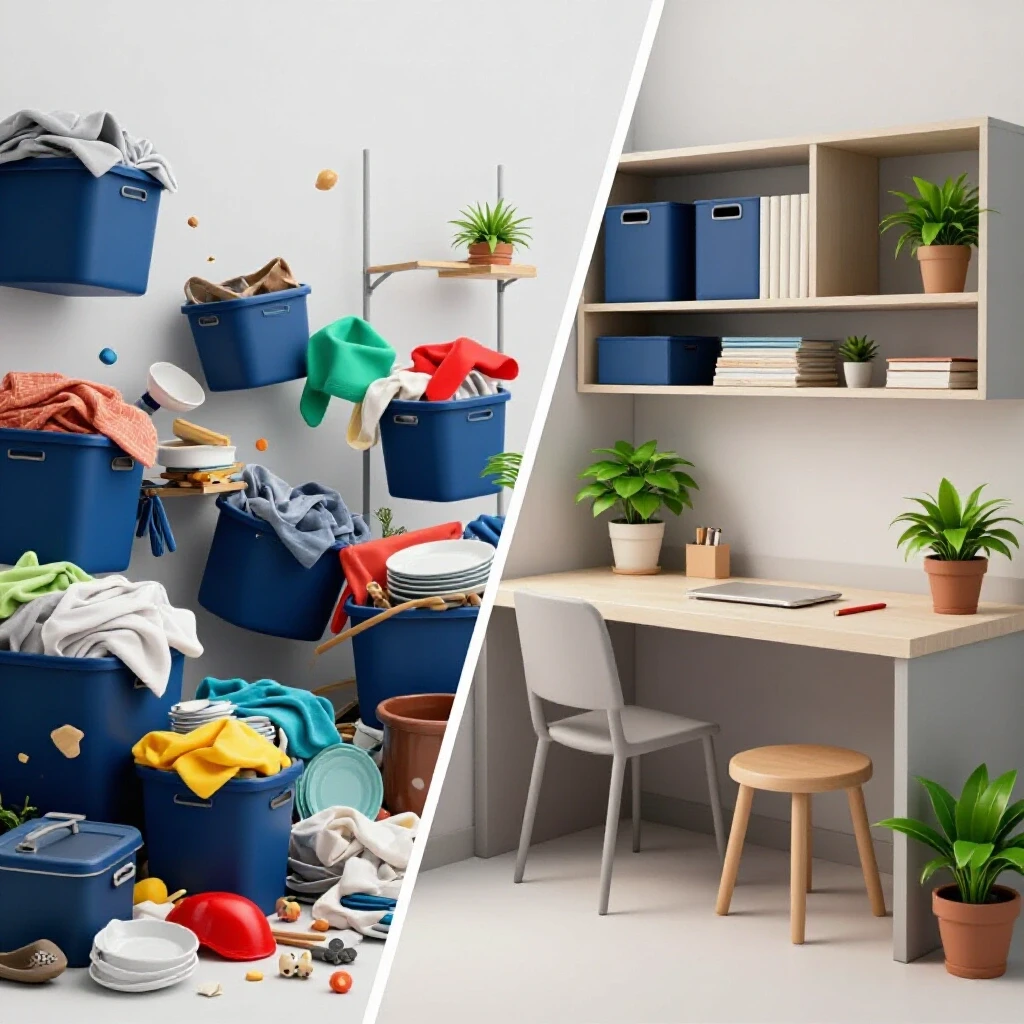
Household management is essentially the management of inventory and flow. When the rate of items entering your home exceeds the rate of items leaving or being stored, the system overflows. This isn’t just a physical problem; it is a psychological one. Environmental psychology research shows that visual clutter can increase cortisol levels, particularly in women, leading to a state of chronic low-grade stress.
Sustainable home organization systems fail when they ignore the “cost” of the task. Every time you ask a family member to put something away, you are asking them to spend “cognitive coins.” If a bin is behind a door, inside a cabinet, and under a lid, the cost is too high. The goal is to reduce the steps required to complete a cycle.
Understanding Retrieval Friction and Decision Fatigue
Friction is the physical and mental resistance encountered when trying to complete a task. In a home, high-friction storage requires you to move three things to get to one. Decision fatigue occurs when you have to think too hard about where an item belongs. If an object doesn’t have a clear, logical “home,” it ends up on a “flat surface of least resistance,” like your dining table.
To fix this, we look at the “Step Count” for daily tasks. A low-friction system allows for “one-handed” storage. If you can’t put an item away with one hand in under five seconds, the system is likely to fail during a busy week.
| Storage Type | Retrieval Steps | Friction Level | Success Rate |
|---|---|---|---|
| Open Bin / Hook | 1 | Very Low | 95% |
| Drawer (No Dividers) | 2 | Low | 80% |
| Lidded Box on Shelf | 3 | Medium | 50% |
| Box inside Cabinet | 4+ | High | 20% |
Creating High-Efficiency Zoning Maps for the Whole Family
Zoning is the practice of grouping items based on where the activity actually happens, rather than where “traditionally” things should go. In logistics, we call this “point-of-use” storage. If you always open mail at the kitchen island, but your recycling bin is in the garage, the mail will stay on the island. Moving the recycling closer or creating a dedicated sorting zone at the island reduces the travel time and the likelihood of a pile forming.
When I redesigned our mudroom, I stopped fighting my children’s natural habits. They didn’t want to open a closet and find a hanger. By installing heavy-duty hooks at their eye level, we reduced the “put away” process from six steps to one. This simple shift in spatial ergonomics transformed our mornings.
Defining Active vs. Passive Storage Zones
Active storage is for items you use daily or weekly. These must be kept in the “Goldilocks Zone”—between your knees and your shoulders. Passive storage is for seasonal or rarely used items, which can go on high shelves or in the basement.
- Zone 1 (Daily): Items used every day. Must be visible or easily accessible.
- Zone 2 (Weekly): Items used once or twice a week. Can be behind a single door or drawer.
- Zone 3 (Seasonal/Deep): Items used monthly or yearly. These can be in high-friction areas like the attic or under-bed bins.
The Industrial Sorting Framework for Reducing Household Clutter
When a backlog of clutter becomes overwhelming, you need a high-speed sorting method. I use a variation of the “5S” system used in lean manufacturing: Sort, Set in order, Shine, Standardize, and Sustain. The most critical part for a busy parent is the initial “Sort” and “Set.”
We often make the mistake of trying to organize while we are cleaning. These are two different tasks. Organizing is about creating the system; cleaning is about maintaining it. When you are in a “sorting sprint,” do not worry about where things will eventually live. Focus entirely on categorizing.
The Three-Category Sorting Log
During a major reorganization, I use a simple volume-based log to track progress. This helps visualize the “outflow” and provides a sense of accomplishment that keeps the momentum going.
| Category | Action | Logistical Goal |
|---|---|---|
| Relocate | Move to the correct zone | Re-establish logical flow |
| Discard/Donate | Remove from the home | Increase available spatial capacity |
| Evaluate | Decide within 24 hours | Reduce “decision debt” |
Selecting Low-Maintenance Storage Solutions for Families
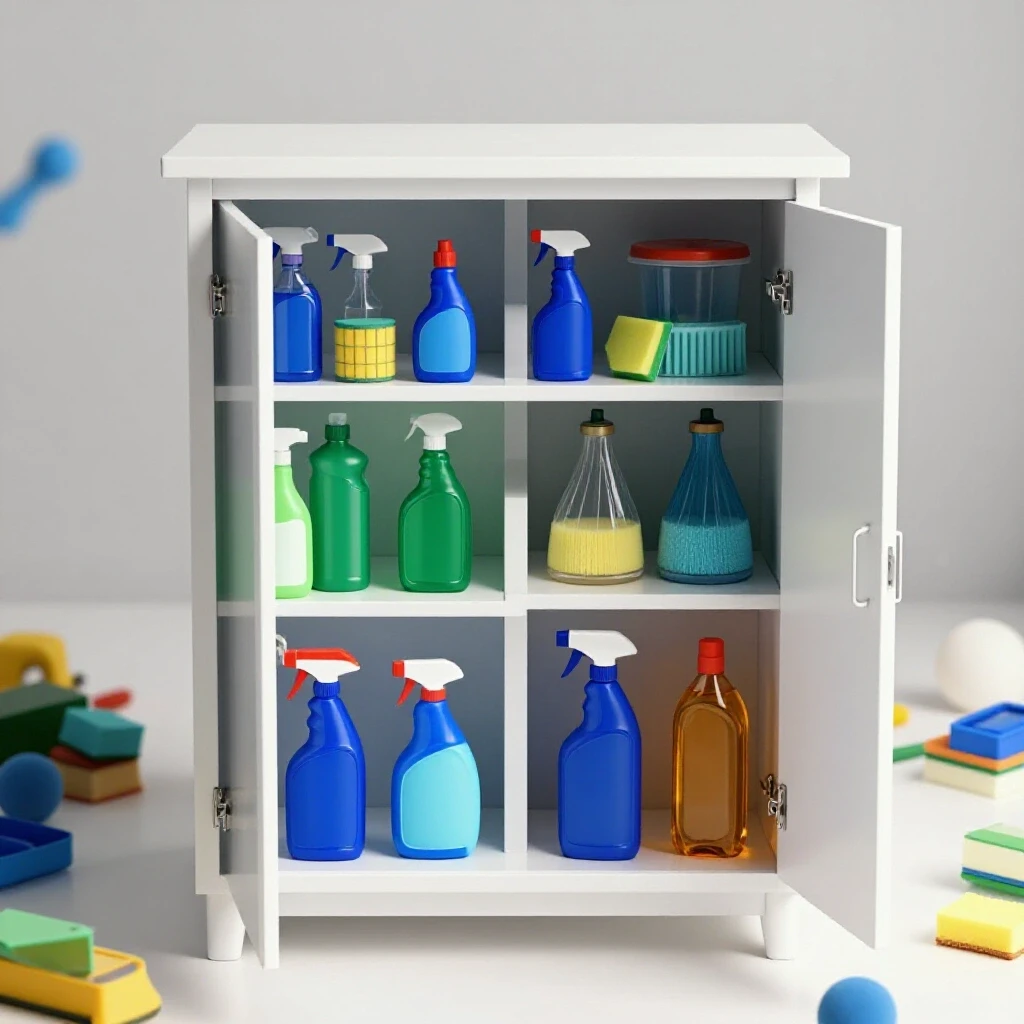
Not all containers are created equal. Many storage solutions for families are designed for aesthetics, but they actually increase the workload. For example, woven baskets are popular but can snag clothing and hide the contents, leading to “out of sight, out of mind” syndrome. This often results in family members buying duplicates because they can’t find the original item.
I recommend clear, modular units for active zones. Being able to see the inventory levels of snacks, school supplies, or toiletries at a glance prevents overbuying and reduces the mental load of “checking the list.”
The “80% Rule” for Spatial Capacity
In logistics, a warehouse is considered “full” at 85% capacity. Beyond that, the time it takes to move items around increases exponentially. The same applies to your closets. If your coat closet is packed to 100%, you have to fight to get a jacket out. Aim to keep every shelf and drawer at 80% capacity. This “buffer space” allows for easy retrieval and makes putting things away much faster.
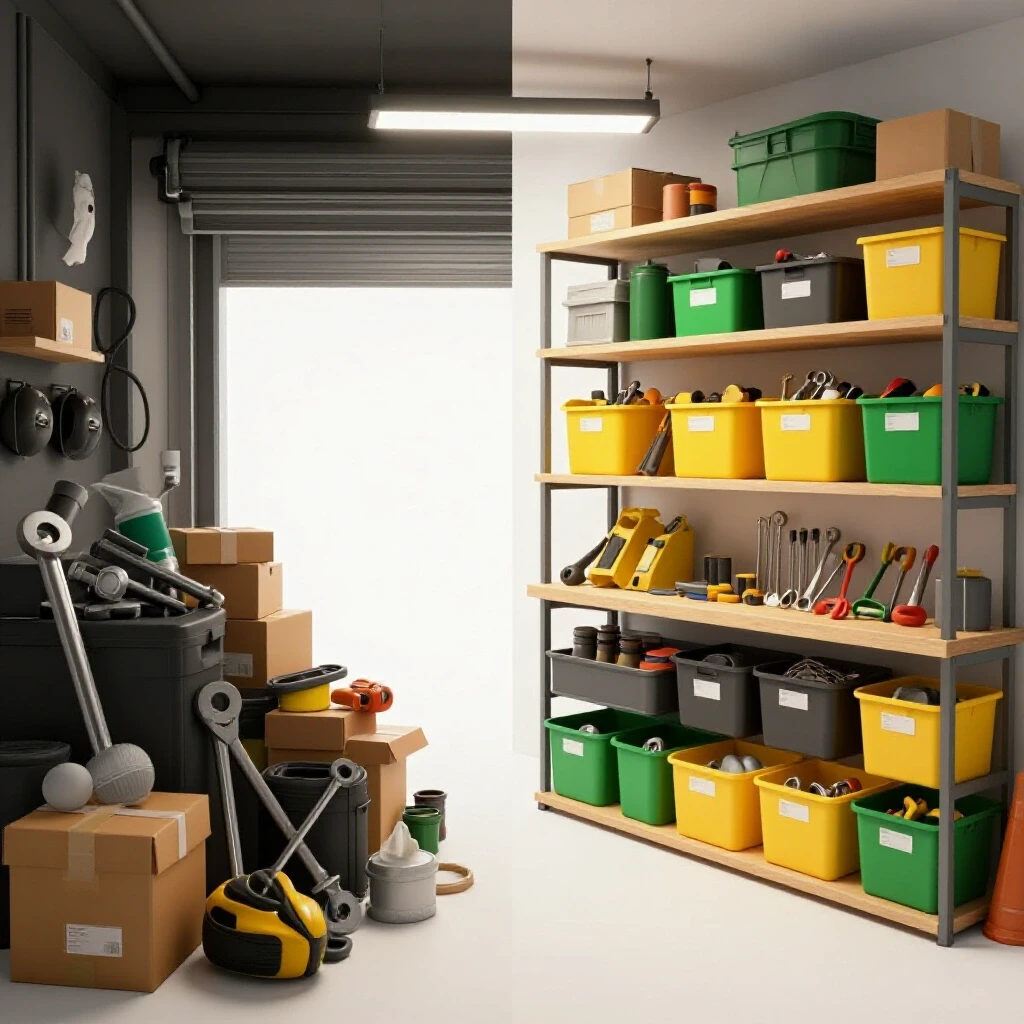
- Open Bins: Best for toys, shoes, and frequently used pantry items.
- Uniform Hangers: Reduces visual noise and prevents clothes from tangling.
- Drawer Dividers: Essential for keeping small items from migrating and creating “junk drawers.”
- Labeling: Use large, clear text. For younger children, use picture labels to reinforce where items belong without needing adult help.
Aligning Household Behavior with Functional Home Storage
The best system in the world will fail if the people using it don’t understand it. We often expect our partners and children to “just see” the mess, but people have different levels of visual clutter tolerance. To build a sustainable habit, the system must be the “path of least resistance.”
I found that by holding a 10-minute “family reset” every evening, we could maintain the progress we made during our larger organization sprints. This isn’t a deep clean; it’s a logistical reset. We move items back to their designated zones so the house is ready for the “inflow” of the next morning.
Building Systematic Habit Loops
A habit loop consists of a cue, a routine, and a reward. In a home, the cue might be “walking through the door.” The routine is “hanging the keys and coat.” The reward is “not having to look for keys in the morning.”
- The “One-Touch” Rule: If a task takes less than two minutes (like hanging a coat), do it immediately. Touching an item once is more efficient than moving it three times.
- The “In-Out” Rule: For every new item that enters the home, one item of similar volume must leave. This keeps your spatial capacity stable.
- Visual Cue Systems: Use physical markers, like a designated tray for “Action Items” (bills, forms), to signal that these items require a decision.
Measuring Success Through Daily Maintenance Timelines
How do you know if your new functional home storage is actually working? You measure the time it takes to “reset” the house. Before we redesigned our kitchen and living room zones, a nightly tidy-up took 45 minutes of frantic searching and sorting. After lowering the friction, that time dropped to 12 minutes.
Success isn’t a house that is always tidy; it’s a house that can be tidied in 15 minutes or less because everything has a logical home and the storage is easy to access.
| Family Size | Average Daily Reset (High Friction) | Average Daily Reset (Low Friction) | Time Saved Per Week |
|---|---|---|---|
| 2 Adults | 25 min | 8 min | ~2 hours |
| 2 Adults + 1 Child | 45 min | 15 min | ~3.5 hours |
| 2 Adults + 2+ Children | 60+ min | 20 min | ~4.5 hours |
Practical Steps for Your Decluttering Journey
Starting can be the hardest part. Don’t try to fix the whole house in one weekend. Instead, focus on the “logistical hotspots”—the areas that cause the most frustration during your daily routines.
- Audit your “dumping grounds”: Identify where piles naturally form. This is where you need better storage.
- Remove the lids: If you have bins with lids that you have to take off every time, try removing them for a week. See if the items get put away more often.
- Label everything: Even if you think it’s obvious, labels act as a “permanent instruction manual” for the rest of the family.
- Standardize your containers: Using the same type of bin creates a “visual calm” and allows you to swap them between rooms as your needs change.
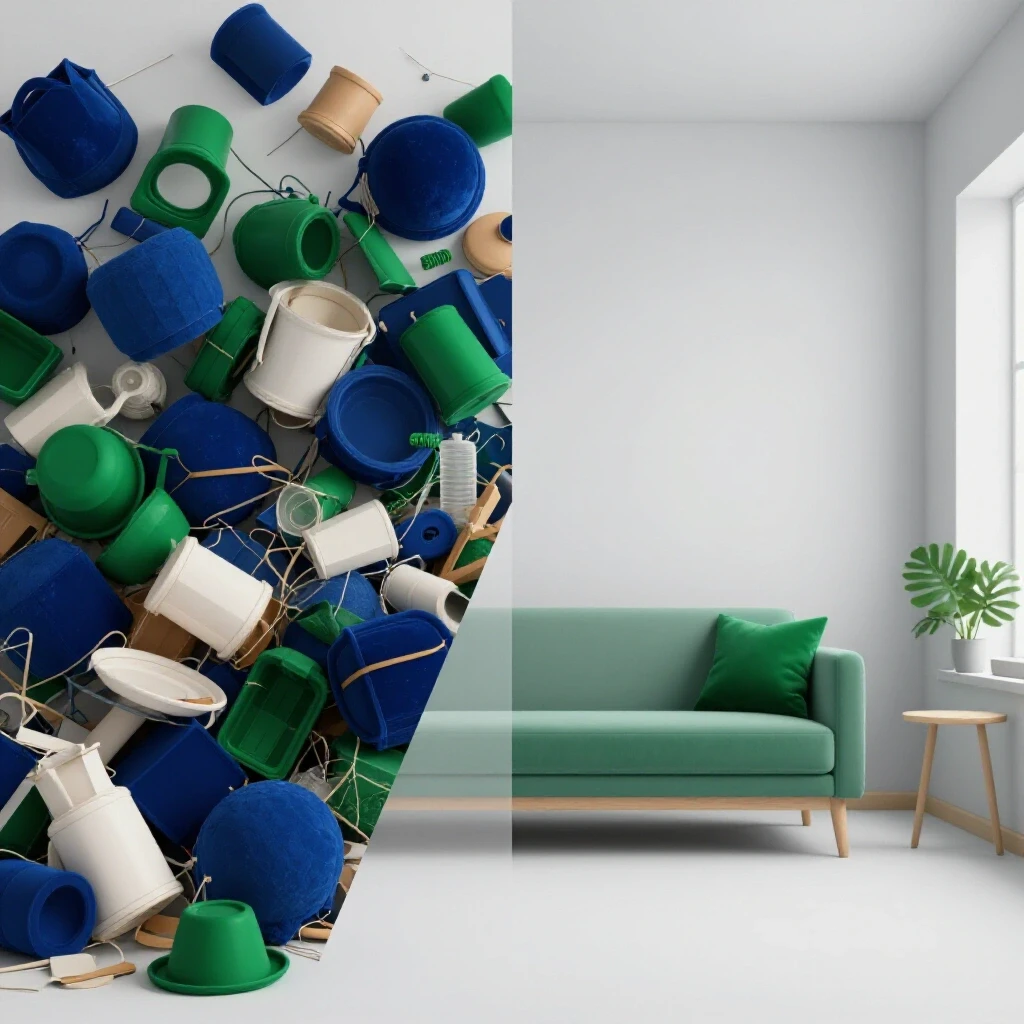
By focusing on flow, friction, and spatial capacity, you can move away from the exhausting cycle of “clean-clutter-repeat.” Your home should support your life, not be a source of constant labor. When the systems are simple enough for a tired adult or a distracted child to follow, they become sustainable. The goal is a functional, lived-in space where you spend less time managing your belongings and more time enjoying your home.
Frequently Asked Questions
Why does my house get messy again so quickly after I clean it?
This usually happens because the storage systems are too complex or don’t match your family’s natural habits. If it takes more than two steps to put something away, people will leave it on the nearest flat surface. You likely have “high-friction” storage that works for a photo but not for a busy Tuesday morning.
What is “retrieval friction” and how do I fix it?
Retrieval friction is the number of physical actions required to get an item out or put it away. For example, a box inside a closet behind a door has high friction. To fix it, move frequently used items to “Zone 1” (open shelves or hooks) where they can be reached in a single motion.
How do I get my kids to actually use the organization systems?
Kids thrive on “one-touch” systems. Use open bins without lids and hooks instead of hangers. Make sure the storage is at their height. Clear labels with pictures also help children identify where things go without needing to ask for help, which builds independence.
Is it better to have hidden storage or visible storage?
For items you use daily, visible storage (like clear bins or open shelves) is usually better because it reduces the mental effort of finding things. Hidden storage is great for “passive” items you don’t need often. If you prefer a hidden look, use labels on the outside of solid bins so you don’t have to open every one to find what you need.
What is the “80% rule” in home organization?
The 80% rule suggests that you should never fill a shelf or drawer more than 80% full. That extra 20% of “white space” allows you to move items around and put things back easily. Once a space hits 100% capacity, it becomes difficult to maintain, and clutter begins to overflow into other areas.
How can I manage the “paper trail” of mail and school forms?
Create a “one-in, one-out” station near your entryway. Use a simple vertical sorter with three slots: “To Do,” “To File,” and “Recycle.” The key is to sort the paper the moment it enters the house so it never hits the kitchen counter.
What are “logistical hotspots”?
These are the specific areas in your home where clutter consistently accumulates, such as the entryway, the kitchen island, or the end of a hallway. These spots are “crying out” for a better system. Usually, a pile forms because the “home” for those items is too far away or too hard to reach.
How do I start decluttering when I feel completely overwhelmed?
Start with a “spatial audit” of one small area, like a single drawer or the space under the kitchen sink. Use a timer for 15 minutes. Focus on removing anything that doesn’t belong in that “active zone.” Small wins build the momentum needed for larger projects.
Do I really need to label my storage bins?
Yes. Labels aren’t just for you; they are for everyone else in the house. They remove the “I didn’t know where it went” excuse and act as a visual reminder of the system you’ve put in place. It standardizes the “home” for every object.
How often should I “reset” my organization systems?
A daily 10-to-15-minute “evening sweep” is the most effective way to maintain order. This prevents small messes from turning into overwhelming weekend projects. Think of it as a “logistical reset” to prepare the home for the next day’s flow.
(This article was written by one of our staff writers, Christopher Bennett. Visit our Meet the Team page to learn more about the author and their expertise.)