How to Avoid Decluttering Too Fast for Lasting Home Organization (Guide)

On a typical Saturday morning, many of us feel a sudden burst of energy to reclaim our homes. We grab trash bags, empty every closet onto the floor, and vow that by sunset, the house will be transformed. However, as a professional in operations and logistics for over a decade, I have seen this “sprint” mentality fail repeatedly in both industrial warehouses and my own living room. By Tuesday, the laundry is back on the chair, the “organized” bins are overflowing, and the mental fatigue returns.
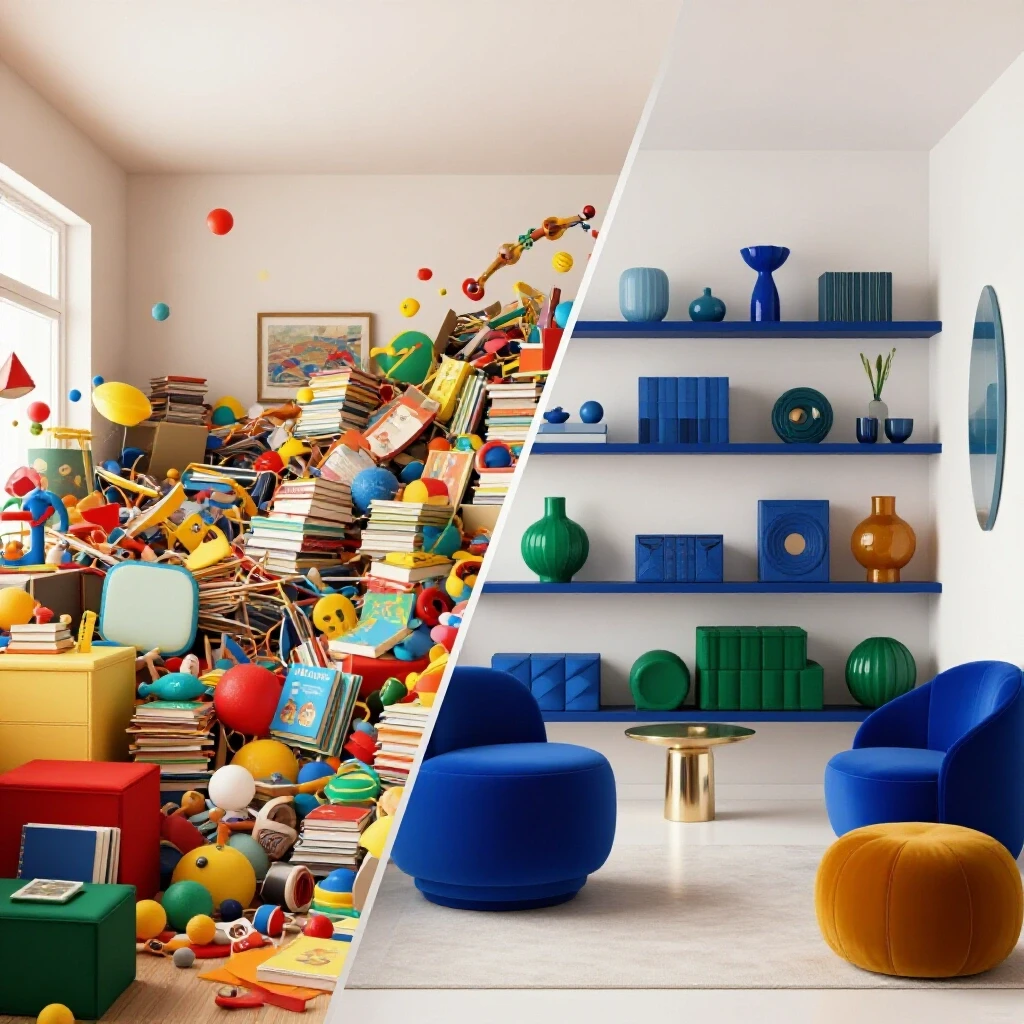
My own family’s turning point came after a massive weekend overhaul of our playroom. I spent eight hours sorting every block and doll into color-coded bins with tight-fitting lids. Within 48 hours, the system collapsed. The kids couldn’t open the lids easily, and I was too tired to help them. This taught me that the speed of the initial purge matters far less than the friction of the daily maintenance. We had optimized for “the look” rather than the “logistical flow” of a busy household.
To build a home that stays tidy, we must move away from the idea of a quick fix. Instead, we need to apply spatial management principles that account for human behavior and the natural speed at which a family moves. This guide explores why rushing the process often leads to failure and how you can design a sustainable decluttering journey that actually lasts.
The Hidden Risks of Rapid Household Purges
Quick decluttering often ignores the underlying flow of items in a home. When we rush the process, we fail to create systems that handle incoming items, leading to a rapid return of mess and increased decision fatigue for the whole family.
When you remove items too quickly, you often skip the critical “diagnostic phase.” In logistics, we call this a failure to analyze the “inflow and outflow.” If you clear a kitchen counter but don’t address why mail and keys land there every afternoon, the clutter will return within 24 hours. This is known as the “rebound effect” in environmental psychology.
Rapid purging also triggers significant decision fatigue. Research in organizational behavior suggests that our ability to make high-quality choices diminishes as the number of decisions increases. Sorting through 500 items in four hours leads to “decision paralysis,” where you eventually give up and shove the remaining items into a “miscellaneous” drawer. This creates “hidden clutter” that weighs on your mind even if you can’t see it.
- Decision Fatigue: The mental exhaustion caused by making too many choices, leading to poor organizational habits.
- Rebound Effect: The tendency for a space to return to its original cluttered state when the underlying habits are not changed.
- Hidden Clutter: Items stored away without a logical system, which still contribute to a sense of household disorganization.
Why High-Friction Bins Lead to Rapid Clutter Reversion
Friction refers to the number of steps required to put an item away. High-friction systems, like bins with tight lids or those stacked behind other items, discourage family members from maintaining order, causing items to accumulate on flat surfaces instead.
In my years managing supply chains, I learned that the harder it is to put something back, the less likely it is to happen. For a busy parent, a bin with a lid represents “two-step” friction: you must remove the lid, then place the item inside. If that bin is at the bottom of a stack, it becomes “four-step” friction. In a high-speed household, any system requiring more than two steps to put an item away is prone to failure.
We often choose storage solutions for families based on how they look in a store. However, “visual organization” (how pretty it looks) is often the enemy of “functional organization” (how easy it is to use). Open-top baskets and low-shelf zones are far more effective for maintaining order because they reduce the physical and mental effort required to tidy up at the end of the day.
Storage Friction Index by Bin Type
| Container Type | Steps to Store | Steps to Retrieve | Sustainability Rating |
|---|---|---|---|
| Open Basket (Floor Level) | 1 | 1 | High |
| Clear Bin (No Lid) | 1 | 1 | High |
| Labeled Drawer | 2 | 2 | Medium |
| Lidded Bin (Stacked) | 4 | 4 | Low |
| Decorative Box (Lidded) | 2 | 2 | Medium |
Redefining the Decluttering Journey Through Spatial Logistics
Approaching home organization as a logistics problem involves analyzing the “flow rate” of items. This means understanding how objects enter, move through, and exit the home, ensuring that storage capacity matches the actual volume of daily-use items.
Every room has a “spatial capacity limit.” This is the maximum amount of inventory a space can hold while still remaining functional. When we declutter too fast, we often focus on what to get rid of rather than what the room can realistically hold. A successful decluttering journey starts with defining the purpose of a room and then limiting the items to what fits comfortably within that “zone.”
In logistics, we use a “first-in, first-out” (FIFO) model to manage stock. In a home, we need a similar “one-in, one-out” rule to prevent volume creep. If you bring a new toy or kitchen gadget into the house, an older one must exit. This keeps the total volume of items stable, preventing the slow accumulation that leads to a cluttered home.
- Flow Rate: The speed at which items move in and out of your home.
- Spatial Capacity: The volume of items a shelf or room can hold before it becomes difficult to navigate.
- Volume Creep: The gradual increase of household items over time that eventually overwhelms your storage systems.
Designing Low-Maintenance Home Organization Systems
Sustainable systems focus on “one-handed” retrieval and “zero-thought” replacement. By prioritizing functionality over aesthetics, parents can create a living space that stays tidy because the effort required to maintain it is lower than the effort required to create a mess.
To reduce household clutter, we must align our storage with our existing habits. If your children always drop their backpacks by the front door, the most logical storage solution is a hook or cubby at that exact spot. Trying to force them to walk to a closet ten feet away adds “retrieval friction” and ensures the backpacks will stay on the floor.
I recommend using the “80/20 rule” for storage: 80% of your items should be easy to reach, while the 20% you rarely use can be stored in higher or deeper “deep storage” zones. This reduces the daily sorting time and keeps the most-used items from being buried under seasonal gear.
Daily Maintenance Timelines by Family Size
| Family Size | Daily Reset Time | Weekly Deep Sort | System Complexity |
|---|---|---|---|
| 2 Adults | 10 Minutes | 30 Minutes | Low |
| 2 Adults + 1 Child | 20 Minutes | 45 Minutes | Medium |
| 2 Adults + 3 Children | 40 Minutes | 90 Minutes | High |
| 2 Adults + 4+ Children | 60 Minutes | 120 Minutes | High |
Implementing Sustainable Decluttering via Functional Zoning
Zoning involves grouping items by their activity rather than just their category. By placing tools, toys, or paperwork exactly where they are used, you reduce the “travel distance” of clutter, making it easier for children and busy adults to follow the system.
A common mistake is storing all “office supplies” in one drawer. However, if you always sign school permission slips in the kitchen, keeping a pen and a stapler in a kitchen drawer is more functional. This is called “point-of-use” storage. It reduces the number of steps you have to take to put something back, which is the single most important factor in keeping a home tidy.
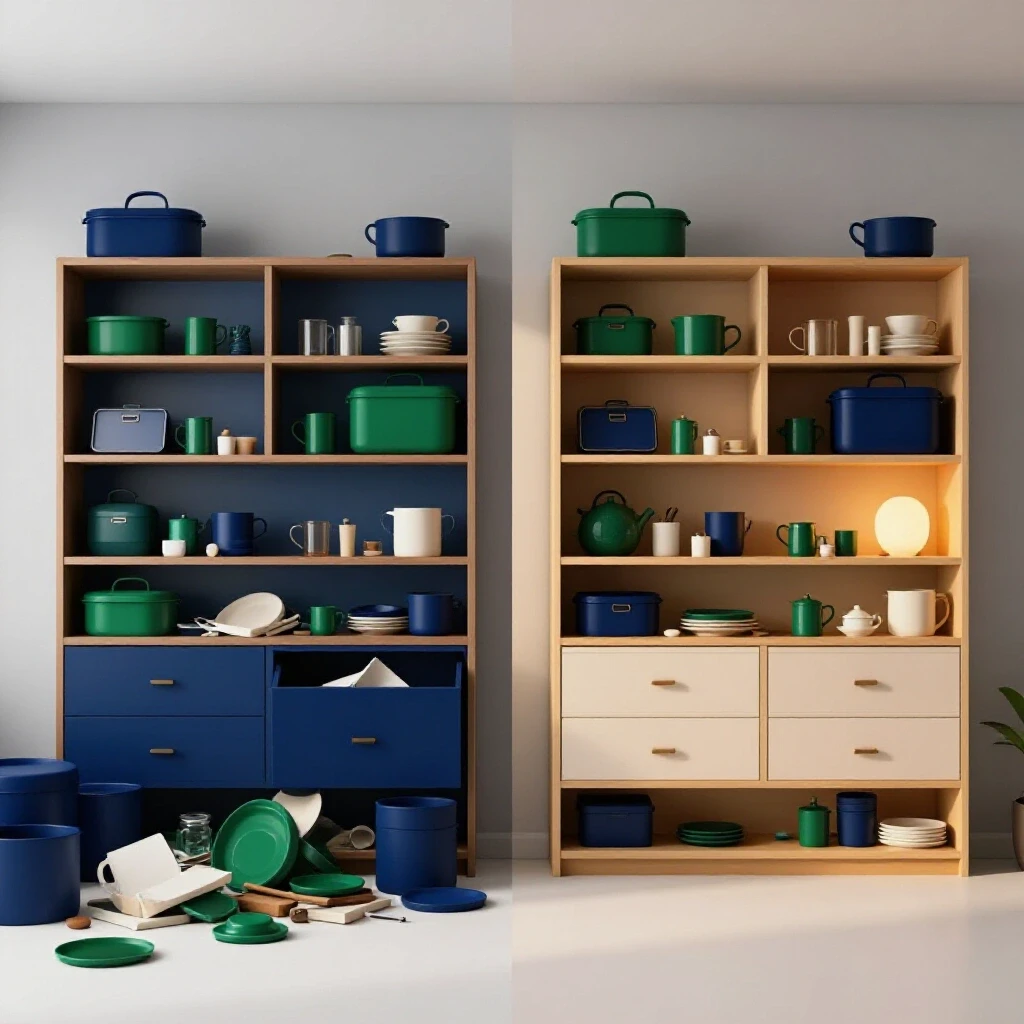
When we create zones, we must also consider “visual processing overload.” Environmental psychology tells us that too many different items in our field of vision can increase cortisol levels. By using uniform containers or “hiding” busy zones behind cupboard doors, we can reduce mental fatigue without making the items harder to access.
- Identify Hotspots: Locate areas where clutter naturally builds up (e.g., the “everything” chair).
- Map the Activity: Determine what tasks happen in that specific spot.
- Place Storage at Point-of-Use: Install hooks, baskets, or bins exactly where the items are dropped.
- Test the Friction: If the item still ends up on the floor, the storage is too hard to use. Simplify it.
Selecting Functional Home Storage for Busy Families
The right storage gear should be durable, accessible, and transparent. Choosing modular units that grow with the family’s needs prevents the “system collapse” that occurs when children outgrow their toy bins or parents’ hobbies change.
When selecting storage solutions for families, I always look for “modular” units. These are systems that can be reconfigured as your needs change. For example, a shelving unit with adjustable heights is far superior to a fixed bookcase. It allows you to maximize “space utilization percentages,” ensuring no vertical space is wasted.
Modern organizing technologies can also help maintain these systems. Smart-label tracking systems allow you to scan a QR code on a bin to see what is inside without opening it. This is particularly useful for seasonal items stored in garages or attics, as it prevents you from digging through multiple boxes and creating a new mess just to find one item.
- Modular Units: Furniture or bins that can be combined or adjusted to fit different spaces and needs.
- Space Utilization: The percentage of available storage space that is actually being used effectively.
- Smart Labels: QR-code-based systems that link a physical bin to a digital list of its contents.
Building Long-Term Habit Loops for Household Order
Maintenance is not a marathon; it is a series of small, repeatable actions. Creating simple habit loops—like the “reset” before bed—ensures that the home remains functional without requiring a massive weekend overhaul every few months.
In logistics, we use “standard operating procedures” (SOPs) to ensure tasks are done correctly every time. In a home, these are “habit loops.” A habit loop consists of a cue (finishing dinner), an action (loading the dishwasher), and a reward (a clean counter for coffee the next morning). When you link decluttering to an existing habit, it becomes “automatic,” requiring less willpower.
To track your progress, use measurable goals rather than vague ones. Instead of saying “I want to be organized,” aim for a “3-minute reset” for the living room. By timing these tasks, you realize that maintaining the system takes far less time than you think, which helps overcome the mental barrier of getting started.
Actionable Metrics for Home Maintenance
- Item Density: Aim for shelves to be no more than 75% full to allow for easy retrieval.
- Sorting Time-Boxes: Limit decluttering sessions to 20-minute intervals to avoid decision fatigue.
- Retrieval Step Count: No daily-use item should take more than 3 steps to put away.
- Daily Habit Tracking: Mark a calendar for every day you complete a “10-minute evening reset.”
A Logistics-Based Approach to the Decluttering Journey
My family’s home is not a museum, and yours shouldn’t be either. It is a living, breathing system that handles a high volume of “inventory” every day. The goal of sustainable decluttering is not to reach a state of “empty rooms,” but to create a home that supports your daily life rather than draining your energy.
By slowing down and focusing on the logistics of your space, you can build systems that withstand the chaos of busy schedules and growing children. Remember that every “friction point” you remove is a gift to your future self. When you make it easy to be organized, staying tidy stops being a chore and starts being a natural part of your day.
Start small. Pick one “hotspot” this week—perhaps the shoe pile by the door or the mail on the counter. Don’t worry about the rest of the house yet. Apply the “two-step” rule to that one spot. Once that system feels effortless, move to the next. This gradual, logical approach is the only way to ensure that your hard work doesn’t disappear the moment life gets busy again.
FAQ: Navigating Sustainable Home Systems
What is the “two-step” rule in home organization? The two-step rule suggests that any item used daily should require no more than two physical actions to put away. For example, opening a drawer and dropping an item in is two steps. Moving a box, opening a lid, and placing an item inside is three steps. Minimizing these steps is the key to reducing household clutter.
Why does my house get messy again so quickly after I clean? This usually happens because the storage systems have too much “friction” or don’t align with where the family naturally drops items. If the system is harder to use than simply leaving the item on a table, the table will always win. You must move the storage to the “point of use.”
How do I handle “decision fatigue” while sorting? The best way to avoid decision fatigue is to “time-box” your sorting sessions. Limit yourself to 20 or 30 minutes at a time. Once the timer goes off, stop. This prevents the mental exhaustion that leads to “clutter rebound” and makes the decluttering journey feel manageable.
What is the best type of storage for children’s toys? Open-top, floor-level baskets are the most sustainable storage solutions for families with children. They require only one step (dropping the toy in), which even toddlers can master. Avoid bins with lids or complex sorting systems for daily-use toys.
How can I tell if a room has reached its “spatial capacity”? A room is at capacity when you can no longer put an item away without moving something else first. If you have to “shuffle” items to find what you need, you have exceeded the functional volume of the space, and it is time for a gradual decluttering session.
What are “smart labels” and how do they help? Smart labels use QR codes that you stick onto storage bins. You scan the code with your phone to see a list or photo of what is inside. This is perfect for functional home storage of seasonal items, as it eliminates the need to open every box to find a specific item.
How do I get my spouse or children to follow a new system? People generally follow the path of least resistance. If your family isn’t using a system, it is likely too complex. Observe where they naturally leave things and place simple, open storage in those spots. The easier the system, the more likely they are to use it.
Is it better to organize by category or by activity? Organizing by activity (zoning) is usually more effective for busy homes. Instead of keeping all “batteries” in a junk drawer, keep the specific batteries for toys in the playroom and the ones for remotes in the living room. This reduces the time spent searching and returning items.
How often should I do a “system audit”? I recommend a brief spatial audit every three months. As children grow or seasons change, your “inventory” changes. A quick 15-minute check to see if your current bins and zones still match your daily habits will prevent major clutter build-up.
What is “visual processing overload”? This is the stress caused by seeing too many items at once. Even if items are “organized” on a shelf, if there are hundreds of them visible, your brain has to process all that information. Using solid-colored bins or cabinet doors can “hide” the visual noise and reduce mental fatigue.
(This article was written by one of our staff writers, Christopher Bennett. Visit our Meet the Team page to learn more about the author and their expertise.)