How to Complete a Family Declutter Sprint (Step-by-Step Guide)

Managing a household requires the same precision as running a distribution center. Over my 11 years in operations and logistics, I have learned that the mess in our homes is rarely a lack of effort. Instead, it is often a failure of the systems we put in place. By focusing on completed home clearing projects, families can realize significant long-term savings. You save money by not buying duplicates of items you already own. You save time by reducing the minutes spent searching for lost keys or shoes. Most importantly, you save mental energy by removing the visual noise that triggers stress.
In my own home, we recently reached a terminal state in several key zones. This means the work is finished, and the systems are now in a maintenance phase. For example, our entryway used to be a bottleneck of shoes and bags. By applying logistics principles, we shifted from a “hidden” storage model to an “open” flow model. This change reduced the steps required to put items away, ensuring the space stays clear even during the morning rush.
Analyzing Why Household Systems Frequently Fail
Spatial logistics involves managing the flow of items through a home to prevent bottlenecks. When the rate of incoming items exceeds the capacity of storage solutions for families, the result is visual and functional chaos. Many systems fail because they ignore “retrieval friction,” which is the physical and mental effort required to get an item out or put it back.
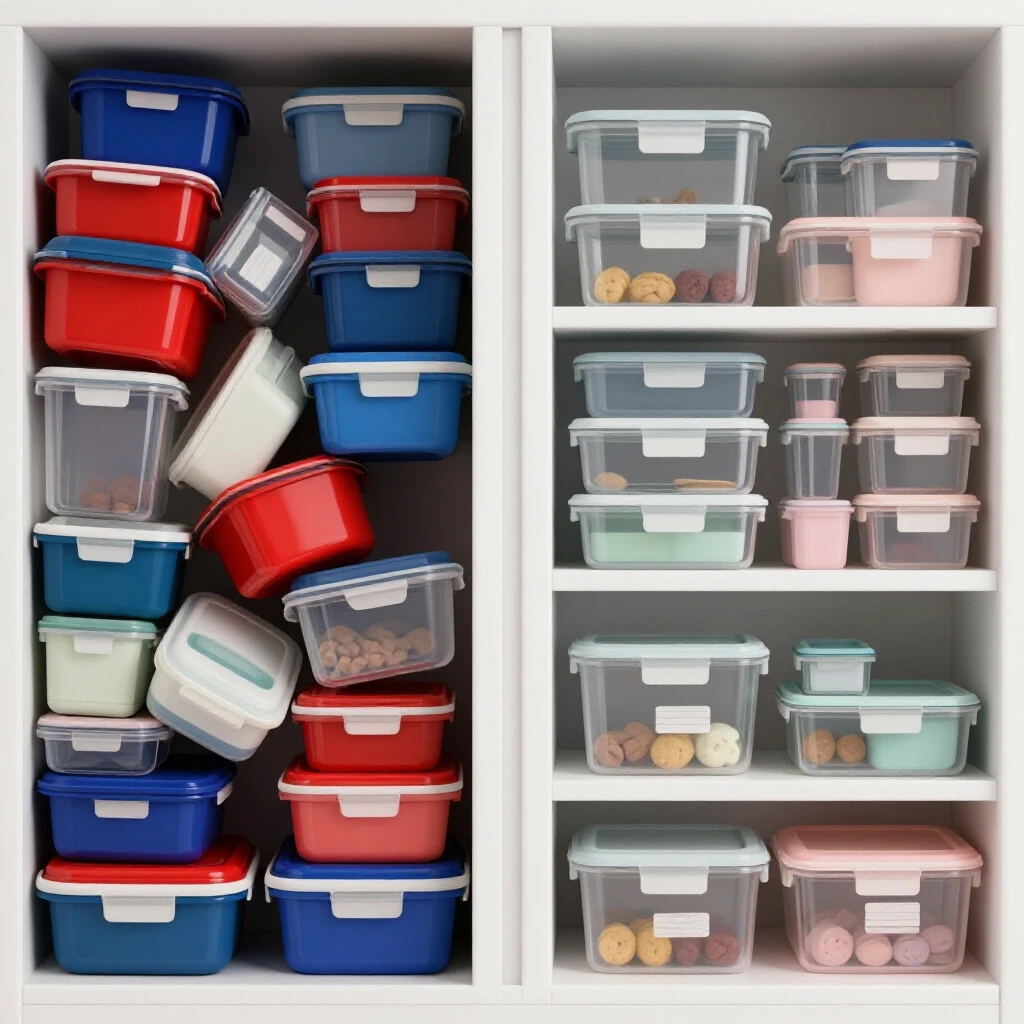
Most people choose storage based on how it looks in a magazine. They buy matching bins with tight lids and stack them high. While this looks neat, it creates high friction. If you have to move two boxes to get to a third, and then pry off a lid, you are less likely to put the item back. In our completed kitchen project, we replaced deep, lidded bins with open-front containers. This lowered the friction score of the room, allowing every family member to maintain the order without constant reminders.
| Storage Type | Retrieval Steps | Friction Level | Sustainability |
|---|---|---|---|
| Open Shelf / Hook | 1 Step | Low | Very High |
| Open Bin on Shelf | 2 Steps | Low | High |
| Lidded Bin (Single) | 3 Steps | Medium | Moderate |
| Stacked Lidded Bins | 5+ Steps | High | Low |
Key Takeaway: To keep a space finished, choose storage that requires the fewest possible movements to use.
Establishing Sustainable Decluttering Outcomes through Logistics
Sustainable decluttering refers to creating a terminal state of organization where items have fixed, logical homes. This outcome is achieved by aligning storage solutions with the natural movement patterns of the household. Instead of fighting against how your family lives, you build the system around their existing habits.
In our finished mudroom, we stopped trying to force everyone to put shoes in a closed closet. We recognized that the “outflow” of people in the morning was too fast for a closet door. We set up a heavy-duty, open shelving unit right next to the door. This layout matches the “velocity” of our family’s movement. The result is a completed zone that has not reverted to clutter in over six months. We also used “zoning” to ensure that items used together are stored together, such as pet leashes and waste bags near the exit.
- Zone 1 (High Frequency): Items used daily (keys, coats, shoes).
- Zone 2 (Medium Frequency): Items used weekly (library books, sports gear).
- Zone 3 (Low Frequency): Seasonal items (snow boots, umbrellas).
Key Takeaway: Map your home based on how often you touch items to ensure the most used things are the easiest to reach.
Optimizing High-Traffic Zones for Long-Term Order
High-traffic zones are areas like entryways and kitchens that see the most daily movement. Successful organization in these areas requires low-friction storage that allows for rapid item placement. These spaces are the “hubs” of the home and dictate the overall feel of the house.
We recently finished a total reorganization of our pantry. We moved away from the original deep shelves that caused items to get lost in the back. By installing pull-out drawers, we increased the “space utilization percentage” to nearly 90%. Now, every item is visible and accessible. We also grouped items by “use-case,” such as a dedicated bin for school lunch prep. This reduces the time spent gathering supplies, making the morning routine much smoother for busy parents.
- Identify the “hot spots” where mail or bags naturally land.
- Clear the surface entirely to reset the visual baseline.
- Install a dedicated “landing strip” for these items.
- Use vertical space for items that don’t need to be on the counter.
Key Takeaway: Focus on the flow of the room rather than just the storage capacity to prevent clutter from backing up.
Repurposing Removed Items into Functional Home Elements
Repurposing involves taking items no longer needed for their original purpose and transforming them into useful or decorative assets. This practice reduces waste and adds unique character to a reorganized space. It allows you to give new life to objects that still have value but no longer fit their old roles.
During our finished home clearing project, we found several items that were no longer needed in their original rooms. Instead of discarding them, we found new logistical uses for them. An old wooden ladder from the garage was cleaned and moved to the bathroom to serve as a towel rack. This provided vertical storage without the need for drilling holes. We also took glass jars from the kitchen and used them in the home office to hold small supplies like paperclips and rubber bands.
- Glass Jars: Perfect for small hardware, craft supplies, or spices.
- Wooden Crates: Can be wall-mounted for sturdy, open shelving.
- Old Trays: Great for “corralling” items on coffee tables or nightstands.
- Baskets: Use them to hide electronics or chargers in the living room.
Key Takeaway: Before discarding an item, consider if its form can solve a storage problem in a different part of the home.
Implementing Low-Maintenance Storage Solutions for Families
Low-maintenance storage consists of systems that require minimal effort to use and maintain. These systems prioritize accessibility and visibility, ensuring that every family member can follow the organizational logic. The goal is to create a “self-healing” home where items naturally return to their spots.
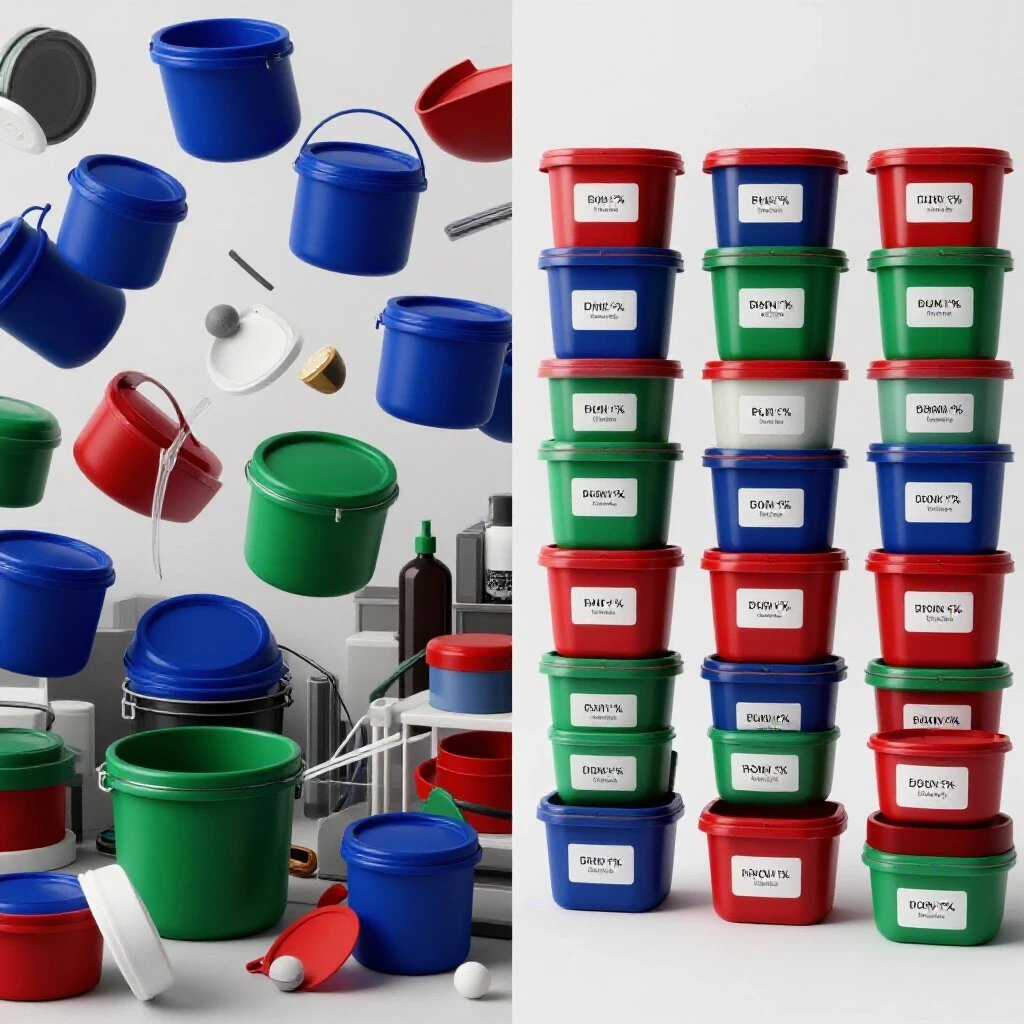
In our completed playroom, we moved away from a single large toy box. Large bins create “sorting fatigue” because you have to dig through everything to find one toy. We switched to small, clear, open bins on low shelves. Each bin has a simple label with both a word and a picture. This allows even the youngest children to participate in the maintenance. By lowering the “cognitive load” required to clean up, the room stays functional without constant adult intervention.
- Visibility: Use clear bins so you can see the inventory at a glance.
- Accessibility: Store heavy items low and light items high.
- Labeling: Use bold, clear text to define the “home” for every category.
- Durability: Choose materials like metal or thick plastic for high-use areas.
Key Takeaway: A system is only as good as its weakest user; make it simple enough for a child to follow.
Maintaining the Finished State with Daily Habit Loops
Habit loops are repetitive actions triggered by specific cues that help sustain a home’s organization. By integrating small cleanup tasks into existing routines, families can prevent the gradual buildup of clutter. This is the “preventative maintenance” of home logistics.
We use a “one-in, one-out” rule for our finished closets. When a new piece of clothing enters the home, an old one must leave. This keeps our “spatial capacity” at a steady level and prevents the shelves from becoming overstuffed. We also perform a “ten-minute sweep” every evening. This isn’t a deep clean, but a quick reset of high-traffic zones to ensure they are ready for the next day. These small habits protect the work we have already finished.
- The Trigger: Finishing dinner or putting the kids to bed.
- The Action: Clearing the kitchen counters or the entryway floor.
- The Reward: Waking up to a clear, functional space the next morning.
Key Takeaway: Small, daily resets are the secret to keeping a home from reverting to its old, cluttered state.
Frequently Asked Questions
What is the best way to start a home clearing project when I feel overwhelmed? Start with a single “win” in a small, high-impact area like a junk drawer or the entryway. Completing one zone provides the momentum needed to tackle larger spaces. Focus on finishing that one area completely before moving to the next.
How do I prevent my home from becoming cluttered again after I finish organizing? The key is to lower the friction of your storage. If it is hard to put something away, it will stay on the counter. Use open bins, hooks, and clear labels to make returning items to their homes as easy as possible.
Can I organize my home without buying expensive new bins and containers? Yes. Repurposing items you already own is a great way to save money. Use sturdy shoe boxes, glass jars, or wooden crates to create functional storage. The logic of the system is more important than the cost of the containers.
What is “retrieval friction” and why does it matter for my family? Retrieval friction is the number of steps it takes to get an item out or put it back. For families, low friction is vital. If a child has to open a lid and move a box to put away a toy, they likely won’t do it. Aim for one-step storage whenever possible.
How do I choose the right size for my storage containers? Measure your shelf depth and height before buying anything. Aim for “standard item density,” where you have enough room to see every item without stacking them. Avoid buying bins that are too deep, as items will get lost at the bottom.
What should I do with items that I don’t use often but want to keep? Move these to “Zone 3” storage, such as high shelves, the attic, or under-bed bins. These are low-frequency areas. Keep your “Zone 1” (eye-level and easy-reach) clear for the things you use every single day.
Is labeling really necessary for a finished home? Labels act as a map for the rest of the family. They remove the need for people to ask “where does this go?” or “where is the tape?” Clear labels reinforce the system and ensure that everyone can help maintain the order.
How do I handle the “inflow” of paper and mail in my home? Set up a “landing strip” near the entrance with a dedicated recycling bin and a small tray for “action items.” Process the mail immediately as it enters the house to prevent it from piling up on the kitchen table.
What is the “one-in, one-out” rule? This is a logistics principle to manage inventory. For every new item that comes into a category (like shoes or books), one old item must be donated or recycled. This keeps your home’s volume within its spatial limits.
How can I involve my children in keeping our finished zones clear? Use visual labels with pictures and place their storage at their height. Make the cleanup process a game or a quick “sprint” before a fun activity. When the system is easy for them to use, they are more likely to participate.
What are the benefits of using vertical storage? Vertical storage maximizes your “space utilization percentage” without taking up floor space. Wall-mounted hooks, tall shelving units, and over-the-door organizers are excellent ways to clear the floor and make a room feel larger.
How do I know when a room is truly “finished”? A room is finished when every item has a logical home, the storage friction is low enough for everyone to use, and the space functions smoothly for your daily needs. It doesn’t have to be perfect; it just has to work for your family.
(This article was written by one of our staff writers, Christopher Bennett. Visit our Meet the Team page to learn more about the author and their expertise.)