Why Popular Organizing Methods Fail Homes (Practical Solutions)

In my eleven years working in operations and logistics, I have managed complex supply chains where every second of movement matters. When I brought those same principles home to my family of four, I expected our house to run like a high-end warehouse. Instead, I found that the popular, visually stunning methods I saw online often crumbled under the pressure of real life. My family and I spent a weekend decanting every cereal box into matching glass jars and labeling every basket with custom calligraphy. Within three days, the system failed because the “friction” of maintaining it was too high for a busy Tuesday night.
Sustainable home organization systems are not about how a room looks in a photo. They are about how quickly an item can be found, used, and, most importantly, put back. In my professional life, we call this “cycle time.” At home, we call it sanity. When a storage method requires too many steps to complete a simple task, the human brain naturally seeks the path of least resistance. This usually results in items being left on the counter rather than returned to their designated spots. My goal is to share how we moved away from high-maintenance trends and toward a functional model that actually sticks.
The Logistics of Spatial Management in the Home
Spatial management is the practice of organizing physical areas to maximize efficiency, accessibility, and flow. In a family home, this involves understanding how people move through a room and where items naturally accumulate. By treating your home like a functional workspace, you can identify why certain areas always seem to attract clutter regardless of how often you tidy them.
Understanding Retrieval Friction and System Failure
Retrieval friction refers to the total number of physical and mental steps required to access or put away an item. When we implemented a trendy system that involved nested boxes and tight-fitting lids, our friction levels skyrocketed. To get a simple pair of scissors, a family member had to move a decorative tray, open a cupboard, slide out a bin, and unlatch a lid.
In logistics, we try to reduce “touches.” Every time someone touches an object to get to another object, the risk of the system failing increases. If a child has to perform five steps to put a toy away, they will likely leave it on the floor. A low-friction system usually involves one or two steps, such as dropping an item into an open-top bin. Reducing household clutter depends entirely on making the “put away” process as easy as the “take out” process.
Spatial Capacity and the Inflow-Outflow Balance
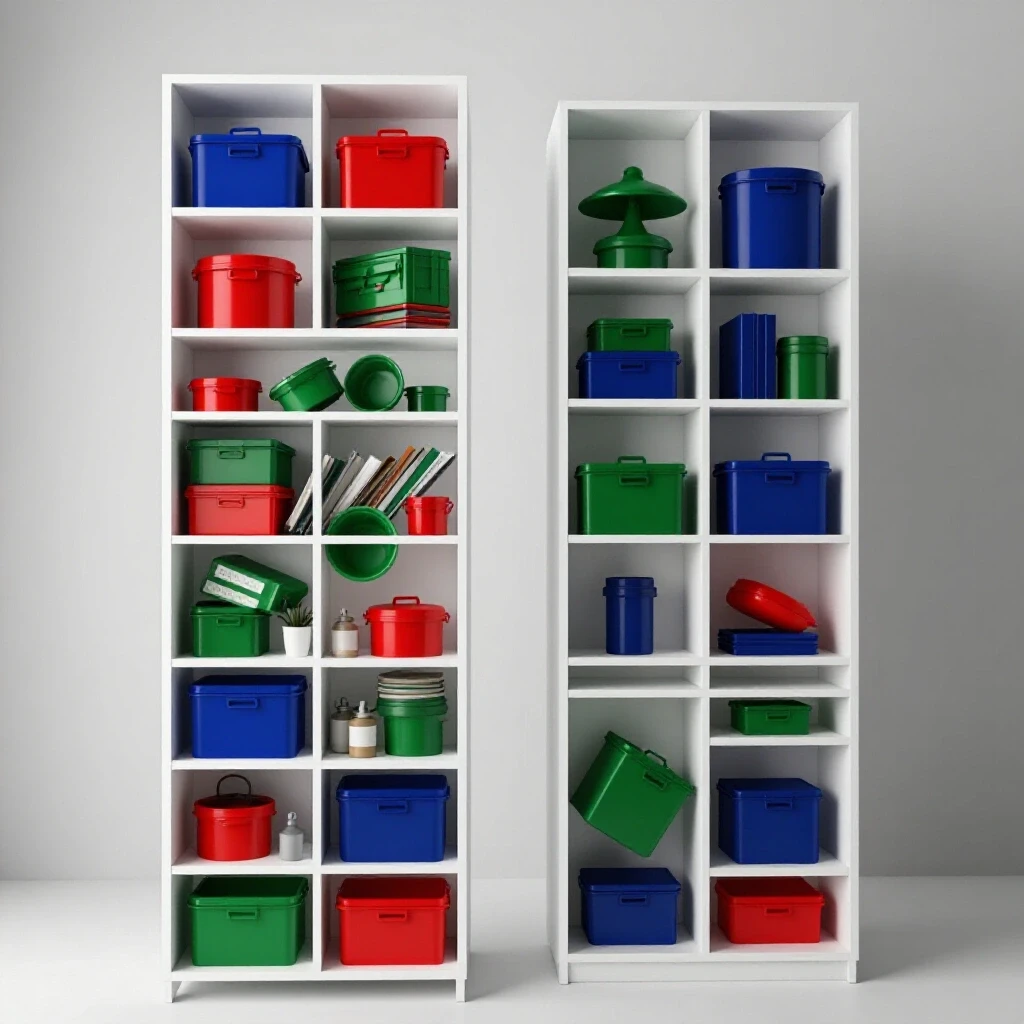
Every room has a fixed spatial capacity, which is the maximum amount of volume available for storage without blocking movement. Clutter often happens when the “inflow” of new items—mail, groceries, or toys—exceeds the “outflow” of discarded or donated items. When a shelf reaches 100% capacity, it becomes impossible to maintain order because there is no room to maneuver items.
I recommend maintaining a 15% “air gap” in all storage units. This extra space allows for easy retrieval and accounts for the temporary influx of items. When we overfill our home organization systems, we lose the ability to see what we own. This leads to “duplicate buying,” where you purchase a second item because the first one is buried, further straining your spatial capacity.
| Storage Type | Friction Level | Best Use Case | Risk of Failure |
|---|---|---|---|
| Open-Top Bins | Low | Daily toys, shoes, frequently used tools | Very Low |
| Clear Drawers | Medium | Office supplies, bathroom toiletries | Low |
| Lidded Totes | High | Seasonal decor, long-term archives | High (if used daily) |
| Decanted Jars | Very High | Pantry staples (baking only) | Very High |
Why High-Maintenance Aesthetic Models Often Fail Families
Many popular storage solutions for families focus on visual uniformity, such as matching colors or specific container shapes. While these look organized, they often ignore the ergonomic needs of the people living in the space. If a system requires a high level of precision to maintain, it will eventually become a source of frustration rather than a solution.
The Problem with Visual-First Organization
Visual-first systems prioritize how a space looks to an observer. For example, sorting a bookshelf by the color of the spine might look beautiful, but it makes finding a specific title much harder. This creates a “search cost,” which is the time spent looking for an item. In our house, we found that color-coding our kids’ clothes looked great for an hour, but it didn’t help them get dressed faster or help us put laundry away efficiently.
Functional home storage, on the other hand, prioritizes the “sort and find” logic. It groups items by how they are used together. We shifted to a “kit-based” system where all items for a specific activity—like soccer practice or homework—are kept in one zone. This reduced the mental fatigue of searching for multiple components across different rooms.
Decision Fatigue and Complex Sorting Frameworks
Every time you have to decide where an item belongs, you use a small amount of mental energy. This is known as decision fatigue. Trendy systems often have too many sub-categories. For instance, having separate bins for “blue blocks,” “red blocks,” and “yellow blocks” requires a decision for every single piece.
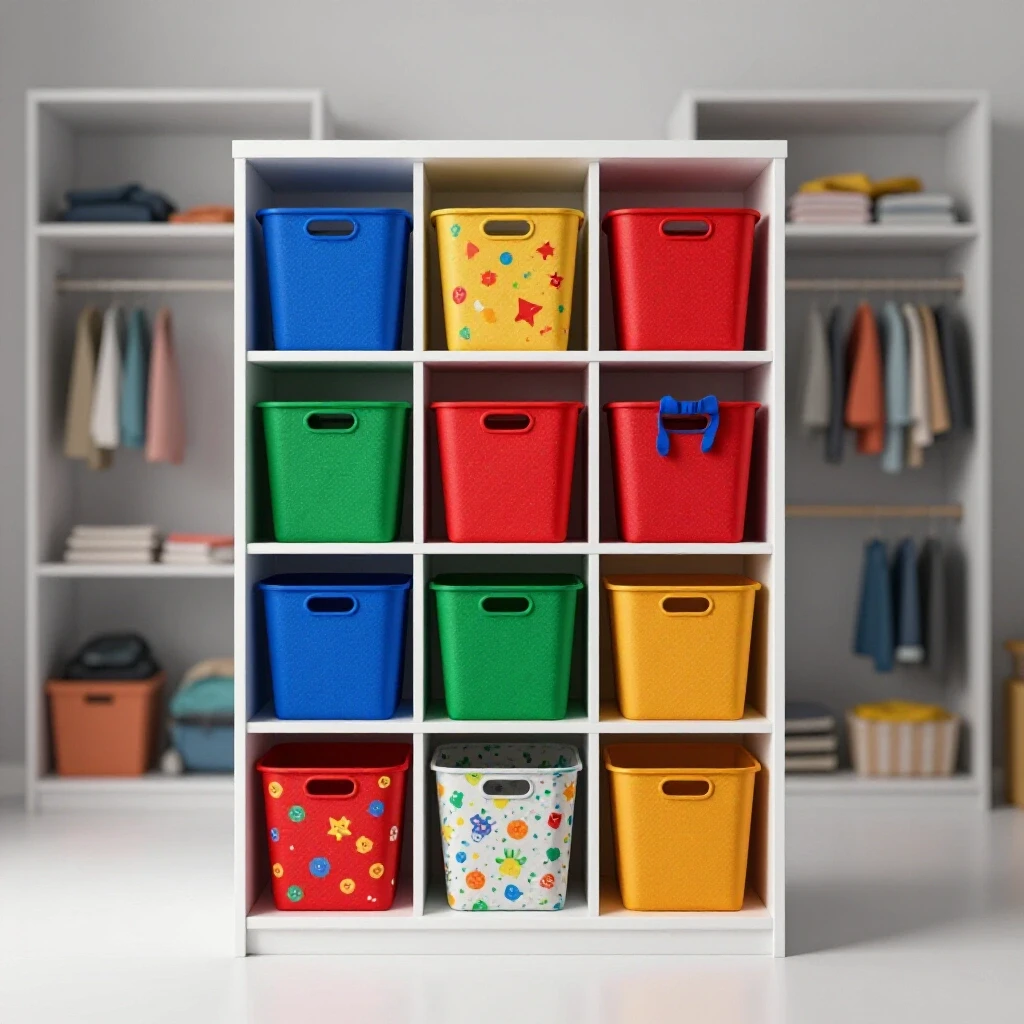
A more sustainable decluttering approach uses broad categories. We replaced our hyper-specific toy bins with large, open bins labeled “Building Toys” and “Vehicles.” This simplified the sorting process so much that our youngest child could participate in the cleanup. When the sorting rules are simple, the whole family can follow them without needing a manual.
Designing Functional Zoning Maps for the Household
Zoning is a logistical technique where you divide a space into specific areas based on the frequency of use and the type of activity performed there. By creating a zoning map, you can ensure that the items you use every day are in the most accessible locations. This reduces the distance you travel and the time you spend on daily maintenance.
High-Frequency vs. Low-Frequency Zones
We categorize our home into three distinct zones based on movement patterns. Zone 1 is the “Prime Real Estate,” which includes areas between waist and eye level in high-traffic rooms. Zone 2 is for items used weekly, and Zone 3 is for items used once a month or less, such as holiday platters or camping gear.
- Zone 1 (Daily Use): These items should be visible and reachable with one hand. No lids, no stacking.
- Zone 2 (Weekly Use): These can be stored in lower cabinets or higher shelves, perhaps in bins with lids to prevent dust.
- Zone 3 (Occasional Use): These are kept in the garage, basement, or the very top of closets.
The “Drop Zone” Strategy for Entryways
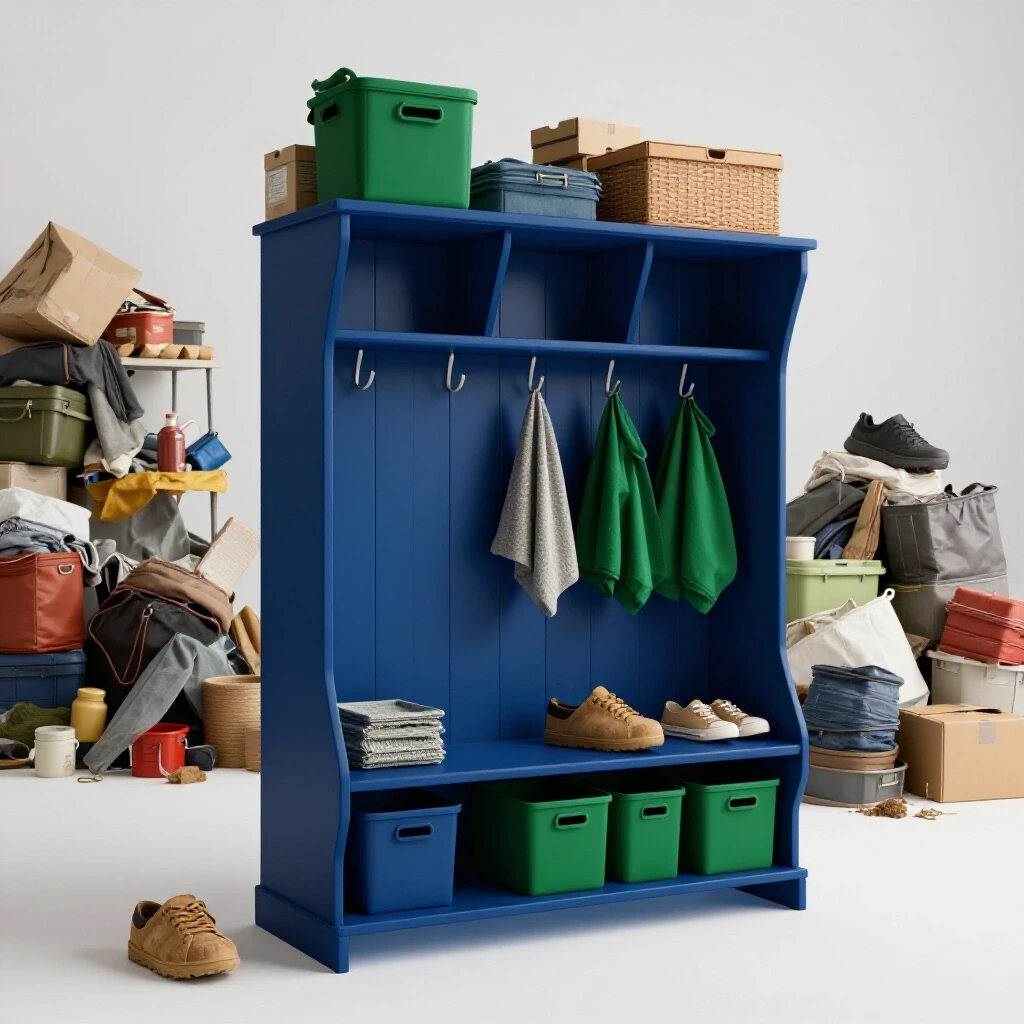
The entryway is often the first place where home organization systems break down. In our decluttering journey, we realized that our “drop zone”—where bags and shoes land—was too small for our actual needs. We applied the “flow rate” principle here. If four people enter the house at once, the storage must be able to handle that sudden volume of items.
We installed heavy-duty hooks and large, open floor baskets. This allows family members to “drop” their items in the correct zone without having to open a closet door or hang a coat on a flimsy hanger. By acknowledging the natural human tendency to drop things at the door, we created a system that works with our behavior instead of against it.
Selecting Durable and Low-Maintenance Storage Gear
The containers you choose are the “hardware” of your organizational system. Many trends suggest using fragile materials or opaque baskets that hide the contents. However, from a logistics perspective, the best containers are those that provide high visibility and can withstand the wear and tear of a busy household.
The Case for Clear, Modular Units
Visibility is the enemy of clutter. When you can see what is inside a bin, you are less likely to buy duplicates or rummage through it, creating a mess. We transitioned to clear, stackable modular units for our pantry and craft room. These units allow us to perform a “visual inventory” in seconds.
- Standardize Bin Sizes: Using the same brand and size of bins allows them to be swapped between rooms as needs change.
- Choose Straight Sides: Many decorative baskets are tapered, which wastes significant shelf space. Square or rectangular bins maximize the “footprint” of your storage.
- Prioritize Durability: Avoid thin plastics that crack or wicker that snags fabric. High-quality, thick-walled polycarbonate or metal mesh bins last longer and are easier to clean.
Labeling Systems for Long-Term Success
Labels act as the “signage” for your home warehouse. They tell everyone in the family exactly where things go, removing the excuse of “I didn’t know where to put it.” However, labels should be flexible. We use a simple label maker with black-on-clear tape, or even chalk markers on certain bins.
- Text + Icons: For families with young children, use a word and a simple picture.
- Broad Categories: Instead of “AA Batteries,” use a label that says “Power & Tech.”
- Placement: Place labels on the front of the bin, not the lid, so they remain visible when the bin is in use.
Building Sustainable Maintenance Habit Loops
A system is only as good as the habits that support it. In operations, we use “feedback loops” to monitor a system and make small corrections before a major failure occurs. In a home, this means establishing short, repeatable routines that keep the clutter from reaching a tipping point.
The Five-Minute Daily Reset Protocol
The most effective way to maintain order is the “Daily Reset.” This is not a deep clean; it is a logistical reset of Zone 1. Every evening, we spend five minutes returning items to their designated zones. Because we have reduced the retrieval friction and used broad categories, this process is incredibly fast.
During our reset, we focus on high-impact areas: the kitchen island, the entryway, and the living room floor. We don’t worry about the inside of the junk drawer or the linen closet. We simply ensure that the “flow paths” are clear for the next morning. This prevents the mental fatigue that comes from waking up to a messy house.
Monthly Volume Audits
Once a month, we perform a quick “volume audit” of our storage units. If a bin is overflowing, it is a signal that our inflow has exceeded our outflow. We don’t wait for a massive decluttering sprint; we simply remove two or three items that are no longer used. This keeps our spatial capacity at that healthy 85% level.
- The “One-In, One-Out” Rule: For every new toy or clothing item that enters the house, an old one must leave.
- The Transition Bin: Keep a permanent bin in the closet for donations. When it’s full, it goes to the car.
- Digital Inventory: For large items in Zone 3, we keep a simple list on our phones so we don’t forget what we have in the attic.
Conclusion: Emphasizing Function Over Perfection
The reason many popular organization methods fail is that they are designed for the camera, not for the chaos of a living, breathing family. My 11 years in logistics have taught me that the best systems are the simplest ones. They are the systems that account for human laziness, busy schedules, and the unpredictable nature of kids.
By focusing on reducing friction, creating logical zones, and choosing durable hardware, you can build a home that supports your life rather than demanding your constant attention. You don’t need a perfectly labeled, color-coordinated pantry to feel at peace. You just need a system that allows you to find your keys in five seconds and put the groceries away in five minutes. Start by identifying your highest-friction area today and look for one way to make the “put away” process easier.
Frequently Asked Questions
Why does my house get messy again so quickly after I organize it?
This usually happens because the system has too much “retrieval friction.” If it takes more than two steps to put an item away, family members will likely leave it on a flat surface. To fix this, simplify your storage by removing lids or using broader categories that don’t require deep thought.
How do I get my kids to follow an organization system?
Design the system for the “shortest person in the room.” Use open-top floor baskets and hooks at their eye level. Avoid complex sorting rules; for example, put all “blocks” in one large bin rather than separating them by size or color. If they can see where it goes and reach the spot easily, they are more likely to help.
Are expensive clear bins really necessary?
Clear bins are helpful because they provide “visual feedback,” allowing you to see your inventory at a glance. However, they don’t have to be expensive. The key is the transparency and the shape. You can use any clear container as long as it has straight sides to maximize your shelf space.
What is the best way to start a decluttering journey?
Start with your “Zone 1” areas—the places you touch every single day, like the silverware drawer or the entryway. Success in these high-traffic areas provides immediate relief from mental fatigue and gives you the momentum to tackle larger, more complex zones like the garage or basement.
How do I know if a storage bin is the right size?
Aim for the “85% Rule.” A bin should be about 85% full when all items are put away. If it is 100% full, you will struggle to get things out. If it is only 20% full, you are wasting valuable spatial capacity. If a category is too large for one bin, split it into two logical sub-categories.
What should I do with items that don’t have a “home”?
Every item must have a designated zone, or it will inevitably become clutter. If you can’t find a logical home for an item, ask yourself if you truly need it. If you do, create a “Utility Zone” for miscellaneous items, but keep it small to prevent it from becoming a dumping ground.
How often should I update my organization system?
Your system should evolve with your family. A system that worked for a toddler won’t work for a teenager. I recommend a quick “system check” every six months. If you notice a specific area is constantly cluttered, it’s a sign that the current system is no longer meeting your logistical needs.
Does labeling really make a difference?
Yes, because labels remove the “decision-making” step of where an item belongs. Labels act as a contract between family members. They define the purpose of a space. Even if you live alone, labels help maintain the system when you are tired or in a rush.
What is “sorting friction”?
Sorting friction is the mental effort required to categorize an item. High sorting friction occurs when you have too many specific categories (e.g., “blue pens,” “black pens,” “red pens”). Low sorting friction uses broad categories (e.g., “Writing Tools”), making it much faster to clean up.
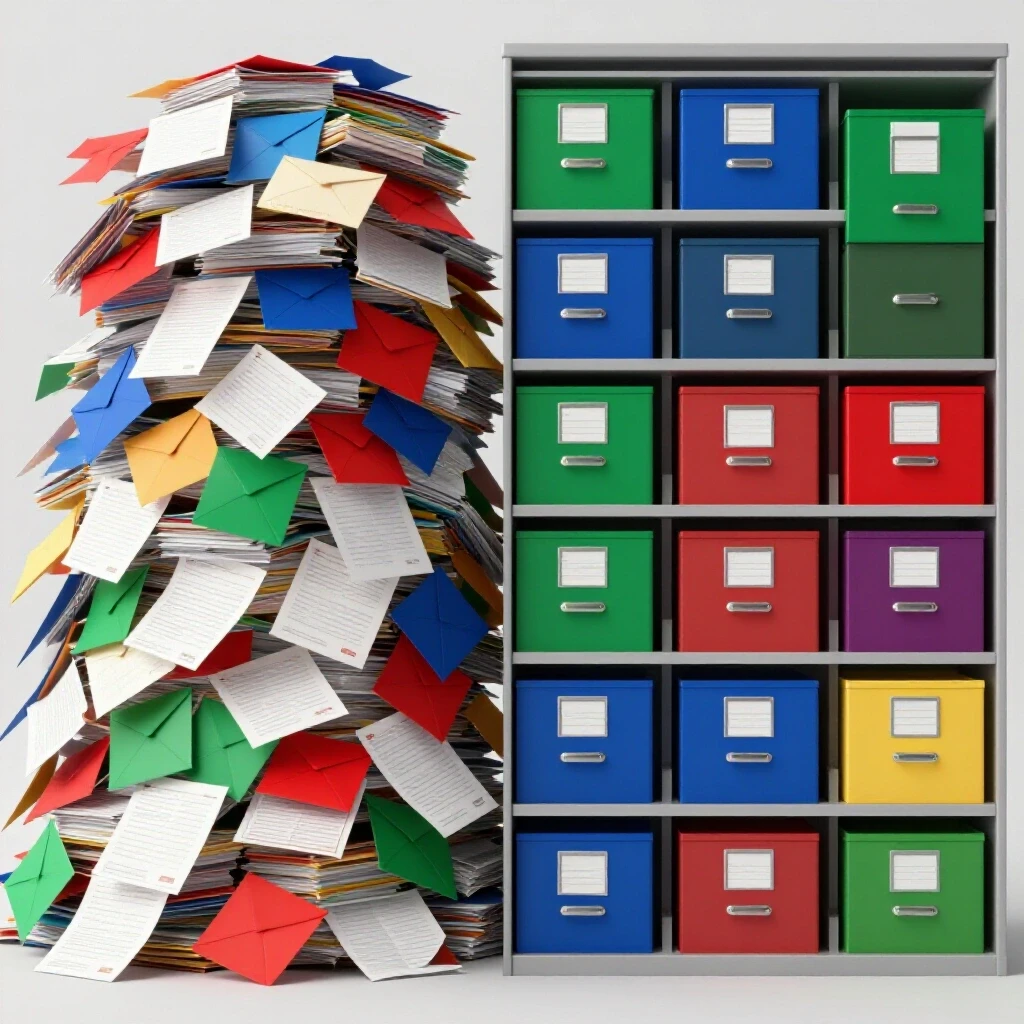
How do I manage the “inflow” of paper and mail?
Create a “One-Touch” station near the entrance. Sort mail immediately over a recycling bin. Only the items that require action (bills, invites) should move into your Zone 1 storage. Never let paper sit in a pile; give it a specific “action folder” or discard it immediately.
(This article was written by one of our staff writers, Christopher Bennett. Visit our Meet the Team page to learn more about the author and their expertise.)