How to Decide When to Toss Broken Items and Let Go of Guilt (Guide)

Many people believe that holding onto damaged items is a sign of being thrifty or environmentally conscious. We tell ourselves that we will eventually fix that wobbly chair or find a replacement part for the blender. In reality, keeping non-functional items creates a “storage tax” on our homes, draining our mental energy and cluttering our living spaces without providing any actual utility.
In my eleven years managing logistics and operations, I have learned that a warehouse is only as efficient as its “active” inventory. When a family home becomes a graveyard for things that no longer work, the entire system breaks down. My own turning point came when I realized I was spending twenty minutes every weekend moving a broken vacuum cleaner just to reach the one that actually worked. This was not just a storage problem; it was a logic failure. By treating our homes like high-functioning distribution centers, we can identify “dead stock” and remove it to restore the flow of daily life.
The Logistics of Letting Go: Why We Keep Non-Functional Items
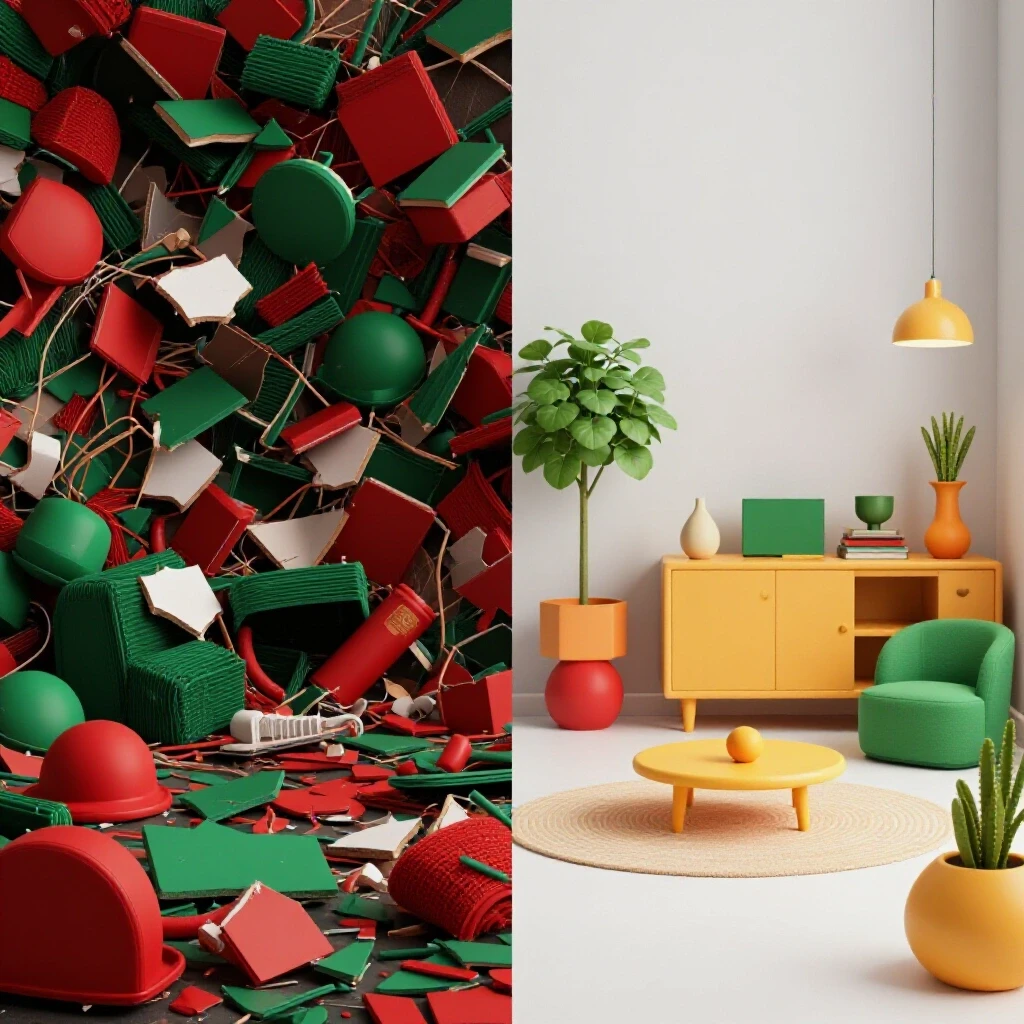
This section explores the psychological and logistical reasons why we struggle to discard items that are no longer useful. We will look at how the sunk cost fallacy and the endowment effect create a mental barrier that prevents us from maintaining a functional home environment for our families.
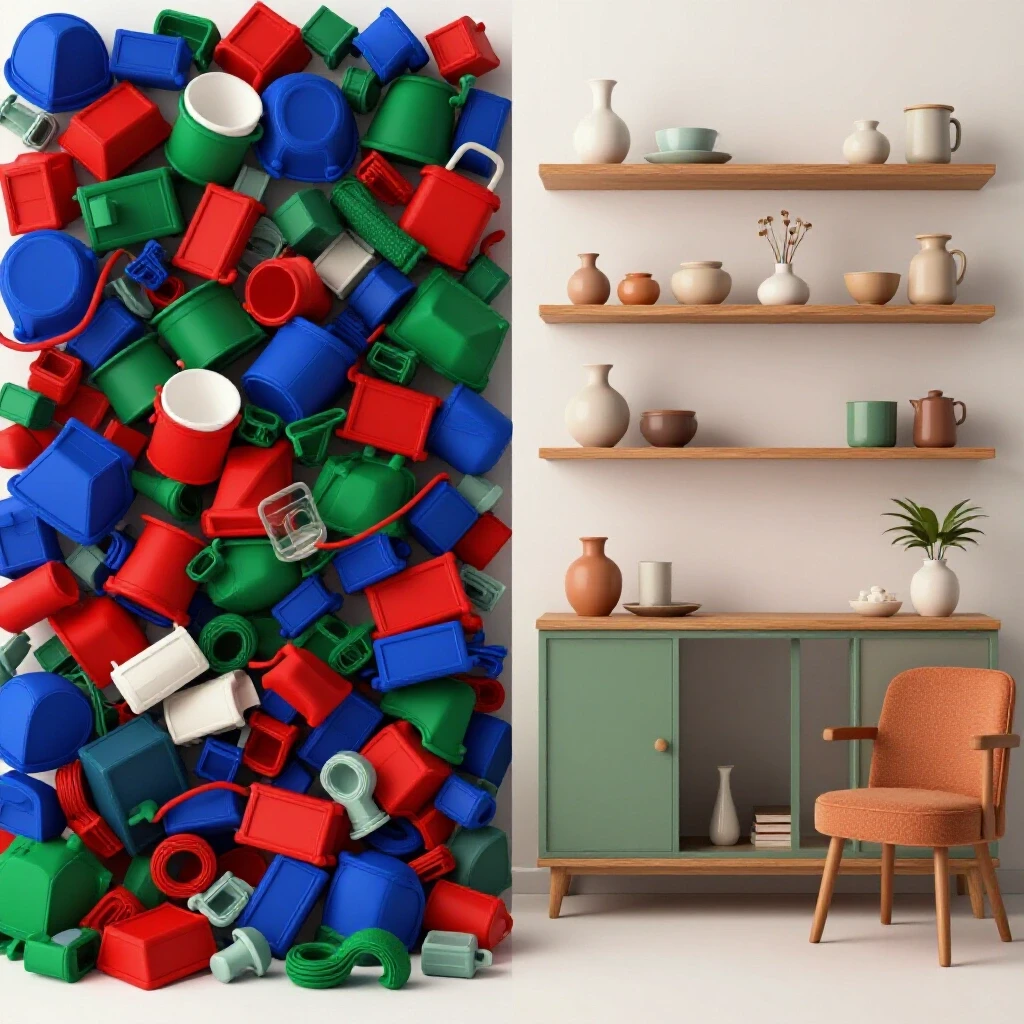
In the world of logistics, “dead stock” refers to inventory that cannot be sold or used but still takes up valuable shelf space. In a home, this translates to the broken toys, cracked storage bins, and outdated electronics that sit in corners. We often keep these things because of the sunk cost fallacy. This is the psychological tendency to continue an endeavor once an investment in money, effort, or time has been made. You remember paying eighty dollars for that coffee maker, so throwing it away feels like throwing away cash.
However, the money is already gone. Keeping the item does not bring the money back; it only consumes your “spatial capacity.” Spatial capacity is the total volume of usable storage in your home. When you fill 20% of your cabinets with things that do not work, you increase your retrieval friction. Retrieval friction is the amount of effort required to get to the things you actually need. If you have to move three broken items to find one working tool, your home organization systems are failing.
Understanding Visual Noise and Cognitive Load
Visual noise refers to the overstimulation caused by seeing too many items in your line of sight. Cognitive load is the amount of mental effort being used in the working memory. When your environment is filled with reminders of unfinished repairs, your brain stays in a state of low-level stress.
Research in environmental psychology suggests that physical clutter can lead to increased cortisol levels, especially in parents. Every broken item is a “to-do” list item that you are looking at. By removing these items, you are not just cleaning a room; you are reducing the mental load required to exist in that space. This is a key step in a sustainable decluttering journey that focuses on long-term mental health rather than just temporary neatness.
Calculating the Hidden Cost of “Someday” Repairs
This section provides a framework for evaluating whether a damaged item is worth the space it occupies. We will analyze the “storage tax” and the “repair window” to help you make logical decisions about what stays and what goes, reducing the guilt associated with disposal.
Every item in your home has a carrying cost. In business, this includes the cost of the space, insurance, and the labor to move it. In a family home, the carrying cost is your time and your peace of mind. If an item has been sitting in a “to-fix” pile for more than thirty days, it has officially entered the “dead stock” category. The likelihood of a busy parent finding three hours to repair a complex electronic device is statistically low.
I use a simple metric called the “Repair-to-Replacement Ratio.” If the cost of the repair (including your time at an hourly rate) exceeds 50% of the replacement cost, the item should be discarded. My family recently had to apply this to a high-end stroller with a broken wheel. While the stroller was expensive, the parts were discontinued, and the time I would spend “hacking” a fix was worth more than a used, functional replacement.
The Storage Friction Index
To help you visualize why broken items cause such a mess, I developed the Storage Friction Index. This measures how much a specific storage method contributes to or prevents clutter reversion.
| Storage Type | Friction Level | Impact on Daily Flow |
|---|---|---|
| Open, Labeled Bins | Low (1/10) | Items are returned in under 3 seconds. |
| Lidded Bins (Stacked) | Medium (5/10) | Requires 2-3 steps to access or store. |
| “Fix-it” Piles (Loose) | High (9/10) | Creates visual stress and blocks walkways. |
| Overstuffed Cabinets | Maximum (10/10) | Leads to “avalanche” effect; items never return. |
As shown in the table, loose piles of broken items create the highest friction. They don’t just take up space; they actively prevent you from using the functional parts of your home. Reducing household clutter starts by eliminating these high-friction zones.
The Repair Feasibility Framework: A Logical Decision Matrix
This section introduces a step-by-step method for sorting through damaged goods. By using a standardized set of questions, you can bypass the emotional struggle of decision-making and move through your home organization systems with speed and confidence.
When I lead my family through a decluttering sprint, we use a “Logic Gate” system. This prevents us from getting stuck on a single item for ten minutes. Decision fatigue is real; the more choices you have to make, the harder each subsequent choice becomes. By using a pre-set matrix, you can sort through a garage or a junk drawer in a fraction of the time.
- Does it perform its primary function? If no, move to step 2.
- Can it be fixed in under 20 minutes with tools I currently own? If no, move to step 3.
- Is the part needed to fix it available and under $20? If no, discard it.
- Will I actually perform this repair within the next 48 hours? If no, discard it.
Applying the 72-Hour Rule
In my household, we have a 72-hour rule for any item that enters the “maintenance zone.” If a toy breaks or a piece of clothing loses a button, it goes into a small, designated basket. If it is not repaired within 72 hours, it is discarded or donated if the damage is minor. This prevents the “maintenance zone” from becoming a permanent storage area for broken things.
- Sorting Time-Box: Set a timer for 15 minutes per room.
- Item Density Guideline: Aim for 20% empty space in every cabinet to allow for easy retrieval.
- Action Metric: For every 5 items you keep, at least 1 non-functional item must leave the house.
Designing Low-Friction Home Organization Systems for Real Families
This section focuses on creating storage solutions that are easy for children and busy adults to maintain. We will discuss the importance of zoning and how to choose containers that support a functional home storage environment without being overly complex.
Most home organization systems fail because they are designed for aesthetics rather than logistics. A system that requires a label maker and color-coded files is too high-friction for a family with two working parents and three kids. To make a system last, it must be “low-touch.” This means it should take less than five seconds to put an item away.
Zoning is the practice of grouping items by where they are used, not just by what they are. For example, all “outgoing” items—trash, recycling, and donations—should be zoned near the exit of the home. If you have a broken item that you have decided to toss, it should move immediately to the “Exit Zone.” If it stays in the living room, it remains part of your cognitive load.
Choosing the Right Containers
Not all storage solutions for families are created equal. In my experience, clear, open-topped bins are the gold standard for high-traffic areas. They allow for instant visual inventory. You can see at a glance if a bin is filled with functional toys or broken plastic bits.
- Primary Zone (Daily use): Open bins, no lids.
- Secondary Zone (Weekly use): Lidded bins, labeled, on reachable shelves.
- Deep Storage (Seasonal): Heavy-duty, opaque bins in the garage or attic.
When choosing containers, avoid “micro-organizing.” Don’t try to separate LEGO bricks by color; just have a “LEGO bin.” The goal is to reduce the number of decisions your family has to make during clean-up.
Systematic Habit Loops: Maintaining Order Over Months
This section outlines how to build routines that prevent the re-accumulation of non-functional items. We will explore the concept of “inflow and outflow control” and how to use feedback loops to keep your home functional and stress-free.
Sustainability in decluttering is about the flow of goods. If items enter your home faster than they leave, you will eventually run out of space. Logistically, this is a simple input/output problem. To maintain a tidy home, you must establish an “outflow habit.”
I recommend a “Sunday Reset” that takes no more than 30 minutes. During this time, walk through the house with a single bag. Your only goal is to find things that are broken, dried up (like old markers), or no longer serve a purpose. By doing this weekly, you prevent the “clutter creep” that leads to those massive, exhausting weekend-long cleaning projects.
Feedback Loops and System Adjustments
A feedback loop is a process where the output of a system is used as input for future operations. If you notice that a specific drawer always becomes a graveyard for broken electronics, that is “system feedback.” It tells you that your current storage for electronics is either too hard to reach or poorly defined.
Instead of getting frustrated, adjust the system. Move the electronics bin to a more accessible location or add a “recycle” bin right next to it. By listening to how your family actually uses the space, you can create a functional home storage plan that works with your habits instead of against them.
| Habit Metric | Frequency | Target Duration |
|---|---|---|
| Surface Clear-off | Daily | 5 Minutes |
| Outflow Check (Toss/Donate) | Weekly | 15 Minutes |
| Zone Audit (Deep Dive) | Monthly | 45 Minutes |
| System Redesign | Yearly | 2 Hours |
Practical Steps for a Guilt-Free Transition
This section provides actionable advice for dealing with the emotional weight of discarding items. We will discuss how to shift your perspective from “losing an item” to “gaining a space,” ensuring your decluttering journey is a positive experience.
The biggest hurdle for most people is not the physical act of tossing an item; it is the feeling of waste. To overcome this, I use a technique called “Spatial Reframing.” Instead of looking at the broken item, look at the square foot of shelf space it is occupying. In many cities, the cost of housing per square foot is incredibly high. You are essentially paying rent for a broken toaster.
When you remove that item, you aren’t “losing” a toaster; you are “buying back” a square foot of your home. This shift in perspective makes it much easier to let go. You are choosing your family’s comfort over a piece of plastic and metal.
Digital Inventory and Modern Tools
For items that have sentimental value but are broken beyond repair, consider a digital inventory approach. Take a high-quality photo of the item and save it in a dedicated folder. This allows you to keep the memory without the physical bulk.
For more functional items, use smart-label tracking systems like QR code stickers. These can be placed on lidded bins in deep storage. When you scan the code with your phone, you see a list of what is inside. This prevents you from “losing” functional items in the back of a closet, which often leads to buying duplicates and increasing household clutter.
- Step 1: Identify one “hot spot” (e.g., the junk drawer).
- Step 2: Remove everything. If it doesn’t work perfectly, toss it immediately.
- Step 3: Group functional items by frequency of use.
- Step 4: Return only the functional items to the space, leaving 20% empty.
By starting small and focusing on functionality, you build the momentum needed to tackle larger areas. Remember, the goal is not a museum-quality home; it is a space that supports your life rather than demanding your constant attention.
Frequently Asked Questions
How do I know if an item is worth fixing or if I should just toss it? Use the 50% rule: if the repair cost or the value of your time to fix it exceeds half the cost of a new one, it is time to let go. Also, if you haven’t fixed it in 30 days, the “repair window” has likely closed, and it is now just clutter.
What should I do with broken items that have sentimental value? Take a photo of the item to preserve the memory, then consider if the physical object is adding joy or stress. If the item is broken and cannot be displayed, it is often better to keep the digital memory and reclaim the physical space for your family’s current needs.
How can I stop feeling guilty about the money I spent on things that are now broken? Acknowledge that the money was spent the moment you bought the item. Keeping a broken item doesn’t recover that money; it only “taxes” you further by taking up space and causing mental fatigue. Think of disposal as stopping the ongoing cost of clutter.
What is the best way to dispose of broken electronics and appliances? Look for local e-waste recycling centers or retail stores that offer recycling programs. Many communities have specific “hard-to-recycle” events. Moving these items to your car or an “Exit Zone” immediately helps clear your living space while you wait for a trip to the center.
How do I get my kids to stop keeping broken toys? Involve them in the “Logic Gate” process. Ask them, “Does this toy do what it’s supposed to do?” and “Can we play with it right now?” If the answer is no, explain that by removing the broken toy, they make more room for the toys they actually love and use.
How do I manage the “to-fix” pile so it doesn’t grow out of control? Limit the size of your “to-fix” container. Once the bin is full, you cannot add anything else until something is either fixed or tossed. This creates a natural limit on how much “maintenance debt” you can accumulate.
Why does my house get cluttered again so quickly after I organize? This usually happens because the system friction is too high. If it takes more than one or two steps to put something away, or if you are keeping non-functional items that “clog” your storage, the system will inevitably fail. Focus on low-friction, open-bin solutions.
Is it better to donate broken items or just throw them away? Never donate items that are truly broken or unusable; this just shifts the burden of disposal to non-profits. If an item cannot fulfill its primary function and you wouldn’t give it to a friend in its current state, it should be recycled or trashed.
How often should I do a “clutter sweep” for broken items? A weekly 15-minute “Outflow Check” is the most effective way to prevent accumulation. By making it a regular habit, you catch broken items before they become part of the furniture, keeping your home organization systems running smoothly.
What are the most common “hidden” broken items in a home? Common culprits include dried-out pens/markers, chipped coffee mugs, electronics with missing cords, toys with missing vital pieces, and stretched-out hair ties. These small items add up to significant visual noise and should be cleared out regularly.
(This article was written by one of our staff writers, Christopher Bennett. Visit our Meet the Team page to learn more about the author and their expertise.)