How Decluttering Reduces Family Arguments at Home (Pro Guide)

“I feel like I am constantly moving things from one pile to another, and it’s making us snap at each other. Every time I think we have a handle on the mess, it just creeps back in within forty-eight hours.”
In my 11 years working in operations and logistics, I have learned that a system is only as good as its weakest link. In a warehouse, a bottleneck causes a delay in shipping. In a busy family home, a bottleneck causes a pile of mail on the kitchen island and a heated debate over who was supposed to clear it. For over a decade, I have applied the same spatial management principles I use at work to my own home. I have found that when we stop focusing on “being neat” and start focusing on “reducing friction,” the daily tension in our household drops significantly.
Sustainable decluttering is not about a one-time purge. It is about creating a flow that works for the people living in the space. When a home is organized around human behavior rather than aesthetic ideals, it stays tidy longer. This guide explores how to build these low-maintenance systems to improve daily life.
The Logistics of Shared Living: Why Physical Mess Triggers Domestic Tension
Managing household flow involves understanding how items enter, move through, and exit your living space. When the “inflow” of items exceeds the “outflow,” spatial capacity is reached, leading to visual overwhelm and increased decision fatigue for every family member.
In logistics, we talk about “spatial capacity limits.” This is the point where a storage area is so full that you cannot find what you need without moving three other things. Research in environmental psychology suggests that visual clutter competes for our attention. When our eyes hit a messy counter, our brains have to work harder to filter out the “noise.” This leads to mental fatigue.
In my home, I noticed that most of our disagreements happened in the kitchen between 5:00 PM and 6:30 PM. After a spatial audit, I realized the kitchen island had become a “landing zone” for mail, school papers, and keys. Because there was no designated spot for these items, they sat in the way of meal prep. The “clutter” wasn’t just a mess; it was a physical obstacle to a necessary task.
By defining the “what” and “why” of our mess, we can see that most household friction isn’t about laziness. It is about a system failure. If the system is too hard to use, people will bypass it. This is why we focus on reducing “retrieval friction”—the number of steps it takes to get an item out or put it away.
Diagnosing Spatial Bottlenecks Through a Home Audit
A spatial audit is a systematic review of how every room in your house is currently being used versus how you want it to be used. It identifies “hot spots” where items naturally accumulate and determines if your current storage solutions are helping or hurting your daily routine.
To start, walk through your home with a notepad. Look for areas where items are “staged” on the floor or furniture. These are your bottlenecks. In my house, the mudroom was a disaster. We had a beautiful bench with wicker baskets underneath. On paper, it looked great. In reality, the kids had to pull the basket out, take the lid off, put their shoes in, put the lid back on, and slide the basket back.
That is a four-step process. In logistics, we try to keep high-frequency tasks to one or two steps. Because the system was “high-friction,” the shoes ended up on the floor in front of the bench. We swapped the baskets for open, heavy-duty floor trays. The step count dropped from four to one. The shoes stayed off the walkway, and the morning arguments about tripping over sneakers disappeared.
The Storage Friction Index
Use this table to evaluate your current storage. The higher the friction, the less likely your family is to maintain the system.
| Storage Type | Steps to Use | Friction Level | Best Use Case |
|---|---|---|---|
| Open Bin/Basket | 1 Step (Drop in) | Very Low | Toys, shoes, daily bags |
| Drawer (No divider) | 2 Steps (Open, Drop) | Low | Clothes, kitchen tools |
| Lidded Box | 3-4 Steps (Move, Unlatch, Drop) | Medium | Seasonal decor, keepsakes |
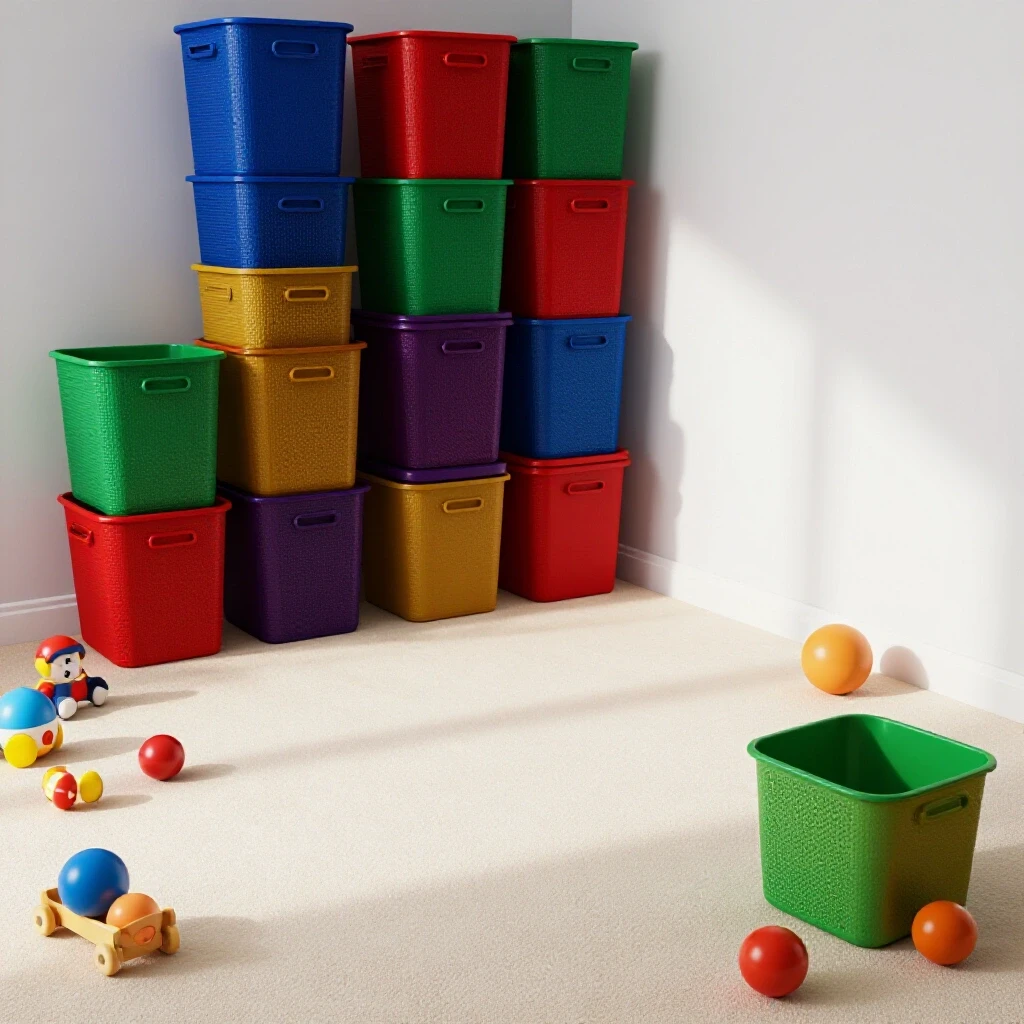
| Stacked Containers | 5+ Steps (Unstack, Open, Drop) | High | Long-term archives only |
Implementing Low-Maintenance Home Organization Systems
Functional home storage focuses on the ease of putting things away rather than the ease of getting them out. A sustainable system prioritizes “micro-zones” where specific categories of items live, ensuring that every family member knows exactly where an object belongs without thinking.
Building these systems requires a shift in mindset. We often organize for how we wish we lived. We buy matching jars for the pantry because they look nice. But if refilling those jars takes twenty minutes every grocery trip, the system will fail. My family moved toward “functional zoning.” We divided our common areas into zones based on how often we used the items.
- Zone 1 (Daily): Items used every day. These must be kept between waist and eye level or in open containers.
- Zone 2 (Weekly): Items used once or twice a week. These can go in lower cabinets or higher shelves.
- Zone 3 (Monthly/Seasonal): Items used rarely. These go in the garage, attic, or top of closets.
By mapping our home this way, we reduced the time spent searching for things. When everyone knows that the “Zone 1” shelf in the pantry is for school snacks, the kids can pack their own lunches. This reduces the “mental load” on parents and cuts down on the constant “Where is the…?” questions that lead to frustration.
Sustainable Decluttering Through High-Speed Sorting
High-speed sorting is a method of categorizing items quickly based on their utility and frequency of use rather than their emotional value. This framework uses a “binary decision” model to prevent the “maybe” pile from growing and stalling the decluttering process.
When my family does a “sorting sprint,” we use a simple matrix. We don’t ask, “Does this spark joy?” We ask, “When did we last use this?” and “Where does it live?” If we can’t answer the second question, the item is a “straggler.” Stragglers are the primary cause of household clutter.
The Family Sorting Log
Try using this log during your next weekend project to track your progress and identify problem categories.
| Item Category | Last Used (Months) | Current Location | New Zone | Action (Keep/Donate/Trash) |
|---|---|---|---|---|
| Kitchen Gadgets | 12+ | Countertop | Zone 3 | Donate (Keep only 1) |
| Kids’ Shoes | 1 | Entryway | Zone 1 | Keep (Move to open tray) |
| Old Magazines | 6+ | Coffee Table | N/A | Recycle |
| Winter Coats | 4 | Hall Closet | Zone 3 | Keep (Move to back) |
In our experience, setting a “time-box” of 20 minutes for a single drawer or shelf prevents the project from becoming overwhelming. If a task takes too long, decision fatigue sets in. This is when people start getting irritable. Keeping the sessions short and the goals measurable ensures the project actually gets finished.
Selecting Storage Solutions for Families That Last
The best storage solutions for families are durable, transparent or clearly labeled, and appropriately sized for the space they occupy. Avoid “over-engineered” systems that require precise stacking or complex labeling, as these are the first to break down during a busy week.
I have seen many families fail because they bought a “system” before they understood their needs. In logistics, we call this “buying the box before the product.” You must measure your volume first. If you have ten gallons of LEGOs, a five-gallon bin is a setup for failure.
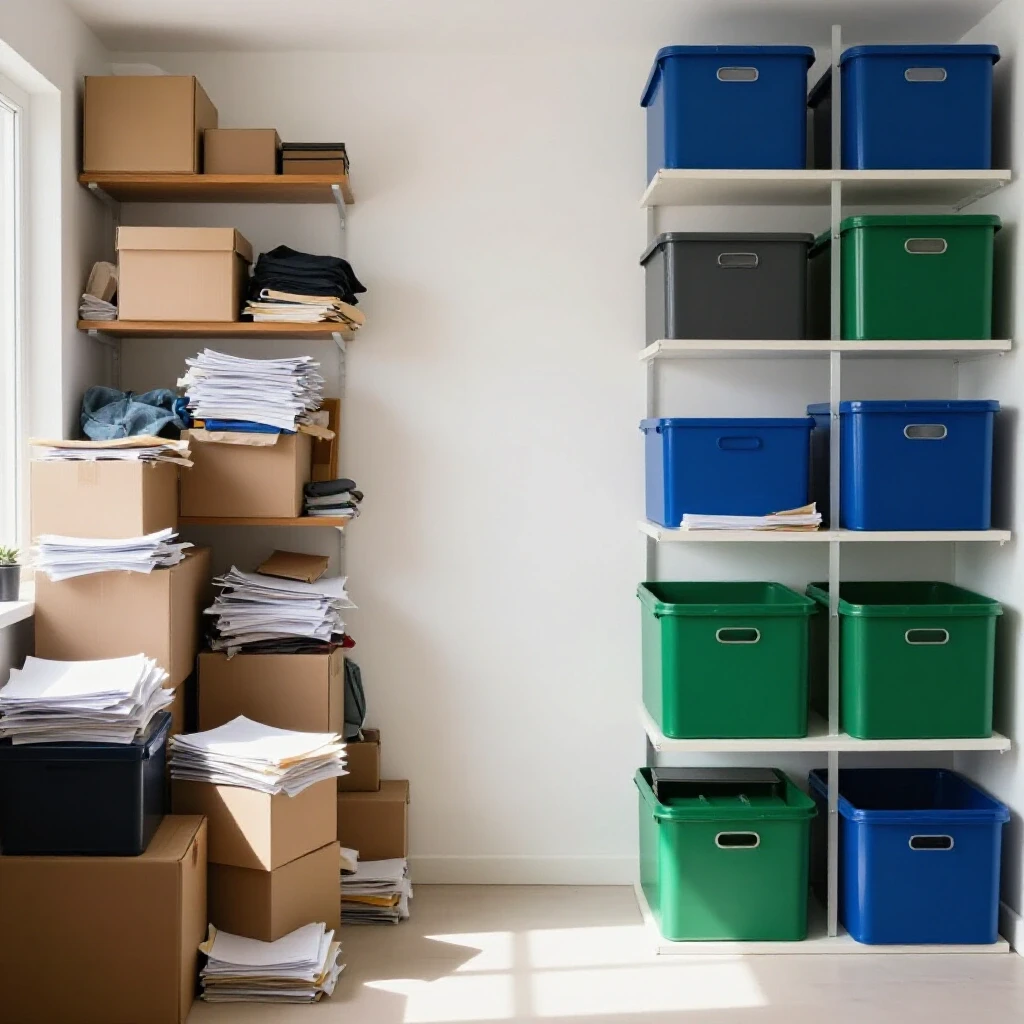
We now use “clear-view” bins for almost everything in the kids’ play area and the pantry. Visual access is key. If you can see what is inside, you don’t have to rummage. Rummaging is a high-friction activity that creates secondary mess.
- Transparent Bins: Use these for toys, crafts, and pantry staples.
- Heavy-Duty Totes: Use these for garage storage or sports equipment.
- QR Code Labels: For items in long-term storage (Zone 3), use smart labels. You can scan the box with your phone to see a photo of what is inside without opening it.
- Uniform Hangers: This is a small change, but using the same type of hanger reduces “visual noise” in a closet and makes it easier to slide clothes along the rod.
Building Systematic Habit Loops to Prevent Reversion
A habit loop is a three-part process consisting of a cue, a routine, and a reward. In a home setting, these loops ensure that small maintenance tasks are performed automatically, preventing the “clutter creep” that leads to large-scale weekend cleanups.
The reason most homes revert to mess within days is the lack of a “feedback loop.” A system needs regular maintenance to stay functional. We implemented a “10-Minute Reset” every evening at 7:00 PM. This is not a deep clean. It is a logistical reset.
- Cue: The kitchen timer goes off after dinner.
- Routine: Everyone spends 10 minutes putting Zone 1 items back in their places.
- Reward: We watch a show together or have a snack once the timer is done.
During this time, we focus on “outflow.” If we see something that is broken or no longer fits, it goes directly into a “Permanent Outbox” in the garage. This prevents the house from reaching its spatial capacity. By making this a family activity, the responsibility for the home’s state is shared. This significantly reduces the feeling that one person is doing all the work, which is a major source of household arguments.
Why Visual vs. Functional Organization Systems Matter
Visual organization focuses on how a space looks to an outsider, often prioritizing color-coding and hidden storage. Functional organization focuses on how a space works for the inhabitants, prioritizing accessibility, durability, and the speed of both retrieval and return.
Many people get frustrated because they try to copy “perfect” homes they see online. Those spaces are often visually organized but functionally fragile. For example, a color-coded bookshelf looks beautiful. However, if a child has to remember exactly where the “blue” book goes every time they finish reading, they probably won’t do it.
Comparison: Visual vs. Functional
| Feature | Visual Organization | Functional Organization |
|---|---|---|
| Primary Goal | Aesthetic appeal | Ease of use |
| Maintenance | High (Requires constant “fixing”) | Low (Designed for “drop and go”) |
| Labels | Small, stylish, or none | Large, clear, and descriptive |
| Storage Type | Hidden (behind doors/lids) | Accessible (open bins/drawers) |
| Family Adoption | Difficult (requires strict rules) | Easy (aligns with natural habits) |
In my 11 years of managing these systems, I have found that a “70% functional” home is much more peaceful than a “100% visual” home that falls apart the moment someone leaves a bag on the floor. When the system is simple, the “cost” of being tidy is low.
Actionable Steps to Reduce Daily Domestic Friction
To move toward a more functional home, start with small, measurable changes. Focus on the areas that cause the most daily stress and apply logistical principles to clear the path.
- Identify the “First 15 Minutes”: What is the first thing you do when you walk in the door? If you are tripping over shoes or can’t find a place for your keys, fix that entry point first.
- Apply the “One-In, One-Out” Rule: For every new item that enters the house, one item must leave. This keeps your total volume stable.
- Use “Macro-Labeling”: Instead of labeling a bin “Legos,” “Blocks,” and “Cars,” try a larger bin labeled “Building Toys.” It is easier for kids to follow and faster to clean up.
- Set a “Spatial Limit”: Decide that the bookshelf can only hold what fits on the shelves. Once it is full, you must donate a book before buying a new one.
- Track Your “Reset Time”: Aim for a daily cleanup that takes less than 15 minutes. If it takes longer, you have too many items or your system is too complex.
By treating your home like a logistical operation, you remove the emotion from the mess. It isn’t about “being a messy person” or “not caring.” It is about a system that needs an upgrade. When the path of least resistance leads to a tidy home, the arguments naturally fade away.
Frequently Asked Questions
How do I get my family to follow a new organization system?
The key is to involve them in the “friction audit.” Ask them why they don’t put their things away. If they say a bin is too hard to reach, move it. When people help design a system based on their own habits, they are much more likely to use it. Start with one small area, like the shoe rack, to prove the system works before moving to the rest of the house.
What is the biggest mistake people make when decluttering?
Most people start by buying containers. In logistics, we never buy storage until we know the volume of the inventory. You should declutter first, group your remaining items by category, and then measure the space. Buying bins first often leads to “container clutter,” where you have empty or mismatched boxes that don’t actually solve the problem.
How often should we perform a “spatial audit” of our home?
A quick audit every six months is usually enough. Family needs change—kids grow out of toys, or your work-from-home setup might need more space. A seasonal check-in allows you to move “Zone 1” items to “Zone 3” and keep the most important tools within reach.
How can I manage “paper clutter” without it piling up?
Paper is a major source of friction. Create a “One-Touch” system. When mail enters the house, it is either recycled immediately, filed in a single “Action” folder for bills, or put in a “Long-Term” file. Never let paper sit on a flat surface like a counter or table; these are for “active use,” not storage.
What should I do if my house is too small for “zones”?
In small spaces, use vertical real estate. Wall-mounted hooks and over-the-door organizers can turn a “Zone 3” area (like the top of a closet) into a “Zone 1” area (like a place for daily coats). The goal is to keep the floor clear to reduce the visual “noise” that causes stress.
Why do my organization systems fail after just a few days?
Failure usually happens because the “return friction” is too high. If it is easier to leave an item on the counter than to put it away, the counter will always be messy. Look for ways to remove lids, open up cabinets, or move storage closer to where the item is actually used.
Is it better to declutter one room at a time or by category?
For busy families, I recommend decluttering by “usage zone.” Start with the area that causes the most daily arguments—usually the kitchen or the entryway. Fixing the logistics of these high-traffic areas provides immediate relief and builds momentum for the rest of the house.
How do I handle sentimental items that I can’t throw away?
Sentimental items belong in Zone 3. They should be kept in a dedicated “Memory Box” in a less accessible area. By moving them out of your daily living space, you protect them while ensuring they don’t interfere with your functional routines. If the box gets full, it is time to curate the collection.
What is “decision fatigue” in the context of a messy home?
Decision fatigue occurs when you have to make too many choices in a short period. In a cluttered home, you are constantly deciding: “Where should I put this?” or “Where did I leave that?” A good system makes these decisions for you by having a designated, low-friction spot for every item.
How can I reduce the “inflow” of clutter into my home?
Be intentional about what enters. This includes everything from free promotional items to impulse buys. Set a “holding area” in the garage or porch for new items. If you don’t have a clear “Zone 1” or “Zone 2” spot for an item, reconsider if you actually need it in your home.
(This article was written by one of our staff writers, Christopher Bennett. Visit our Meet the Team page to learn more about the author and their expertise.)