How to Organize When Your Storage Is Overflowing (Easy Guide)

Have you ever noticed that you are spending more time organizing your storage bins than actually using the items kept inside them? This is a common tipping point for many families. I have spent 11 years managing complex supply chains and logistics operations. When I brought those principles home to my own family of four, I realized that most home organization fails because it ignores the physical limits of a room. We often try to solve a volume problem with more containers, but eventually, the containers themselves become the clutter.
In my early years of managing a busy household, I fell into the trap of buying “solutions.” I bought nested bins, stackable crates, and specialized dividers. However, our living room still felt heavy. My children couldn’t find their shoes, and my wife and I felt a constant sense of mental fog. We were experiencing a breakdown in spatial logistics. When your systems require constant “re-organizing,” it is a sign that the volume of goods has exceeded the functional capacity of your home.
Identifying the Point of Spatial Saturation
Spatial saturation occurs when the density of items in a room prevents the system from functioning as intended. This means you can no longer access one item without moving three others first.
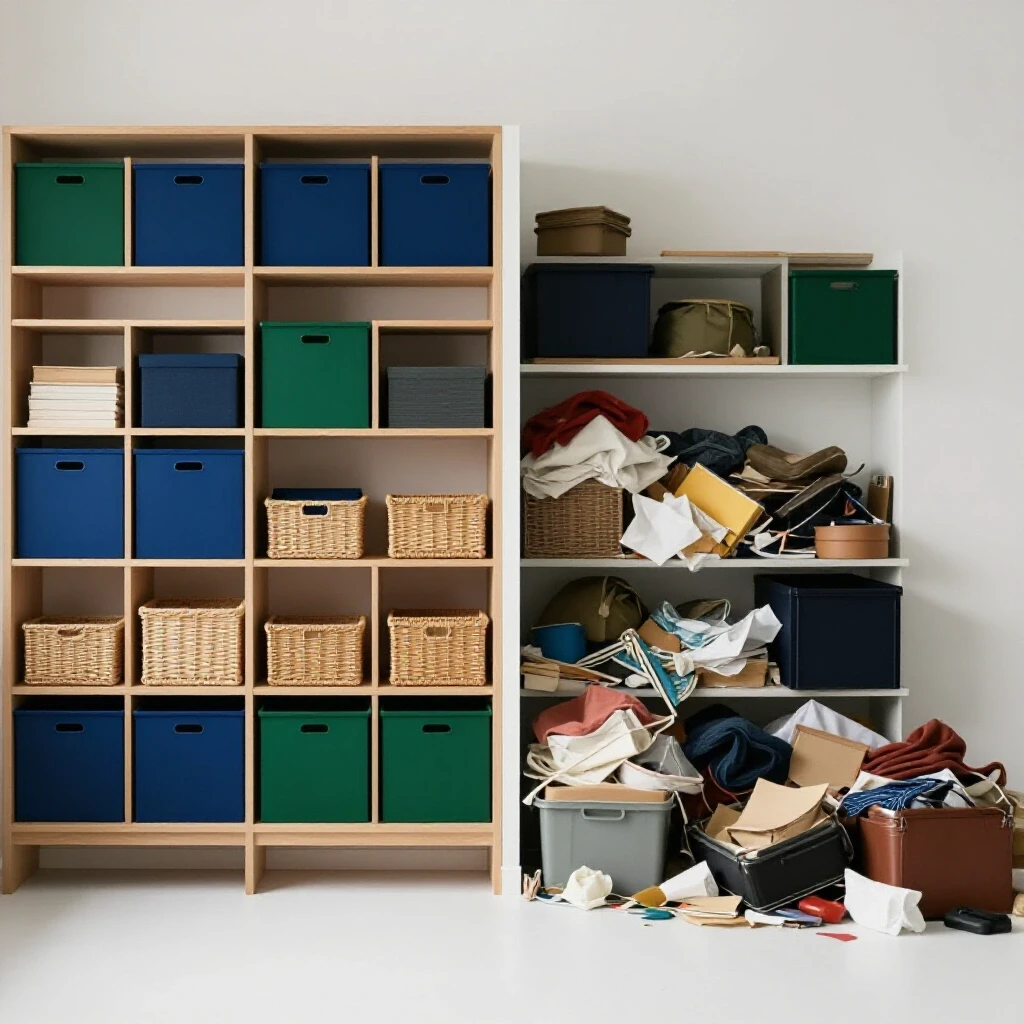
In logistics, we look at “utilization rates.” A warehouse is considered at maximum capacity when it reaches about 85% of its physical limit. Beyond that, the time it takes to move items around becomes too expensive. Your home works the same way. When every shelf is 100% full, the “friction” of daily life increases. You start to see signs of overflow, such as items resting on top of lids or bins stacked so high that the bottom one is never opened.
The Hidden Costs of Container Overload
This concept refers to the mental and physical energy wasted when storage systems become too complex for a family to maintain.
When you have too many storage units, you create a “search and rescue” culture in your home. Research in environmental psychology suggests that visual clutter increases cortisol levels, the body’s primary stress hormone. For a busy parent, this manifests as “decision fatigue.” If it takes five steps to put a toy away, that toy will likely stay on the floor. My family discovered that our “efficient” lidded bins were actually causing the mess because the friction of opening them was too high for a six-year-old.
Visual Cues of Systemic Breakdown
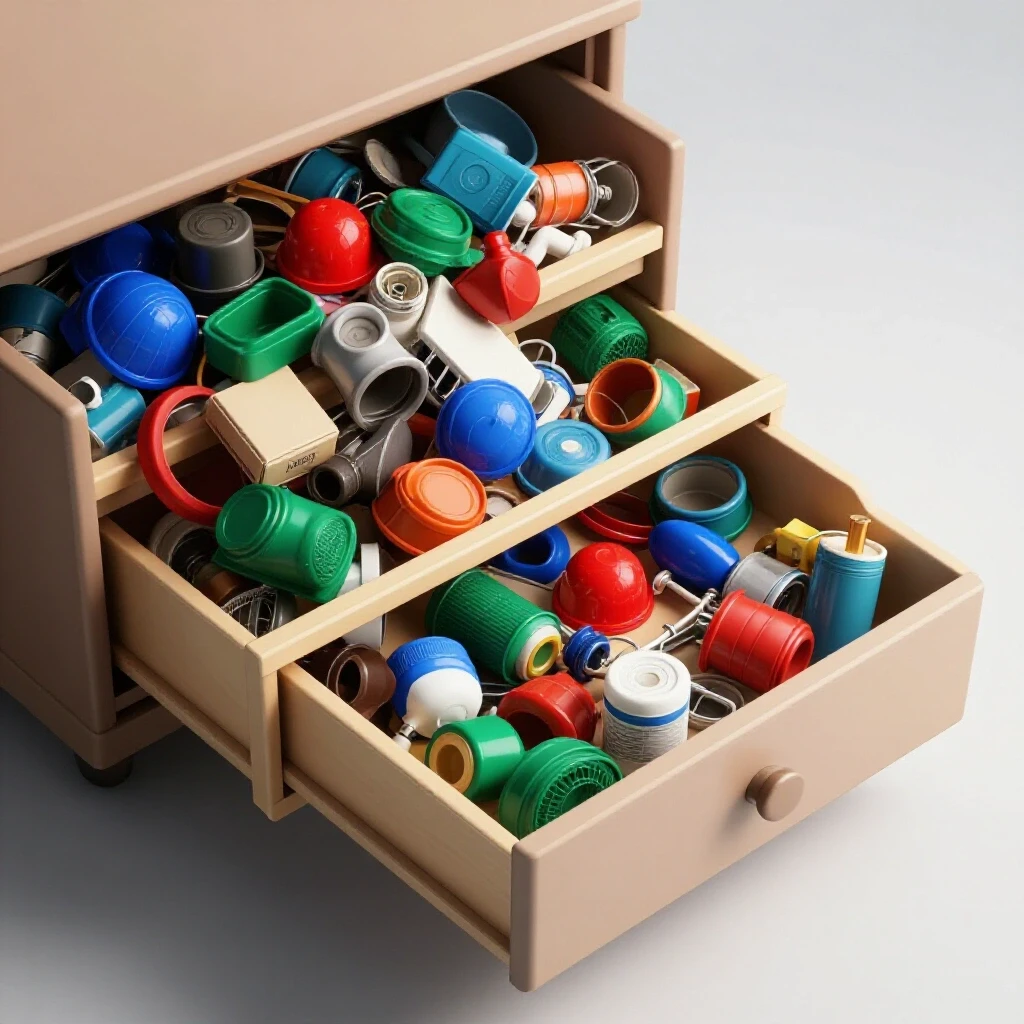
Visual cues are physical indicators, like piles on “hot spots” or overflowing drawers, that show your current storage method is failing.
I track these cues using a simple “Surface Audit.” If the dining table or the entryway bench is constantly covered, it is rarely a sign of laziness. Instead, it is a sign that the “inflow” of items has no easy “home.” In my house, we noticed that mail and school papers always piled up on the kitchen island. The “system” was a filing cabinet in the office, but the friction of walking to the office was too high. The system was broken, not the people using it.
| Storage Type | Friction Level | Maintenance Needs | Best Use Case |
|---|---|---|---|
| Open Bins | Low | Weekly | High-use toys, shoes |
| Lidded Tubs | Medium | Monthly | Seasonal gear |
| Drawer Dividers | Medium | Daily | Kitchen tools, socks |
| Nested Containers | High | Rare | Deep storage, archives |
Why High-Friction Systems Lead to Rapid Reversion
Friction is the total number of physical actions required to retrieve or stow an item. High friction leads to “reversion,” where a room returns to a messy state shortly after being cleaned.
If you have to move a chair to open a closet, that is high friction. If you have to unstack three boxes to find a holiday decoration, that is high friction. In my experience, families often choose systems that look good in photos but require too many steps for real life. We once tried a color-coded bin system for LEGO bricks. It looked beautiful for exactly two days. The “sorting time” was too high, and the kids simply stopped cleaning up. We shifted to large, open floor bins, and the floor stayed clear.
The Science of Retrieval Steps
Retrieval steps are the individual movements needed to get an item out of storage and put it back.
Logistics professionals aim for “one-touch” handling. In a home, you should aim for two steps or fewer for daily items. For example, grabbing a coat should be: 1. Open door, 2. Take coat off hook. If you have to move a vacuum cleaner to get to the coat, you have added a third step. This increases the likelihood that the coat will end up on the back of a chair instead of in the closet.
Cognitive Load and Visual Processing Overload
Cognitive load is the amount of mental effort used in the working memory. Too many visual inputs from cluttered shelves can overwhelm the brain’s ability to focus.
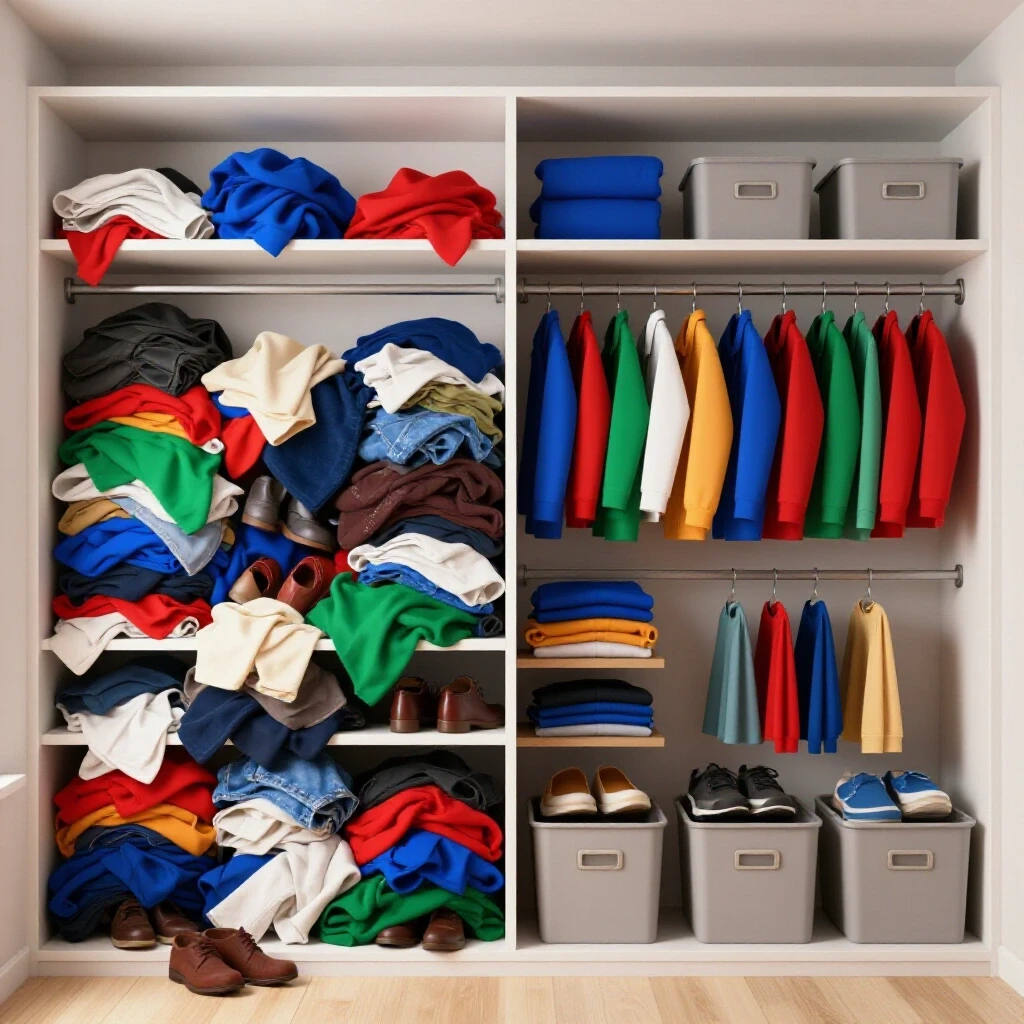
Studies in organizational behavior show that when a space is over-saturated, the brain struggles to prioritize tasks. This is why you might walk into a messy room to clean it, feel overwhelmed, and walk back out. By reducing the density of items on open shelves, you reduce the “visual noise.” I recommend the 80% rule: never fill a shelf or a drawer more than 80% full. That extra 20% of “white space” acts as a buffer for your brain.
Implementing an Industrial Sorting Framework
A sorting framework is a logical process used to categorize items based on how often they are used rather than what they are.
In my professional life, we categorize inventory by “velocity.” High-velocity items move every day. Low-velocity items move once a year. Most homeowners treat all their belongings the same way, shoving them into whatever space is available. To fix a home where storage has taken over, you must sort by frequency of use.
The Velocity Sorting Method
This method involves grouping items into three categories: Active (daily use), Transitional (weekly/monthly use), and Deep (yearly/seasonal use).
- Active Items: These belong in the “Prime Zone,” which is between your shoulders and knees.
- Transitional Items: These can go on higher shelves or in the back of cabinets.
- Deep Items: These are the only things that should be in lidded, stacked bins in a garage or attic.
When we applied this to our kitchen, we moved the stand mixer (used once a month) off the counter and into a lower cabinet. We moved the daily coffee mugs to the most accessible shelf. The result was a 40% reduction in morning “traffic jams” in the kitchen.
Identifying “Zombie” Storage
Zombie storage refers to containers filled with items that are no longer useful, yet continue to take up valuable square footage.
I often find that families have “bins of bins.” This is a major red flag. If you are storing empty containers “just in case,” you are losing floor space to air and plastic. During one of our family organization sprints, I found three large tubs in the basement filled with smaller, empty gift boxes. We were paying for our mortgage to house empty cardboard. We recycled the boxes, and suddenly, we had room for the kids’ bikes.
Designing Low-Friction Zoning Maps
Zoning is the practice of assigning specific functions to different areas of a home to minimize travel time and effort.
A well-zoned home follows the “Point of Use” principle. This means items should be stored exactly where they are used. If you always open mail at the kitchen counter, your recycling bin and shredder should be within arm’s reach of that spot. If you store your shoes in a bedroom closet but always take them off at the front door, you will inevitably have a pile of shoes at the entrance.
Creating a High-Efficiency Entryway
The entryway is the “loading dock” of the home. It manages the inflow and outflow of people and goods.
Most entryways fail because they lack the capacity for “temporary staging.” You need a dedicated spot for things leaving the house (library books, donations, gym bags). In our home, we installed a simple “Outbound Tray.”
- Identify the exit path.
- Clear a 2-foot section of wall or shelf.
- Designate it for “Outbound Only.”
- Empty it every time you walk to the car.
Kitchen Logistics and Workflow
Kitchen zoning involves grouping tools by task, such as prep, cooking, and cleaning, to reduce the number of steps taken during meal prep.
| Kitchen Zone | Primary Items | Storage Strategy |
|---|---|---|
| Prep Zone | Knives, boards, bowls | Top drawers, open counters |
| Cooking Zone | Pots, pans, spices | Closest to stove |
| Cleaning Zone | Soap, towels, trash | Under-sink pull-outs |
| Storage Zone | Food, Tupperware | Pantry or peripheral cabinets |
By measuring the distance between these zones, I found we were walking nearly 50 extra feet per meal because our spices were across the room from the stove. Moving them saved us time and reduced the “mess creep” that happens when you are rushing.
Selecting Low-Maintenance Storage Gear
Low-maintenance gear consists of durable, easy-to-access containers that do not require complex labels or perfect stacking to remain orderly.
Avoid “fussy” storage. This includes anything with tiny latches, opaque lids that you can’t see through, or round containers that waste corner space. In a logistics environment, we use standardized, rectangular bins because they maximize “cube utilization.” At home, clear rectangular bins are the gold standard. They allow you to see the contents without opening the lid, which reduces the mental effort of searching.
The Problem with Opaque Tubs
Opaque tubs hide clutter but do not solve it. They often become “black holes” where items go to be forgotten.
If you cannot see what is inside a bin, you are 50% less likely to put things back correctly. I recommend clear bins for everything except seasonal clothing. When my kids could see their toys through the plastic, they actually played with them more. More importantly, they knew exactly where the “blue blocks” went during cleanup time.
Why Modular Systems Outperform Custom Solutions
Modular systems are flexible units that can be rearranged as your family’s needs change over time.
Custom-built shelving is beautiful but rigid. A family’s needs change every 18 to 24 months as children grow. I prefer modular wire shelving or adjustable track systems. These allow you to change the height of shelves as your “inventory” changes. When our son moved from large toddler toys to small building sets, we simply added more shelves and smaller bins to the existing rack.
Building Sustainable Habit Loops
A habit loop is a three-part process: a cue, a routine, and a reward. In a home, this ensures the organization system stays functional.
Logistics is not a one-time event; it is a continuous flow. You cannot “organize” your home once and be done. You must manage the “flow rate.” This means for every item that comes into the house, one should ideally leave. We use a “One-In, One-Out” rule for clothing and toys. This keeps our total volume stable and prevents our storage from overflowing.
The Five-Minute “Reset” Routine
A reset routine is a short, timed period where the family returns items to their designated zones to prevent clutter from accumulating.
We do this every night before the kids go to bed. It is not a “deep clean.” We simply move items back to their zones. Because we have low-friction systems (like open bins), this takes less than five minutes.
- Step 1: Clear all flat surfaces (counters, tables).
- Step 2: Return “Outbound” items to the entryway.
- Step 3: Toss stray toys into their specific floor bins.
Monthly Volume Audits
A volume audit is a quick check of storage areas to ensure they haven’t reached the 85% capacity limit.
Once a month, I walk through the garage and the pantry. If I see bins stacked more than two high, or if I have to move something to see what’s behind it, I know we have hit a bottleneck. We then spend 15 minutes identifying items to donate or recycle. This prevents the need for a massive, weekend-long decluttering project later on.
Case Study: The Bennett Family Playroom Redesign
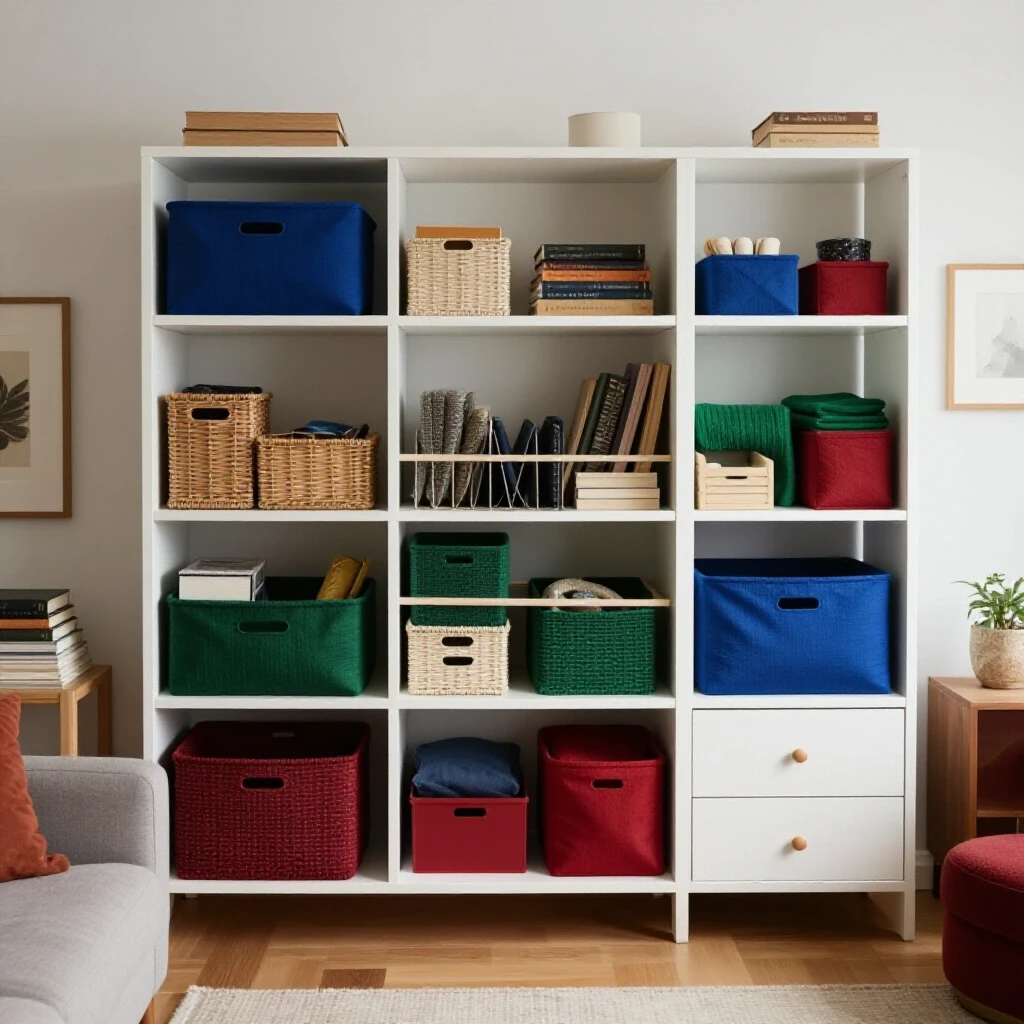
Our playroom was the site of my greatest organizational failure. I had installed a wall of beautiful, white cubbies with dark fabric bins. It looked like a magazine. Within a week, the floor was covered in toys again.
I applied a “Time-Motion Study” to the room. I watched my kids clean up. To put away a single toy, they had to: 1. Find the right bin, 2. Pull the heavy bin out of the cubby, 3. Take the lid off (if it had one), 4. Place the toy inside, 5. Push the bin back in. It was five steps.
We removed the fabric bins and replaced them with open-top, clear plastic crates. We reduced the number of toys by 20% to reach that 80% volume goal. The “cleanup” time dropped from 20 minutes of arguing to 4 minutes of easy tossing. The system worked because it respected the reality of how children move, not how I wanted the room to look.
Actionable Metrics for Your Home
To manage your home like a logistics pro, you need to measure your progress. Use these benchmarks to see if your systems are sustainable.
- Retrieval Time: You should be able to find any “Active” item in under 30 seconds.
- Sorting Speed: A standard laundry basket of mixed items should take less than 3 minutes to put away.
- Density Check: Drawers should slide open without catching on items inside.
- Visual Gap: You should see at least 2 inches of “air” at the top of every shelf.
Conclusion
Managing a home is a matter of managing flow and friction. When your storage systems start to feel like a burden, it is a clear signal that the volume of your belongings has surpassed the functional limits of your space. By applying logistics principles—like the 80% rule, low-friction zoning, and velocity sorting—you can create a home that supports your life rather than demanding your constant attention.
Start small. Choose one high-traffic area, like your entryway or a single kitchen drawer. Reduce the number of steps it takes to use that space. Focus on the “flow” of items in and out. You don’t need more bins; you need a system that respects your time and your mental energy.
Frequently Asked Questions
How do I know if I have too many storage bins?
If you are stacking bins on top of other bins to the point where the bottom one is inaccessible, you have reached a saturation point. Another sign is “nested storage,” where you are storing empty bins inside larger bins just to save space. This usually indicates that the volume of containers is competing with your actual living space.
What is the 80% rule in home organization?
The 80% rule suggests that no storage space—whether a shelf, drawer, or closet—should be more than 80% full. The remaining 20% of “buffer space” allows for easy retrieval of items and reduces the visual stress of a cramped environment. In logistics, this is the point where efficiency is highest before “gridlock” sets in.
Why does my house get messy again so quickly after I organize?
This is usually due to “high friction.” If your storage system requires too many steps to put an item away (like opening a closet, then a bin, then a lid), your family will naturally leave items on the nearest flat surface instead. To stop the reversion, you must reduce the number of physical actions required to maintain the system.
Are clear bins better than opaque bins?
For “Active” and “Transitional” items used daily or weekly, clear bins are superior. They reduce the “search time” and cognitive load of remembering where things are. Opaque bins are best reserved for “Deep Storage” items, like holiday lights or out-of-season clothes, that are kept in a garage or attic.
What is “point-of-use” storage?
Point-of-use storage means keeping items as close as possible to where they are actually used. For example, storing coffee mugs directly above the coffee maker or keeping trash bags at the bottom of the trash can. This minimizes movement and makes it easier to maintain order.
How can I get my kids to follow an organization system?
The key is to make the “putting away” process easier than the “getting out” process. Use open-top bins at their height and avoid complex categories. If a child can throw a toy into a bin in one motion, they are much more likely to do it than if they have to sort items by color or size.
What should I do with items I only use once a year?
These are “Low-Velocity” items. They should be stored in your least accessible areas, such as high closet shelves, under-bed storage, or the garage. They should be clearly labeled and kept in lidded bins to protect them from dust, as they do not need to be accessed quickly.
How do I handle “paper clutter” without a complex filing system?
Use a “Zone 1” approach. Place a small tray or basket exactly where you enter the house. Sort mail immediately over a recycling bin. Only the papers that require action should move further into the house. By stopping the “inflow” at the door, you prevent paper from spreading to your kitchen or dining tables.
What is the best way to start decluttering a very overwhelmed room?
Focus on “Surface Area” first. Clear the floors and the tops of tables. This provides immediate visual relief and reduces cortisol levels. Once the surfaces are clear, move to “Velocity Sorting,” starting with the items you use every day and working toward the things you haven’t touched in a year.
Is it better to have one large storage unit or several small ones?
In most family homes, smaller, modular units are better. They allow for more specific “zoning” and can be moved or adjusted as your needs change. Large, deep cabinets often lead to “lost” items at the back, which increases the likelihood of buying duplicates and creating more clutter.
(This article was written by one of our staff writers, Christopher Bennett. Visit our Meet the Team page to learn more about the author and their expertise.)