Morning Organization Tips for a Peaceful Start (Step-by-Step Guide)

Why did the parent cross the road? To get to the coffee before the kids woke up and asked where their left shoe was. Most of us start our day in a race against the clock, tripping over stray toys or hunting for car keys. After 11 years in operations and logistics, I realized that my home was essentially a warehouse with poor inventory management. We were frequently cleaning, yet the house reverted to chaos within forty-eight hours. By applying spatial management principles to our early morning routines, we shifted from reactive tidying to a sustainable system that actually holds up during the sunrise rush.

The Spatial Psychology of Early Morning Friction
Spatial psychology examines how our physical environment influences our thoughts and behaviors. In a home setting, visual clutter competes for your attention, leading to cognitive overload before you even finish your first cup of tea. When every surface is covered, your brain struggles to prioritize tasks, making the start of your day feel much heavier than it needs to be.
Environmental psychology journals often discuss the “cost of visual noise.” When we see a pile of unsorted mail or a stack of shoes, our brains register these as “unfinished tasks.” This creates micro-stressors. In my own home, we found that reducing the number of visible items in our high-traffic zones—like the kitchen island and the entryway—immediately lowered our collective tension. We weren’t just “cleaning”; we were reducing the data our brains had to process at 6:30 AM.
Logistically, this is about “retrieval friction.” This is the amount of effort required to get an item out or put it away. If a child has to open a closet, move a box, and lift a lid to find their shoes, they won’t do it. They will leave the shoes on the floor. To build a system that lasts, we have to lower the friction of putting things back to nearly zero.
Defining the Logic of Sustainable Home Organization Systems
Home organization systems are structured frameworks designed to manage the flow of physical objects within a living space. Unlike a one-time cleaning event, these systems focus on the “inflow” and “outflow” of items. They ensure that every object has a designated home that aligns with how the family actually moves through the house.
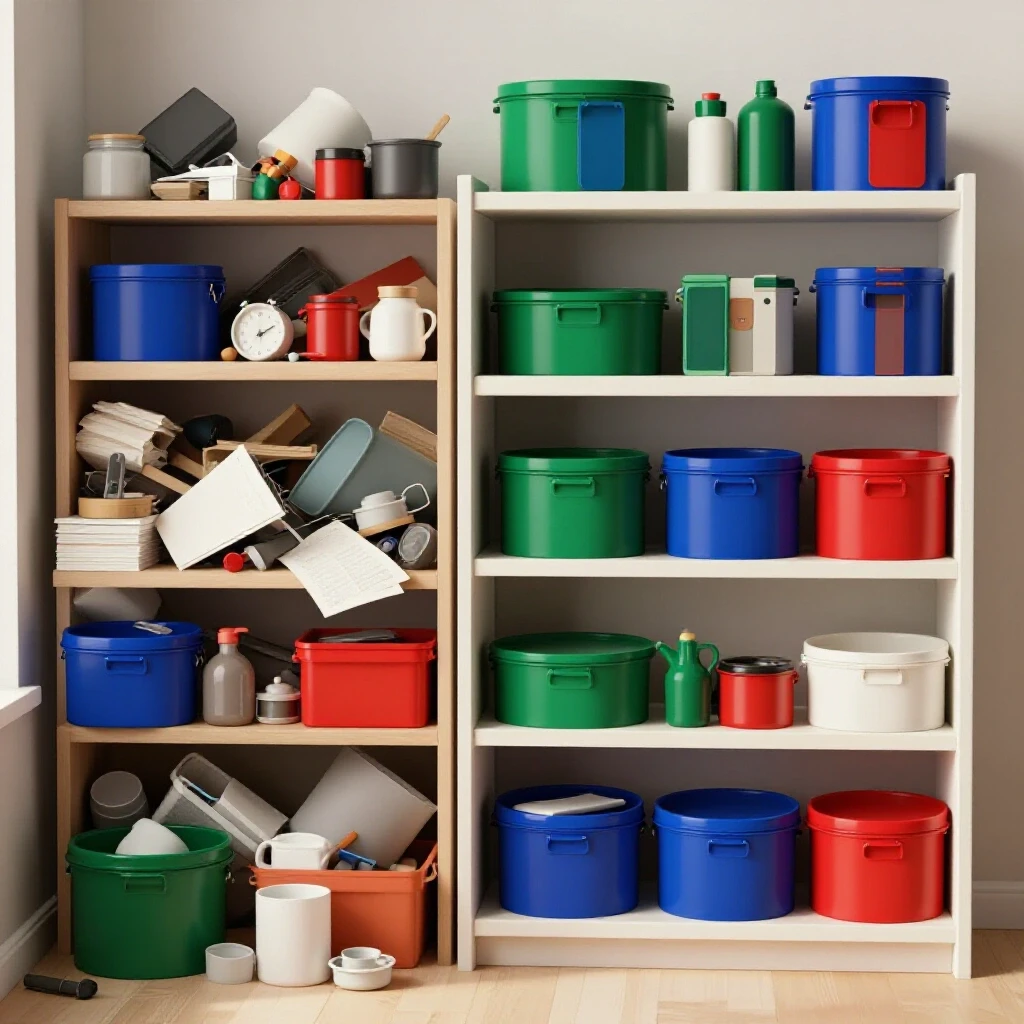
For years, I fell into the trap of buying pretty matching bins. I thought that if the containers looked good, the organization would follow. It didn’t. In logistics, we call this a “container failure.” The bins were too small, or the lids were too hard to snap on. We realized that functional home storage must prioritize “access speed” over “visual perfection.”
We started measuring our “sorting speed”—the time it takes to clear a room at the end of the day. If it took more than ten minutes, the system was too complex. We moved toward open-top baskets and clear labels. This change meant that even a five-year-old could participate in the maintenance without asking for help.
Understanding Retrieval Step Counts
Retrieval step counts refer to the number of physical actions required to access or store an item. A “one-step” system might be a hook on the wall for a coat. A “four-step” system involves opening a door, moving a hanger, placing the coat, and closing the door.
In our house, we audited our morning path. We found that the coffee pods were in a drawer (two steps), the mugs were in an upper cabinet (two steps), and the spoons were across the room. By grouping these into a single “coffee zone” where everything was visible and reachable in one step, we saved time and mental energy.
The Impact of Spatial Capacity Limits
Spatial capacity is the maximum amount of “stuff” a specific area can hold before it stops being functional. When a shelf is 100% full, you cannot easily remove one item without knocking over another. This creates a “clutter cascade.”
We now follow a 75% rule. We never fill a shelf or a drawer more than three-quarters full. This extra “white space” allows for easy movement of items. It also provides a buffer for those days when we haven’t had time to do a full sort.
Building a High-Speed Zoning Map for Your Home
A zoning map is a strategic layout that assigns specific activities and their related objects to dedicated areas. By mapping out where things happen, you can place storage solutions for families exactly where they are needed most. This prevents items from “drifting” across the house and creating piles.
In my home, we identified three primary zones for our early hours: the Launchpad (entryway), the Fuel Station (kitchen), and the Preparation Hub (bathroom). We mapped the “flow rate” of people through these areas. We noticed that everyone collided in the hallway because that’s where the shoes were stored. By moving the shoe rack six feet into the mudroom, we cleared the bottleneck.
Creating a Functional Launchpad
The Launchpad is the final checkpoint before leaving the house. It should hold only the items needed for that day’s departure, such as bags, keys, and coats. By limiting this area to “active” items only, you eliminate the need to dig through out-of-season gear.
- Hooks over Hangers: We replaced all entryway hangers with sturdy hooks. This reduced the “putting away” friction from four steps to one.
- Individual Cubbies: Each family member has a dedicated basket. If an item isn’t in their basket, it doesn’t belong in the Launchpad.
- The “Outbox”: We added a small tray for items that need to leave the house, like library books or dry cleaning.
Optimizing the Fuel Station
The kitchen is often the site of the most morning friction. By organizing the kitchen based on “task frequency,” you can streamline breakfast and lunch packing. We moved our daily-use items to the “strike zone”—the area between the shoulders and knees.
| Item Type | Storage Location | Friction Level |
|---|---|---|
| Daily Cereal/Oats | Open Counter Canister | Low (1 Step) |
| School Lunch Boxes | Lower Drawer (no lid) | Low (1 Step) |
| Occasional Baking Gear | Top Shelf Cabinet | High (3 Steps) |
| Seasonal Platters | High Closet/Basement | Very High (5 Steps) |
Selecting Storage Solutions That Reduce Daily Friction
Storage solutions are the physical tools—bins, shelves, and labels—used to contain household items. The goal of these tools is to create a “visual boundary” for clutter. When choosing gear, the focus should be on durability and ease of use rather than just the aesthetic appeal.
I once spent a fortune on wicker baskets with delicate liners. Within a month, the liners were stained and the wicker was snagging our clothes. We switched to heavy-duty, wipeable plastic bins for high-use areas. These are the “workhorses” of our home organization systems. They don’t look like they belong in a magazine, but they stay clean and intact.
The Storage Friction Index by Bin Type
When selecting containers, consider how much effort they require. We use a simple index to decide which bins go where.
- Open Baskets (Index 1): Best for toys, shoes, and daily blankets. No lid means no excuse not to use them.
- Clear Tubs with Latches (Index 3): Best for seasonal clothes or holiday decor. The transparency allows you to see the contents without opening them.
- Opaque Boxes with Lids (Index 5): Best for long-term storage in the attic or garage. These require the most effort to access.
Why Labeling Systems Are Essential for Families
Labels act as a “user manual” for your home. They tell everyone—including guests and children—exactly where things belong. This removes the “decision fatigue” of figuring out where to put a stray item.
- Picture Labels: For younger children, use photos of the items (e.g., a picture of blocks) so they can clean up independently.
- Text Labels: Use a simple label maker for pantry and linen closet shelves.
- QR Code Tracking: For deep storage bins, we use smart-label stickers. You scan the code with your phone to see a photo list of what’s inside without moving the box.
Sustainable Decluttering: The Inflow/Outflow Method
Sustainable decluttering is the practice of maintaining a balance between the items entering your home and those leaving it. It is a continuous process rather than a one-time event. By managing the “flow” of goods, you prevent the slow creep of household clutter that leads to visual overwhelm.
We use a “One In, One Out” rule for certain categories, like shoes and toys. If a new toy comes in for a birthday, an old one must be donated. This keeps our total inventory within the “spatial capacity” of our storage units. We also keep a “Permanent Donation Bin” in the laundry room. As soon as someone outgrows a shirt, it goes in the bin.
The 10-Minute Evening Reset
The secret to a calm start isn’t what you do in the morning; it’s what you do the night before. We implemented a “10-Minute Reset” at 8:00 PM. This isn’t a deep clean. It is a logistical sweep to return the house to its “base state.”
- Clear the Surfaces: All kitchen counters and the dining table must be cleared.
- Reset the Launchpad: Check that bags are packed and by the door.
- Load the Dishwasher: Ensure no dirty dishes are left in the sink to greet you in the morning.
Decluttering Sorting Log: A Monthly Pulse Check
To keep our systems from failing, we do a quick monthly audit. We track which areas are getting messy again. This helps us identify “system friction” before it becomes a major problem.
| Room | Clutter Level (1-10) | Bottleneck Identified | Solution |
|---|---|---|---|
| Entryway | 8 | Too many shoes for the rack | Purge out-of-season shoes |
| Kitchen | 3 | Mail piling on the counter | Move mail bin to the office |
| Playroom | 6 | Bins are overflowing | Implement “One In, One Out” |
Aligning Family Behavior with Organizational Systems
A system only works if the people using it understand and agree with it. In a family, this means designing for the “lowest common denominator.” If the system is too hard for the messiest person in the house, the system will fail. We had to stop fighting our children’s natural habits and start building systems around them.
My kids used to drop their backpacks in the middle of the kitchen. Instead of yelling, I looked at the “logistics of the drop.” They dropped them there because the coat closet was too far away and the door was heavy. We put two hooks right next to the kitchen entrance. The backpacks haven’t touched the floor since. This is “path of least resistance” organizing.
Reducing Household Clutter Through Shared Responsibility
We don’t expect the kids to be perfect, but we do expect them to follow the “flow.” We use a simple checklist for our morning routine that is posted on the fridge. It isn’t about chores; it’s about “setting up the next person for success.”
- Refill the water bottles.
- Put the pajamas in the hamper (not on the floor).
- Check the “Outbox” for school forms.
Maintaining Order Over Months and Years
The biggest mistake people make is thinking that once they are “organized,” they are done. In reality, a home is a living system that requires constant calibration. As children grow or hobbies change, your storage needs will shift. We review our zoning map every six months to ensure it still fits our lifestyle.
We also focus on “functional home storage” over “Pinterest-worthy” looks. Our linen closet isn’t color-coded, but I can find a twin-sized sheet in five seconds. That is the true metric of success. If the system saves you time and reduces the mental load, it is a good system.
Actionable Metrics for Your Home
- The 30-Second Rule: If an item takes more than 30 seconds to put away, the storage location is too far or too difficult to access.
- The “Touch Once” Principle: Try to move an item directly to its home rather than setting it on a “temporary” surface like the stairs or a counter.
- Density Check: If you have to move more than two items to get to what you need, your storage density is too high.
Conclusion: Small Steps Toward a Smoother Start
Finding a sense of order in the early hours doesn’t require a total home renovation or a minimalist lifestyle. It requires a shift in how we view our belongings and our space. By focusing on reducing friction, understanding spatial capacity, and building systems that accommodate real human behavior, we can create a home that supports us rather than drains us.
Start small. Choose one area—perhaps the “Fuel Station” or the “Launchpad”—and audit it for friction. Replace a difficult lid with an open basket. Move your coffee mugs closer to the machine. These micro-adjustments compound over time, leading to a more functional, less stressful living environment for the whole family.
Frequently Asked Questions
Why does my house get messy again so quickly after I organize it?
This usually happens because the system has too much “retrieval friction.” If it takes more effort to put something away than to leave it on the counter, clutter will accumulate. To fix this, simplify your storage—use open bins and place them exactly where the items are naturally dropped.
How do I get my kids to follow a morning organization system?
Design for their height and strength. Use hooks instead of hangers and open baskets instead of lidded boxes. Picture labels also help younger children understand where things go without needing an adult to guide them.
What is the most important area to organize for a better morning?
The “Launchpad” (entryway) is typically the most critical. If shoes, bags, and keys are easy to find and grab, it eliminates the frantic “last-minute search” that causes the most stress before leaving the house.
Are expensive clear acrylic bins necessary for a functional home?
Not at all. While they look nice, any sturdy, appropriately sized container will work. The key is the “function” (size, accessibility, and durability) rather than the material or the price tag.
How often should I declutter to maintain a tidy home?
Decluttering should be an ongoing “flow” rather than a seasonal event. Keeping a permanent donation bin and following the “One In, One Out” rule helps maintain a steady balance of items in the home.
What is “visual noise,” and how does it affect my morning?
Visual noise refers to the clutter that your brain has to process when you look at a room. High levels of visual noise can lead to “decision fatigue” and increased stress, making simple morning tasks feel more difficult.
How can I reduce the time I spend cleaning every day?
Focus on “resetting” rather than “cleaning.” A 10-minute nightly sweep to clear surfaces and return items to their zones prevents deep-seated messes from forming and makes the morning much smoother.
What should I do if I have a small home with very little storage?
Focus on “vertical space” by adding shelves and hooks. Also, be very strict about “spatial capacity”—if you don’t have room for an item, it may be time to let it go or find a multi-functional storage solution.
How do I handle “sentimental clutter” that I can’t throw away?
Move sentimental items out of your “active zones.” Store them in labeled, lidded bins in a basement or attic so they don’t interfere with your daily morning flow.
What is the “75% Rule” in home organization?
The 75% rule suggests that you should never fill any shelf, drawer, or bin more than three-quarters full. This leaves “white space” that makes it easier to remove and replace items without creating a mess.
(This article was written by one of our staff writers, Christopher Bennett. Visit our Meet the Team page to learn more about the author and their expertise.)