How to Declutter Your Home Room by Room (Step-by-Step Guide)

I remember standing in my kitchen three years ago, staring at a stack of mail that had somehow migrated from the entryway to the toaster. Beside it sat a half-finished Lego castle and three different types of sunscreen. It was a Tuesday. I had spent the previous Saturday “organizing” the entire ground floor, yet here we were again, drowning in a sea of miscellaneous objects. As someone who manages supply chains and logistical flows for a living, the irony was painful. My professional life was a model of efficiency, but my home was a series of bottlenecks and storage failures. This realization changed how I approached our living space. I stopped looking for “perfect” containers and started looking at the flow rates of our belongings.
The frustration many of us feel isn’t due to a lack of effort. It stems from a mismatch between our storage systems and our actual behavior. When we try to fix everything at once, we create a temporary surge of order that our daily routines cannot support. By applying logistical principles—like reducing retrieval friction and honoring spatial capacity—we can transition from a cycle of constant tidying to a sustainable state of functional order.
The Spatial Psychology of Household Bottlenecks
Spatial psychology examines how our physical environment influences our cognitive load and stress levels. In a home setting, clutter acts as a series of “unmet tasks” that the brain must process every time you enter a room.
Research in the Journal of Environmental Psychology indicates that a cluttered home environment can lead to increased cortisol levels, particularly in women. When our visual field is crowded, our brains struggle to focus, leading to “decision fatigue.” This is why you might feel exhausted just looking at a messy playroom. From a logistics perspective, every item left out is a signal of a broken system. If an item doesn’t have a low-friction “home,” it will inevitably end up on a flat surface. We must understand that our homes have a fixed spatial capacity. When we exceed 80% of that capacity, the “flow” of daily life stops, and clutter begins to accumulate in the gaps.
Why High-Friction Bins Lead to Rapid Clutter Reversion
Friction refers to the number of physical and mental steps required to complete a task, such as putting away a pair of shoes. High-friction systems require more effort than a tired parent or a busy child is willing to give.
Building on this, consider the standard plastic bin with a snap-on lid. To put a toy away, a child must: find the bin, remove the lid, place the toy inside, and snap the lid back on. That is a four-step process. In a high-traffic household, four steps are often three steps too many. Interestingly, a simple open basket reduces this to a one-step process: drop the toy. Reducing “retrieval friction” is the cornerstone of creating sustainable storage solutions for families. If it takes more than five seconds to put an item away, the system is likely to fail within a week.
| Storage Type | Steps to Use | Friction Level | Best Use Case |
|---|---|---|---|
| Open Baskets | 1 (Drop) | Very Low | Toys, shoes, daily blankets |
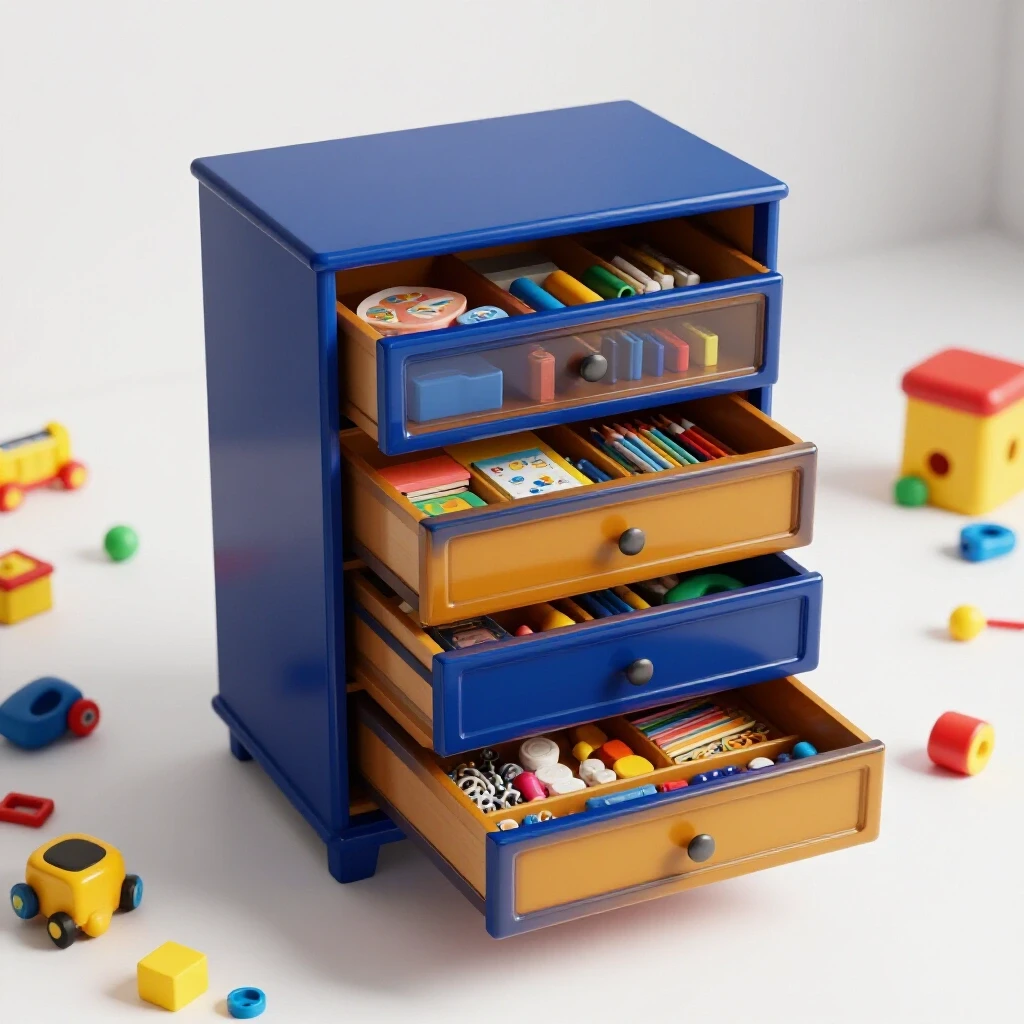
| Drawer Units | 2 (Pull, Place) | Low | Clothes, office supplies |
| Lidded Totes | 4 (Unlatch, Lift, Place, Snap) | High | Seasonal decor, long-term storage |
| Vacuum Bags | 6+ (Retrieve, Open, Fill, Seal, Vacuum) | Extreme | Out-of-season heavy bedding |
Establishing a Sustainable Sequential Sorting Framework
A sequential sorting framework involves addressing one zone at a time to prevent the “explosion effect,” where the entire house becomes a construction zone. This method respects your limited time and energy.
I found that my family’s biggest failures happened when we tried to “blitz” the house in a weekend. We would end up with piles of stuff in the hallway, lose motivation by Sunday afternoon, and then live in chaos for the next month. Now, we use a phased approach. We focus on one functional zone—not necessarily a whole room—until it reaches a “steady state.” A steady state means the inflow of items matches the outflow, and the storage system handles the volume without overflowing. This prevents the mental fatigue caused by seeing a half-finished project every time you walk through the house.
The Logistics of the Four-Box Sorting Method
Industrial sorting relies on clear categorization to move goods efficiently. At home, we can use a simplified version of this to manage our decluttering journey without getting overwhelmed by sentiment or indecision.
When you begin an area, use four distinct containers: 1. Relocate: Items that belong in a different room (e.g., a coffee mug in the bedroom). 2. Donate/Sell: Functional items that no longer serve your current lifestyle. 3. Repair/Maintenance: Items that are broken but worth the time-investment to fix. 4. Discard: Actual trash or items beyond repair.
By categorizing at a high speed, you avoid the “micro-decision” trap. Don’t worry about where exactly the “Relocate” items go yet; just get them out of the current zone. This keeps your sorting momentum high and your cognitive load low.
Standard Sorting Time-Box Intervals
- Micro-Zone (Drawer/Shelf): 15–20 minutes.
- Functional Zone (Pantry/Entryway): 45–60 minutes.
- Full Room (Bedroom/Living Room): 2–4 hours (spread over multiple sessions).
Designing Functional Home Storage with Low-Friction Zoning
Zoning is the practice of grouping items based on where they are used rather than what they are. This reduces the “travel distance” within your home, making it easier to maintain order.
In my own home, we redesigned our entryway using these principles. We realized the kids were dropping their backpacks in the kitchen because the coat closet was too hard to open while holding bags. We moved to open hooks and floor cubbies. As a result, the kitchen counters stayed clear. This is “functional home storage”—it prioritizes the way people actually move through a space over how a magazine photo might look. We aim for a “Space Utilization Percentage” of about 70-80%. If a shelf is 100% full, you cannot easily remove one item without disturbing others, which increases friction and leads to mess.
Mapping Your Household Flow
To create a zoning map, watch your family’s movement for two days. Where do shoes pile up? Where does mail land? These are your natural “logistical hubs.”
- Identify Hotspots: Locate areas where clutter naturally congregates.
- Analyze the “Why”: Is the current storage too far away? Is it too hard to open?
- Place Storage at the Point of Use: If mail piles on the counter, put a small paper tray right there.
- Label for the Lowest Common Denominator: Use pictures for toddlers or clear text for adults to ensure everyone knows the “system.”
| System Type | Focus | Visual Appeal | Maintenance Effort |
|---|---|---|---|
| Visual Organization | Aesthetics, matching colors, hidden items | High | High (requires constant “fixing”) |
| Functional Organization | Ease of use, proximity, low friction | Medium | Low (easy for kids/busy adults) |
Selecting Durable Gear for Reducing Household Clutter
The right tools act as the infrastructure for your home. Choosing modular, transparent, and sturdy storage allows your system to grow and change as your family’s needs evolve over the years.
When I look for storage solutions for families, I avoid flimsy “organizers” that only hold one specific type of item. Instead, I look for modular bins that can be repurposed. For example, heavy-duty clear acrylic bins are excellent for pantries because they allow for a “visual inventory.” If you can see that you have three boxes of pasta, you won’t buy a fourth. This controls the “inflow” of goods, which is half the battle in reducing household clutter.
Essential Metrics for Storage Selection
- Visibility Score: Can you see the contents without touching the bin? (Clear > Opaque).
- Accessibility Count: How many hands do you need to get an item out? (1 hand is ideal).
- Durability Rating: Will it survive being dropped by a seven-year-old?
- Stackability: Does it maximize vertical space without becoming unstable?
Implementing Habit Loops to Prevent Clutter Reversion
A habit loop consists of a cue, a routine, and a reward. In a home, the “cue” is often a transition time, like arriving home or finishing dinner.
The reason our homes revert to chaos is that we treat organizing as a “one-and-done” event. In logistics, we call this “continuous improvement.” We need small, daily systems to manage the daily “inflow.” My family uses a “10-minute reset” every evening. It isn’t a deep clean; it’s a logistical sweep. We move items back to their designated zones. Because we’ve lowered the friction of those zones (open bins, clear labels), the reset is fast. According to organizational behavior studies, these small, consistent routines are more effective for long-term maintenance than occasional massive overhauls.
Daily Maintenance Timelines by Family Size
The time required to maintain a tidy space scales with the number of residents and the complexity of your systems.
- 2 Adults: 10 minutes / day (Focus on kitchen and mail).
- 2 Adults + 1-2 Children: 20 minutes / day (Focus on toys and entryways).
- Large Families (5+): 30-40 minutes / day (Requires distributed tasks among all members).
Case Study: The “Pantry Bottleneck” Redesign
In my home, the pantry was a constant source of stress. We would buy duplicates of spices we already had, and snacks would spill onto the floor. It was a classic “inventory management” failure.
I applied a “First-In, First-Out” (FIFO) system, similar to what we use in warehouses. We installed deep, clear pull-out bins. * The Problem: Opaque bins meant we forgot what was in the back. * The Fix: Clear bins labeled by category (Grains, Snacks, Baking). * The Result: We reduced our grocery bill by 15% because we stopped over-buying, and the “reset” time for the pantry dropped from 20 minutes a week to just 5 minutes.
Practical Steps for a Sustainable Area-by-Area Transition
To begin your own sustainable decluttering process, start with the area that causes the most daily friction. For many, this is the entryway or the kitchen.
- Audit the Volume: Measure your current shelf space. If you have 10 feet of shelving but 15 feet of books, no amount of “organizing” will help. You must reduce the volume.
- Apply the 80% Rule: Leave 20% of every shelf or drawer empty. This “buffer” allows for easy retrieval and prevents the space from feeling cramped.
- Use Digital Inventory for Low-Use Items: For bins in the garage or attic, use smart-label systems or simple QR codes that link to a photo of the contents. This prevents you from digging through boxes later.
- Schedule “Outflow” Days: Once a month, take your “Donate” box to a local center. A system is only as good as its exit strategy.
Maintaining Order Over Months and Years
True success is not a house that looks like a museum; it is a house that can be restored to order in fifteen minutes. This requires a shift in mindset from “cleaning” to “managing flow.”
As your family grows, your zones will need to change. A diaper station becomes a craft bin. A toy chest becomes a sports equipment locker. By keeping your storage modular and your friction low, you can adapt these systems without starting from scratch. Remember, the goal is to reduce mental fatigue. When every object has a logical place that is easy to reach, your home stops being a source of “to-do” lists and starts being a place of rest.
Frequently Asked Questions
Why does my house get messy again just days after I clean it?
This usually happens because the storage systems have too much “friction.” If it’s harder to put something away than it is to leave it on the counter, the item will stay on the counter. You likely have too many lids, too many tight fits, or storage that is located too far from where the items are actually used.
How do I decide which room to start with?
Don’t start with the hardest room (like a basement or garage). Start with the “high-frequency” zone that frustrates you most daily—usually the kitchen, entryway, or primary bathroom. Success in a small, high-impact area provides the momentum needed for larger projects.
What is the “80% Capacity Rule” and why does it matter?
In logistics, a warehouse at 100% capacity is inefficient because there is no room to move items around. The same applies to your home. When drawers are stuffed full, you have to remove five items to get to the one at the bottom. Keeping spaces at 80% capacity ensures you can see and reach everything easily.
Are expensive clear bins really better than cheap opaque ones?
From a cognitive load perspective, yes. Clear bins allow for “visual inventory,” which means your brain doesn’t have to remember what is inside. This reduces the mental energy required to maintain the system and prevents you from buying duplicate items you can’t find.
How can I get my kids to follow these systems?
Focus on “one-motion” storage. Use open baskets without lids and hooks instead of hangers. Label the baskets with pictures if the children are young. If a child can “toss” an item into its home, they are much more likely to do it than if they have to navigate a complex filing system.
How much time should I realistically spend on this each day?
For most busy professionals, a 15-minute “evening reset” is the most sustainable habit. This isn’t for deep cleaning; it’s for returning items to their designated zones. If your systems are designed correctly, 15 minutes should be enough to restore the main living areas.
What should I do with items that I’m not sure about keeping?
Use a “quarantine bin.” Place these items in a box in the garage or a closet and date it for six months from now. If you haven’t reached for anything in that box by the deadline, you can confidently donate the entire contents without looking through it again.
How do I handle paper clutter and mail?
Create a “One-Touch” system. Sort mail immediately over a recycling bin. Only three categories should survive: “To Action,” “To File,” and “To Read.” Place these in a small, high-visibility desktop sorter near where you usually sit.
What are the best labels for long-term organization?
For families, simple printed labels or even handwritten ones on masking tape work well. However, smart-label systems that use QR codes are excellent for “deep storage” items like holiday decor or old documents, as they allow you to see a photo of the contents on your phone.
Is it better to organize by category or by room?
Focus on “Functional Zones.” For example, keep all “coffee-related” items in one spot, even if that means moving mugs away from other glasses. Organizing by how you use items is always more sustainable than organizing by arbitrary categories.
(This article was written by one of our staff writers, Christopher Bennett. Visit our Meet the Team page to learn more about the author and their expertise.)