How to Avoid Decluttering Fatigue: 3 Easy Questions (Guide)

For over a decade, I have managed large-scale logistics and operations. In the professional world, we focus on flow, efficiency, and reducing the time it takes to move an item from point A to point B. When I applied these same principles to my own home, I realized why my family’s organization efforts kept failing. We were focusing on how the room looked for a photo rather than how the room functioned during a Tuesday morning rush.
Sustainable home organization systems are not about achieving a magazine-ready aesthetic. They are about creating a functional environment that supports your daily life without adding to your mental load. By treating your home like a high-functioning warehouse, you can stop the cycle of cleaning and immediate cluttering. This approach shifts the focus from “tidying up” to “managing inventory and flow.”
The Logistics of Mental Exhaustion in Home Management
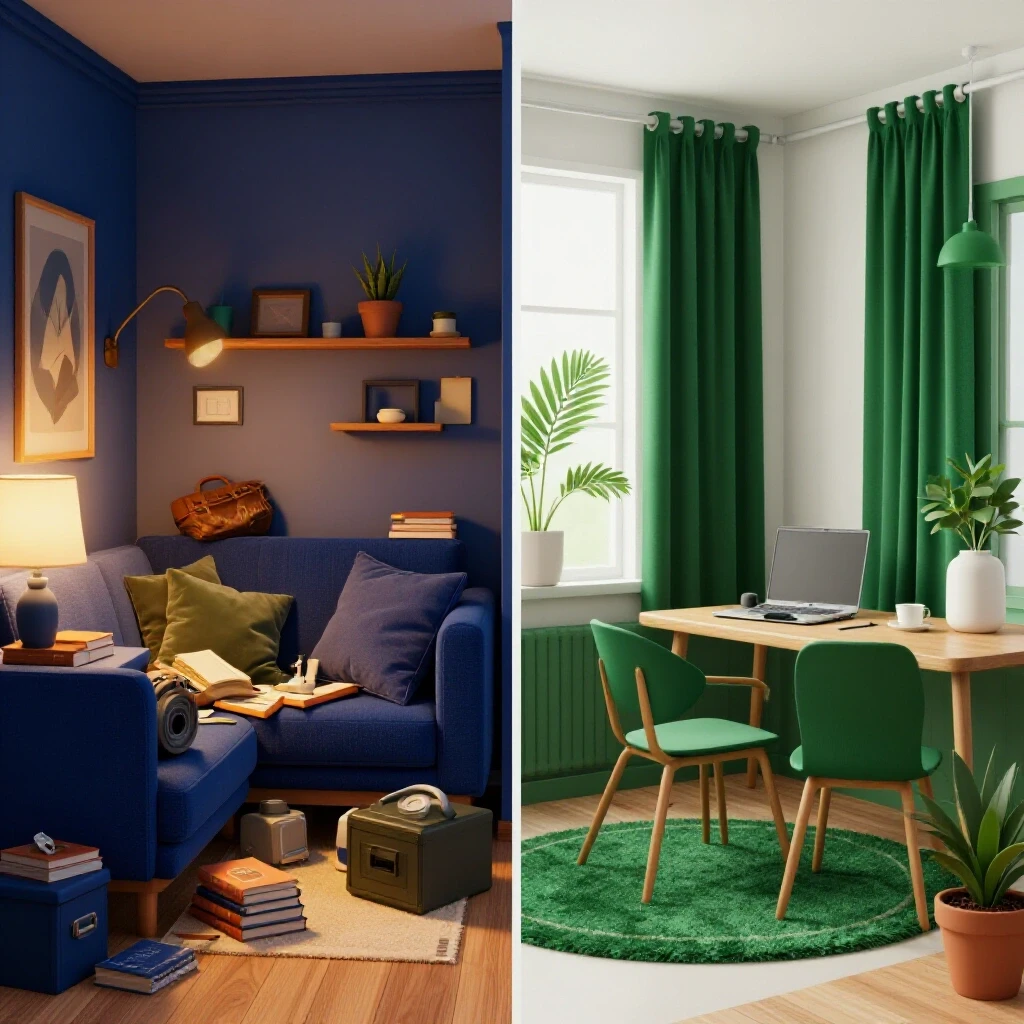
Mental exhaustion in the home occurs when the brain is forced to make too many micro-decisions about where things belong. When every surface is covered in miscellaneous items, your brain constantly processes that visual noise, which increases stress levels.
Environmental psychology research shows that visual clutter can lead to increased cortisol levels, especially in women. In a logistics sense, this is “decision fatigue.” If a toy, a mailer, or a pair of shoes doesn’t have a clear, low-friction “address,” you have to decide what to do with it every time you see it. Over time, your brain simply gives up, leading to the piles we all know too well.
Understanding Spatial Capacity and Flow Rates
Spatial capacity is the maximum amount of inventory a room can hold before its function is compromised. Flow rate refers to how quickly items enter and leave your home. If your inflow is higher than your outflow, clutter is inevitable regardless of how many bins you buy.
- Inflow Control: The rate at which new items (mail, groceries, toys) enter the home.
- Outflow Control: The systematic removal of items that no longer serve a purpose.
- Spatial Density: The percentage of storage space currently occupied (aim for 80% to allow for easy retrieval).
| Metric | Definition | Ideal Target |
|---|---|---|
| Retrieval Step Count | Number of physical actions to get an item out. | 1-2 steps |
| Put-Away Friction | The effort required to return an item to its home. | < 3 seconds |
| Visual Noise Level | Percentage of flat surfaces covered by items. | < 10% |
| Space Utilization | How much of your storage is actually usable. | 75-80% |
A Three-Question Framework for Rapid Item Processing
To stop the cycle of indecision, I developed a simple sorting framework for my family. This method removes the emotional weight of decluttering and replaces it with logic-based criteria. Instead of debating the “value” of an item, we ask three specific questions to determine its fate.
This framework is designed to be used quickly. If you spend more than five seconds thinking about an answer, the item is likely a candidate for removal. By standardizing these choices, we reduce the cognitive load on parents and children alike.
1. Does this item have a permanent, accessible “address”?
An address is a specific spot where an item lives. If it doesn’t have one, it will drift around your home. Accessibility means you can reach it in two steps or fewer. If you have to move three boxes to get to a kitchen mixer, that mixer does not have an accessible address.
2. Is the “cost of storage” higher than the “cost of replacement”?
Every item in your home “pays rent” in the form of the space it occupies and the time you spend cleaning around it. If an item is cheap to replace but takes up valuable “prime real estate” in your living room, it is failing the cost-benefit analysis. We prioritize keeping items that are hard to replace or used daily.
3. Does this item support a current, active routine?
We often keep things for “fantasy selves”—the person who might bake sourdough or start a marathon training plan. Logistically, we only have space for our current selves. If you haven’t used an item in its natural cycle (e.g., a full year for seasonal items), it is a bottleneck in your home’s flow.
Why High-Friction Bins Lead to Rapid Clutter Reversion
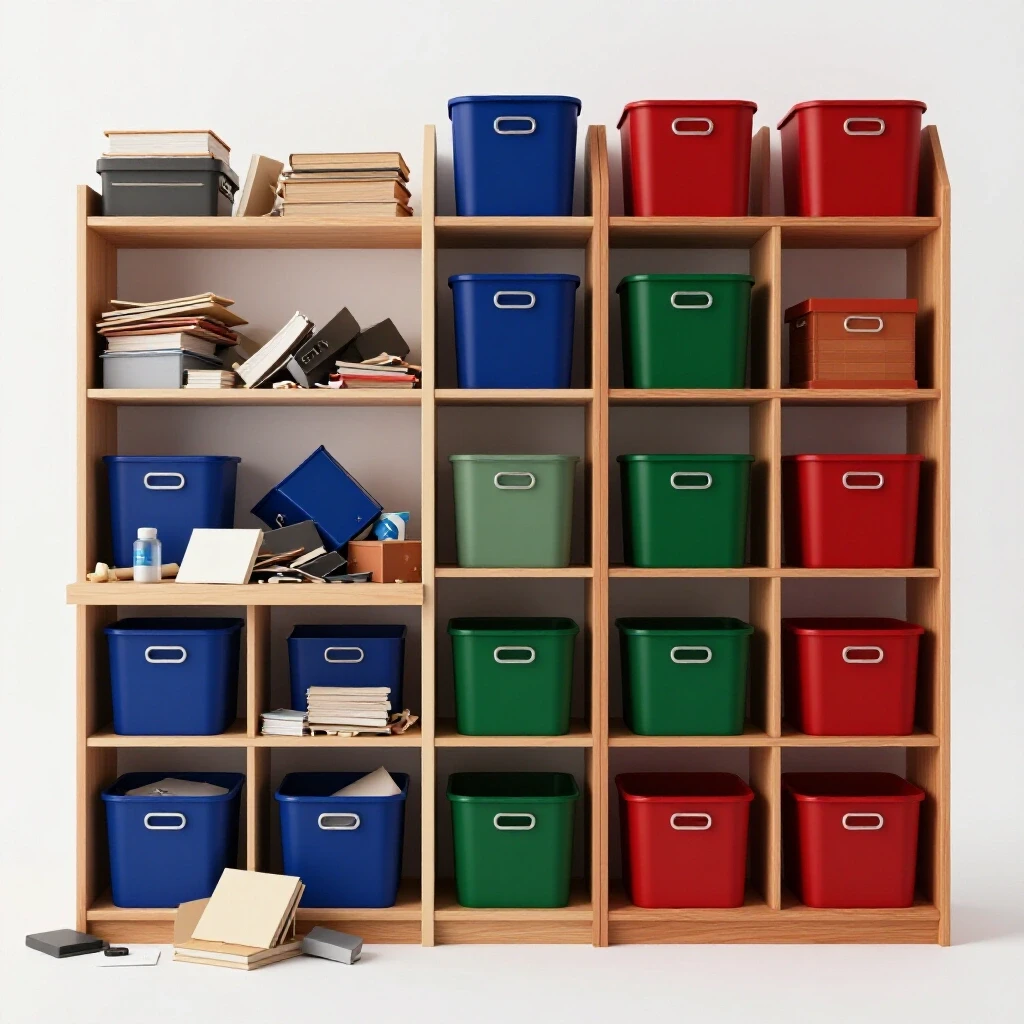
Many people buy complex storage systems with lids, latches, and stacked layers. In a busy household, these are “high-friction” solutions. If it takes four steps to put a toy away—opening a lid, removing a tray, placing the toy, and replacing the lid—the toy will end up on the floor.
Logistics professionals use “pick-and-pack” efficiency metrics. To keep a home tidy, you need “low-friction” storage. Open bins are almost always better than lidded boxes for daily-use items. If you can throw it in, you are more likely to do it.
Storage Friction Index by Bin Type
The following table compares common storage methods based on how much effort they require to maintain.
| Storage Type | Retrieval Steps | Put-Away Effort | Maintenance Success Rate |
|---|---|---|---|
| Open Basket | 1 (Reach in) | Very Low | 95% |
| Clear Bin (No Lid) | 1 (Reach in) | Low | 90% |
| Lidded Tote | 3 (Unlatch, Lift, Place) | Medium | 60% |
| Stacked Boxes | 5+ (Move top boxes, Open) | Very High | 20% |
| Drawer with Dividers | 2 (Open, Place) | Medium | 80% |
Designing High-Efficiency Household Zones
In logistics, we zone warehouses based on how often items are touched. High-velocity items (keys, shoes, school bags) stay near the exit. Low-velocity items (holiday decor, tax papers) go to the “back” of the warehouse.
Most homes fail because high-velocity clutter is stored in low-velocity areas. For example, if your kids’ shoes are supposed to go in a bedroom closet far from the front door, they will inevitably end up in a pile by the entrance.
Creating Your Home Zoning Map
- Zone 1 (Hot Zone): Entryways and kitchen counters. Items here should be touched daily. Use open storage.
- Zone 2 (Active Zone): Living areas and easy-reach cabinets. Items used weekly.
- Zone 3 (Deep Storage): High shelves, basements, or garages. Items used once a year.
- Zone 4 (Transition Zone): A specific spot for items leaving the house (donations, returns).
Reducing Household Clutter Through Systematic Habit Loops
Even the best system will fail without a maintenance loop. In my home, we don’t do “marathon cleaning” on weekends. Instead, we use “micro-sorts.” A micro-sort is a five-minute sweep of a specific zone to ensure items are at their correct addresses.
The goal is to keep the “sorting debt” low. If you wait a week, you have two hours of work. If you do it daily, you have five minutes. We use the “One-Touch Rule”: if you pick something up, don’t put it down until it is at its final destination.
Daily Maintenance Timelines by Family Size
The time required to maintain order scales with the number of residents. These are averages based on our internal household tracking.
- 2 Adults: 10 minutes per day (5 min morning / 5 min evening).
- 2 Adults + 1 Child: 20 minutes per day (Focus on Zone 1).
- 2 Adults + 3 Children: 35 minutes per day (Shared responsibility).
- Large Families (5+): 45-60 minutes per day (Zoned assignments).
Selecting Sustainable Storage Solutions for Families
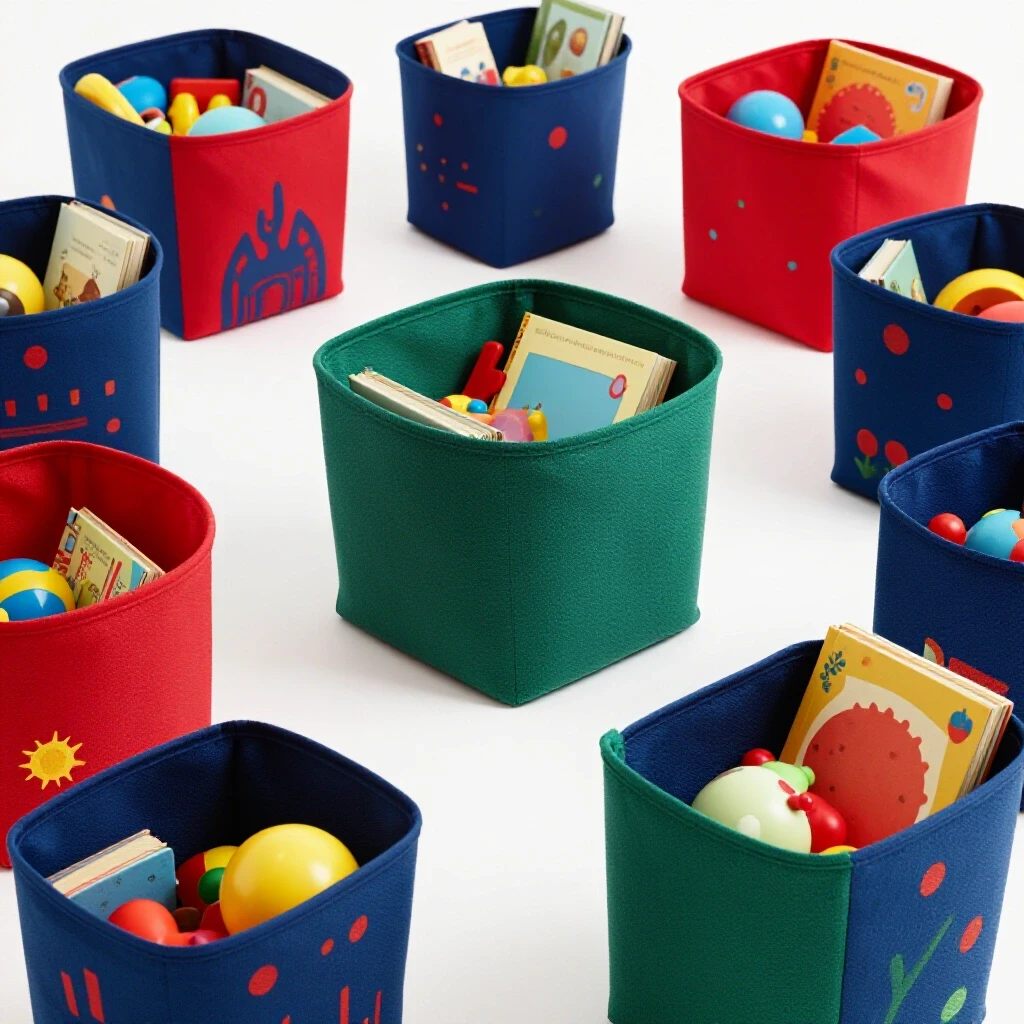
When choosing gear, prioritize durability and visibility. Clear containers allow the brain to process what is inside without opening them, which reduces the mental search time. However, in high-traffic areas like living rooms, opaque baskets can hide visual noise while still offering low-friction “drop zones.”
Professional Labeling and Tracking Systems
Labeling is not just for looks; it is a communication tool for the whole family. It tells everyone—including guests and children—where the “address” is.
- Picture Labels: Best for toddlers and young children who cannot read yet.
- Text Labels: Use high-contrast, large fonts.
- QR Code Labels: For deep storage bins (Zone 3). Scan the code to see a digital photo of the contents without opening the box.
- Color Coding: Assign a color to each family member for their “active zone” bins.
Overcoming the “Reversion Effect”
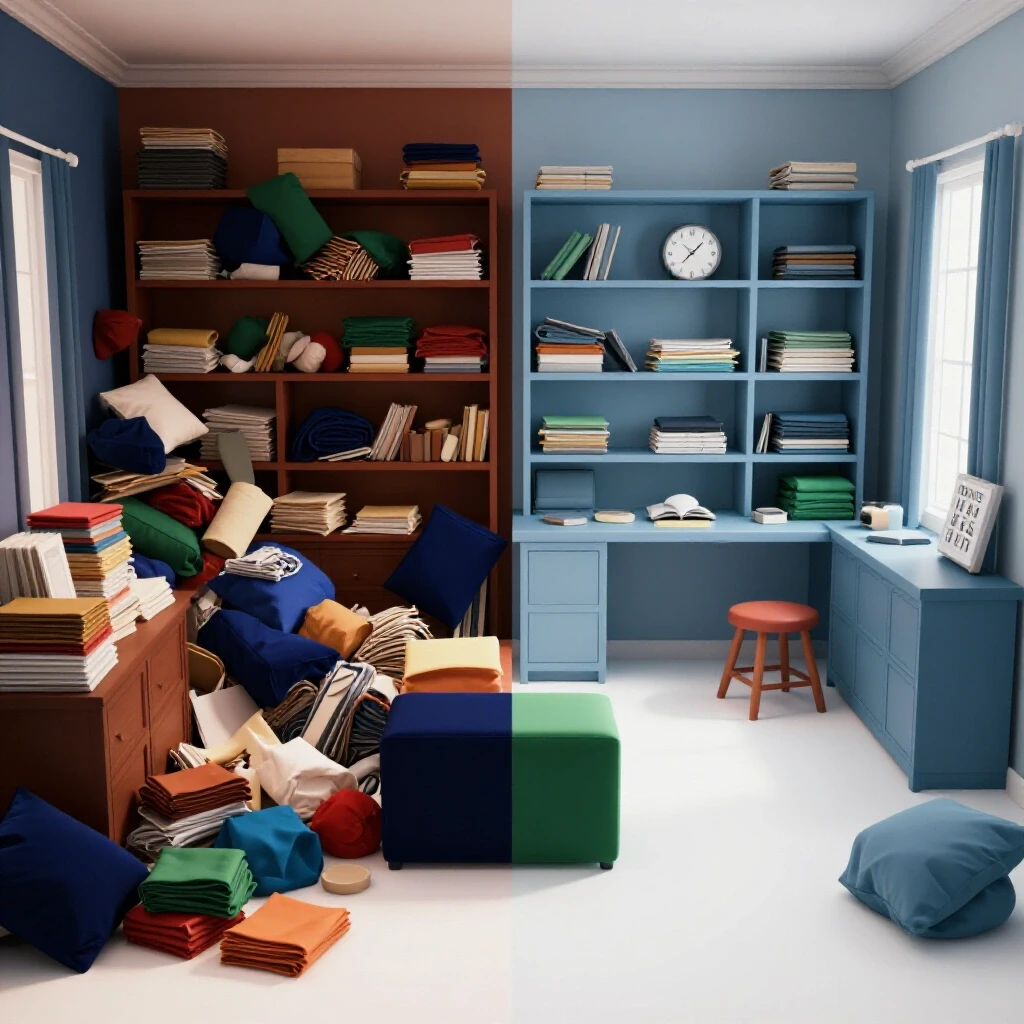
The reversion effect happens when a system is too fragile for real life. If your organization system requires items to be perfectly folded or color-coordinated to work, it will break within 48 hours. A robust system assumes people are tired, busy, and in a hurry.
To prevent reversion, build “buffer capacity.” Never fill a shelf to 100%. Leave 20% empty. This “air” in your system allows you to put things away quickly without having to Tetris them into place. If a drawer is jammed, you won’t use it. If it’s 80% full, you’ll use it every time.
Sorting Time-Box Intervals
When tackling a cluttered area, use time-boxing to prevent burnout. * 10-Minute Sprint: Clear one flat surface (e.g., the mail pile). * 25-Minute Block: Organize one drawer or small cabinet. * 90-Minute Session: Full zone audit (e.g., the pantry). * Never exceed 90 minutes: Decision fatigue sets in after this point, and your sorting accuracy drops.
Actionable Steps for a Functional Home
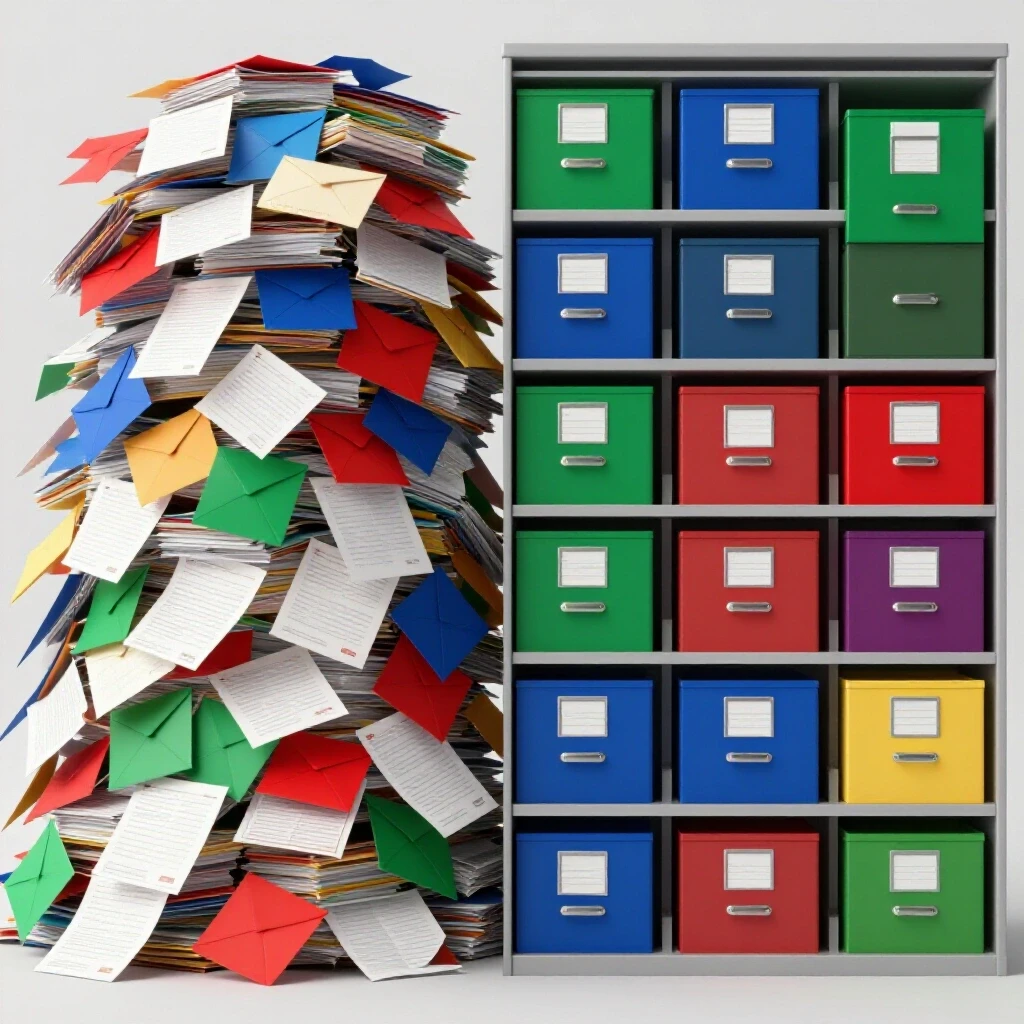
To begin streamlining your home, don’t start by buying bins. Start by auditing your flow. Watch where piles naturally form—these are “desire paths.” If mail always piles on the kitchen island, that is where your mail system needs to be. Don’t fight human nature; build the system around it.
- Identify your highest-friction area. Where do you struggle most to find things?
- Apply the 3-Question Framework. Process 10 items from that area today.
- Lower the friction. Replace a lidded box with an open basket.
- Label the address. Make it clear where the item belongs.
- Audit the capacity. Remove items until the space is only 80% full.
By focusing on these logistical principles, you move away from the frustration of temporary tidiness. You create a home that manages itself, allowing you to spend your mental energy on your family and your work rather than on locating a pair of scissors or clearing a coffee table for the tenth time this week.
Frequently Asked Questions
Why does my house get messy again so quickly after I organize it?
Usually, this happens because the storage system has too much friction. If it takes too many steps to put an item away, people will leave it on the nearest flat surface. You may also have more items than your “spatial capacity” allows, meaning there is no room for easy flow.
How do I get my kids to follow these organization systems?
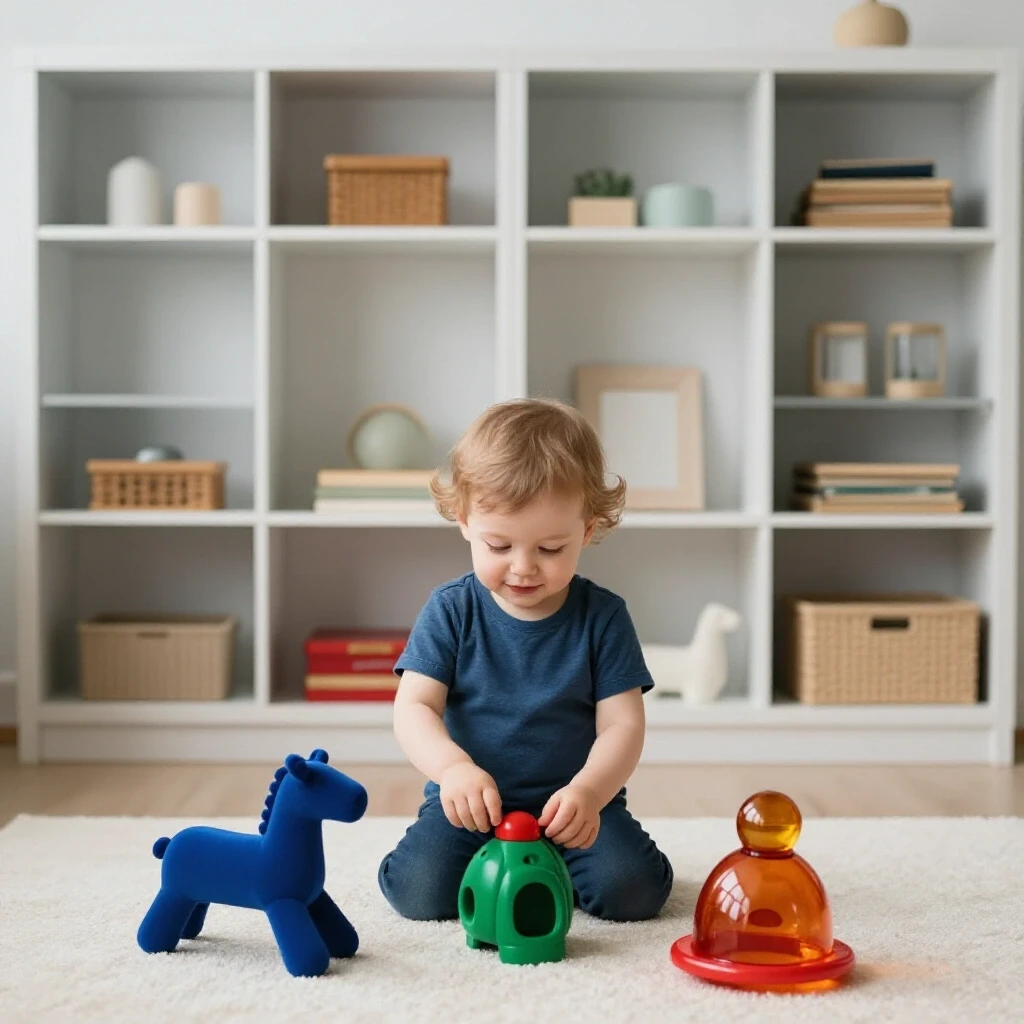
Use the “One-Step Rule.” For children, storage should be as simple as dropping an item into a bucket. Use open bins at their height and label them with pictures. If they have to struggle with a lid or a tight shelf, they won’t do it.
What are the best types of bins for a busy family?
Open-top baskets and clear acrylic bins are the gold standard for sustainability. They allow for “drop-and-go” tidying and provide instant visual feedback on what is inside. Save lidded totes only for long-term storage in the garage or attic.
How do I decide what to keep when I feel overwhelmed?
Use the replacement cost rule. Ask yourself: “If I needed this in six months, could I buy it for under $20 in under 20 minutes?” If the answer is yes, and you aren’t using it now, the mental cost of storing it is likely higher than its actual value.
What is “retrieval friction” and why does it matter?
Retrieval friction is the number of physical obstacles between you and an item. High friction (boxes inside boxes) leads to “clutter by avoidance”—you don’t want to dig for it, so you buy a second one or leave the first one out once you finally get it.
How much empty space should I leave in my cabinets?
Aim for 20% empty space. In logistics, this is called “buffer.” It prevents items from becoming jammed, makes retrieval easier, and allows for minor fluctuations in inventory without causing the system to collapse.
How often should I perform a “system audit”?
A quick daily sweep of Zone 1 (5-10 minutes) keeps the home functional. A deeper audit of active zones should happen seasonally (every 3 months) to ensure your “fantasy self” hasn’t started accumulating items that your “current self” doesn’t use.
Is labeling really necessary for a small home?
Yes. Labeling is not about memory; it’s about boundary setting. It defines the “address” of an item so clearly that there is no room for decision fatigue. It also ensures that every member of the household is working from the same “map.”
What should I do with items I’m not sure about?
Create a “Transition Box.” Put the items in a bin with a date six months from now. If you haven’t opened the bin by that date, you haven’t missed the items. You can then donate the entire box without the stress of individual decision-making.
How do I stop “visual noise” without hiding everything?
Focus on flat surfaces. Keep counters and tables 90% clear. Use “contained” storage—like a tray for coffee supplies—to group small items. This tells the brain to see “one group” instead of “ten separate objects,” which immediately lowers stress.
(This article was written by one of our staff writers, Christopher Bennett. Visit our Meet the Team page to learn more about the author and their expertise.)