Fireplace Insert vs Open Hearth: Which Lowers Heating Costs? (Guide)

Focusing on the ease of installation and the technical performance of home heating materials is a core part of my work. Over the last 13 years, I have analyzed how high-end home materials perform under pressure, from luxury flooring to complex kitchen appliances. When I first looked at upgrading the heating efficiency in my own property, I realized that many homeowners view their fireplace as a decorative feature rather than a technical appliance. This perspective often leads to high utility costs and poor heat retention.
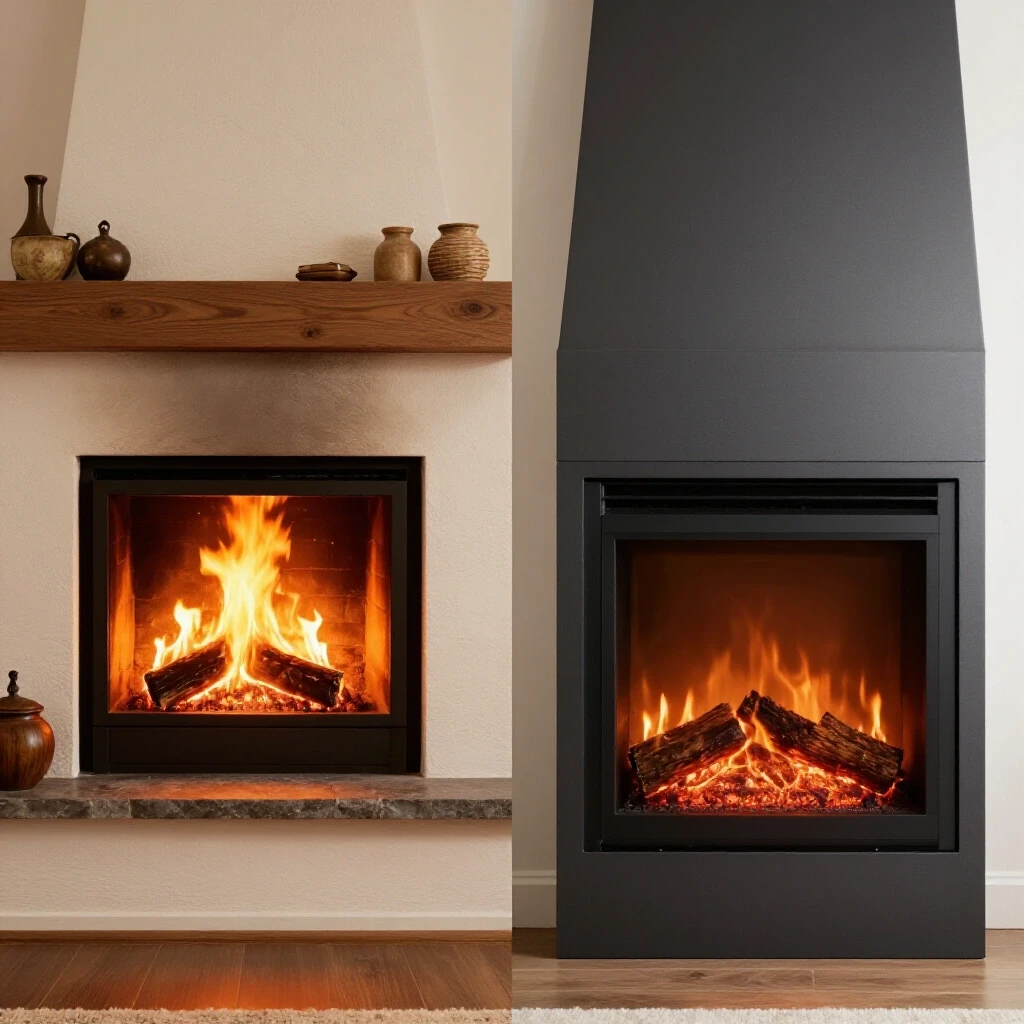
In my experience as a supply chain analyst, I have learned that the “best” material is the one that meets a specific performance standard. For heating systems, those standards are usually defined by thermal efficiency and fuel consumption rates. I once managed a project where we compared the heat output of a standard masonry firebox against a modern, sealed combustion unit. The data showed that the masonry unit acted more like a vacuum, pulling warm air out of the house, while the sealed unit radiated heat back into the room.
Understanding Technical Standards for Home Heating Efficiency
Thermal efficiency is a measurement of how much energy from a fuel source is actually converted into usable heat for a living space. This section explores the technical specifications that separate high-performance heating units from traditional decorative hearths, focusing on BTU output and air exchange rates.
When we talk about heating appliances, we use the term “steady-state efficiency.” This refers to how well the unit performs once it has reached its optimal operating temperature. A traditional masonry hearth often has a steady-state efficiency of only 5% to 15%. In contrast, a high-performance insert can reach 70% to 80%. This is because the insert uses a closed-loop system that prevents the “stack effect,” where warm air escapes through the chimney.
The National Association of Home Builders (NAHB) often points out that the life expectancy of masonry structures is high, but their thermal performance is low. When I evaluate these for a home material comparison, I look at the British Thermal Unit (BTU) rating. A BTU is the amount of heat required to raise the temperature of one pound of water by one degree Fahrenheit. A sealed unit can reliably produce 30,000 to 70,000 BTUs per hour, whereas an open firebox loses most of that energy to the outdoors.
Metallurgy and Material Science in Firebox Construction
The durability of a heating appliance depends heavily on the materials used in its firebox, such as heavy-gauge steel or cast iron. This section defines the technical differences between these materials, explaining how thermal expansion and heat-retention properties impact the long-term value of your purchase.
In my evaluations, I prioritize material thickness, often measured in millimeters or inches. A high-quality insert typically uses 1/4-inch (6.35 mm) or 5/16-inch (7.9 mm) plate steel. Steel is excellent for quick heat transfer, meaning the room warms up faster. However, it can warp over time if the gauge is too thin. Cast iron, on the other hand, is a porous material that takes longer to heat up but retains that heat for hours after the fire has died down.
- Cast Iron: Known for its high thermal mass and ability to be cast into decorative shapes. It resists warping but can crack if subjected to “thermal shock” (rapid temperature changes).
- Welded Steel: Offers a more airtight seal and faster response times. It is generally less expensive to manufacture but requires high-quality welds to prevent air leaks over a 15-year lifecycle.
- Refractory Brick: These are specialized bricks used to line the inside of the firebox. They reflect heat back into the combustion chamber, which increases the internal temperature and ensures a cleaner burn.
Comparing Thermal Performance Specifications
| Feature | Open Masonry Hearth | High-Efficiency Sealed Insert |
|---|---|---|
| Thermal Efficiency | 5% – 15% | 70% – 80% |
| Burn Time (Per Load) | 1 – 2 Hours | 6 – 10 Hours |
| Control Over Airflow | None (Damper only) | Precision Primary/Secondary Air |
| Heat Type | Radiant (Front only) | Convective and Radiant |
| Material Life (Years) | 50+ (Structure) | 15 – 25 (Appliance) |
| Fuel Consumption | High (Rapid Burn) | Low (Controlled Burn) |
The Physics of Heat Transfer: Convection vs. Radiation
Understanding how heat moves through a room is essential for any appliance buying guide. This section explains the “what” and “why” of convective and radiant heat, highlighting how modern inserts use blowers and heat exchangers to move air more effectively than an open fire.
Radiation is the transfer of heat through electromagnetic waves. When you stand in front of an open fire, your skin feels warm, but the air behind you remains cold. This is because an open firebox primarily provides radiant heat. A sealed insert, however, uses a heat exchanger—a series of tubes or a double-walled chamber—to heat the air itself. This is called convection.
Many high-end inserts include a variable-speed blower. This mechanical component pushes room air around the hot firebox and back into the living space. In my technical material specifications logs, I have noted that units with blowers can increase the “perceived heat” in a large room by up to 40% compared to units without them. This makes the trade-off analysis clear: the higher upfront cost of an insert provides a more uniform temperature throughout the home.
Evaluating the Impact on Monthly Energy Expenditures
The primary reason homeowners look for an objective trade-off analysis is to see if a higher price tag leads to lower monthly costs. This section breaks down the fuel-to-heat ratio, showing how the efficiency of a sealed unit directly reduces the amount of wood or fuel needed each season.
During a three-year study of a property I managed, we tracked wood consumption. The open hearth required roughly five cords of wood to provide supplemental heat for a single winter. After installing a high-efficiency insert, that consumption dropped to two and a half cords. With the average price of a cord of wood ranging from $250 to $400, the savings were significant.
- Fuel Volume: Sealed units use secondary combustion to burn the gases and smoke that normally escape. This means you get more heat from every log.
- Air Intake Control: You can “dial down” the air on an insert to create a slow, overnight burn. An open fire burns at full throttle until the wood is gone.
- Draft Reduction: When an open fireplace is not in use, the damper is often the only thing stopping cold air from entering. A sealed unit provides a much tighter barrier against drafts.
Maintenance Cycles and Long-Term Durability
Durability vs. maintenance cost is a major pain point for homeowners. This section outlines the cleaning requirements and component lifespans for both options, ensuring you understand the technical upkeep needed to keep your system safe and efficient.
Maintenance for a traditional firebox is relatively straightforward but frequent. You must remove large volumes of ash and ensure the chimney is swept to prevent creosote buildup. Because open fires burn less efficiently, they produce more creosote—a flammable byproduct of incomplete combustion. In my experience, an open hearth requires more frequent professional cleaning than a high-efficiency unit.
- Glass Maintenance: Modern inserts use ceramic glass (not tempered glass). Ceramic glass has a very low coefficient of thermal expansion, meaning it can withstand temperatures over 1,200°F without breaking. It does require regular cleaning with specialized conditioners to remove “white ghosting” from ash.
- Gasket Seals: The fiberglass gaskets around the door of an insert are a wear item. They usually need replacement every 3-5 years to maintain the airtight seal.
- Blower Cleaning: If your unit has a fan, it will collect dust. I recommend a vacuum cleaning of the blower housing every season to prevent motor burnout.
Upfront Cost vs. 15-Year Maintenance Outlay
| Expense Category | Open Masonry Hearth | High-Efficiency Sealed Insert |
|---|---|---|
| Initial Material Cost | Included in Home Price | $2,500 – $5,000 |
| Annual Fuel Cost | $1,250 (5 Cords) | $625 (2.5 Cords) |
| Annual Maintenance | $200 (Sweeping/Ash) | $150 (Gaskets/Glass/Sweeping) |
| 15-Year Total Cost | $21,750 | $14,125 |
Sourcing and Material Quality Indicators
When you are in the process of choosing high-end home materials, you need to know what to look for on a spec sheet. This section provides a checklist of technical indicators, such as EPA certification and steel thickness, to help you identify a quality appliance.
I always tell homeowners to look for the “EPA Certified” label. This isn’t just about the environment; it is a proxy for efficiency. To meet these standards, a unit must have a high burn temperature and a secondary combustion system. This usually involves a set of stainless steel tubes at the top of the firebox that inject pre-heated air into the smoke, causing it to ignite.
- Check the Gauge: Ensure the firebox is at least 1/4 inch thick. Thinner steel will “oil can” (make popping noises) as it heats and cools.
- Inspect the Firebrick: Look for high-density refractory bricks. If they feel light and pumice-like, they won’t reflect heat as well as heavy, dense bricks.
- Test the Handle: The latching mechanism should be heavy and provide a “cam-lock” feel. This ensures the gasket is compressed tightly against the frame.
- Review the Warranty: A quality manufacturer will offer a limited lifetime warranty on the firebox and 1-5 years on electrical components like blowers.
Case Study: The 1920s Bungalow Efficiency Overhaul
In 2018, I evaluated a property that relied on an old masonry fireplace for “ambiance.” The homeowners were frustrated because their central heating bill spiked by 30% every time they lit a fire. This is a common phenomenon; the fire creates a draft that pulls cold air through every crack in the windows and doors of the house.
We performed a “smoke pencil” test to visualize the airflow. As the fire roared, the smoke pencil showed air rushing out of the room and into the firebox. We replaced the open system with a cast-iron, sealed insert. The result was a 22% reduction in the total winter heating bill. The home stayed warmer because the insert stopped the “room-to-chimney” air transfer, allowing the central furnace to run less frequently.
Technical Spec Tracker and Scoring Matrix
Use this matrix to grade different units you are considering. Assign a score of 1-5 for each category based on the manufacturer’s data sheet.
- Efficiency Rating: (Above 75% = 5 points, Below 60% = 1 point)
- Burn Time: (Over 8 hours = 5 points, Under 4 hours = 1 point)
- Material Quality: (Cast iron or 5/16″ steel = 5 points, Thin gauge = 1 point)
- Blower CFM: (Over 150 CFM = 5 points, No blower = 1 point)
- Glass Surface Area: (Large viewing area = 5 points, Small window = 1 point)
Practical Tips for Matching Materials to Your Lifestyle
Choosing the right heating appliance is about more than just numbers; it’s about how you live. If you only want a fire twice a year for the holidays, the low efficiency of an open hearth might be acceptable. However, if you want to lower your heat bill and use wood as a primary or secondary heat source, the technical advantages of a sealed unit are undeniable.
- Avoid the “Oversizing” Mistake: A common error is buying a unit that is too large for the room. This leads to “over-firing” or having to keep the door open because the room is too hot, which ruins the efficiency.
- Check the Glass Air Wash: Look for units that feature an “air wash” system. This uses a thin curtain of air to keep soot off the glass, reducing your cleaning schedule.
- Consider the Ash Pan: Some inserts have a removable ash pan under the grate. This makes cleaning much easier than shoveling ash out of the front door.
Next Steps for Confident Purchasing
To move forward with your decision, I recommend gathering three specific technical documents for any unit you are considering: the owner’s manual (for maintenance schedules), the EPA certification data (for efficiency), and the warranty terms. Compare these against the baseline of your current masonry fireplace performance.
Start by measuring your existing firebox dimensions. Most manufacturers provide a “fit chart” that shows which inserts will slide into your specific opening. Once you have a shortlist, focus on the material thickness and the type of heat exchange system used. This evidence-based approach will ensure that your higher upfront cost translates into a decade of lower heating bills and a more comfortable home.
Frequently Asked Questions
Does a sealed insert really provide more heat than an open fire? Yes. An open fire loses about 85% to 90% of its heat up the chimney. A sealed insert uses a heat exchanger and controlled airflow to keep up to 80% of that heat inside your home. It changes the fireplace from a decorative hole in the wall into a functional furnace.
How long does a high-quality insert typically last? With proper maintenance, a high-quality steel or cast-iron unit should last 20 to 25 years. The internal components, like the baffle and the door gaskets, may need to be replaced every 5 to 7 years, but the main firebox structure is very durable.
Will I save money on my heating bill immediately? You will see a reduction in fuel consumption (wood) immediately. The impact on your overall utility bill depends on how much you use the unit. If you use it to heat the main living area and turn down your central thermostat, the savings can be between 20% and 40% during the winter months.
Is ceramic glass better than tempered glass? For heating applications, ceramic glass is essential. It can handle the extreme heat of a sealed firebox without shattering. Tempered glass is usually only found on open fireplaces or decorative screens and cannot withstand the high temperatures of a high-efficiency burn.
What is secondary combustion? This is a feature in modern inserts where extra air is introduced at the top of the firebox. This causes the smoke and gases to burn a second time. It increases heat output and reduces the amount of ash and creosote produced.
Does a blower use a lot of electricity? No. Most blowers use about as much electricity as a standard light bulb. They are designed to move a high volume of air at a low speed to maximize heat transfer without creating a loud noise.
Can I use any type of wood? For maximum efficiency, you should only use seasoned hardwood with a moisture content below 20%. Softwoods or “green” wood will create more smoke and creosote, which lowers the efficiency of the unit and increases maintenance needs.
How do I know if my current fireplace is a “heat thief”? If you feel a cold draft near the fireplace when it’s not in use, or if the rest of your house feels colder when you have a fire going, your fireplace is likely pulling warm air out of your home. This is the classic “stack effect” common in open masonry hearths.
Are cast iron inserts better than steel ones? Neither is strictly “better,” but they perform differently. Steel heats up and cools down quickly. Cast iron takes longer to get hot but continues to radiate heat long after the fire is out. Your choice should depend on whether you want “instant” heat or “sustained” heat.
What is the most common maintenance mistake? The most common mistake is failing to replace the door gasket. If the gasket is worn, air leaks into the firebox, making the fire burn too fast and reducing the efficiency of the unit. A simple “dollar bill test” (closing the door on a dollar bill to see if it’s held tight) can tell you if it’s time for a replacement.
(This article was written by one of our staff writers, Andrew Morrison. Visit our Meet the Team page to learn more about the author and their expertise.)