How to Fix Floor Installer Mistakes in Home Renovations (Guide)

You stand in the doorway of your newly finished kitchen, admiring the quartz countertops and the fresh paint. Then you take a step forward and hear a hollow “thud” followed by a noticeable dip under your foot. Your heart sinks because you realize the beautiful wide-plank flooring you spent weeks picking out wasn’t laid on a level surface. This is the moment every homeowner fears: the aesthetic is perfect, but the structural execution is flawed.
In my 18 years as a construction project coordinator, I have learned that the most expensive repairs are the ones you have to do twice. During my second full-home renovation, I encountered this exact dilemma. The surface looked pristine, but the preparation was rushed. Correcting these errors requires a mix of technical knowledge and a systematic approach to residential renovation planning. This guide will help you identify, estimate, and fix common installation oversights to ensure your floors remain durable for decades.
Why Subfloor Preparation Dictates the Success of Your Residential Renovation Planning
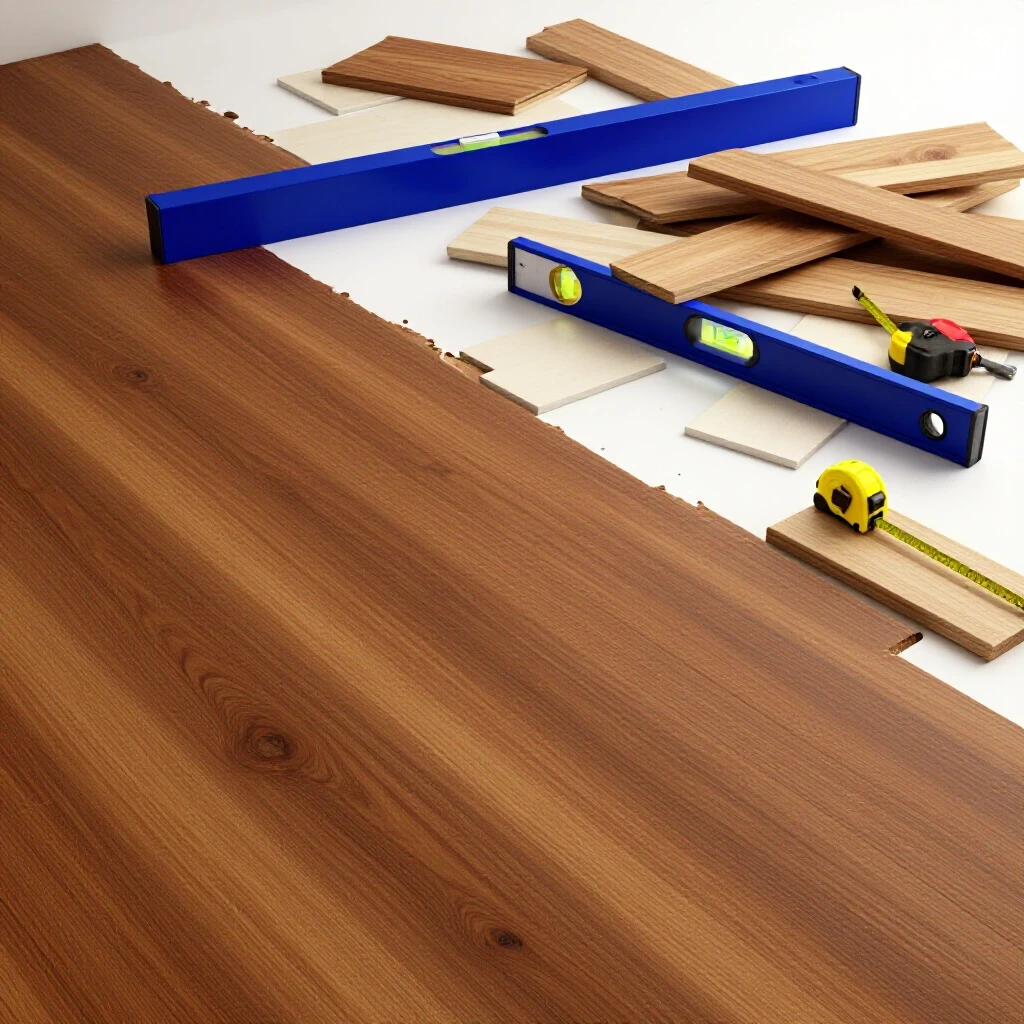
Subfloor preparation is the process of ensuring the structural base of a room is flat, dry, and secure before installing decorative materials. It involves checking for moisture, sanding high spots, and filling low areas. Proper preparation prevents future squeaks, cracks, and uneven surfaces that can ruin an expensive remodel.
When I managed a large-scale renovation in a 1940s colonial, we discovered the original joists had settled significantly. If we had ignored the 1-inch slope across the dining room, the new hardwood would have eventually separated at the tongues and grooves. In home remodeling tips, the “golden rule” is that your finish floor is only as good as what lies beneath it.
Before any material is delivered, you must perform a structural inspection. Use a 10-foot straightedge to check for flatness. Industry standards, often cited by the National Association of the Remodeling Industry (NARI), suggest a tolerance of no more than 3/16 of an inch deviation over a 10-foot span. If your subfloor exceeds this, you will face “deflection,” which is the vertical movement of the floor under a load.
Identifying Leveling Inconsistencies Before the Finish Floor Goes Down
Leveling inconsistencies are localized high or low spots in the subfloor that prevent the finish material from laying flat. These are often caused by warped plywood, proud floor joists, or settled foundations. Identifying these early allows for corrective measures like sanding or using self-leveling underlayment before the expensive top layer is applied.
In my own projects, I use a simple “light test.” Place a powerful flashlight on the floor at night and look for shadows. Shadows indicate high spots, while light pooling indicates a dip. To fix these, you can use a self-leveling compound, which is a cementitious product that flows like water to create a perfectly flat surface. According to RSMeans construction estimating resources, professional application of leveling compound can cost between $1.50 and $3.50 per square foot, depending on the depth required.
- Check for “Squeak Points”: Walk the entire subfloor and mark every squeak with a circle.
- Secure the Base: Use 2-inch subfloor screws to tighten the plywood to the joists; never rely solely on nails.
- Moisture Testing: Ensure the subfloor moisture content is within 2-4% of the finish flooring material to prevent warping.
Estimating Realistic Costs for Floor Surface Corrections
Estimating for floor corrections involves calculating the additional labor and materials needed to fix an uneven or damaged base. This includes the cost of specialized primers, leveling compounds, and the labor hours required for drying and sanding. Accurate forecasting prevents budget-blowing surprises during the execution phase of a remodel.
One of the biggest mistakes I see in a kitchen remodel budget is the failure to include a “floor prep” line item. Most homeowners assume the floor is ready for tile or wood as soon as the old carpet is ripped up. However, real-world bids often exclude extensive leveling. Based on post-occupancy evaluations, projects that skip this step often face a 20% higher maintenance cost over five years due to floor failure.
| Component | RSMeans National Average (Per Sq. Ft.) | Real-World Bid Range (High-Cost Areas) | Contingency Recommended |
|---|---|---|---|
| Basic Subfloor Prep | $0.85 | $1.25 – $2.00 | 10% |
| Self-Leveling (1/4″) | $2.10 | $3.00 – $4.50 | 15% |
| Plywood Overlay (1/4″) | $1.50 | $2.25 – $3.50 | 5% |
| Joist Sistering | $15.00 (per LF) | $25.00 – $40.00 (per LF) | 25% |
Using RSMeans Data to Forecast Material and Labor Surprises
RSMeans data provides a standardized benchmark for construction costs across North America, adjusted for local labor rates. It helps homeowners validate contractor quotes by providing a neutral third-party cost for specific tasks. Using this data allows you to spot “low-ball” bids that might be skipping essential preparation steps.
When you see a bid that is significantly lower than the RSMeans average, ask the contractor about their “prep scope.” If they aren’t planning to sand the seams of the subfloor or check for flatness, you are looking at a future repair bill. In my 18 years of oversight, I have found that spending an extra $500 on prep saves $5,000 in replacement costs later.
Correcting Misaligned Patterns and Expansion Gap Errors
Expansion gaps are intentional spaces left around the perimeter of a room to allow flooring materials to expand and contract with temperature and humidity changes. Misaligned patterns occur when the layout is not squared to the longest wall. Correcting these involves strategic trimming or the use of specialized molding.
I once worked on a project where the installer forgot to leave the required 1/2-inch expansion gap against a stone fireplace. Within three months, the floor “tented” in the middle of the living room because the wood had nowhere to go as it expanded in the summer humidity. We had to carefully use a toe-kick saw to cut the gap back after the fact, a stressful and dusty process that could have been avoided.
The Critical Role of Perimeter Spacing in Hardwood and Laminate
Perimeter spacing is the gap between the edge of the flooring and the wall studs or baseboards. This gap is essential for floating floors and solid hardwoods, which are “hygroscopic,” meaning they absorb moisture from the air. Without this space, the floor will buckle, squeak, or pull apart at the seams.
If you find your floor was installed too tight, you can fix it without a full tear-out. Remove the baseboards and check the edges. If the wood is touching the drywall, use a multi-tool or a specialized flooring saw to create a 3/8-inch to 1/2-inch gap. This allows the “thermal envelope” of the house to shift without destroying your floor’s integrity.
- Visual Alignment: Always start your layout from the longest, most visible wall to minimize the appearance of “crooked” boards.
- Pattern Repeats: In luxury vinyl plank (LVP), ensure you don’t have the same “knot” pattern next to each other; follow a 1-in-6 board repeat rule.
- Undercutting Door Jambs: Instead of cutting the floor to fit the door frame, use a jamb saw to cut the frame so the floor can slide underneath.
Strategic Sequencing to Prevent Surface Damage During Construction
Construction sequencing is the logical order of operations in a remodel to ensure one trade does not damage the work of another. For flooring, this usually means installing the surface as late as possible. Proper sequencing protects the floor from heavy machinery, paint spills, and dropped tools.
In a whole-house remodel, the “critical path” schedule usually places flooring after the “wet trades” (drywall taping and painting) but before the final “trim” (baseboards and shoe molding). I have seen homeowners insist on installing floors early to see progress, only to have the plumbers scratch the finish while installing a heavy bathtub.
Transition Management and Height Differential Solutions
Transitions are the pieces used to bridge the gap between two different types of flooring or two rooms of different heights. Height differentials occur when a thick tile meets a thin laminate. Managing these requires “reducers” or “T-moldings” that provide a safe, trip-free passage between spaces.
If you end up with a height difference of more than 1/4 inch, a standard T-molding won’t work. You will need a “reducer” strip. In my first home renovation, the bathroom tile was nearly an inch higher than the hallway hardwood. We had to custom-mill an oak transition strip to create a gentle ramp. This is a common fix for “outdated wiring” or plumbing repairs that required a thicker subfloor in specific areas.
- Measure the Offset: Use a digital caliper to find the exact height difference between the two floors.
- Select the Profile: Use a “T-mold” for floors of the same height and a “Reducer” for different heights.
- Mechanical Fastening: Always glue and nail transitions into the subfloor, not the finish floor, to allow for movement.
Quality Control Checklists for Final Walkthroughs
A quality control checklist is a systematic list of points to inspect before making the final payment to a contractor. It covers aesthetic details, structural integrity, and functional requirements. Using a checklist ensures that small errors are caught and corrected during the “punch-list” phase rather than months later.
As you finish your project, walk the floor in your socks. Your feet are more sensitive to height changes and “lippage” (where one tile edge is higher than another) than your eyes. In my project logs, I always note the “hollow spot” test: tap the floor with a wooden broom handle. A hollow sound indicates a lack of adhesive or a low spot in the subfloor.
Structural Inspection Checklists for Long-Term Durability
This checklist focuses on the hidden elements that ensure the floor lasts 20+ years. It includes verifying the fastener schedule, checking for “bounce,” and ensuring the moisture barrier was installed correctly. These steps are vital for preventing “mold or rot” in crawlspaces or basements.
- Deflection Test: Place a glass of water in the center of the room and walk past it; if the water ripples significantly, the joists may need bracing.
- Fastener Pattern: For nail-down wood, verify cleats are every 6-8 inches and within 2 inches of every board end.
- Expansion Gap Verification: Use a mirror to look under the baseboards and confirm the gap exists.
- Transition Stability: Ensure all T-moldings and reducers are rock-solid and do not “wiggle” when stepped on.
Conclusion: Taking the Next Steps Toward a Successful Floor Installation
Correcting flooring missteps is about more than just aesthetics; it is about protecting the largest investment in your home. By focusing on subfloor preparation, understanding the real costs of leveling, and ensuring proper expansion gaps, you can avoid the most common pitfalls of residential renovation.
Your next step should be to conduct a “flatness audit” of your current space. Buy a 10-foot straightedge and a moisture meter. These tools cost less than $100 combined but can save you thousands in avoided errors. If you are currently in the middle of a project, don’t be afraid to pause the installation if the subfloor doesn’t look right. It is always easier to fix the foundation than it is to repair the finish.
FAQ: Navigating Flooring Challenges and Corrections
How do I fix a “bouncy” spot in my new floating floor? A bouncy spot is usually caused by a low point in the subfloor. If the floor is already installed, you can sometimes fix this by drilling a small hole in a discreet area and injecting a specialized floor-leveling foam or adhesive. This fills the void and provides a solid base without requiring a full tear-out.
What is the best way to hide a gap that is too wide at the wall? If your expansion gap is wider than your baseboard can cover, do not fill it with caulk, as this will prevent the floor from moving. Instead, add a piece of “shoe molding” or “quarter round” to the bottom of the baseboard. This adds an extra 1/2 inch to 3/4 inch of coverage while allowing the floor to slide underneath.
Can I install new flooring over an old, uneven floor? It is generally not recommended to install new material over an uneven old floor. If the old floor is stable, you can sometimes use a 1/4-inch plywood underlayment to create a new, flat surface. However, you must ensure the added height doesn’t interfere with doors or appliances.
How much should I set aside for “hidden” flooring issues in my budget? For homes over 30 years old, I recommend a 20-25% contingency buffer specifically for flooring and subfloor issues. Older homes often have joist rot or significant settling that isn’t visible until the old flooring is removed.
What should I do if my hardwood floor starts squeaking shortly after installation? Squeaks are usually caused by boards rubbing against each other or a nail that has missed the joist. You can often fix this from below if you have access to the basement by driving a “Squeeeeek No More” screw through the subfloor into the wood. If you don’t have access, a graphite lubricant between the boards can temporarily solve the friction.
Why are my floor planks separating at the ends? End-gap separation is often a sign of low humidity. If the air in your home is too dry, the boards will shrink. Before assuming it is an installation error, try using a humidifier to bring the home’s humidity to 35-50%. If the gaps don’t close, the boards may need to be “tapped” back together using a floor pull bar.
Is self-leveling compound something a homeowner can do? Yes, but it requires speed and a partner. Self-leveling compound sets very quickly (often in 15-20 minutes). One person should be mixing while the other is pouring and spreading. It is a “one-shot” process, so preparation and having all tools ready is critical.
How do I handle a height difference between a new tile floor and an existing wood floor? The most professional fix is a hardwood “reducer” strip that is planed down to match the exact height of both surfaces. Avoid using “universal” transition kits from big-box stores if the height difference is more than 1/2 inch, as they often look bulky and create a trip hazard.
What is the “critical path” for flooring in a kitchen remodel? The ideal sequence is: 1. Demolition, 2. Structural/Subfloor repair, 3. Rough-in plumbing/electric, 4. Cabinets (if using heavy stone tops), 5. Flooring, 6. Baseboards. Some prefer flooring under cabinets, but installing them after cabinets saves material costs and makes future floor replacement easier.
How can I tell if my subfloor is too wet for installation? You must use a moisture meter. For wood flooring, the subfloor should be within 4% of the moisture content of the flooring planks. If the subfloor is too wet, you must run a dehumidifier for several days before starting the installation to prevent the wood from cupping later.
(This article was written by one of our staff writers, David Langford. Visit our Meet the Team page to learn more about the author and their expertise.)