How to Build a Fridge Nook That Fits Your Space (Step-by-Step Guide)

Focusing on the ease of change is a principle I have learned through nearly two decades of coordinating residential projects. When you plan a kitchen layout, you are essentially creating a puzzle where every piece must fit perfectly, yet remain flexible enough for future adjustments. One of the most overlooked elements in this puzzle is the recessed housing for the primary cold storage unit. In my own first home renovation, I learned the hard way that a quarter-inch error in a cabinetry enclosure can derail an entire week of progress. By focusing on how these alcoves integrate with the surrounding cabinetry, you can create a seamless look that feels intentional rather than squeezed in.
Defining the Spatial Requirements for an Integrated Appliance Alcove
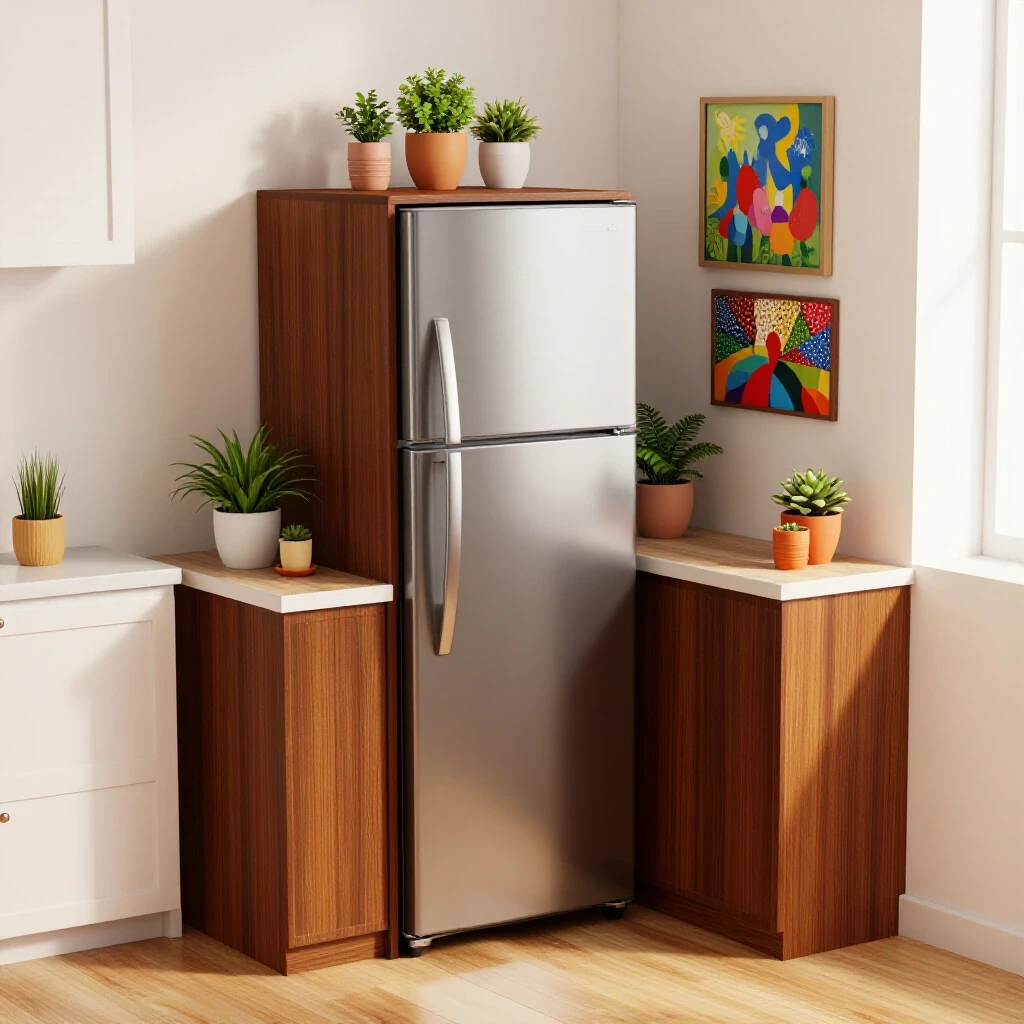
A recessed housing for a refrigerator is a custom-built frame designed to envelop the appliance, making it appear flush with the surrounding cabinetry. This design choice focuses on maximizing floor space while ensuring the appliance does not protrude into the walking path of the kitchen.
When I coordinate a kitchen layout, I start with the “depth-first” rule. Most standard refrigerators are deeper than the 24-inch depth of standard base cabinets. To achieve a built-in look, the alcove must be deep enough to swallow the bulk of the unit while allowing the doors to swing freely. I have seen many homeowners forget that a refrigerator door needs a specific clearance to open past 90 degrees. If the alcove is too tight, the door will hit the cabinet edge, preventing the internal drawers from sliding out.
In my second full-home remodel, I insisted on a 1-inch clearance on all sides of the unit. This buffer isn’t just for aesthetics; it provides necessary ventilation. Without air circulation, the compressor works harder, shortening the life of the machine. I always recommend checking the manufacturer’s specification sheet for “minimum clearances.” If the manual says you need two inches of overhead space, do not try to cheat it down to a half-inch just to close a gap.
Strategic Sequencing for Cabinetry Integration
Sequencing refers to the specific order in which construction tasks are completed to ensure no work has to be undone. For an integrated appliance niche, the framing and cabinetry must be coordinated so that the final opening is perfectly square and plumb.
Building a recessed niche requires a different timeline than a standard cabinet install. In my professional experience, the alcove should be defined during the early design phase, well before any materials arrive on-site. If you are moving walls to create a deeper recess, this happens during the “rough-in” phase. This is when the skeleton of the room is exposed. If you wait until the cabinets are being hung to decide you want a recessed look, you may find yourself facing expensive change orders.
| Renovation Phase | Appliance Alcove Activity | Impact on Project Flow |
|---|---|---|
| Initial Planning | Define dimensions and clearances | Prevents mid-project design shifts |
| Rough-In | Frame the wall recess if necessary | Establishes the physical footprint |
| Cabinet Install | Anchor the side panels and over-fridge cabinet | Finalizes the visual enclosure |
| Finish Work | Install trim or molding to close gaps | Provides the “built-in” aesthetic |
During one project I managed, the homeowner changed their mind about the refrigerator size after the cabinetry was ordered. This led to a “scope creep” situation where we had to modify the surrounding panels. It added four days to the schedule and required custom trim work that wasn’t in the original plan. To avoid this, I suggest finalizing your appliance selection before the first cabinet is even built.
Managing Design Variations and Material Selection
Material selection for an appliance enclosure involves choosing the side panels, over-fridge cabinets, and trim that will match the rest of the kitchen. The goal is to create a cohesive visual flow where the appliance feels like a part of the furniture.
I prefer using 3/4-inch plywood panels for the sides of the alcove rather than thinner materials. Plywood offers the structural rigidity needed to support the heavy cabinet that often sits above the refrigerator. In many of my projects, we use “end panels” that match the door style of the kitchen. This creates a consistent texture and color throughout the space. If you are using a wood veneer, ensure the grain direction matches the adjacent cabinets to maintain a high-end look.
When considering the over-refrigerator cabinet, think about accessibility. These are often deep and hard to reach. I often suggest installing pull-out trays or vertical dividers for cookie sheets in this space. This turns a “dead” storage area into a functional part of the kitchen. In my own kitchen, I used a deep cabinet with heavy-duty hinges to store large holiday platters. It keeps them out of the way but makes them easy to grab when needed.
Avoiding Common Layout Mistakes in Appliance Placement
Layout mistakes in an appliance niche can lead to “choke points” in the kitchen where traffic is blocked whenever the refrigerator is open. Quality control involves verifying that the niche is placed in a location that supports a logical workflow.
One of the biggest mistakes I see is placing the refrigerator niche directly next to a wall. If the unit is flush against a side wall, the door on that side will likely not open all the way. This is a classic design error that can be caught during the planning phase. I recommend placing a 3-inch or 6-inch filler cabinet or “pull-out spice rack” between the refrigerator and the wall. This small gap provides the necessary swing room for the door.
Another factor is the “work triangle”—the distance between the sink, stove, and refrigerator. The niche should be placed so that the path between these three points is clear. In a project I coordinated last year, the homeowner wanted the refrigerator at the far end of a long island. We realized during a walkthrough that this would require them to walk twenty feet every time they needed an egg. We moved the niche three feet closer to the prep area, which significantly improved the kitchen’s usability.
Estimating and Budgeting for Custom Enclosures
Budgeting for a custom appliance housing involves accounting for the extra cabinetry panels, the over-fridge cabinet, and the labor to ensure everything is level. While it may seem like a small detail, these costs can add up if not planned correctly.
Using data derived from RSMeans, a standard kitchen remodel can see a 5% to 10% increase in cabinetry costs when moving from a “freestanding” look to a “fully integrated” alcove look. This is due to the additional panels and the precision required for the installation. I always advise homeowners to set aside a contingency buffer for these types of custom details. For a kitchen in an older home, a 20% contingency is safer because walls are rarely perfectly straight.
| Property Age | Recommended Contingency Buffer | Reasoning |
|---|---|---|
| New Construction (0-10 years) | 10-12% | Fewer surprises behind surfaces |
| Mid-Age Home (10-40 years) | 15% | Potential for minor leveling issues |
| Historic Home (40+ years) | 20-25% | High likelihood of non-plumb walls |
I once worked on a 1920s bungalow where the floor sloped two inches from one side of the kitchen to the other. To make the refrigerator niche look right, we had to build a custom plinth to level the unit. Without a healthy contingency fund, that unexpected labor would have blown the budget.
Post-Occupancy Evaluation of the Kitchen Workflow
A post-occupancy evaluation is a review of how the space functions after you have lived in it for a few months. This is the ultimate test of whether the appliance niche was designed and executed correctly.
After my own kitchen remodel, I realized that the 1-inch gap I left at the top of the refrigerator was a magnet for dust. In subsequent projects, I started recommending a “removable valance” or a piece of matching trim that can be popped off for cleaning or when the appliance needs to be serviced. This maintains the sleek look while remaining practical.
Ask yourself these questions three months after the project is finished: – Can I open the refrigerator doors wide enough to remove the vegetable crisper drawers? – Is there enough space to pull the unit out for cleaning without scratching the side panels? – Does the over-fridge storage feel useful, or is it too high to reach?
Actionable Framework for Planning Your Appliance Niche
To ensure your project stays on track, follow this systematic approach. This framework is based on the checklists I used during my 18 years in the field to keep projects moving without friction.
- Measure Three Times: Measure the height, width, and depth of your chosen appliance. Then, find the “total dimensions” including the door swing and handle depth.
- Consult the Spec Sheet: Download the manufacturer’s installation guide. Highlight the required clearances for air circulation.
- Map the Floor Plan: Mark the location of the niche on your floor with painter’s tape. Walk through your daily routine to see if the open doors block any paths.
- Verify Plumb and Level: Use a long level to check the walls and floor where the niche will go. If they aren’t straight, plan for shims or custom trim.
- Finalize Cabinetry Orders: Ensure the side panels are deep enough to cover the refrigerator’s body but shallow enough to let the doors clear.
Frequently Asked Questions
How much extra space should I leave around the refrigerator in the niche? Most manufacturers require at least 1/8 to 1/4 inch on the sides and 1 to 2 inches at the top for ventilation. However, for a built-in look, I recommend a 1/2-inch gap on the sides to allow for slight adjustments if the walls aren’t perfectly square. Always prioritize the manufacturer’s specific ventilation requirements to avoid voiding your warranty.
Can I build a niche for a refrigerator I already own? Yes, but you must ensure the existing unit is a “cabinet-depth” model if you want it to be flush. Standard-depth models will always stick out about 6 to 10 inches past the cabinets. If you are okay with the unit protruding, you can still build a niche, but the side panels will need to be deeper to hide the sides of the machine.
What is the best material for the side panels of the alcove? I recommend 3/4-inch furniture-grade plywood with a veneer that matches your cabinets. Plywood is more stable than particle board and can better support the weight of the upper cabinet. Avoid using thin 1/4-inch “skins” for the sides, as they tend to warp and won’t provide a high-quality finished look.
How do I handle the gap between the top of the fridge and the cabinet above? You can leave it open for maximum ventilation, or you can use a matching trim piece called a “fill strip” or “valance.” If you use a trim piece, ensure it is set back slightly from the front of the cabinet or is easily removable so the refrigerator can still be pulled out for maintenance.
What happens if my floor is unlevel where the niche is being built? This is common in older homes. The refrigerator itself usually has leveling legs, but the cabinetry enclosure must be built level to look right. Your installation team should use shims under the side panels and the over-fridge cabinet to ensure the lines of the niche are perfectly horizontal and vertical, regardless of the floor’s slope.
Does a recessed niche make the refrigerator harder to repair? It can if the fit is too tight. I always ensure there is enough “wiggle room” to slide the unit out without damaging the floor or the side panels. Using floor protectors or “air sleds” during installation and maintenance is a best practice I’ve used for years to prevent floor scratches.
Can I put a refrigerator niche next to an oven? It is possible, but not ideal. The heat from the oven can cause the refrigerator to work harder. If the layout requires them to be adjacent, I recommend using a high-quality “heat shield” or a 1.5-inch thick insulated gable between the two appliances to minimize heat transfer.
How deep should the over-refrigerator cabinet be? To achieve a cohesive look, the over-fridge cabinet should be the same depth as the side panels (usually 24 to 27 inches). This brings the cabinet forward so it is flush with the front of the refrigerator’s body, making the storage more accessible than a standard 12-inch deep wall cabinet.
(This article was written by one of our staff writers, David Langford. Visit our Meet the Team page to learn more about the author and their expertise.)