How to Prevent Gutter Ice Dams: Best Solutions Explained (Guide)

Many homeowners believe that thick ridges of ice forming along their rooflines are caused by faulty gutters or heavy snowfall. In my 17 years of maintaining older properties, I have found that these frozen blockages are rarely a gutter problem; they are almost always a symptom of heat loss from the living space. Addressing the ice itself is a temporary fix that ignores the underlying physics of your home.
Understanding Attic Heat Dynamics and Roof-Edge Ice
Building science involves studying how heat, air, and moisture move through a home’s structure. In winter, this field explains how warm air rising into an attic melts snow on the roof, which then refreezes at the cold eaves. Understanding these physics is the first step toward preventing structural damage and ensuring long-term residential diagnostics.
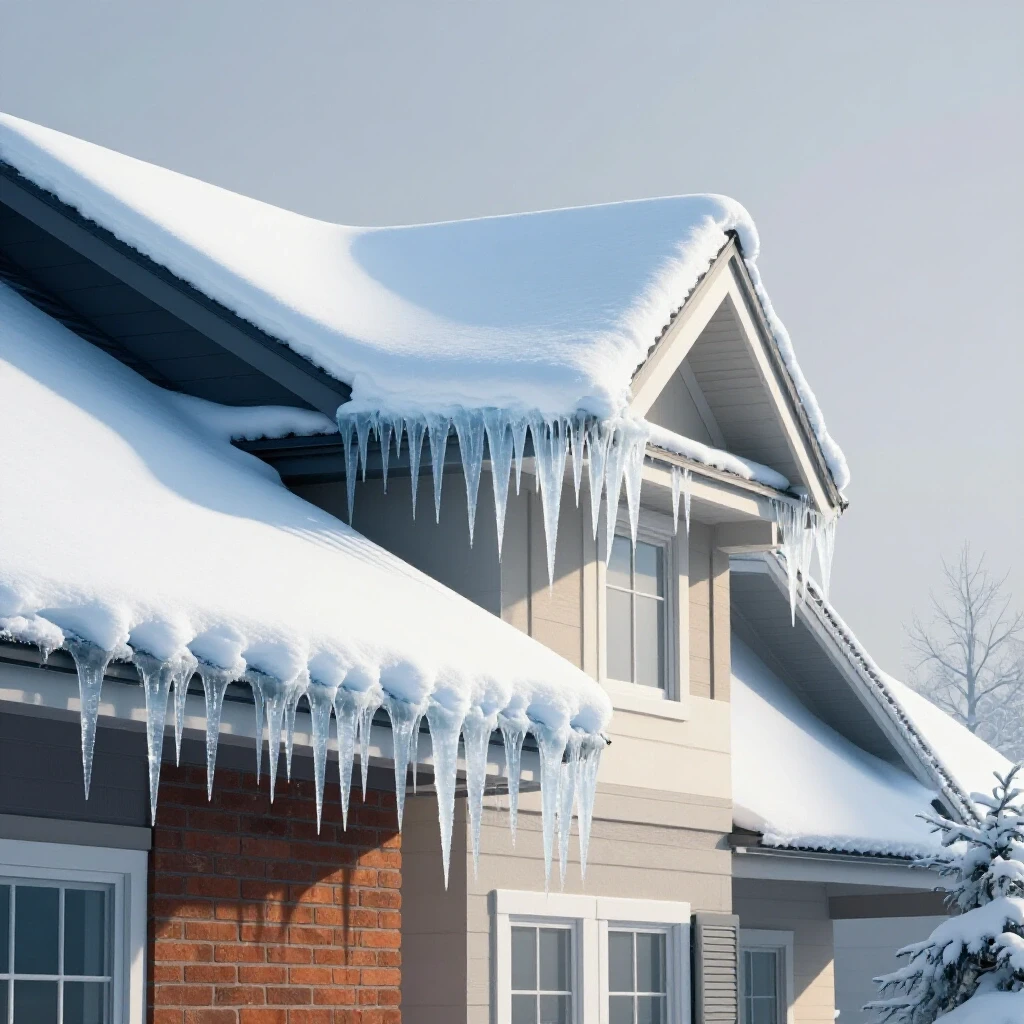
When I managed a 1940s colonial, I noticed that ice always formed in the same spot above the kitchen. The snow would melt there even when the rest of the roof stayed white. This happened because of the stack effect. This is a process where warm, less dense air rises to the top of a building and escapes through gaps, creating a vacuum that pulls cold air in at the bottom.
As that warm air hits the underside of the roof deck, it raises the temperature of the shingles above the freezing point. The snow melts and flows down toward the gutters. However, the gutters and the roof overhang are not over the heated house; they are exposed to the cold air from both sides. When the meltwater reaches these cold surfaces, it refreezes, creating a physical barrier that traps subsequent runoff.
The Role of Thermal Bridging in Winter Build-up
Thermal bridging occurs when a more conductive material allows heat to bypass an insulation layer. In older homes, wooden rafters or metal pipes often act as bridges, carrying heat from the warm interior directly to the cold roof deck. This localized heating creates specific points where ice begins to accumulate, often leading to moisture intrusion.
During a structural protection audit, I often look for “ghosting” or specific melt patterns on a roof. If you see lines of shingles where the snow has disappeared while the rest of the roof is covered, you are seeing thermal bridging in action. The heat is traveling through the wooden rafters. While wood is a decent insulator, it is much less effective than fiberglass or cellulose.
To quantify this, we look at R-values, which measure a material’s resistance to heat flow. A standard 2×6 rafter has an R-value of about 6.8. In contrast, modern building codes often require attic insulation levels of R-49 to R-60. This massive difference means heat moves through the wood nearly ten times faster than through the surrounding insulation, creating the temperature fluctuations that feed ice formation.
Diagnostic Tools for Winter Moisture Detection
Effective preventative home care relies on using the right tools to find what the naked eye misses. Thermal imaging and moisture meters allow you to see heat signatures and hidden dampness before they cause rot or mold. These tools transform guesswork into a systematic diagnostic process for any homeowner.
When I perform a home maintenance checklist in the winter, I rely on three primary tools:
- Infrared (IR) Thermal Camera: This identifies “hot spots” on your ceiling or roof. A temperature differential of even 5 to 10 degrees Fahrenheit can indicate an air leak.
- Pinless Moisture Meter: I use this on the interior drywall near the eaves. If the moisture content in the wood or plaster exceeds 15% to 19%, it suggests that water is already backing up under the shingles.
- Digital Anemometer: This measures airflow. I use it to check if the soffit vents are actually pulling air into the attic or if they are blocked by old insulation.
Symptom-to-Root-Cause Diagnostic Tree
| Observed Symptom | Immediate Physical Cause | Underlying Systemic Failure |
|---|---|---|
| Icicles forming behind the gutter | Water bypassing the flashing | Ice dam forcing water under the drip edge |
| Frost on attic roofing nails | High humidity in the attic | Poor ventilation or bathroom fan venting into attic |
| Snow melting over the garage | Heat loss through the ceiling | Lack of insulation or unsealed attic hatch |
| Damp insulation near the eaves | Capillary action | Water being pulled upward by the ice barrier |
Air Sealing and Insulation Strategies
Air sealing is the process of closing gaps between the living space and the attic to prevent convection. Insulation then provides a thermal barrier to slow down conduction. Together, these two steps are the most effective way to keep the roof deck cold and prevent the freeze-thaw cycle.
In my experience, homeowners often add more insulation without sealing air leaks first. This is a mistake. Insulation is like a sweater; it keeps you warm but doesn’t stop the wind. Air sealing is like a windbreaker. I once spent three days in a cramped attic sealing “top plates”—the tops of the interior walls—with expanding spray foam.
We focused on electrical penetrations, plumbing stacks, and recessed light fixtures. These small gaps can leak a massive amount of warm air. By sealing these, we reduced the attic temperature by 12 degrees, which was enough to stop the ice from forming. We then ensured the insulation reached a depth of at least 15 to 18 inches of blown-in cellulose to meet modern standards.
Measuring Success with R-Values
When evaluating your attic, you need to know the current R-value of your materials.
- Fiberglass Batts (Pink/Yellow): Approximately R-3.2 per inch.
- Blown-in Cellulose (Grey): Approximately R-3.5 to R-3.8 per inch.
- Closed-Cell Spray Foam: Approximately R-6.0 to R-7.0 per inch.
If you have only 6 inches of old fiberglass, you are at an R-19. Upgrading to 18 inches of cellulose brings you to roughly R-63, which significantly reduces the heat available to melt snow on your roof.
Optimizing Attic Ventilation for Temperature Regulation
Attic ventilation uses natural airflow to keep the roof deck at the same temperature as the outdoor air. A balanced system uses intake vents at the eaves and exhaust vents at the ridge to create a continuous flow of cool air. This prevents heat from building up and melting the snow.
A common issue I see in older properties is “clogged” ventilation. Over decades, homeowners or contractors often push insulation deep into the corners of the attic, inadvertently covering the soffit vents. This suffocates the attic.
To fix this, I install vent baffles (also called rafter tails). These are plastic or foam channels that attach directly to the roof sheathing. They ensure that there is at least a 2-inch gap for air to flow from the soffits up into the main attic space, regardless of how much insulation is added.
Ventilation Math for Homeowners
The Federal Housing Administration (FHA) recommends a minimum of 1 square foot of net free vent area (NFVA) for every 300 square feet of attic floor space. This should be split 50/50 between intake (soffits) and exhaust (ridge or gable vents). If your attic is 1,200 square feet, you need 4 square feet of total venting. If you have less than this, heat will remain trapped, regardless of how much insulation you have.
Managing Electrical Heating Elements for Eave Protection
Low-profile heating cables are specialized electrical wires installed in a zigzag pattern along the roof edge and inside gutters. They do not prevent ice from forming, but they create “melt channels” that allow water to escape. This prevents hydraulic pressure from forcing water under the shingles.
When insulation and ventilation aren’t enough—often due to complex roof geometries or structural limitations—I turn to self-regulating heating cables. Unlike old-fashioned constant-wattage cables, self-regulating versions adjust their heat output based on the ambient temperature.
I prefer to hardwire these into a dedicated 20-amp circuit with a specialized controller. These controllers use a moisture sensor and a temperature sensor. The system only activates when it is both cold enough to freeze (usually below 38°F) and wet enough to form ice. This prevents the system from wasting electricity on dry, cold days.
Electrical Resistance and Safety Standards
Heating cables work through electrical resistance, converting current into heat. It is vital to follow the Consumer Product Safety Commission (CPSC) guidelines:
- GFCI Protection: Always use a Ground Fault Circuit Interrupter to prevent fire or shock.
- No Overlapping: Never cross the cables over each other, as this can cause localized overheating and wire failure.
- Annual Inspection: Check for brittle jackets or exposed wires every October before the first frost.
Step-by-Step Winter Maintenance Schedule
A preventative maintenance framework helps you stay ahead of weather-related issues. By breaking tasks down by the month, you can address small signs of wear before they become structural emergencies. This systematic approach is the hallmark of professional residential diagnostics.
Fall Preparation (October – November)
- Gutter Cleaning: Remove all organic debris. Even a handful of leaves can act as a dam for slush, accelerating ice formation.
- Downspout Testing: Run a hose through the gutters to ensure water exits at least 5 to 10 feet away from the foundation.
- Visual Shingle Check: Look for curled or missing shingles near the eaves that might allow water to enter if a blockage occurs.
Winter Monitoring (December – March)
- Snow Depth Assessment: If more than 6 inches of heavy wet snow accumulates, consider using a roof rake from the ground to clear the first 3 feet of the roof edge.
- Interior Ceiling Checks: Look for water spots or bubbling paint in the corners of rooms on the top floor.
- Ice Thickness Monitoring: If ice in the gutter exceeds 2 inches in height, it is time to check your heating cables or attic temperature.
Spring Recovery (April – May)
- Gutter Alignment Check: Heavy ice can bend gutter hangers. Ensure the gutters still have a slope of 1/4 inch per 10 feet toward the downspouts.
- Fascia Inspection: Look for “tiger stripping” (dark streaks) or rot on the wooden boards behind the gutters, which indicates water has been backing up.
DIY vs. Professional Scope Limits
| Task | DIY Appropriate | Professional Required |
|---|---|---|
| Clearing gutters of leaves | Yes, with a secure ladder | N/A |
| Installing vent baffles | Yes, if attic access is safe | N/A |
| Blown-in insulation | Yes, with rental equipment | N/A |
| Adding a dedicated 20A circuit | No | Licensed Electrician |
| Structural roof repairs | No | Licensed Roofer |
| Spray foam in tight crevices | Yes, with DIY kits | Large-scale attic envelopes |
Real-World Case Study: The 1950s Ranch Failure
I once consulted on a 1950s ranch house that suffered from recurring water leaks every February. The homeowner had replaced the gutters twice, but the leaks persisted. Using a thermal camera, we discovered that the bathroom exhaust fan was not actually vented to the outside. It was blowing warm, moist air directly into the attic insulation.
This created a massive “hot spot” on the roof. The snow would melt, run down to the cold eave, and freeze. We fixed the issue by: 1. Extending the fan ductwork through the roof with a proper cap. 2. Air sealing the attic hatch with weatherstripping. 3. Adding 10 inches of additional cellulose.
The total cost was under $600 in materials. The following winter, despite record snowfall, the roof remained clear of ice blockages. This illustrates that the “fix” is often found in the mechanical systems, not the exterior drainage.
Long-term Structural Protection and Prevention
The goal of these interventions is to preserve the building envelope. When water is trapped by ice, it can enter the home through capillary action. This is the ability of a liquid to flow in narrow spaces without the assistance of, or even in opposition to, external forces like gravity. Water literally “climbs” up under the shingles and into your walls.
By maintaining a cold roof deck through insulation, sealing, and ventilation, you eliminate the energy source that creates the ice. This protects your rafters from rot, your insulation from losing its R-value due to dampness, and your interior finishes from costly water damage.
Frequently Asked Questions
How much insulation do I really need to prevent ice buildup? Most building scientists recommend reaching an R-value of at least R-49 in northern climates. This usually requires about 15 to 18 inches of blown-in cellulose or fiberglass. However, insulation alone won’t work if you have significant air leaks from the house into the attic.
Will new gutters stop ice from forming on my roof? No. Gutters do not cause ice dams, and new ones will not stop them. Ice forms when snow melts on a warm roof and refreezes on a cold eave. While clean gutters help water flow, the freezing process happens on the roof surface itself.
Are heating cables expensive to run all winter? If you use self-regulating cables with a moisture and temperature controller, the cost is relatively low because they only turn on when necessary. Constant-wattage cables that stay on all winter can significantly increase your utility bill.
Can I just use a roof rake to solve the problem? A roof rake is a good reactive tool. By removing the “fuel” (snow) from the bottom 3 to 4 feet of the roof, you prevent the meltwater from forming. However, it is a manual chore and doesn’t address the root cause of heat loss.
How do I know if my attic ventilation is working? On a cold day, the temperature inside your attic should be within 5 to 10 degrees of the outside temperature. If it is significantly warmer, your ventilation is likely inadequate or blocked.
What is the most common air leak in older homes? In my experience, the “bypass” around the chimney and the gaps around recessed “can” lights are the biggest offenders. These act like chimneys, sucking warm air out of your living room and dumping it directly onto the underside of your roof.
Should I remove the ice with a hammer or shovel? Never. Hitting the ice can shatter your shingles, especially in freezing temperatures when they are brittle. If you must remove ice, use warm water or wait for a natural thaw. Prevention through insulation is always safer for the structure.
Does a ridge vent work better than gable vents? Generally, yes. A ridge vent provides exhaust at the highest point of the roof, which works with the natural rise of warm air. When paired with soffit intake vents, it creates the most consistent airflow across the entire underside of the roof deck.
Is it safe to install heating cables myself? If you are comfortable working on a ladder and have an existing outdoor GFCI outlet, you can install the cables. However, if you need a new electrical circuit or want the system hardwired, you should hire a professional to ensure it meets local electrical codes.
Why does ice only form on one side of my house? This is usually due to “solar loading” or interior heat patterns. One side of the house may get more sun, or it may be located above a room with a high ceiling or a heat-producing appliance like a furnace or water heater.
(This article was written by one of our staff writers, Daniel Whitaker. Visit our Meet the Team page to learn more about the author and their expertise.)