Gutter Replacement Cost Breakdown & Budget Guide (Homeowners)

Modern water management systems are evolving rapidly with a focus on eco-tech and sustainable infrastructure. Homeowners are increasingly looking at high-efficiency drainage solutions that integrate with rainwater harvesting and utilize recycled materials. These advancements not only protect the structural integrity of a property but also align with a more environmentally conscious approach to homeownership. As a financial planner, I view these upgrades through a lens of long-term asset protection and capital preservation.
Establishing a Financial Framework for Water Management Systems
A home renovation budget is a calculated financial plan that outlines all expected costs for a project, including materials, labor, and a safety net for surprises. It serves as a roadmap to ensure the work remains affordable without compromising other financial goals or long-term stability. This framework prevents emotional overspending and keeps the project within the limits of your localized market value.
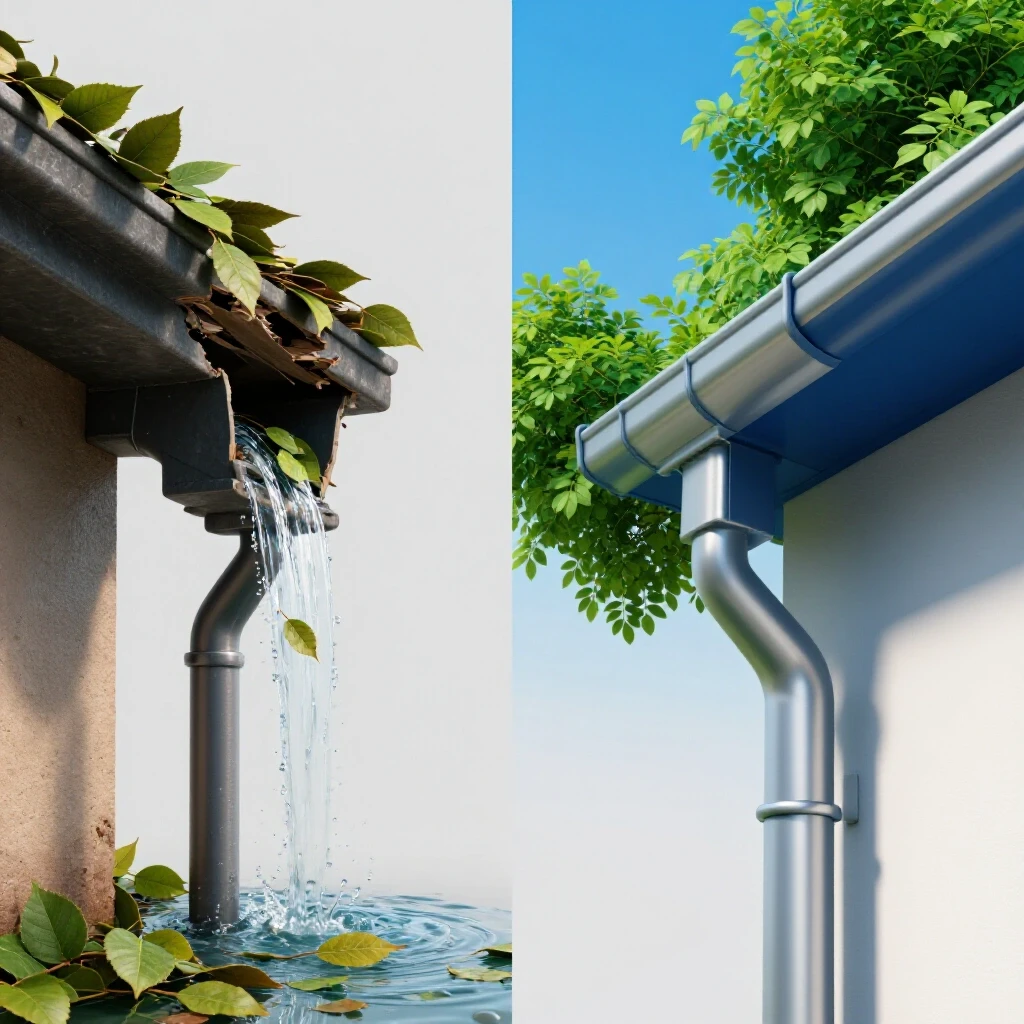
When I analyzed my own property ledgers from 2014 and 2021, I noticed a significant shift in how exterior maintenance impacts the bottom line. For cost-conscious home planners, replacing drainage channels isn’t just a repair; it is a strategic investment in the home’s envelope. To start, you must establish a borrowing or funding boundary. If you are using cash, your limit is absolute. If you are looking at financing, you must calculate the interest rate amortization over the life of the improvement.
I recommend a “top-down” budgeting approach. Start with the maximum amount you can spend without triggering financial strain. From there, subtract a 20% contingency buffer. The remaining 80% is your working capital for materials and labor. This method ensures that even if costs escalate, you are not dipping into emergency savings or retirement accounts.
The 10-30% Contingency Buffer for Exterior Projects
A contingency buffer is a reserved portion of the budget, usually between 10% and 30%, set aside to cover unforeseen expenses that arise during construction. This financial cushion protects the homeowner from mid-project work stoppages due to hidden damage or sudden material price hikes. It is a vital component of a remodeling expense tracker.
In my experience tracking over a dozen residential projects, exterior work rarely stays exactly on budget. When removing old drainage systems, contractors often find rotted fascia boards or damaged rafter tails that were hidden from view. If you haven’t allocated a specific line item for these “hidden fees,” your project could stall. For older homes (built before 1980), I advise a 25% buffer. For newer constructions, 15% is typically sufficient.
Localized Cost Factors and Regional Labor Indexing
Localized cost factors are variables specific to your geographic area, such as regional labor demand, transportation costs for materials, and local municipal fees. Understanding these ensures your estimates reflect your actual market rather than a national average. This data is crucial for creating an accurate cost breakdown guide.
Labor rates fluctuate wildly based on your zip code. According to data from the U.S. Bureau of Labor Statistics, construction labor costs in urban hubs can be 30% to 50% higher than in rural areas. When I assist clients with their financial planning for homeowners, we use a regional labor multiplier. For example, if the national average for a specialized installer is $75 per hour, a homeowner in San Francisco might need to budget $115 per hour.
| Region | Labor Cost Coefficient | Estimated Hourly Rate |
|---|---|---|
| Northeast | 1.25 | $85 – $110 |
| Midwest | 0.95 | $60 – $80 |
| South | 0.90 | $55 – $75 |
| West | 1.35 | $95 – $125 |
Material Line-Item Breakdowns and Market Volatility
A cost breakdown guide for materials involves a detailed list of every physical component required for the project, from the primary channels to the smallest fasteners. This list allows homeowners to track price fluctuations in real-time and make informed decisions about material quality versus total cost. It is the foundation of any detailed remodeling spreadsheet.
The choice of material is the largest variable in your initial capital outlay. While many planners look only at the sticker price, I encourage you to look at the “cost-per-year” of the material’s expected lifespan. This is a form of cost-benefit amortization.
- Aluminum: This is the most common choice due to its balance of cost and durability. It is lightweight and resistant to rust.
- Steel: Galvanized steel offers superior strength in areas with heavy snow loads but requires more maintenance to prevent corrosion over time.
- Copper: This is a premium material that offers extreme longevity (often 50+ years) and high aesthetic value, but the initial investment is significantly higher.
Calculating Linear Footage and Roof Complexity
Project scope definition is the process of measuring the exact physical requirements of a job to prevent over-ordering materials. In the context of drainage, this includes measuring the total linear feet of the roofline and identifying complex angles, multiple levels, or steep pitches. This precision is key to avoiding waste.
Interestingly, the linear footage is only half of the story. A simple rectangular ranch home with 200 feet of roofline will cost much less to service than a Victorian home with the same footage but ten different corners and three stories. Complexity adds labor hours. In my personal remodeling expense tracker, I categorize roof complexity on a scale of 1 to 5. A level 5 complexity can increase labor costs by 40% compared to a level 1.
| Material Type | Cost Per Linear Foot (Installed) | Expected Lifespan |
|---|---|---|
| Aluminum | $6 – $12 | 20 Years |
| Galvanized Steel | $9 – $20 | 15 – 20 Years |
| Copper | $25 – $50 | 50+ Years |
Accounting for Hidden Fees and Municipal Requirements
Permit and inspection fees are mandatory costs paid to local governments to ensure that home improvements meet safety and building codes. These fees vary by municipality and are often overlooked in initial estimates, leading to budget overruns. They are a non-negotiable part of a professional home renovation budget.
Building on the material costs, we must look at the administrative side of the project. Some jurisdictions require a permit for any work that alters the exterior of a home or its drainage patterns. Failing to account for these can lead to fines or issues when you eventually try to sell the home. In my analysis of housing market cost reports, unpermitted work can decrease a home’s value by more than the cost of the project itself.
The Impact of Debris Removal and Disposal Costs
Disposal fees are the costs associated with hauling away and processing old materials from a job site. These are often calculated by weight or volume and can include landfill taxes and transportation surcharges. Including these in your initial spreadsheet prevents a common “end-of-project” financial surprise.
Many homeowners forget that the old system has to go somewhere. Contractors will charge for the labor to remove the old channels and the fees to dump them. If you are replacing a heavy steel system, the weight-based disposal fees might be higher than you expect. Always ask for a specific line item for “waste management” in your quotes to ensure it is not hidden in a general labor charge.
Cost-to-Value Recovery and Long-Term ROI
Return on Investment (ROI) in home improvement is the percentage of the project’s cost that is recouped through an increase in the home’s market value. Lifestyle value, conversely, is the non-monetary benefit of the improvement, such as peace of mind or reduced maintenance. Balancing these two is the core of smart financial planning for homeowners.
According to Remodeling Magazine’s Cost vs. Value reports, exterior maintenance projects generally have a higher recoup rate than interior cosmetic ones. While a kitchen remodel might recover 60%, essential exterior protection often recovers 70% to 80%. This is because savvy buyers prioritize a “tight” and well-maintained envelope over trendy finishes.
Depreciation Schedules and Maintenance Sinking Funds
A depreciation schedule is a financial tool used to track the declining value of an asset over time. For home components, it helps you estimate when a system will need replacement again, allowing you to save incrementally. A maintenance sinking fund is a dedicated savings account where you deposit small amounts monthly to cover these future costs.
Building a sinking fund is the best way to avoid debt for future projects. If an aluminum system costs $3,000 and lasts 20 years, it “costs” you $150 per year in depreciation. By saving $12.50 a month in a dedicated account, you ensure that the next replacement is already paid for. This is the hallmark of a cost-conscious home planner.
| Project Phase | Projected Budget | Actual Expenditure | Variance |
|---|---|---|---|
| Materials (Aluminum) | $1,800 | $1,950 | +$150 |
| Labor (Standard) | $1,200 | $1,450 | +$250 |
| Permits/Fees | $150 | $150 | $0 |
| Contingency (20%) | $630 | $300 (Used) | -$330 |
| Total | $3,780 | $3,850 | +$70 |
Strategic Financing and Tax Assessment Adjustments
Financing reserve guidelines are the rules of thumb for how much debt you should take on for a home project. Generally, I advise that any home improvement loan should not push your total debt-to-income ratio above 36%. This protects your ability to handle other financial obligations.
If you are not paying cash, the method of financing is critical. A Home Equity Line of Credit (HELOC) often offers lower rates than a personal loan, but it uses your home as collateral. You should also consider the tax implications. In some regions, substantial exterior improvements can lead to a reassessment of your property value, which might slightly increase your annual property taxes. However, these are often classified as capital improvements, which can be added to your home’s cost basis, potentially reducing capital gains taxes when you sell.
Sweat-Equity Valuation and Labor-to-Material Ratios
Sweat-equity valuation is the process of assigning a dollar value to the labor a homeowner performs themselves. While it saves out-of-pocket cash, it has an “opportunity cost”—the value of the time spent working on the house instead of earning money elsewhere or resting. Understanding this ratio helps determine if hiring a professional is more “cost-effective.”
A typical labor-to-material ratio for drainage work is 60:40. This means for every $400 you spend on materials, you will likely spend $600 on professional labor. If you are a high-earning professional, spending 20 hours of your weekend to save $600 might not make financial sense. However, for those in the 28-55 age bracket looking to maximize their remodeling expense tracker, performing small parts of the prep work can be a valid way to stay under budget.
Practical Tools for Tracking Home Finances
To keep your project on track, I recommend using a combination of digital tools and manual spreadsheets. This ensures that every penny is accounted for and that you can spot trends in your spending before they become problems.
- Custom Excel/Google Sheets: Create a multi-tab workbook. Tab one for the budget, tab two for actual receipts, and tab three for contractor contact info and quotes.
- Construction Pricing Indexes: Use online resources that track the current market price of metals like aluminum and copper to time your purchase.
- Regional Labor Calculators: Consult local trade association websites to find the current “going rate” for installers in your specific city.
- Home Value Tracking Software: Use tools that estimate your home’s current market value to ensure you aren’t over-improving for your neighborhood.
Actionable Next Steps for Home Planners
To move forward without financial strain, follow these steps in order. This sequence is designed to protect your cash flow and ensure a high-quality result.
- Step 1: Conduct a Linear Footage Audit. Measure your roofline twice. Note every corner, downspout location, and elevation change.
- Step 2: Define Your Funding Source. Decide if this is a cash project or a financed one. If financing, get pre-approved to know your exact interest rate.
- Step 3: Gather Three Localized Quotes. Ensure each contractor provides a line-item breakdown that separates labor, materials, and fees.
- Step 4: Update Your Spreadsheet. Input the quotes into your remodeling expense tracker and compare them against your 20% contingency-adjusted budget.
- Step 5: Verify Permits. Call your local building department to confirm if a permit is required and what the exact fee will be.
By following this data-driven framework, you can approach the task of replacing your home’s drainage infrastructure with confidence. You aren’t just spending money; you are managing a capital project that protects your largest asset. The goal is not just to finish the project, but to finish it without debt and with a clear understanding of the value you’ve added to your home.
Frequently Asked Questions
How much does the average drainage system replacement cost for a standard home? For a typical 2,000-square-foot home with about 200 linear feet of roofline, the cost usually ranges from $1,500 to $4,000 for aluminum. High-end materials like copper can push this well over $10,000. These figures include both professional labor and materials but can vary based on your local market and the complexity of your roof.
What is the most cost-effective material for long-term value? Aluminum is generally considered the most cost-effective. It offers a low initial price point and a 20-year lifespan. While copper lasts longer, its high upfront cost makes the “break-even” point very far in the future, which may not be ideal if you plan to move within 10 to 15 years.
How much should I expect to pay for labor versus materials? In most regions, labor accounts for 50% to 70% of the total project cost. For a $3,000 project, expect to pay roughly $1,200 for materials and $1,800 for skilled labor, equipment, and insurance overhead. This ratio can shift if your home has significant height or difficult access points.
Will replacing my gutters increase my home’s resale value? Yes, but it is primarily a “value-retention” project. While it may not increase your asking price by the full cost of the project, it prevents “value-deductions” during an inspection. A home with a failing drainage system will often receive lower offers because buyers fear hidden water damage.
Do I really need a permit for this type of work? It depends entirely on your local municipality. Many cities do not require a permit for simple replacements, but some do, especially if the work involves changing where the water is discharged (e.g., into a city storm drain). Always check with your local building office to avoid potential fines.
How do I know if I’m over-improving for my neighborhood? Look at the “comparables” in your area. If most homes in your neighborhood use standard aluminum systems, installing a $15,000 copper system is likely an over-improvement. You will struggle to recoup that extra investment because the market ceiling for your area is set by the surrounding properties.
How can I reduce the cost without sacrificing quality? The best way to save is by handling the “soft costs.” You can remove the old system yourself and dispose of it to save on labor and disposal fees. Additionally, scheduling the work during a contractor’s “off-season” (often late autumn or early spring) may result in more competitive labor rates.
What are the most common hidden costs in these projects? The most frequent hidden expense is the replacement of rotted wood. If water has been overflowing, the fascia boards behind the channels are often decayed. Replacing these boards requires additional materials and labor hours that are rarely included in a basic “per-foot” quote.
How does roof pitch and height affect the final bill? Height increases risk and requires specialized equipment like scaffolding or high-reach ladders, which adds to the labor cost. A steep roof pitch also makes the installation more dangerous and time-consuming. Expect a 15% to 25% premium for two-story homes or homes with complex rooflines.
Should I include a drainage system in my annual maintenance budget? Absolutely. You should budget about 1% to 2% of your home’s value annually for all maintenance. Specifically, for drainage, you should factor in the cost of professional cleaning twice a year if you have heavy tree cover, which helps extend the life of the system and prevents premature replacement.
(This article was written by one of our staff writers, Steven Fletcher. Visit our Meet the Team page to learn more about the author and their expertise.)