Hallway Update Budget Guide for Narrow Spaces (Cost Breakdown)

In the Northeast, where many homes date back to the early 20th century, hallways are often an afterthought. They are usually narrow, dark, and cramped. When I moved into my 1920s colonial in a suburb of Philadelphia, the main corridor was a perfect example of this. It was a 12-foot stretch of dated wallpaper and scuffed baseboards that felt more like a tunnel than a transition. As a financial planner, I knew that even a small project could spiral if I didn’t treat it with the same rigor as a kitchen remodel. I opened my trusty spreadsheet and began tracking every cent, from the $4.00 roll of painter’s tape to the $150 light fixture.
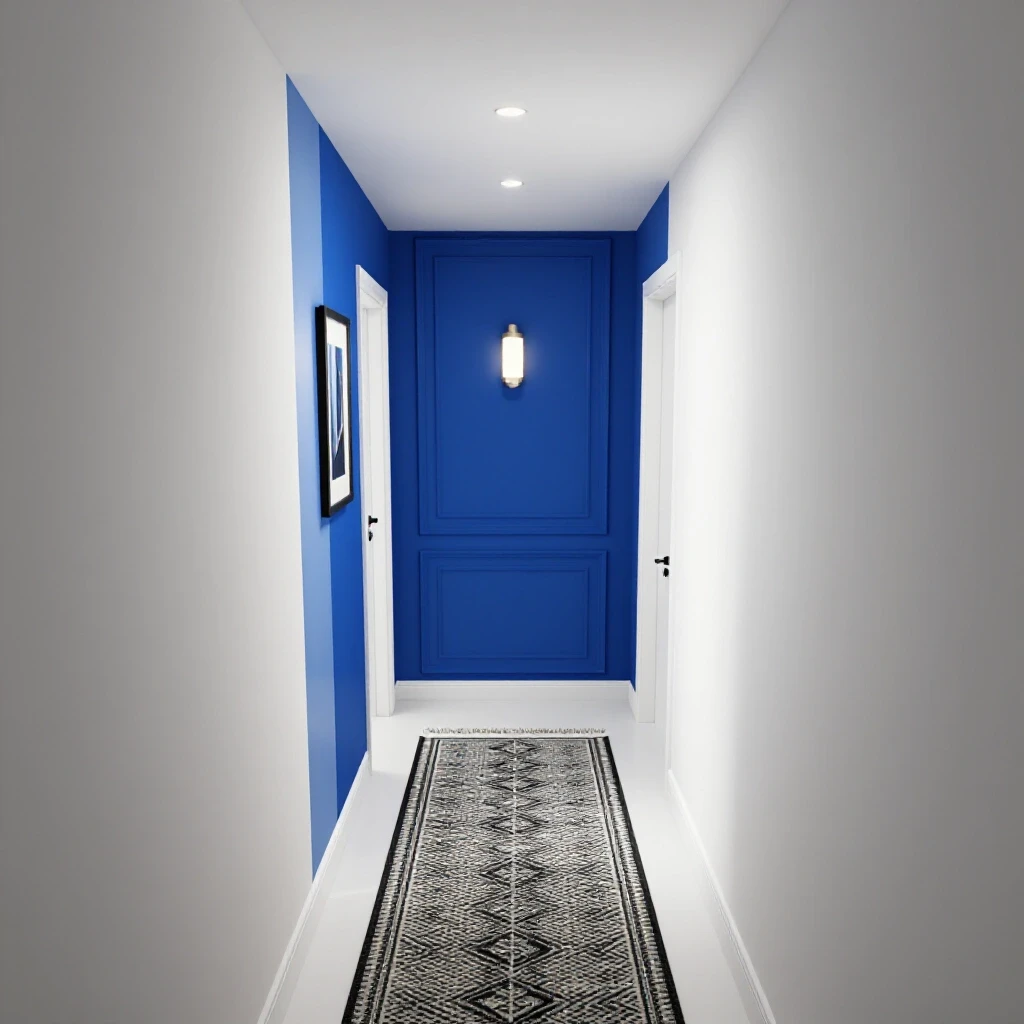
Establishing a firm financial framework for narrow entryway refreshes is the first step toward a successful outcome. This process involves a “financial health check” where you evaluate your liquid savings against the project’s projected costs. You must determine a “ceiling price” based on local comparable home values to ensure you do not spend more than the market can return.
Why Standard Remodeling Estimates Fail in Tight Passages
General estimates often overlook the peculiar logistics of small, cramped areas. Standard square footage pricing doesn’t account for the high density of trim work or the specialized tools needed for tight corners and narrow passages. When you work in a three-foot-wide space, your movement is restricted, and your material waste can actually increase due to awkward cuts.
In my own experience, I found that “per square foot” estimates are almost useless for small halls. For example, a gallon of premium paint covers about 350 to 400 square feet. In a standard room, that is easy to calculate. In a narrow hallway, you have more doors, more trim, and more corners. I ended up needing 20% more primer than I expected because the old plaster walls were incredibly thirsty. This is why I recommend a 20% contingency buffer for these specific zones, rather than the standard 10% used for larger rooms.
Building a Detailed Remodeling Expense Tracker
A detailed list of every physical component, from primer to switch plates, prevents “death by a thousand cuts.” By tracking every screw and sanding disc, homeowners can maintain a strict remodeling expense tracker and avoid mid-project bank runs. This level of granularity is what separates a successful DIY project from a financial headache.
When I tracked my corridor update, I categorized every item into “Fixed Costs” and “Variable Costs.” Fixed costs included the items I knew I needed, like the overhead light. Variable costs included things like sandpaper, wood filler, and extra paint. Below is a breakdown of what a realistic, modest spend looks like for a 10-to-15-foot linear passage.
| Item Category | Projected Cost | Actual Cost | Variance |
|---|---|---|---|
| Paint & Primer (2 Gallons) | $110.00 | $128.00 | +$18.00 |
| Sanding & Patching Supplies | $25.00 | $42.00 | +$17.00 |
| New Baseboard Trim (Linear Ft) | $85.00 | $92.00 | +$7.00 |
| Modern Flush-Mount Light | $120.00 | $115.00 | -$5.00 |
| Door Hardware (3 Knobs) | $90.00 | $105.00 | +$15.00 |
| Wall-Mounted Hooks/Storage | $45.00 | $38.00 | -$7.00 |
| Total | $475.00 | $520.00 | +$45.00 |
Factoring in Opportunity Cost and Labor-Material Splits
Even in DIY scenarios, your time has a financial value. Calculating the labor-to-material ratio helps determine if a weekend project is a sound investment or if it detracts from higher-value financial planning for homeowners. If you spend 40 hours on a project to save $500, you are essentially paying yourself $12.50 an hour.
The U.S. Bureau of Labor Statistics (BLS) notes that the median hourly wage for a painter is approximately $23.00, but a private handyman may charge between $50 and $90 per hour. When I look at my own ledger, I see that my hallway took 18 hours of active labor. Had I hired this out, the labor cost would have likely exceeded $1,000. By doing it myself, I kept my “labor-to-material ratio” at 0:1 in terms of cash outlay, which is a significant win for a cost-conscious homeowner.
Navigating Hidden Preparation Costs and Structural Realities
Older hallways often hide uneven floors or lead-based paint under layers of wallpaper. These “invisible” line items can consume 15% to 20% of a modest budget before the first coat of finish paint is applied. Ignoring these issues can lead to “change-order escalation,” a term used when a project’s scope grows because of unforeseen problems.
During my own project, I pulled back a piece of loose baseboard only to find that the plaster behind it was crumbling. This required a $30 bag of structural setting compound and an extra day of drying time. I also had to buy a lead paint testing kit for $15 because my home was built before 1978. These are small amounts, but they add up. Always include a “Prep and Repair” line item in your spreadsheet to account for these inevitable discoveries.
Regional Labor Rate Indexing and Material Multipliers
Construction and material costs are not uniform across the country. A homeowner in San Francisco will pay significantly more for the same gallon of paint and the same length of oak trim than someone in Indianapolis. Understanding your regional multiplier is vital for setting a realistic budget.
Based on data from Remodeling Magazine’s Cost vs. Value reports, you can apply a coefficient to your baseline budget to adjust for your location.
- Northeast/West Coast: Multiply baseline by 1.15 to 1.30.
- Midwest/South: Multiply baseline by 0.90 to 1.05.
- Mountain Regions: Multiply baseline by 1.10.
If your baseline budget is $500, but you live in a high-cost-of-living area like Seattle, you should realistically expect to spend closer to $625 for the same quality of materials.
Measuring the Long-Term Return on Small-Scale Improvements
Hallways are high-traffic areas that impact a buyer’s first impression. Understanding cost vs value home improvement data allows you to spend enough to increase marketability without exceeding the localized market ceiling. Over-improving a hallway with expensive marble tile in a neighborhood of modest starter homes is a poor financial move.
In the world of personal finance, we look at “lifestyle value” versus “resale value.” A fresh coat of neutral paint and updated lighting in a narrow hall has a high “Return on Investment” (ROI) because it makes the entire home feel larger and cleaner. Most real estate experts agree that cosmetic refreshes of transitional spaces can recoup 60% to 80% of their cost at resale. However, if you spend $2,000 on custom built-ins for a 3-foot-wide hall, you may only see a 20% return because the next buyer might find them intrusive.
Practical Tools for Tracking Your Narrow-Space Spend
To keep your project on track, you need more than just a notebook. You need a system that accounts for every variable. I use a combination of three tools to manage my home improvement funds.
- HomeWyse: This is an excellent tool for finding localized cost estimates for specific tasks, like installing a light fixture or painting trim.
- A Dedicated Project Escrow: I recommend moving your project budget into a separate savings account. This prevents you from accidentally spending your “paint money” on groceries or gas.
- The “Change-Order” Log: Even if you are the one doing the work, keep a log of every time you deviate from your original plan. This helps you understand why you went over budget and prevents “scope creep.”
Case Study: The $600 Corridor Transformation
I once consulted with a couple who wanted to update their entry passage. They had a strict $600 limit. Their initial plan was to buy a new rug and a fancy mirror. After looking at their spreadsheet, I suggested they reallocate $200 of that toward better lighting and high-quality trim paint.
By focusing on the “bones” of the space—the walls and the light—they made the hallway feel wider. They bought a smaller, more affordable rug and used the remaining $50 for a DIY “gallery wall” using frames they already owned. They finished the project at $585. Their home appraisal six months later noted the “updated interior finishes,” which contributed to a higher valuation than their neighbors with original, dark hallways.
Final Steps for the Cost-Conscious Homeowner
Before you pick up a paintbrush, take a moment to review your financial boundaries. A hallway update is a “low-stakes” project, which makes it the perfect place to practice disciplined budgeting.
- Audit your current supplies: Do you already have brushes, drop cloths, or sandpaper?
- Get three quotes for materials: Check local hardware stores versus big-box retailers.
- Set a “Stop-Loss” point: If you find structural damage that costs more than $500 to fix, decide now if you will pause the project or dip into your emergency fund.
By treating a small space with the same financial respect as a large one, you build the habits necessary for long-term wealth and a well-maintained home.
FAQ: Navigating the Costs of Narrow Space Updates
Do I need a permit to change a light fixture in a hallway? In most jurisdictions, replacing an existing light fixture does not require a permit. However, if you are running new electrical wire or moving the location of the junction box, many cities require a minor electrical permit. These usually cost between $50 and $100. Always check your local municipal website to avoid fines.
What is the best paint finish for high-traffic, narrow areas? For narrow halls where shoulders and bags frequently rub against walls, I recommend a “Satin” or “Eggshell” finish. These finishes are more durable and easier to clean than “Flat” paint but don’t show wall imperfections as much as “Semi-Gloss.” Budget about $10 to $15 more per gallon for premium “scuff-resistant” lines.
How much should I budget for a 10-foot-long hallway? For a cosmetic DIY refresh, a realistic range is $300 to $700. This includes paint, minor wall repairs, one new light fixture, and updated hardware. If you need to replace flooring or all the doors, that budget will jump to $1,500 or more.
Can I save money by painting the trim the same color as the walls? Yes, this is a popular design trend called “color drenching.” It saves money because you buy fewer types of paint and spend less time on “cutting in” or taping. However, you still need to ensure the paint used on the trim is a durable enamel or a specific trim-grade product.
How does a narrow hallway update affect my home’s appraisal? Appraisers look at the “Effective Age” and “Condition” of a home. A fresh, bright hallway contributes to a higher “Condition” rating. While a $500 update won’t add $5,000 to your home’s value, it can make the difference between a “Good” and “Fair” rating, which impacts the final valuation significantly.
What is a “sunk cost” in a hallway project? A sunk cost is money already spent that cannot be recovered. For example, if you buy a gallon of custom-mixed paint and realize you hate the color, that $60 is a sunk cost. Don’t let the “Sunk Cost Fallacy” force you to use a color you hate just because you paid for it; it’s better to spend another $60 now than to live with a mistake for five years.
Should I replace my old hollow-core doors during this update? If your budget allows, replacing dated doors is a high-impact move. However, new doors cost $100 to $200 each, plus hardware. If you have four doors in a small hall, this will triple your budget. Consider painting the existing doors a contrasting color first to see if that achieves the look you want for less.
How do I track “misc” expenses like tape and rollers? I recommend a “Consumables” line item in your spreadsheet. Set aside $50 specifically for items that get thrown away after the project. This prevents these small $5 and $10 purchases from making you feel like you’re failing your budget.
Is it worth it to buy a rug for a narrow space? A runner can protect your floors and add style, but high-quality rugs can be expensive. From a financial perspective, only buy a rug if your flooring is in poor condition and you aren’t ready to replace it. Otherwise, a rug is a “lifestyle” purchase rather than an “investment” purchase.
What is the most common hidden fee in these projects? The most common hidden fee is the “tool gap.” Many homeowners forget they need a specific ladder, a high-quality trim brush, or a pole sander. Always audit your tool chest before you start, or include a “Tool Rental/Purchase” line in your budget.
(This article was written by one of our staff writers, Steven Fletcher. Visit our Meet the Team page to learn more about the author and their expertise.)