Range Hood Upgrade Costs and Noise Reduction Guide (Full Breakdown)

Focusing on simplicity, I have found that the most effective way to manage a home renovation budget is to break it down into its smallest possible parts. As a financial planner who has spent over a decade tracking every cent in my personal remodeling spreadsheets, I have learned that even small projects can derail a savings plan if you don’t account for the details. One of the most common areas where homeowners stumble is kitchen ventilation, where the choice between a budget-friendly unit and a high-end model can have long-term impacts on both your wallet and your daily comfort.
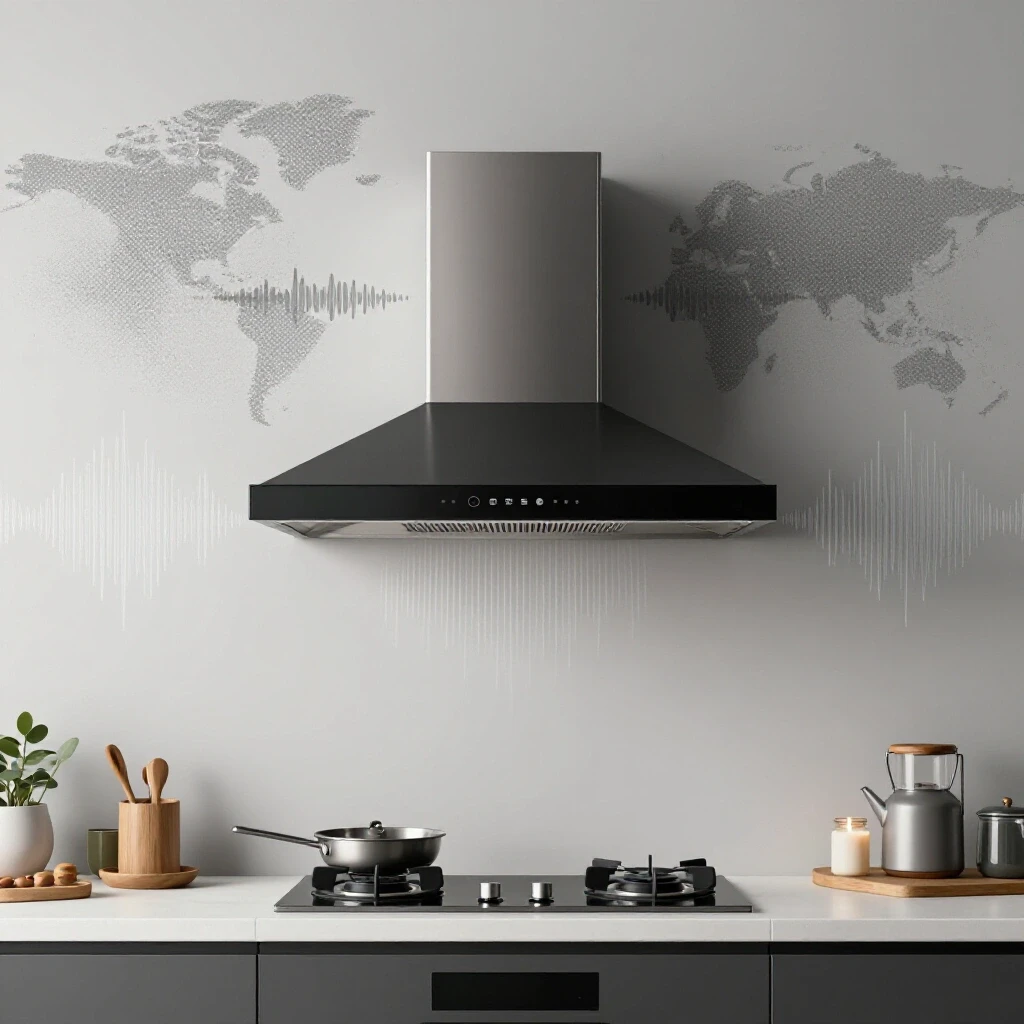
Building a Realistic Framework for Kitchen Ventilation Improvements
Establishing a baseline for your project involves looking at your current liquid assets and setting a hard cap based on your home’s total value. This ensures you do not over-improve for your neighborhood or drain your emergency fund. A solid financial plan for home improvements always starts with a clear understanding of what you can afford to spend without touching high-interest credit.
When I look at my own remodeling expense tracker, I always start with the 1% rule. This rule suggests that you should expect to spend about 1% of your home’s value annually on maintenance and minor upgrades. For a $400,000 home, that is $4,000. If you are planning to refresh your kitchen exhaust system, you are likely looking at a small fraction of that annual budget. However, the goal is to keep the total project cost within a range that reflects the home’s market value.
In my experience, a kitchen renovation budget should allocate about 2% to 5% of the total kitchen budget toward ventilation. If you are doing a standalone swap, the materials usually range from $200 to $800 for DIY-friendly models. I recommend a 20% contingency buffer. This is not just a random number; it is a safety net for when you realize the existing cabinet spacing is off by a quarter-inch or the mounting bracket requires a specific type of wall anchor you didn’t buy.
Why Standard Estimates Often Miss the Mark
Standard estimates fail because they ignore the specific variables of your kitchen’s layout and your personal tolerance for sound. Most online calculators give you a flat rate for a unit, but they don’t account for the “noise lesson” I learned during my first condo refresh. I bought the cheapest unit available, thinking I was being financially prudent. Within a week, I realized the loud vibration made the kitchen unbearable, and I ended up spending more money to replace it with a quieter model.
This is a classic case of “buying twice.” From a financial planning perspective, it is better to spend 30% more upfront on a quality unit than to pay 100% of the cost again two years later. When you evaluate cost vs value home improvement data, remember that “value” includes the utility and comfort you get from the item every day.
Component Pricing and Material Forecasting for DIY Projects
Predicting the cost of a new ventilation unit requires looking beyond the sticker price on the box. You must account for filters, mounting hardware, and sound-insulating materials to get an accurate total before you start the work. A detailed cost breakdown guide should include every nut, bolt, and rolls of aluminum tape needed to complete the installation.
When I analyze material costs, I categorize them into “Primary” and “Secondary” expenses. The primary expense is the unit itself. Secondary expenses are the items that actually make the unit work and look good in your space. For a DIY-friendly project, these costs are usually manageable, but they can add up if you are not careful.
- The Ventilation Unit: $250–$600 (Mid-range models with decent Sone ratings).
- Duct Transition Pieces: $15–$40 (To ensure a tight fit to existing vents).
- Aluminum Foil Tape: $10–$15 (For sealing joints; never use duct tape).
- Sound-Dampening Pads: $20–$50 (Optional but recommended for thin-walled cabinets).
- Trim and Molding: $30–$70 (To close gaps between the unit and cabinetry).
Material Quality vs. Long-Term Depreciation
In accounting, we look at depreciation schedules to see how long an asset lasts. A cheap, plastic-heavy exhaust fan might have a functional life of only five years before the motor begins to whine or the housing yellows. A stainless steel unit with a brushless motor might last 15 years.
When you calculate the “cost per year of use,” the more expensive unit often becomes the cheaper option. I prefer to use a 10-year depreciation model for kitchen appliances. If a $500 unit lasts 10 years, it costs you $50 a year. If a $200 unit lasts only 3 years, it costs you $66 a year. The financially disciplined choice is often the one with the higher initial price but better build quality.
The Sound-Dampening Factor: Balancing Decibels and Dollars
Sone ratings measure the noise level of a fan, and lower numbers often come with higher price tags. Balancing silence with suction power is a key financial decision for open-concept homes where kitchen noise can disrupt the living area. Understanding this relationship is vital for anyone trying to avoid the “noise lesson” of a loud, unusable fan.
A “Sone” is a unit of loudness. To give you a frame of reference, a quiet refrigerator is about 1 Sone. A normal conversation is about 4 Sones. Many entry-level kitchen fans operate at 6 or 7 Sones, which sounds like a jet engine in a small room. In my own home, I found that any fan over 3 Sones stayed turned off because it was too annoying.
Sound Level Price Comparison Table
The following table reflects average retail pricing for under-cabinet units based on their noise ratings. These figures are gathered from current home improvement warehouse data and my own project logs.
| Sone Rating | Noise Description | Average Material Cost | Value Rating |
|---|---|---|---|
| 0.5 – 1.5 | Whisper Quiet | $450 – $850 | High (Lifestyle Value) |
| 2.0 – 3.5 | Noticeable Hum | $250 – $450 | Moderate |
| 4.0 – 6.0 | Loud Vacuum | $150 – $250 | Low |
| 7.0+ | Industrial Drill | Under $150 | Poor |
From a financial planning standpoint, the “sweet spot” is usually in the 2.0 to 3.5 Sone range. You get a significant reduction in noise without the exponential price jump of the ultra-quiet luxury models. This is where you maximize your return on lifestyle without over-improving the asset.
Aesthetic Integration and Cabinetry Modification Costs
Matching a new hood to existing cabinets can involve trim work or custom housing. These finishing touches often represent the biggest hidden material costs in a DIY kitchen refresh. If the new unit is smaller or larger than the old one, you may need to spend money on wood, paint, or stainless steel filler panels.
When I consulted with a client last year, they bought a beautiful chimney-style hood but forgot that their cabinets didn’t go all the way to the ceiling. They ended up spending an extra $200 on matching crown molding and a custom soffit just to make it look intentional. This is why I stress the importance of a line-item material audit.
Managing the “Visual Gap” Expenses
- Filler Strips: If your new unit is 30 inches but your cabinet opening is 31 inches, you will need filler strips. These can cost $20 to $50 depending on the finish.
- Paint Matching: If you have to sand or move cabinets, a quart of high-quality cabinet paint can cost $30 to $40.
- Caulk and Sealant: $10. Never skip the high-heat silicone if you are working near a cooktop.
By identifying these needs before you start, you avoid the “mid-project hardware store run” which is where many budgets die a death by a thousand cuts. I track these as “Integration Costs” in my spreadsheets to keep them separate from the appliance cost itself.
Tracking the Ledger: Actual vs. Projected Expenses
A remodeling expense tracker compares your initial estimates with what you actually spent at the hardware store. Keeping this log helps prevent scope creep during the installation process and provides a historical record for future projects. I recommend using a simple spreadsheet with columns for “Budgeted,” “Actual,” and “Variance.”
In my own project log for a recent kitchen fan upgrade, I noticed that my “Miscellaneous” category was the only one that went over budget. This was due to a specific type of mounting screw I needed for my 1950s-era cabinets. While the $12 difference didn’t break the bank, it’s a reminder that no estimate is ever 100% accurate.
Sample Project Ledger: Exhaust Fan Swap
| Item | Budgeted | Actual | Variance |
|---|---|---|---|
| Mid-range Hood (3 Sones) | $350.00 | $329.00 | +$21.00 |
| Aluminum Tape & Clamps | $25.00 | $28.00 | -$3.00 |
| Stainless Steel Trim Kit | $60.00 | $85.00 | -$25.00 |
| Sound-Dampening Mat | $30.00 | $30.00 | $0.00 |
| Totals | $465.00 | $472.00 | -$7.00 |
This $7 variance is negligible, but only because I had a detailed plan. Without the trim kit and tape in the original budget, the “actual” cost would have looked like a 30% overrun compared to just the unit price.
ROI and Resale Value of Kitchen Ventilation Upgrades
Kitchen improvements generally offer a high return on investment, but ventilation is often overlooked in favor of countertops or backsplashes. High-quality, quiet systems add lifestyle value that appeals to future buyers who notice the small details during an open house. According to Remodeling Magazine’s Cost vs. Value reports, minor kitchen remodels can recoup between 70% and 80% of their cost.
However, as a financial planner, I look at ROI in two ways: financial return and functional return. The financial return is the money you get back when you sell. The functional return is the value of not having your house smell like fried fish for three days because your fan actually works.
Localized Valuation Reviews
Before you spend $1,000 on a high-end ventilation system, look at the “comps” (comparable sales) in your neighborhood. If most homes in your area have basic, $100 builder-grade fans, installing a $1,500 designer hood might be over-improving. You likely won’t get that money back.
- Starter Homes: Stick to the $200–$350 range. Focus on clean lines and basic functionality.
- Move-up Homes: The $400–$700 range is appropriate. Focus on lower Sone ratings and stainless finishes.
- Luxury Homes: This is where you can justify the $1,000+ units, as buyers in this bracket expect high-performance, silent operation.
DIY Tools and Financial Tracking Resources
Using digital tools allows you to model your spending before you buy a single screw. From spreadsheet templates to noise-level apps, these resources keep your finances organized and your expectations realistic. I have a specific folder on my phone dedicated to “Home Finance” that I use during every project.
- Mobile Spreadsheet Apps: Use Google Sheets or Excel to update your ledger in real-time while you are at the store.
- Decibel Meter Apps: Download a free decibel meter to test your current fan. This gives you a baseline to compare against the Sone ratings of new units.
- Unit Converters: Helpful for matching CFM (Cubic Feet per Minute) to your kitchen’s square footage.
- Price Trackers: Use browser extensions to see the price history of a unit on major retail sites. This helps you avoid “fake” sales.
Actionable Metrics for Your Budget
- Labor-to-Material Ratio: For DIY, this is 0:1, but value your time at $50/hour to understand the “true cost.”
- Contingency Buffer: Always set aside 20% of the material cost for surprises.
- CFM-to-BTU Ratio: Ensure your fan can handle your stove. The rule of thumb is 100 CFM for every 10,000 BTUs of a gas range.
Conclusion: Taking the Next Steps Toward a Quiet Kitchen
Upgrading your kitchen’s air flow doesn’t have to be a financial burden if you approach it with a planner’s mindset. By focusing on the “noise lesson” and choosing a unit that balances cost with decibel levels, you protect both your investment and your sanity. Start by measuring your current space and checking your local hardware store’s inventory against your spreadsheet.
Your next steps should be: * Measure your existing unit and the cabinet opening. * Test your current fan’s noise level with a decibel app. * Set a hard budget cap based on your 20% contingency. * Compare three models within your price range, focusing on Sone ratings.
By following this data-driven framework, you can ensure that your kitchen refresh remains a source of pride rather than a source of financial stress.
Frequently Asked Questions
How do I calculate the right CFM for my kitchen without overspending? To find the required CFM (Cubic Feet per Minute), calculate the volume of your kitchen (Length x Width x Height) and divide by 7.5. This ensures the air is exchanged eight times per hour. Buying a unit with significantly more CFM than you need often leads to higher costs and more noise without added benefit.
Is it worth paying more for a lower Sone rating? Yes, within reason. Moving from a 6-Sone unit to a 3-Sone unit is a massive improvement in daily quality of life. However, moving from 1.5 Sones to 0.5 Sones often doubles the price for a difference that is barely audible in a typical home environment.
What are the most common hidden costs in a DIY fan replacement? The most frequent “surprises” include needing a different size of duct adapter, discovering that the previous installer didn’t use proper screws, and the cost of finishing materials like trim or paint to hide gaps from the old unit.
How does a new kitchen fan affect my home’s resale value? While a fan alone won’t drastically increase your home’s price, a quiet, high-functioning unit contributes to the “move-in ready” feel that buyers love. It prevents grease buildup on cabinets, which preserves the value of your entire kitchen.
Can I reuse the old mounting hardware to save money? It is rarely a good idea. New units usually come with specific brackets designed for their weight and vibration levels. Using old, mismatched hardware can lead to increased noise or even the unit falling, which would be a much costlier fix.
What is the “opportunity cost” of doing this project myself? If the project takes you eight hours and you value your time at $50 an hour, your “sweat equity” cost is $400. If you enjoy the work and it saves you from hiring out, it’s a win. If it prevents you from doing paid work, you must factor that into your financial plan.
Should I buy a unit with a mesh filter or a baffle filter? Mesh filters are cheaper upfront but often need replacing. Baffle filters (stainless steel slats) are more expensive but are dishwasher safe and last the life of the unit. From a long-term financial perspective, baffle filters are usually the better value.
How much should I spend on a unit if I plan to sell in two years? If you are selling soon, focus on aesthetics and a moderate noise level. A clean, stainless steel unit in the $250 range will look great in photos and perform well enough for inspections without over-investing in an asset you won’t keep.
Does a higher price always mean better performance? Not necessarily. Some high prices are driven by brand names or “smart” features like Wi-Fi connectivity. Focus your budget on the motor quality and the Sone rating, as these impact the unit’s core function and longevity.
How do I handle a budget overrun if I find damage behind the old fan? This is exactly why we use a 20% contingency. If you find moisture damage or crumbling drywall, stop and reassess. Use your contingency funds for the repair materials before buying aesthetic upgrades. It is better to have a plain, safe kitchen than a fancy, damaged one.
(This article was written by one of our staff writers, Steven Fletcher. Visit our Meet the Team page to learn more about the author and their expertise.)