How to Calculate Raised Bed Soil Costs for Your Garden (Guide)

One of the most frequent financial missteps I see homeowners make involves focusing entirely on the exterior shell of a project while ignoring the high-volume costs required to make it functional. In my decade of tracking home renovation budgets, I have watched many well-meaning planners spend their entire allocation on high-end cedar or composite garden frames, only to realize too late that the materials required to fill those structures cost twice as much as the wood itself. This lack of foresight leads to “budget creep,” where a simple weekend project turns into an unplanned drain on an emergency fund.
The Financial Mechanics of Garden Fill Planning
A home renovation budget should always account for the total volume of materials rather than just the visible surface area. In the context of garden infrastructure, this means shifting your focus from the square footage of the footprint to the cubic volume of the growing medium. This financial framework ensures that you are not caught off guard by the sheer amount of material required to fill deep containers.
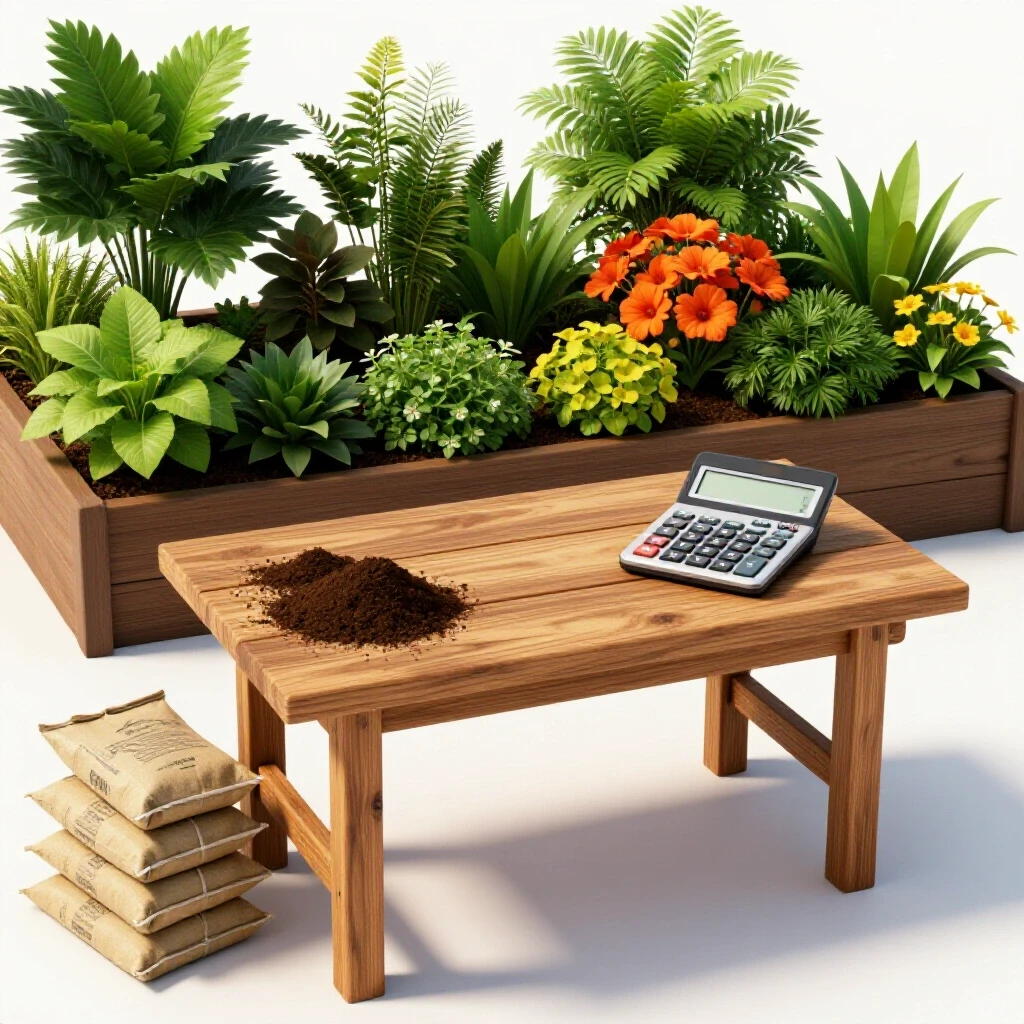
Establishing a realistic expense forecast begins with a fundamental understanding of construction accounting. You must treat the contents of your garden structures as a primary line item rather than an afterthought. When I managed my first large-scale backyard update, I built a remodeling expense tracker that separated “structural costs” from “fill costs.” This allowed me to see that while my lumber was a fixed cost, my soil expenses were variable based on quality and delivery methods.
Before you buy a single board, you should perform a financial health check on the project. Ask yourself if the total cost of the project, including all fill material, aligns with your annual maintenance budget. Most cost-conscious planners aim to keep these projects under a specific percentage of their home’s value, usually less than 1%, to avoid over-improving.
Calculating the True Volume of Growing Media
The core of any cost breakdown guide for outdoor projects is the mathematical formula used to determine volume. For garden structures, this is a simple calculation of length multiplied by width multiplied by depth, but the conversion to cubic yards is where many spreadsheets fail. Understanding this math is the only way to avoid the mid-project realization that you are twenty bags short.
To find the cubic footage, multiply the internal dimensions of your frame. For example, a standard four-foot by eight-foot frame that is one foot deep equals 32 cubic feet. To convert this to cubic yards—the standard unit for bulk purchasing—you divide the total cubic feet by 27. In this scenario, you need approximately 1.18 cubic yards of material.
I always recommend adding a 15% to 20% “settling buffer” to your volume calculations. Organic materials compress over time as air pockets escape and decomposition occurs. If you buy exactly the amount your math suggests, you will likely find your soil level sitting several inches below the rim within a month. In my personal renovation logs, I have noted that failing to account for this settling often leads to a second, more expensive delivery fee later in the season.
- Step 1: Measure internal length, width, and depth in feet.
- Step 2: Multiply (L x W x D) to get total cubic feet.
- Step 3: Divide by 27 to find cubic yards.
- Step 4: Multiply by 1.2 to account for a 20% settling contingency.
Bulk vs. Bagged: A Comparative Cost-Benefit Analysis
A crucial part of financial planning for homeowners is deciding between the convenience of bagged products and the raw value of bulk delivery. This decision is rarely just about the price per unit; it involves weighing labor-to-material ratios and potential delivery fees against your personal time and physical capacity.
When I analyzed my own garden expenditures, I found that bagged soil is almost always the most expensive route for projects exceeding one cubic yard. On average, a 1.5-cubic-foot bag of high-quality garden mix costs between $8 and $12. To fill that 1.18-cubic-yard space, you would need about 22 bags, totaling roughly $220. Conversely, a single cubic yard of bulk garden mix often ranges from $40 to $70, though delivery fees can add another $60 to $100.
| Material Source | Unit Cost (Avg) | Volume Provided | Total Cost for 1.2 Yards | Labor Intensity |
|---|---|---|---|---|
| Bagged Mix | $10.00 | 1.5 Cubic Feet | $220.00 | High (Individual bags) |
| Bulk Delivery | $55.00 | 27 Cubic Feet | $155.00 (incl. delivery) | Medium (Wheelbarrow) |
| DIY Mix (Bulk) | $35.00 | 27 Cubic Feet | $125.00 (incl. delivery) | Very High (Mixing) |
As shown in the table, the bulk option saves nearly 30% even when accounting for a delivery fee. However, if your project is small—perhaps a single two-by-four frame—the delivery fee for bulk soil might exceed the total cost of five or six bags. I advise my clients to calculate the “break-even point,” which is usually around the 15-bag mark.
Factoring in Soil Amendments and Layering Strategies
A sophisticated cost vs value home improvement strategy looks for ways to reduce material costs without sacrificing the quality of the final result. One effective method is the use of sub-layers to fill the bottom portion of deep frames with less expensive materials. This technique, often referred to as “core filling,” can significantly lower your total expense.
If you have a frame that is two feet deep, you do not necessarily need two feet of premium garden soil. Most residential vegetables only require 8 to 12 inches of high-quality medium. The bottom half of the frame can be filled with organic “filler” like untreated wood scraps, dried leaves, or cardboard. In my remodeling expense tracker, I categorize these as “zero-cost inputs.”
By using these materials, you can reduce your soil purchase by 40% to 50%. However, you must account for the rate of decomposition. These materials will break down faster than soil, meaning your settling buffer should increase to 30%. From a financial perspective, you are trading a lower initial cost for a slightly higher long-term maintenance cost as you top off the beds in subsequent years.
- Premium Layer: Top 12 inches (Most expensive).
- Transition Layer: 4 inches of compost or aged manure (Medium cost).
- Base Layer: 8-12 inches of organic debris (Zero to low cost).
Regional Labor Rate Indexing and Hidden Fees
Even for a DIY project, there are hidden costs that can derail a budget if not tracked properly. These include tool rentals, municipal permits for curb-side deliveries, and even the “hidden tax” of your own time. When I evaluate a project’s viability, I look at the regional labor multipliers to see if hiring out the hauling makes more financial sense than doing it myself.
In many urban areas, leaving a pile of soil on the street requires a temporary use permit, which can cost between $25 and $75. If you do not have a truck, you might also face a “small load fee” from landscape suppliers if you order less than three yards. These small charges are the primary reason projects go over budget. I recommend keeping a 10% contingency fund specifically for these administrative and logistical “surprises.”
Building on this, consider the cost of equipment. If you don’t own a heavy-duty wheelbarrow or a sturdy shovel, you must add these to your initial budget. I have seen homeowners spend $150 on tools for a $200 soil project, which effectively doubles their cost per square foot. In these cases, borrowing tools from a neighbor or renting from a local hardware store is the more prudent financial move.
Localized Valuation and Long-Term Home-Value Impacts
One of the biggest worries for cost-conscious home planners is over-improving a property beyond its localized market value. While a well-maintained garden can increase “curb appeal,” it rarely provides a 1:1 return on investment (ROI) in a standard home appraisal. Understanding the depreciation schedules of outdoor structures is vital for long-term planning.
According to Remodeling Magazine’s data on outdoor improvements, functional landscaping typically sees a value recovery rate of 50% to 70%. However, this assumes the structures are in good repair. Soil quality doesn’t necessarily add to the appraisal value, but the health of the garden does. If you spend $2,000 on premium soil and amendments for a home in a neighborhood where the median price is $250,000, you are likely over-improving for the area.
I suggest looking at the project as a “lifestyle value” rather than a “resale value.” If the project helps you save money on groceries or provides mental health benefits, those are real financial returns that don’t show up on a closing statement. To keep the budget in check, I use a “neighborhood comp multiplier.” If my neighbors have simple gardens, I avoid installing automated irrigation and imported soil mixes that would make my project an outlier in the local market.
Case Study: The $1,200 Garden Overrun
A few years ago, a client of mine decided to install four large, deep-set garden frames. His initial budget was $800, based entirely on the cost of the lumber and hardware. He used a basic remodeling expense tracker but failed to include the soil math. When we sat down to review the actuals, the numbers told a different story.
- Initial Estimate: $800 (Lumber and screws).
- Actual Lumber Cost: $845 (Price shift in cedar).
- Calculated Fill Needed: 6 cubic yards.
- Bulk Soil Cost: $420 (including delivery).
- Additional Amendments: $115 (Compost and perlite).
- Permit Fee: $50 (Street occupancy).
- Total Actual Cost: $1,430.
This 78% budget overrun happened because the “hidden” costs of filling the frames and the logistical fees were completely ignored in the planning phase. By the time he realized the error, the frames were already built, creating a “sunk cost” trap where he felt forced to spend the extra money to finish the project. This is why I advocate for a “bottom-up” budget that starts with the volume of fill and works backward to the structure.
Practical Tools for Tracking Outdoor Projects
To maintain financial discipline, you need more than just a calculator. I recommend using a dedicated spreadsheet that tracks both your estimates and your actual spending in real-time. This allows you to see where you are drifting off course before the project is finished.
- Cubic Yardage Calculators: Many landscape supply websites offer free tools, but I prefer a simple Excel formula:
=(Length*Width*Depth)/27. - Material Price Indexes: Check local supplier websites monthly, as prices for soil and mulch fluctuate based on seasonal demand.
- Expense Tracking Apps: Tools like Mint or YNAB can help you categorize these costs under “Home Maintenance” to ensure you aren’t dipping into other savings.
- The 20% Rule: Always multiply your final soil estimate by 1.2 to account for settling and waste.
By using these tools, you turn a guessing game into a data-driven construction project. This level of detail is what separates a successful renovation from a financial headache.
Conclusion and Next Steps
Taking control of your outdoor project’s finances requires a shift in perspective. Instead of seeing a garden as a collection of wood and plants, view it as a volume-based construction project that requires precise material accounting. By focusing on the math of the fill and the hidden logistical costs, you can avoid the common traps that lead to debt and project fatigue.
Your next step should be to measure your planned garden area and run the cubic yardage calculation. Once you have that number, call three local landscape suppliers to get quotes for bulk delivery, including all fees. Compare those quotes to the cost of bagged soil at your local hardware store. Only after you have these hard numbers should you finalize your budget and begin purchasing materials. This disciplined approach ensures your garden grows without your debt doing the same.
Frequently Asked Questions
How do I calculate how much soil I need for an irregular shape?
For circles, use the formula 3.14 * (radius * radius) * depth. For triangles, use 0.5 * base * height * depth. Always convert all measurements to feet before multiplying, then divide the final result by 27 to get cubic yards. Adding a 20% buffer is even more important for irregular shapes where volume is harder to visualize.
Is it cheaper to mix my own soil using bulk components?
Often, yes. Buying bulk topsoil and bulk compost separately and mixing them yourself can save 15-20% compared to a pre-mixed garden blend. However, you must factor in the labor time and the need for a mixing area. If you are paying for labor, the pre-mixed version is almost always more cost-effective.
Why did my soil level drop four inches after the first rain?
This is caused by settling and the collapse of air pockets. Organic materials like compost continue to break down, which reduces volume. This is why a 15-30% contingency buffer in your initial volume calculation is a financial necessity, not just a suggestion.
Does a garden project require a building permit?
Usually, no, but the delivery of the materials might. If a dump truck needs to leave a pile of soil on a public street or sidewalk, many municipalities require a temporary encroachment permit. Check your local city code to avoid unexpected fines, which can range from $50 to $200.
What is the most expensive part of filling a garden frame?
Usually, it is the delivery fee or the “premium” amendments. While topsoil is cheap, high-quality compost and drainage enhancers like perlite can drive the price up. To save money, focus on a high-quality top 12 inches and use “filler” materials for the deeper sections.
Should I buy soil by the ton or by the cubic yard?
Always try to buy by the cubic yard. Soil weight varies wildly based on moisture content. A “ton” of wet soil provides much less volume than a “ton” of dry soil. Cubic yardage is a measurement of volume and remains constant regardless of how much it rained the night before delivery.
How can I track these costs in my home renovation budget?
Create a specific sub-category for “Landscaping Infrastructure.” Include line items for structural materials, fill volume, delivery fees, and tool rentals. This prevents the project from “bleeding” into your general home repair fund and helps you see the true ROI.
Is there a “best” time of year to buy soil for the budget?
Late autumn or very early spring is often best. Suppliers may offer discounts to move inventory before or after the peak growing season. However, avoid buying right after heavy rains, as the material will be harder to move and may incur higher delivery costs due to weight limits on trucks.
How do I account for the cost of my own labor?
While DIY labor is “free” in terms of cash outlay, I recommend assigning yourself a “shadow wage” of $20-$30 per hour. If the project takes 20 hours to haul soil, that’s $400-$600 of your time. If a professional can do it for $300, it might be more financially prudent to hire it out.
What is the maximum depth I should fill with premium soil?
For most residential vegetables, 12 inches is the “diminishing returns” point. Filling a 24-inch bed entirely with premium soil is often a waste of money. Use the “soil math” to calculate only the top 12 inches as premium and use lower-cost organic matter for the bottom half.
(This article was written by one of our staff writers, Steven Fletcher. Visit our Meet the Team page to learn more about the author and their expertise.)