How to Start Seeds on a Budget: Cost Breakdown Guide (Easy Tips)

Integrating sustainable, low-cost technology into the home doesn’t always require a solar array or a high-end HVAC system. Sometimes, the most effective “eco-tech” is as simple as repurposing a plastic yogurt container into a functional vessel for new life. As a financial planner, I look at every home project through the lens of a cost-to-value ratio. Whether I am overseeing a $50,000 kitchen remodel or a $20 indoor planting project, the principles of fiscal discipline remain identical. I have spent years tracking every nail and screw in my personal remodeling spreadsheets, and I have found that the most successful projects are those where the budget is established before the first dollar is spent.
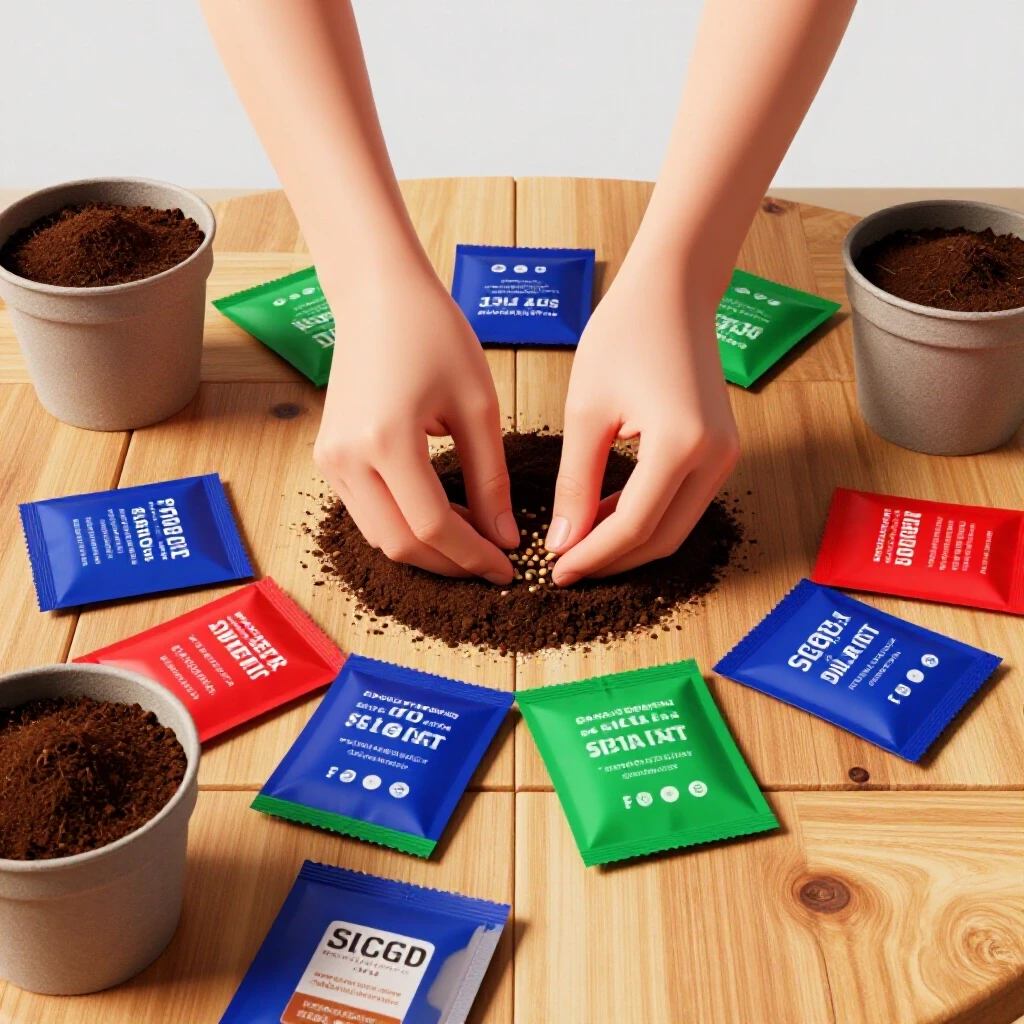
The Micro-Budget Framework for Indoor Germination
A micro-budget framework is a scaled-down version of a full-scale home renovation budget. It focuses on extreme cost control and resourcefulness to achieve a specific domestic goal without impacting the primary household cash flow or emergency reserves. By limiting the scope of an indoor experiment to under $20, homeowners can practice the “lean” methodology required for larger renovations.
Why Small-Scale Tracking Prevents Large-Scale Overspending
Small-scale tracking builds the habit of documenting every cent spent on a project. This discipline ensures that when a homeowner moves to a major remodel, they have the mental and technical tools to manage thousands of dollars with the same precision. In my own experience, the homeowners who struggle with $100,000 additions are often the same ones who lose track of “minor” $50 hardware store runs.
When I started my first indoor planting experiment, I treated it like a test run for my remodeling expense tracker. I wanted to see if I could stay under a $20 cap while using only what I already owned. This approach forced me to look at “trash” as “assets.” According to the U.S. Bureau of Labor Statistics, the cost of household supplies has risen significantly over the last three years. By substituting recycled items for retail products, you are effectively creating a tax-free return on your household waste.
Establishing Your Financial Safety Buffer
Even in a tiny project, I recommend a 10% to 30% contingency buffer. If your goal is to spend $20, you should mentally allocate $26. This protects you from “scope creep”—the tendency to buy a fancy watering can or a specialized light just because you saw it on social media. For cost-conscious home planners, this buffer is the difference between a project that finishes on time and one that lingers as an unfinished debt.
Line-Item Breakdown of a Sub-Twenty-Dollar Project
A line-item breakdown is a granular list of every physical component required for a project. For a low-cost indoor experiment, this involves identifying household items that can be repurposed, thereby reducing the “actual” cash outlay to near zero. This method mirrors how I analyze contractor quotes to ensure no “hidden fees” are tucked into the “materials” category.
Identifying Recycled Infrastructure and Repurposed Materials
Recycled infrastructure refers to using existing household waste—like egg cartons or plastic tubs—as functional tools. Repurposing these items avoids the retail markup of specialized kits and keeps the total project cost within a strict $20 limit. In professional remodeling, we call this “material salvage,” and it is a key strategy for maintaining a home renovation budget in a high-inflation market.
- Containers: Empty yogurt cups, rotisserie chicken lids, and cardboard egg cartons. Cost: $0.
- Growing Medium: Sifted garden soil mixed with crushed dried leaves or finished compost from your own bin. Cost: $0.
- Seeds: Saved from store-bought heirloom tomatoes or peppers. Cost: $0.
- Watering Tool: A plastic water bottle with small holes poked in the cap. Cost: $0.
| Item Category | Retail Estimated Cost | DIY Repurposed Cost | Savings Percentage |
|---|---|---|---|
| Starter Trays | $12.00 | $0.00 (Egg Cartons) | 100% |
| Humidity Dome | $8.00 | $0.00 (Clear Salad Tub) | 100% |
| Potting Mix | $7.00 | $0.00 (Home Compost) | 100% |
| Total Outlay | $27.00 | $0.00 | 100% |
The Reality of Sweat Equity Valuation
Sweat equity is the value added to a project through your own labor rather than through paid professional services. In a micro-project, your time is the primary investment. If it takes you two hours to clean containers and prep soil, and you value your time at $25/hour, the “economic cost” of the project is $50, even if the cash outlay is $0. Understanding this helps you decide if a DIY project is truly “cheaper” or if you are simply trading time for money.
Accounting for Hidden Operating Costs in DIY Projects
Hidden operating costs are the “invisible” expenses like electricity for lighting or water usage. While often negligible in small experiments, understanding these costs is vital for accurate financial planning for homeowners who want to scale up their efforts. This is similar to how a new bathroom increases your monthly water bill, a factor many forget to include in their long-term cost vs value home improvement calculations.
Calculating Energy and Resource Consumption
If you place your recycled containers on a sunny windowsill, your energy cost is zero. However, if you use a standard 60-watt household bulb for 12 hours a day, you are consuming 0.72 kWh daily. Over a 30-day germination period, that is 21.6 kWh. At an average U.S. rate of $0.16 per kWh, your hidden cost is $3.45.
- Water Usage: Minimal, but should be tracked if using a metered system.
- Space Opportunity Cost: The value of the counter space being used.
- Cleanup Costs: The price of soap and water used to sanitize recycled containers.
Interestingly, these tiny costs are exactly what professional developers look at when calculating the “carry cost” of a property. By practicing this level of detail now, you prepare yourself to analyze the utility impact of a larger renovation, such as adding a heated floor or a new dishwasher.
Analyzing the Cost-to-Value Ratio of Indoor Greenery
The cost-to-value ratio measures the financial investment against the tangible or intangible benefits gained. In a low-cost indoor project, the value is often found in the “sweat equity” and the reduction of grocery expenses rather than immediate property resale value. This is a crucial distinction for anyone worried about over-improving their home past localized market values.
Understanding Return on Investment vs. Lifestyle Value
Return on Investment (ROI) is a strictly financial metric, whereas lifestyle value accounts for the joy or utility a project provides. Remodeling Magazine’s Cost vs. Value reports show that most home improvements do not recoup 100% of their cost at resale. However, a $20 indoor experiment has a massive ROI if it produces $50 worth of fresh produce.
- Direct Savings: The retail price of the plants you would have otherwise bought.
- Skill Acquisition: The financial value of learning a new DIY skill that reduces future reliance on paid services.
- Waste Reduction: The “green” value of diverting plastic from landfills, which can sometimes lead to lower municipal waste fees in certain regions.
In my personal remodeling portfolios, I always separate “market value” from “use value.” A seed-starting setup on a windowsill has zero market value to a future buyer, but its use value is high for the current resident. This is the same logic I use when advising clients not to install a $10,000 wine cellar if they don’t drink wine, regardless of what it does for the home’s “appraisal.”
Building a Remodeling Expense Tracker for Micro-Projects
A remodeling expense tracker is a digital or physical ledger used to log every purchase and time investment. For a $20 experiment, this tracker serves as a training ground for managing more complex financial frameworks in future home improvements. It prevents the “death by a thousand cuts” where small, unrecorded purchases destroy a budget.
Steps to Create a Functional Ledger
- Define the Scope: Write down exactly what you intend to achieve (e.g., “Germinate 12 tomato seeds using only household waste”).
- Categorize Expenses: Use categories like “Materials,” “Utilities,” and “Time.”
- Log Real-Time Data: Enter every expense the moment it happens. Do not wait until the end of the week.
- Analyze Variance: Compare your projected $20 budget to your actual spending. If you spent $22, find out exactly where that extra $2 went.
I have found that using a simple spreadsheet on a smartphone is the most effective way to keep project budgets on track. When you are in the store and feel the urge to buy a “specialized” seed-starting soil for $8.99, seeing your “Actual vs. Budget” column in red can be a powerful deterrent.
Why Standard Estimates Fail and How to Forecast Better
Standard estimates often fail because they rely on “national averages” rather than local realities. A “cheap” project in a rural area might be expensive in an urban center where household waste is managed differently or soil is harder to come by. To formulate a realistic expense forecast, you must account for localized cost factors.
- Regional Labor Multipliers: Even if you are doing the work yourself, your “opportunity cost” varies by region.
- Municipal Fees: Some cities have strict rules about indoor composting or waste disposal that could lead to fines if not managed properly.
- Material Availability: If you live in an apartment, “free” garden soil isn’t actually free—you might have to travel to get it, adding fuel costs.
Building on this, I always tell my clients to ignore the “total price” they see on home improvement shows. Those numbers are often stripped of labor costs or permit fees. For your indoor experiment, your “permit fee” might be the cost of a new bottle of dish soap to clean your containers. It seems small, but it is a line item that belongs in your spreadsheet.
Practical Financial Planning for Homeowners
Financial planning for homeowners involves balancing the mortgage, maintenance, and improvements without over-leveraging. A $20 experiment is the perfect way to test your financial limits. If you find it difficult to stick to a $20 budget for seeds, you will almost certainly struggle with a $20,000 budget for a roof.
Common Financial Traps to Avoid
- The “While I’m At It” Trap: Buying extra items just because you are already at the store.
- The Quality Myth: Believing that a $15 retail seed tray is “better” than a free egg carton. In many cases, the recycled version provides better drainage and easier transplanting.
- Ignoring Depreciation: Understanding that your “equipment” (the yogurt cups) has a short lifespan and will need to be replaced (recycled) after one use.
By avoiding these traps in a micro-project, you develop the muscle memory to avoid them during a major renovation. This is how you prevent running out of money mid-project. You learn to respect the budget, no matter how small it is.
Actionable Metrics for Your Indoor Project
To keep your experiment data-driven, use these specific metrics. They will help you move from “guessing” to “knowing” your project’s financial health.
- Labor-to-Material Ratio: Ideally, for a $20 project, this should be 10:1. You want your time to be the primary investment, not your cash.
- Germination Cost Per Unit: If you spend $5 on seeds and get 10 plants, your cost per unit is $0.50. Compare this to the $4.00 price tag for a seedling at a nursery.
- Space Efficiency: Calculate the cost per square inch of your windowsill. This helps you understand the “real estate value” of your home’s interior.
As a result of tracking these metrics, you will find that your confidence in managing larger home renovation budgets grows. You are no longer just “planting seeds”; you are managing a small-scale production facility with a clear bottom line.
Frequently Asked Questions
How do I track the cost of items I already own?
In financial planning for homeowners, we call this “inventory valuation.” Assign a “fair market value” to the item based on what it would cost to buy it at a thrift store. However, for a $20 experiment, it is often better to list these as $0 “salvaged assets” to see how much you are actually saving from the landfill.
Is it really possible to start seeds for under $20?
Yes, absolutely. By using saved seeds from produce and repurposed containers, your only real cost might be a small bag of soil if you cannot make your own. Most people fail because they get distracted by “convenience” items at the garden center.
What is the ROI of using recycled egg cartons versus retail trays?
The ROI is nearly infinite because your investment is $0. Retail trays often cost $1.00 to $2.00 per unit and offer no significant biological advantage for basic seed initiation. Using an egg carton saves $2.00 and reduces your household waste footprint.
How do I account for the “cost” of my time?
Track your hours in your remodeling expense tracker. Even if you don’t “pay” yourself, knowing that a project took 10 hours allows you to calculate the “opportunity cost”—what else could you have done with that time? Perhaps you could have spent those 10 hours researching a better interest rate for a home equity loan.
Will using “free” soil from my yard hurt my budget if it fails?
This is a “risk management” question. If your yard soil is too dense and the seeds don’t sprout, you have lost the “cost” of the seeds and your time. To mitigate this, I recommend a simple drainage test (adding sand or crushed leaves) before committing your entire “crop” to it.
How does this experiment help me with a future kitchen remodel?
It teaches you to find alternatives to expensive retail solutions. If you can find a way to use a $0 egg carton instead of a $15 tray, you will be more likely to find a way to save $1,000 on cabinetry by choosing a different finish or sourcing from a surplus outlet.
Should I include the cost of water in my $20 budget?
For a project of this scale, water usually falls under “fixed household overhead.” However, if you are in a high-cost water district, it is a good exercise to calculate the few cents used to see how it affects your overall financial framework.
What if I go over my $20 budget?
Analyze the “variance.” Did you buy something you didn’t need? Was there an “emergency” purchase? Use this as a lesson for your next home renovation budget. It is better to fail on a $20 project than a $20,000 one.
Can I use this method for larger plants later?
The “recycled container” philosophy scales up easily. Five-gallon buckets from bakeries or construction sites (cleaned thoroughly) make excellent large planters for $0, whereas retail versions can cost $10 to $15 each.
How do I explain this “cheap” experiment to my spouse who wants a professional setup?
Show them the spreadsheet. Data is the best way to win a financial argument. Show the “Projected Savings” column and explain that the money saved here is going into the “Kitchen Remodel Fund.” Most financially prudent partners will appreciate the logic of “saving small to spend big.”
Does using recycled materials lower the “value” of my home?
No. Since these are temporary indoor setups, they have no impact on your home’s appraisal. They do, however, improve your “lifestyle value” by providing fresh food and a sense of accomplishment without adding to your debt load.
What is the most common hidden fee in indoor planting?
Replacement costs. If you use flimsy containers that break, you have to spend time (and potentially money) moving the plants. Choosing “durable” trash—like heavy plastic yogurt tubs—is a form of “quality control” in a micro-budget.
(This article was written by one of our staff writers, Steven Fletcher. Visit our Meet the Team page to learn more about the author and their expertise.)