Handyman Cost Breakdown for Home Updates (Budget Guide)

The home improvement landscape is shifting toward “micro-remodeling,” where homeowners focus on high-impact cosmetic updates rather than massive structural changes. As a financial planner who has spent a decade logging every screw and paint gallon in a remodeling expense tracker, I have seen how small projects can either build equity or drain a savings account. For cost-conscious planners, the goal is to manage general labor expenses for tasks like shelving, trim work, or fixture updates without seeing the budget spiral out of control.
Building a Financial Framework for Cosmetic Home Updates
A financial framework for home improvement is a set of rules that governs how much you spend based on your home’s value and your liquid cash reserves. It prevents “over-improving” a property beyond what the local market can return. This structure ensures that every dollar spent on general labor is a calculated investment rather than an emotional impulse.
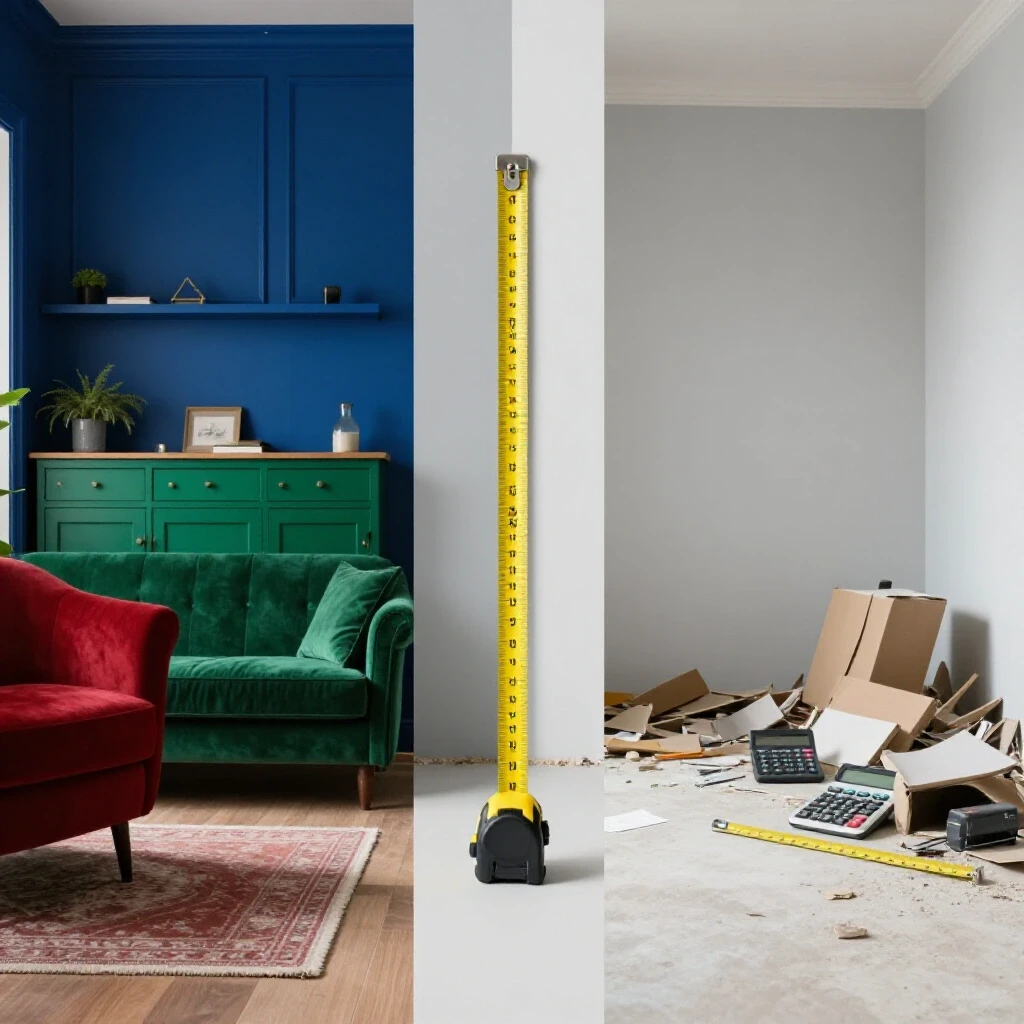
When I started my first home office refresh, I used a simple 1% rule. I decided that no cosmetic update should exceed 1% of the home’s total value unless it addressed a functional deficit. This helped me prioritize projects that offered the best cost vs value home improvement returns. For most homeowners, a safe home renovation budget starts with a 20% contingency buffer. This is not just for materials; it covers the extra hours a professional might need if a wall isn’t level or if the paint requires an extra coat of primer.
Determining Your Home Renovation Budget Thresholds
Budget thresholds are the upper limits of spending that keep your project financially viable within your specific neighborhood. These limits are calculated by looking at “comparable” homes to see if your planned updates align with local standards. If you spend $5,000 on custom shelving in a neighborhood where most homes use basic wire racks, you may not see that money again.
In my personal remodeling spreadsheets, I track the “lifestyle value” versus the “resale value.” Lifestyle value is the joy you get from a beautiful accent wall. Resale value is what a buyer will actually pay for it. I recommend a “70/30” rule for cost-conscious planners: 70% of your project should be aimed at broad market appeal, while 30% can be for personal taste. This balance protects your primary asset while making your house feel like a home.
The Labor-to-Material Ratio in Small Projects
The labor-to-material ratio is a metric that compares the cost of physical goods to the cost of the person installing them. For small-scale cosmetic updates, this ratio often leans heavily toward labor because the tasks require precision and time rather than expensive raw materials. Understanding this helps you decide when to DIY and when to hire.
- Standard Ratio: 40% materials / 60% labor.
- High-Finish Ratio: 30% materials / 70% labor (e.g., intricate crown molding).
- Utility Ratio: 60% materials / 40% labor (e.g., high-end shelving units).
In my experience, homeowners often underestimate the “prep and finish” time. A professional might spend two hours installing a shelf but four hours sanding, caulking, and painting it. When you look at a cost breakdown guide, always check if the labor quote includes these finishing touches.
Analyzing Hourly Rates for General Home Labor
Hourly rates for general labor refer to the price paid for non-specialized home improvement tasks, typically ranging from $50 to $150 per hour. These rates vary based on your geographic location and the complexity of the task. Knowing these benchmarks allows you to spot “low-ball” quotes that might lead to poor quality or “high-ball” quotes that eat your ROI.
When I analyze housing market cost reports, I see a clear divide between urban and rural labor pricing. In a high-cost-of-living area, you might pay $125 per hour for someone to install decorative wall panels. In a mid-sized suburb, that same task might cost $75 per hour. I always suggest getting three quotes to establish a local baseline. This prevents the “sticker shock” that often occurs when homeowners rely on outdated national averages found online.
Regional Labor Cost Coefficients
A labor coefficient is a multiplier used to adjust national average costs to your specific zip code. It accounts for local demand, fuel costs, and the general cost of living for the person doing the work. Using a coefficient helps you create a more accurate remodeling expense tracker before you even call for a quote.
| Region Type | Labor Multiplier | Typical Hourly Range |
|---|---|---|
| Major Metro (NYC, SF, Seattle) | 1.4 – 1.8 | $110 – $150 |
| Mid-Sized City (Austin, Denver) | 1.0 – 1.3 | $75 – $110 |
| Rural/Small Town | 0.7 – 0.9 | $50 – $75 |
Interestingly, I found that hiring during the “off-season” (typically late winter) can sometimes lower these rates. Professionals are often looking to fill their schedules and may be more flexible with their pricing. Building a relationship with a reliable worker can also lead to “bundle pricing,” where you pay a flat day rate for multiple small tasks rather than an inflated hourly fee for just one.
Real-World Cost Breakdown: The Home Office Refresh
A cost breakdown is a line-item list that accounts for every cent spent on a specific project, from the big-ticket items to the smallest hardware. It serves as the “source of truth” for your budget. By comparing your projected costs to your actual spending, you can identify where your financial planning might be failing.
I recently consulted with a client who wanted to install a custom-look accent wall and floating shelves. They initially budgeted $800, thinking it was a simple weekend job. However, once we sat down with my spreadsheet, the reality looked much different. They had forgotten about the cost of high-quality paint, the specialized mounting hardware for the shelves, and the disposal fees for the old materials.
Projected vs. Actual Budget Line-Item Breakdown
The following table reflects a real-life scenario for a small-scale cosmetic update. It highlights the importance of the contingency buffer and the reality of “scope creep.”
| Category | Projected Cost | Actual Cost | Variance (%) |
|---|---|---|---|
| Floating Shelves (Materials) | $250 | $310 | +24% |
| Accent Wall Paint & Supplies | $120 | $155 | +29% |
| General Labor (8 hours @ $85) | $680 | $850 | +25% |
| Wall Prep & Sanding Supplies | $40 | $65 | +62% |
| Disposal & Cleanup | $0 | $50 | N/A |
| Total | $1,090 | $1,430 | +31% |
As you can see, the project went 31% over the initial estimate. The labor cost increased because the walls were not perfectly flat, requiring the worker to spend two extra hours shimmying the shelves to look level. This is why I tell my clients that a “clean” budget is a myth. You must plan for the friction that occurs when theoretical plans meet physical walls.
Maximizing ROI with a Remodeling Expense Tracker
A remodeling expense tracker is a dynamic tool—usually a spreadsheet—that monitors your spending in real-time. It allows you to adjust your plans mid-project if one area starts to go over budget. For example, if your labor costs are higher than expected, you might choose a less expensive paint or delay a secondary project to keep your finances in check.
I use a spreadsheet that automatically calculates my “break-even” point. This is the amount of time I need to live in the home for the lifestyle value to offset the cost of the improvement. If I spend $1,500 on a decorative update and plan to stay for five years, that’s only $25 a month for the enjoyment of that space. This perspective shifts the focus from “spending money” to “allocating resources for quality of life.”
Financial Planning for Homeowners: The “Sweat-Equity” Valuation
Sweat equity is the value added to a property through your own unpaid labor. For cost-conscious planners, the decision to DIY or hire is a matter of calculating your own hourly worth. If you earn $60 an hour at your job, but it takes you five hours to do a task a professional can do in one hour for $85, you are actually losing money by doing it yourself.
- Calculate your “internal hourly rate” (Annual Salary / 2,000 hours).
- Estimate the DIY time (multiply the professional’s estimate by 3).
- Compare the “Cost of Your Time” vs. the “General Labor Quote.”
- Factor in the “Frustration Tax”—the mental toll of a project dragging on for weeks.
In my own renovations, I realized that I am terrible at installing trim. It took me a whole day to do one room, and the corners were still gapped. I hired a professional for the rest of the house. He finished in six hours, and the result was perfect. My time was better spent on my financial consulting work, which more than paid for his labor.
Avoiding Common Financial Traps in Small Projects
Financial traps are unexpected expenses or poor decisions that lead to budget overruns or a decrease in home value. In the world of small cosmetic updates, these often look like “over-customization” or ignoring the “finish-out” costs. Staying disciplined means sticking to the spreadsheet even when a more expensive, “prettier” option catches your eye at the hardware store.
One major trap is the “while you’re at it” syndrome. You hire someone to put up shelves, and then you ask them to also paint the baseboards and swap out the door hardware. Without a formal quote for these additions, you are essentially giving the worker a blank check. Always ask for a “change-order” price, even for small tasks. This keeps the worker accountable and keeps your budget on track.
- Avoid buying materials before the labor is scheduled.
- Don’t skip the prep work; it makes the labor take longer and cost more.
- Never pay 100% upfront; a 25-50% deposit is standard for small jobs.
- Keep a digital folder of all receipts for tax basis adjustments later.
Calculating Long-Term Home-Value Impacts
Long-term value impact is the estimated increase in your home’s resale price specifically attributed to an improvement. For cosmetic updates, the “recovery rate” is often higher than for major renovations because the initial investment is lower. According to data from Remodeling Magazine’s Cost vs. Value reports, minor cosmetic refreshes can often recover 60-80% of their cost at resale.
However, this only holds true if the quality of the work is high. Poorly installed shelves or a sloppy paint job can actually decrease your home’s value, as a buyer will see it as a project they have to “fix.” This is why I advocate for professional labor on tasks that require a high degree of visible finish. You are paying for the “polish” that sells a home.
Conclusion and Next Steps for Your Budget
Managing the costs of small home updates requires the same level of financial discipline as a major kitchen overhaul. By using a remodeling expense tracker and understanding local labor rates, you can enhance your living space without jeopardizing your financial future. The key is to remain analytical, prioritize value over trend, and always keep a healthy contingency fund.
To get started on your next project, follow these steps: 1. Define the scope: List exactly what needs to be done (e.g., install 4 floating shelves, paint 1 accent wall). 2. Research materials: Get firm prices for the goods you want to use. 3. Gather quotes: Contact three local professionals for hourly or flat-rate labor estimates. 4. Update your spreadsheet: Plug in the numbers and see if they fit your 1% rule or neighborhood comps. 5. Set a “Stop-Loss”: Decide at what point the project becomes too expensive and be prepared to scale back the scope.
FAQ: Navigating General Labor Costs for Home Updates
What is a fair hourly rate for someone doing cosmetic home tasks?
In most U.S. markets, you can expect to pay between $50 and $150 per hour. Lower rates usually apply to simple tasks like hanging pictures or basic assembly, while the higher end reflects specialized skills like high-end trim work or custom cabinetry installation.
How do I know if I am over-improving my home for the neighborhood?
Look at the most recent sales in your area. If the average home has basic finishes and you are installing high-end custom features, you are likely over-improving. Aim to be the “nicest version of the average home” rather than an outlier.
Should I buy the materials myself or let the professional provide them?
For cost-conscious planners, buying materials yourself is usually better. It allows you to shop for sales and prevents the 10-20% “markup” that many professionals add for the time spent sourcing and transporting goods.
What is a “contingency buffer,” and why do I need 20%?
A contingency buffer is a portion of your budget set aside for unexpected costs. In cosmetic projects, this often covers “hidden” issues like wall damage behind old fixtures or the need for extra materials due to mistakes or waste.
How does a remodeling expense tracker help me save money?
It forces you to see the cumulative impact of small purchases. A $20 box of screws and a $40 can of paint may seem small, but when logged, they show you the true cost of the project, helping you avoid overspending in other areas.
Can I negotiate a flat rate instead of an hourly rate?
Yes, and for many homeowners, this is preferred. A flat rate provides budget certainty. However, ensure the “scope of work” is clearly defined in writing so there are no disputes about what the flat fee covers.
Is it cheaper to hire one person for multiple tasks?
Generally, yes. Most professionals have a “minimum call-out fee” to cover their travel and setup time. By bundling several small tasks into one full day of work, you spread that fixed cost across more projects.
How do I factor in disposal costs for old materials?
Never assume the worker will take the trash with them. Ask upfront. If they don’t, you may need to budget for a small dumpster bag or a trip to the local landfill, which can cost between $50 and $150.
What is the difference between “lifestyle value” and “resale value”?
Lifestyle value is the personal utility and happiness you get from an update. Resale value is the actual dollar amount the update adds to the home’s price. A project can have high lifestyle value but low resale value.
Does a cosmetic update require a formal contract?
While a full legal contract might be overkill for a $500 job, a written “work order” or an email summary is essential. It should list the tasks, the agreed price, the timeline, and who is responsible for materials.
How often should I update my home renovation budget spreadsheet?
I recommend updating it daily while the project is active. This prevents “budget amnesia,” where you forget about small cash purchases that eventually add up to hundreds of dollars.
What are “finish-out” costs?
These are the final touches that make a project look professional, such as caulk, wood filler, sandpaper, and touch-up paint. They are often overlooked in initial estimates but are crucial for a high-quality result.
(This article was written by one of our staff writers, Steven Fletcher. Visit our Meet the Team page to learn more about the author and their expertise.)