Hardwood Floor Maintenance Routine for Homeowners (Step-by-Step Guide)

Did you know that the natural wood under your feet is one of the few parts of your home that can actually outlast the mortgage if treated with consistent, gentle care? When I bought my first house in 2010, I spent weeks obsessing over the mortgage rate and the inspection report, but I gave almost no thought to the solid oak planks in the living room. I assumed they were indestructible. It took exactly six months of tracking my home logs to realize that the grit from the street was acting like sandpaper on the finish. As a real estate analyst, I’ve seen how well-preserved surfaces can bolster a home’s resale value, but as a homeowner, I’ve learned that the secret isn’t expensive products—it’s the daily and weekly habits that prevent damage before it starts.
Transitioning from Renter to Steward of Natural Wood Surfaces
Moving from a rental to owning solid wood floors requires a shift in mindset from passive use to active preservation. It involves understanding that natural materials react to their environment and need consistent, gentle care to prevent premature wear and maintain the property’s long-term value.
When you rent, a scratch on the floor is a ding on a security deposit. When you own, it is a degradation of a major asset. According to U.S. Census Bureau housing surveys, older homes often retain their original wood flooring, which is a testament to the material’s durability. However, the transition to homeownership means you are now the primary technician for these surfaces. I remember feeling overwhelmed by the sheer square footage of my second home. I had to learn that keeping these surfaces in top shape wasn’t about a once-a-year deep clean, but about establishing a rhythm.
In my 14 years of tracking home expenses, I’ve found that homeowners who follow the “1% rule”—setting aside 1% of the home’s value for annual maintenance—often find that floor preservation is one of the highest-ROI tasks they can perform. It costs very little in terms of cash but requires a steady investment of time. Building this into your household budgeting diary early on prevents the “homeowner fatigue” that sets in when you realize a surface has become dull or damaged due to neglect.
Establishing a Sustainable Weekly Cleaning Sequence
A systematic approach to removing abrasive debris and light soil is the most effective way to protect wood finishes. This process focuses on dry-soil removal followed by controlled, minimal moisture applications to ensure the surface remains clean without risking water damage to the wood fibers.
The biggest mistake I made in my first year was using too much water. Wood is a porous, organic material. If you wouldn’t soak a fine wooden table, you shouldn’t soak your floors. My current routine, which has kept my third home’s floors looking excellent for five years, starts with a daily “sweep” using a microfiber dust mop. This isn’t just about aesthetics; it’s about removing the microscopic rocks and dirt that the EPA notes can be tracked in from outside. These particles act as abrasives under your shoes.
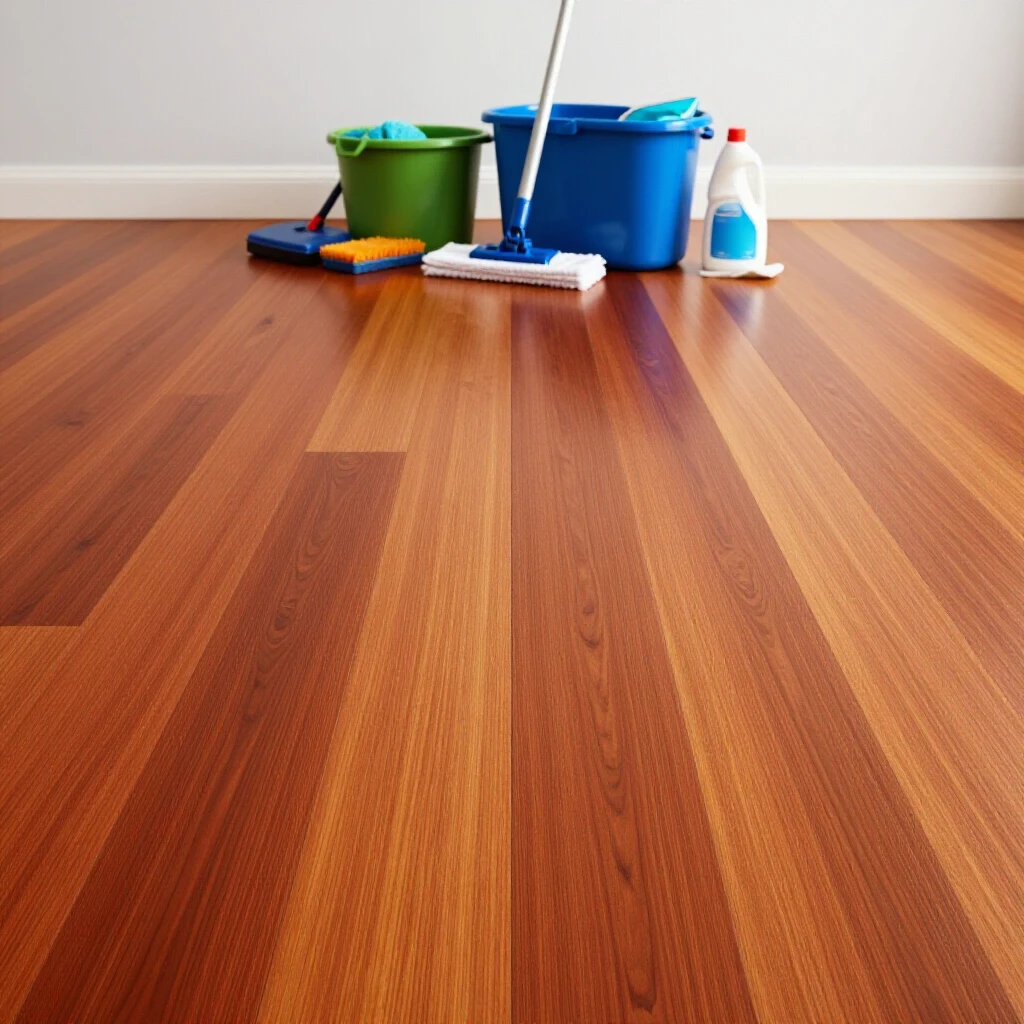
For the weekly deep clean, I follow a specific order of operations. First, I use a vacuum with the beater bar turned off to pull dust from the gaps between planks. Then, I use a barely-damp microfiber cloth mop. If you can see standing water on the wood after you pass over it, the mop is too wet. Interestingly, my logs show that this proactive approach takes about 20 minutes for a standard 1,500-square-foot level, which is a small price to pay for long-term asset protection.
| Task | DIY Time Investment | Annual Supply Cost | Potential Pro Cost (Neglect) |
|---|---|---|---|
| Daily Dust Mopping | 5-10 Minutes | $15 (Replaceable pads) | N/A |
| Weekly Vacuuming | 15 Minutes | $0 (Existing tool) | $2,000+ (Refinishing) |
| Monthly Damp Mop | 30 Minutes | $10 (Gentle cleaner) | $5,000+ (Replacement) |
| Humidity Monitoring | Passive | $20 (Hygrometer) | $3,000 (Structural gaps) |
Protective Daily Habits to Prevent Surface Scratches
Daily behaviors are the first line of defense against mechanical damage to your flooring. By implementing simple rules regarding footwear, furniture movement, and entryway management, you can significantly reduce the physical stress placed on the wood’s protective top coat throughout the year.
One of the most effective first-time homeowner tips I share is the “two-mat system.” Place a heavy-duty mat outside every entrance and a softer rug immediately inside. This captures up to 80% of the debris that would otherwise scratch your finish. In my second home, I noticed a significant decrease in “dulling” near the front door once I enforced a strict shoes-off policy. It’s a simple lifestyle adjustment that saves thousands of dollars in premature wear.
Furniture is another silent culprit. Every chair, table, and sofa in my house has felt pads on the legs. I check these pads every six months. In my 14-year log, I have a note from 2016 where a single missing felt pad on a dining chair caused a deep gouge that took hours of careful hand-buffing to disguise. This is a classic example of how a $5 investment in DIY home care prevents a $500 headache.
- Use high-quality felt pads on all movable furniture.
- Avoid walking on wood surfaces in high heels or spiked athletic shoes.
- Lift furniture when moving it rather than sliding it across the room.
- Place breathable rugs in high-traffic hallways to distribute weight and friction.
Managing Indoor Climate for Long-Term Board Stability
Wood is hygroscopic, meaning it absorbs and releases moisture based on the surrounding air. Maintaining a consistent indoor humidity level prevents the natural planks from expanding or contracting excessively, which helps avoid gaps, cupping, or cracking in the floor’s surface over time.
This is the “invisible” part of homeownership that often catches new buyers off guard. During my first winter as an owner, I was confused by the 1/8th-inch gaps appearing between my floorboards. I thought the house was sinking. In reality, the dry furnace air was sucking the moisture out of the wood. HUD reports suggest that maintaining an indoor relative humidity between 30% and 50% is ideal for both human health and the structural integrity of wood products.
I now keep a small digital hygrometer in the main living area. If the humidity drops below 30% in the winter, I run a humidifier. If it climbs above 50% in the summer, I ensure the air conditioning or a dehumidifier is managing the moisture. This simple environmental control keeps the boards stable and prevents the finish from stressing at the seams. It is a core part of maintaining sustainable home systems that protect your equity.
Seasonal Inspections and Minor Touch-Up Strategies
Conducting quarterly walkthroughs allows you to identify high-traffic wear patterns before they become major issues. These checks involve looking for dull spots, minor finish separations, or areas where the wood may need extra protection during periods of extreme weather or high household activity.
Every spring and fall, I perform what I call the “light-reflection test.” I dim the overhead lights and use a flashlight held at a low angle across the floor. This reveals areas where the protective finish is thinning. Usually, this happens in the “pivot points”—the areas where people turn a corner or stand at the kitchen sink. Identifying these spots early allows you to adjust your rug placement or be more diligent with cleaning to prevent the wood itself from being exposed.
During these inspections, I also look for any signs of “cupping,” where the edges of the boards are higher than the centers. This is a red flag for moisture issues below the surface. By catching this early, you can investigate plumbing or crawlspace issues before they become catastrophic. This proactive mechanical care is what separates a seasoned homeowner from someone who is constantly surprised by expensive repairs.
- Check the “pivot points” in kitchens and hallways for finish wear.
- Inspect the perimeter of the room for any signs of board expansion.
- Verify that all door thresholds are secure and not rubbing against the wood.
- Replace any worn-out felt pads on furniture legs.
- Clean the undersides of area rugs to ensure no grit is trapped beneath them.
Avoiding Homeowner Burnout through Strategic DIY Prioritization
Managing a home can feel like a never-ending list of chores, leading to decision paralysis and fatigue. By prioritizing high-impact, low-effort tasks like floor preservation, you can maintain your home’s integrity without sacrificing your entire weekend to manual labor.
I’ve seen many young professionals spend their first year of homeownership trying to do everything at once. They want to paint, landscape, and renovate, often neglecting the basic systems that keep the house running. My advice is to automate your floor care. Set a recurring reminder on your phone for the weekly vacuuming and the semi-annual pad check. When you turn a task into a habit, it stops being a “project” and starts being part of the house’s natural rhythm.
The psychological transition of moving into your own home is real. You are now the CEO of a small infrastructure project. In my 14 years of logs, the periods where I felt most overwhelmed were the ones where I let the small things—like the dust on the floor—pile up. Keeping a clean, well-maintained floor provides an immediate visual reward that can help combat the anxiety of other, more complex homeownership realities like HVAC maintenance or roof aging.
Long-Term Asset Protection and Equity Planning
A well-maintained wood floor is a significant asset that contributes to your five-year equity planning. Buyers in the 25–40 age bracket consistently rank original wood surfaces as a top “must-have,” and showing a history of meticulous care can set your home apart in a competitive market.
When I evaluated properties for my real estate analysis work, I could always tell which owners were proactive. A floor that hasn’t been allowed to accumulate deep scratches or water damage is a sign of a house that has been cared for in other “hidden” ways. It suggests that the homeowner is attentive to detail. This builds trust with future inspectors and buyers.
Think of your floor care as a form of “slow-motion renovation.” By spending $50 a year on microfiber pads and humidity control, you are effectively saving $10,000 that you would otherwise have to spend on a full sand-and-refinish or replacement before selling. This is the essence of smart homeownership: making small, data-driven decisions today to protect your largest financial investment for tomorrow.
Establishing Your Foundation: A 30-Day Action Plan
If you’ve just closed on your home or are about to, don’t wait for the first scratch to start your routine. Here are the low-barrier steps to take in your first month:
- Week 1: Purchase a high-quality microfiber dust mop and a vacuum with a “hard floor” setting.
- Week 2: Buy a multi-pack of felt furniture pads and apply them to every single item that touches the floor.
- Week 3: Install high-quality walk-off mats at every exterior entrance.
- Week 4: Purchase a digital hygrometer to begin tracking your indoor humidity levels.
By following this roadmap, you move from the anxiety of “what if something breaks?” to the confidence of “I am taking care of my home.” You aren’t just cleaning; you are preserving a legacy.
Frequently Asked Questions
How often should I realistically sweep my wood floors? For the best results, you should use a microfiber dust mop daily in high-traffic areas like the kitchen and entryway. In less-used rooms, once or twice a week is sufficient. The goal is to remove the “sandpaper” grit before it gets walked on and ground into the finish.
Is it safe to use a steam mop on solid wood? No, I strongly recommend against using steam mops. Steam forces moisture deep into the wood fibers and can cause the boards to swell, warp, or peel the finish. A barely-damp microfiber cloth is much safer and just as effective for routine cleaning.
Why are there gaps between my floorboards in the winter? This is usually caused by low indoor humidity. Wood shrinks as it loses moisture to the dry winter air. Maintaining a relative humidity of 30-50% with a humidifier can help minimize these gaps. They typically close up again in the summer when humidity rises.
Can I use vinegar and water to clean my floors? While many people suggest vinegar, it is an acid that can actually dull and break down the protective finish over time. It is better to use a gentle, pH-neutral cleaner specifically designed for wood surfaces or just a slightly water-dampened cloth.
How do I know if my floor needs more than just a cleaning? If you see areas where the wood looks “gray” or “thirsty,” or if water droplets soak into the wood rather than beading on top, the protective finish may be worn through. This is a sign that the surface needs a fresh coat of protection, though not necessarily a full sanding.
Should I wear socks or go barefoot on my wood floors? Socks are generally the safest option. Bare feet can leave oily residues that attract more dust, while outdoor shoes track in abrasive grit. However, be careful with socks on stairs, as they can be slippery.
What is the best way to handle a liquid spill? Time is your biggest enemy with spills. Blot the liquid immediately with a soft, dry cloth. Do not rub, as this can push the liquid into the seams. Once the spill is up, wipe the area with a very slightly damp cloth to remove residue and then dry it completely.
Are rugs necessary for wood floor protection? Rugs are highly recommended in high-traffic areas and under heavy furniture. They act as a buffer against friction and impact. Just ensure the rug backing is “breathable” and doesn’t contain rough materials that could scratch the floor underneath.
How do I fix a minor scratch in the finish? For very light surface scratches that haven’t reached the wood, sometimes a simple buffing with a soft cloth can help. For slightly deeper marks, there are touch-up pens available that can blend the color, but always test in an inconspicuous area like a closet first.
How much should I budget annually for floor care? For a standard home, you should budget about $50–$100 per year. This covers replacement microfiber pads, a gentle cleaning solution, and new felt pads for furniture. This is a tiny fraction of the 1% annual maintenance rule but offers one of the best returns on your time.
(This article was written by one of our staff writers, Michael Morrison. Visit our Meet the Team page to learn more about the author and their expertise.)