How to Choose the Best Home Lighting Temperature (Expert Guide)

There is a subtle luxury in walking into a room that feels exactly right. It is not just about the furniture or the paint on the walls. It is about how the space glows. When I bought my first home 14 years ago, I didn’t understand why my living room felt like a cold, sterile pharmacy at night. I had the right furniture and a great layout, but the atmosphere was jarring. My personal home logs from that era show I spent weeks feeling unsettled until I realized the issue was the color of the light.
Homeownership is full of these small, hidden variables. You focus on the big things like the roof or the foundation, but the daily experience of living in your home is shaped by the visual environment. As a real estate analyst, I have seen how the right light tone can make a modest home feel like a sanctuary. Conversely, the wrong tone can make a high-end renovation feel cheap. Understanding the Kelvin scale is a vital part of your first-year home maintenance guide because it dictates how you interact with your space every single evening.
Transitioning from Renter to Owner: The Role of Light Tone
The psychological transition of homeownership involves taking control of your environment to suit your personal needs and daily routines. Unlike a rental where you accept whatever is provided, owning a home allows you to curate the visual warmth of every room. This control helps reduce the initial overwhelm of moving into a new, unfamiliar property.
When you first move in, your household budgeting diary might be focused on big-ticket items. However, the visual “vibe” of your home is a low-cost priority that offers immediate emotional returns. In my second home, a 1940s bungalow, the previous owners had used high-Kelvin, blueish lights everywhere. It felt clinical. By documenting the change in my maintenance logs, I found that shifting to a warmer tone immediately made the house feel like “mine.” This is a key part of sustainable home systems—creating an environment that you don’t feel the need to constantly “fix” or change.
The Kelvin Scale: A Homeowner’s Guide to Visual Comfort
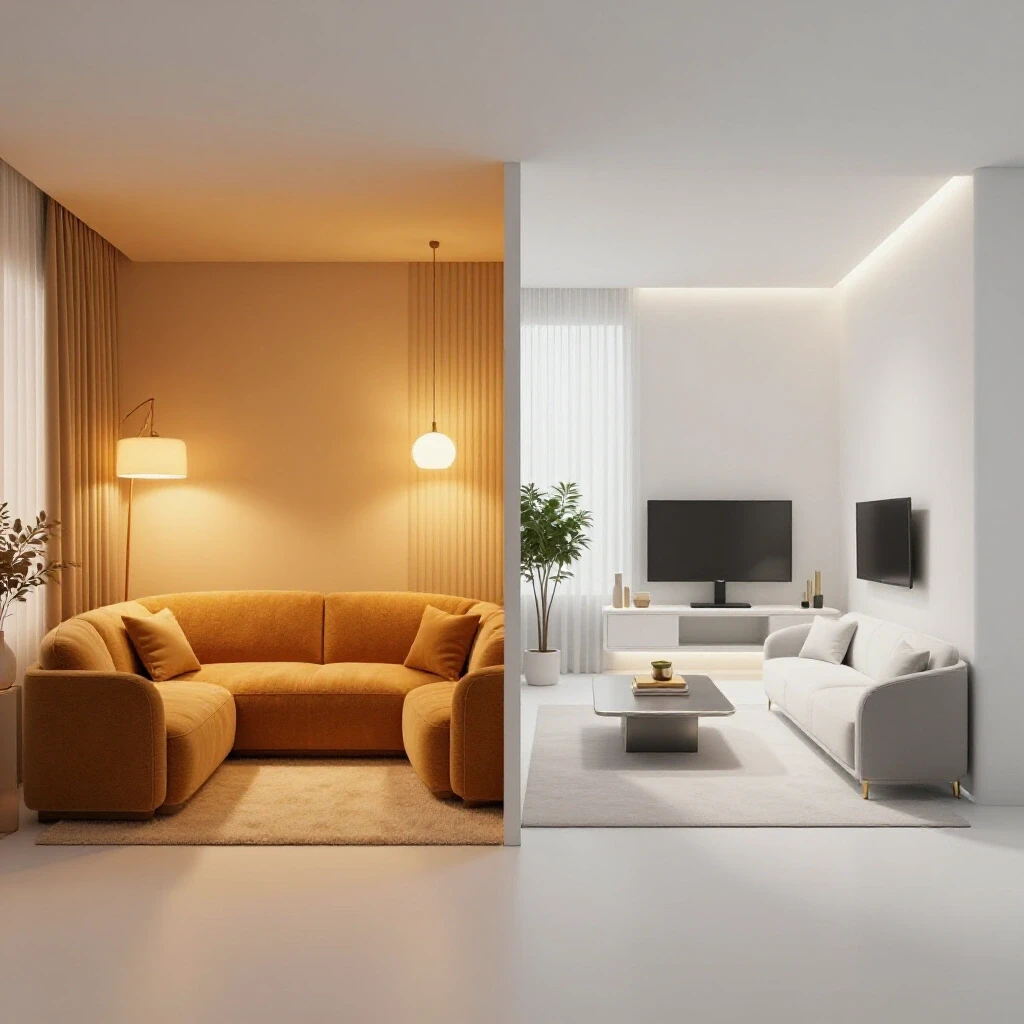
The Kelvin scale is a numerical system used to describe the color characteristics of light, ranging from warm yellow to cool blue. For residential settings, this typically falls between 2700K and 5000K. Knowing these numbers helps you avoid decision paralysis when standing in the home improvement aisle, ensuring you pick tones that match your room’s purpose.
In my 14 years of tracking home data, I have categorized light tones into three main buckets. Understanding these “What” and “Why” foundations is the first step toward smart DIY home care.
- 2700K to 3000K (Warm White): This range provides a cozy, yellowish glow. It mimics the look of traditional lamps and is best for areas where you want to relax.
- 3500K to 4100K (Cool White/Neutral): This is a cleaner, whiter light. It is great for tasks where you need to see clearly but don’t want the space to feel icy.
- 5000K and up (Daylight): This mimics high-noon sunlight. It has a blue tint and is very crisp.
| Light Tone (Kelvin) | Visual Effect | Best Room Use | Homeowner “Feel” |
|---|---|---|---|
| 2700K | Warm, Golden | Bedrooms, Living Rooms | Relaxed, Traditional |
| 3000K | Soft, Inviting | Dining Rooms, Entryways | Welcoming, Balanced |
| 3500K | Crisp, Clean | Kitchens, Bathrooms | Functional, Modern |
| 4000K+ | Bright, Blue-ish | Garages, Workspaces | High-Focus, Clinical |
Budgeting for Aesthetic Consistency in Your New Home
Creating a cohesive look across your home requires a strategic approach to your household budgeting diary. Rather than replacing bulbs one by one as they fail, which leads to a “patchwork” look, I recommend a zone-based replacement strategy. This prevents the visual clutter of having a warm yellow light next to a cool blue light in the same hallway.
According to my personal logs, first-time homeowners often underestimate the cost of “visual maintenance.” While it is not as expensive as a new roof, replacing all the light tones in a 2,000-square-foot home can cost several hundred dollars. I suggest setting aside a small portion of your 1% annual maintenance reserve for these aesthetic updates. This prevents the anxiety of unexpected costs while allowing you to achieve a professional-grade look on a DIY budget.
- Audit your current tones: Walk through your home at night and note which rooms feel “off.”
- Define your zones: Group rooms by function (e.g., “Relaxation Zones” vs. “Work Zones”).
- Standardize your Kelvin: Choose one primary tone for living areas (I prefer 3000K) and one for utility areas (I prefer 3500K).
- Bulk purchase: Buying in packs of 6 or 10 reduces the per-unit cost and ensures color consistency.
Room-by-Room Breakdown of Chromatic Preferences
Each room in your home serves a different purpose, and the light tone should reflect that function to support your daily routines. In my third home, a modern suburban build, I realized that a “one-size-fits-all” approach to color temperature was a mistake. Tailoring the tone to the room’s activity is a core part of long-term property preservation and comfort.
The Living Room and Bedrooms (The Relaxation Zones)
These spaces are meant for unwinding after a long day of work or childcare. I have found that 2700K is the gold standard here. It creates a soft, campfire-like glow that signals to your brain that it is time to rest. In my first year of homeownership, I made the mistake of putting 4000K bulbs in my bedroom. The room felt like a gas station, and I couldn’t relax until I swapped them for a warmer 2700K option.
The Kitchen and Bathroom (The Task Zones)
In areas where you are chopping vegetables or applying makeup, you need more clarity. A neutral 3000K to 3500K is ideal. It provides enough white light to see details clearly without making the room feel like an operating theater. U.S. Census Bureau housing surveys often show that kitchens are the heart of the home; keeping the light tone consistent here makes the space feel cleaner and more organized.
The Garage and Laundry Room (The Utility Zones)
For these areas, I prefer a cooler 4000K tone. When you are hunting for a tool in the garage or checking for stains on laundry, the blue-white light of a higher Kelvin rating is incredibly helpful. It is a functional choice that prioritizes utility over ambiance.
Avoiding Common Mistakes in Visual Consistency
One of the biggest homeownership realities is that small mistakes can lead to long-term frustration and “homeowner burnout.” Mixing different color temperatures in the same visual field is a classic rookie error. If your open-concept kitchen has 4000K lights and your attached living room has 2700K lights, the house will feel disjointed and chaotic.
In my real estate analysis work, I have seen “visual noise” affect home valuations. When a potential buyer walks into a house with mismatched light tones, they often perceive the home as poorly maintained, even if the structural systems are perfect. To avoid this, I use a “visual line of sight” rule. If you can see two different light sources at the same time, they should be within 300K of each other.
- Mistake: Buying “Daylight” bulbs because you think they will be brighter. (They aren’t brighter; they are just bluer).
- Mistake: Replacing only one bulb in a multi-bulb fixture with a different tone.
- Mistake: Ignoring how light tone interacts with your wall paint. (Warm light makes red/yellow paint pop; cool light makes blue/gray paint look better).
Long-Term Property Preservation through Visual Cohesion
Maintaining a home is about more than just fixing leaks; it is about preserving the asset’s appeal and your own mental well-being. A home that is visually harmonious is easier to live in and easier to sell. By documenting your light tone preferences in your digital home logs, you ensure that you can always find the exact match when a bulb eventually needs replacing.
I recommend keeping a “Home Specs” sheet in a simple spreadsheet or app. This sheet should list the Kelvin rating for every room. This level of detail might seem excessive, but after 14 years of managing three properties, I can tell you that it saves hours of guesswork and return trips to the store. It is a simple step toward becoming a more organized, less stressed homeowner.
- Room Name: e.g., Master Bedroom
- Kelvin Target: 2700K
- Quantity needed: 4 bulbs
- Date last replaced: Oct 2023
Managing Homeowner Fatigue through Ambiance
The first three years of homeownership are often the most exhausting. You are balancing a career, perhaps a young family, and a never-ending checklist of home care tasks. It is easy to feel burnt out. This is where the “emotional transition” of lighting comes into play. When you come home to a space that is bathed in a warm, consistent 3000K glow, the stress of the day begins to melt away.
In my logs, I noticed a direct correlation between the visual comfort of my home and my motivation to tackle other DIY home care projects. When the house looks good, you feel better about living in it. Don’t underestimate the power of a $10 box of bulbs to change your entire outlook on your property. It is one of the few home improvements that offers a 100% ROI in terms of daily happiness.
Practical Next Steps for New Homeowners
If you are feeling overwhelmed by the technical side of home maintenance, start with this simple lighting audit. It is a low-barrier task that gives you a sense of control over your new environment.
- Tonight: Wait until the sun goes down. Walk through every room and look at the color of the light.
- Identify the “Hospital” Rooms: Which rooms feel too blue or too cold?
- Check the Bulbs: Most modern bulbs have the Kelvin rating (e.g., 2700K) printed in tiny text on the base.
- Make a List: Note which rooms need a tone shift to match your preference.
- Update Your Budget: Dedicate $50 next month to standardizing one specific zone, like the main hallway or the kitchen.
FAQ: Mastering Home Light Tones
What is the difference between 2700K and 3000K? 2700K is very similar to a traditional light bulb, offering a warm, yellowish glow that is very cozy. 3000K is slightly “whiter” but still warm. It is often called “Soft White.” Many modern homeowners prefer 3000K for living areas because it feels a bit more updated while still being inviting.
Why does my 5000K light look blue? The 5000K range is designed to mimic daylight, which naturally has a higher concentration of blue wavelengths. In a home setting, especially at night, this blue tint can feel very harsh and clinical because it lacks the warmth we usually associate with indoor living spaces.
Can I use different light tones in the same room? It is generally not recommended. Mixing a 2700K bulb with a 4000K bulb in the same fixture or even the same room creates “visual competition.” Your eyes will struggle to adjust, and the room will feel unbalanced. Stick to one Kelvin rating per room for a professional look.
How does color temperature affect my paint colors? Light tone significantly changes how paint looks. Warm light (2700K) will make warm colors like beige, red, and wood tones look richer. Cool light (4000K) will make those same colors look muddy, but it will make blues and grays look crisp and true to tone.
What is the best Kelvin for a home office? For a home office, I recommend 3500K to 4000K. This neutral-to-cool range helps with focus and reduces the “sleepy” feeling that very warm yellow light can create. It provides a clean, alert environment for high-concentration tasks.
Is “Daylight” the best choice because it’s the brightest? This is a common misconception. “Daylight” refers only to the color (the Kelvin), not the brightness. A 2700K bulb and a 5000K bulb can have the exact same light output, but the 5000K one will look “sharper” or “colder” to the human eye.
What should I use in my bathroom? I suggest 3000K or 3500K. This provides a clean, white light that is helpful for grooming and seeing colors accurately, but it isn’t so blue that it feels cold when you are taking a relaxing bath or getting ready in the morning.
Why do my lights look different than they did in the store? Store displays are often huge open spaces with very high ceilings and many different light sources. When you bring that same bulb into a smaller room with specific paint colors and furniture, the tone will behave differently. Always test one bulb in your space before buying a whole case.
Does light tone affect how clean a house looks? Yes, indirectly. Cooler tones (3500K-4000K) tend to show more detail and can make a space look “scrubbed” and clinical. Warmer tones (2700K) are more forgiving and can hide small imperfections, making a home feel lived-in and comfortable.
How do I track my lighting preferences? The best way is to include a “Lighting” section in your household budgeting diary or maintenance log. Record the brand, the Kelvin rating, and the specific room. This ensures that five years from now, you aren’t guessing which tone you used when a bulb finally goes out.
(This article was written by one of our staff writers, Michael Morrison. Visit our Meet the Team page to learn more about the author and their expertise.)